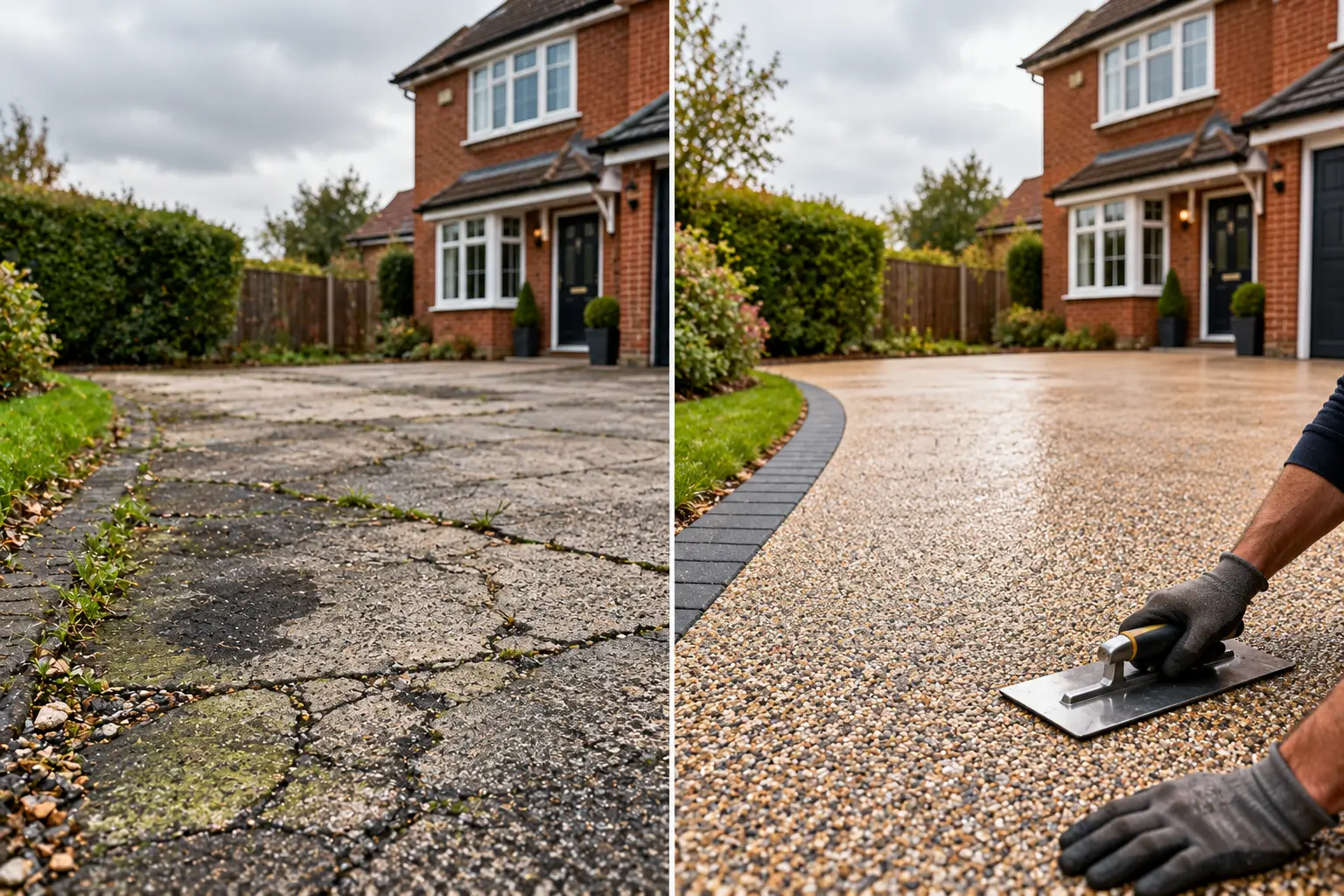
A shared driveway works beautifully right up until it needs resurfacing. Then every unspoken assumption comes to the surface along with the cracks. Who’s paying? Who chooses the colour? Where exactly does your half end and theirs begin? And what happens when one of you needs to get the car out while the resin is still curing?
Resin bound surfacing is an excellent choice for a shared drive. It’s smooth, permeable and low-maintenance, and it makes the whole space look cared for. But it’s also a one-shot decision. Once the surface is down, you can’t tweak the colour or adjust the layout on a whim, and a disagreement that surfaces afterwards is far harder to fix than one settled beforehand. This guide covers what neighbours should agree on before any work starts, in the order it’s easiest to raise them.
Start With the Facts: Who Owns What?
Check the Deeds Before the Conversation
Many disputes happen because each side assumes something different about the driveway. In practice, it may be jointly owned, split down the middle with each side holding rights over the other’s half, or owned entirely by one property with the neighbour holding a right of way. The title deeds usually settle it, and the details can be checked through HM Land Registry on GOV.UK, where you can obtain the title register and plan for a small fee.
It’s worth looking at both properties’ paperwork, because the right of way, who owns the land and any maintenance obligations may be recorded in different places. Walking into a conversation with the documents in hand takes the heat out of it, since you’re discussing what the paperwork says rather than whose memory is better.
Be Clear on What You’re Actually Allowed to Do
Owning part of the driveway doesn’t automatically mean you can change it unilaterally if the neighbour has rights over it. A right of way generally means they can pass and repass without substantial interference, so work that blocks them for a prolonged period is something to discuss, not assume.
Agree How the Cost Will Be Shared
Don’t Assume It Splits Evenly
This is the big one. Responsibility for repairs depends primarily on the deeds, and some contain a clear clause about contributing to maintenance. Where the deeds are silent, which is common, there’s no general legal rule that automatically divides the cost between users. That’s why a written agreement is the sensible route, even between friendly neighbours.
Be upfront about the practical points too. Will you split it fifty-fifty or in proportion to how much of the surface each side uses? What if one household has two cars and the other has none? A fair answer agreed in advance is worth far more than a legally correct one fought over afterwards.
Repair Versus Upgrade Is a Different Conversation
A maintenance clause in the deeds may cover repairs and upkeep, but it doesn’t necessarily stretch to replacing a perfectly usable surface with a more expensive one. If one neighbour is happy with a patched tarmac drive and the other wants resin bound, the second may be asked to cover the extra. Spelling out the specification and price upfront avoids any sense that someone is being bounced into a premium finish.
Decide Who Contracts and Who Holds the Guarantee
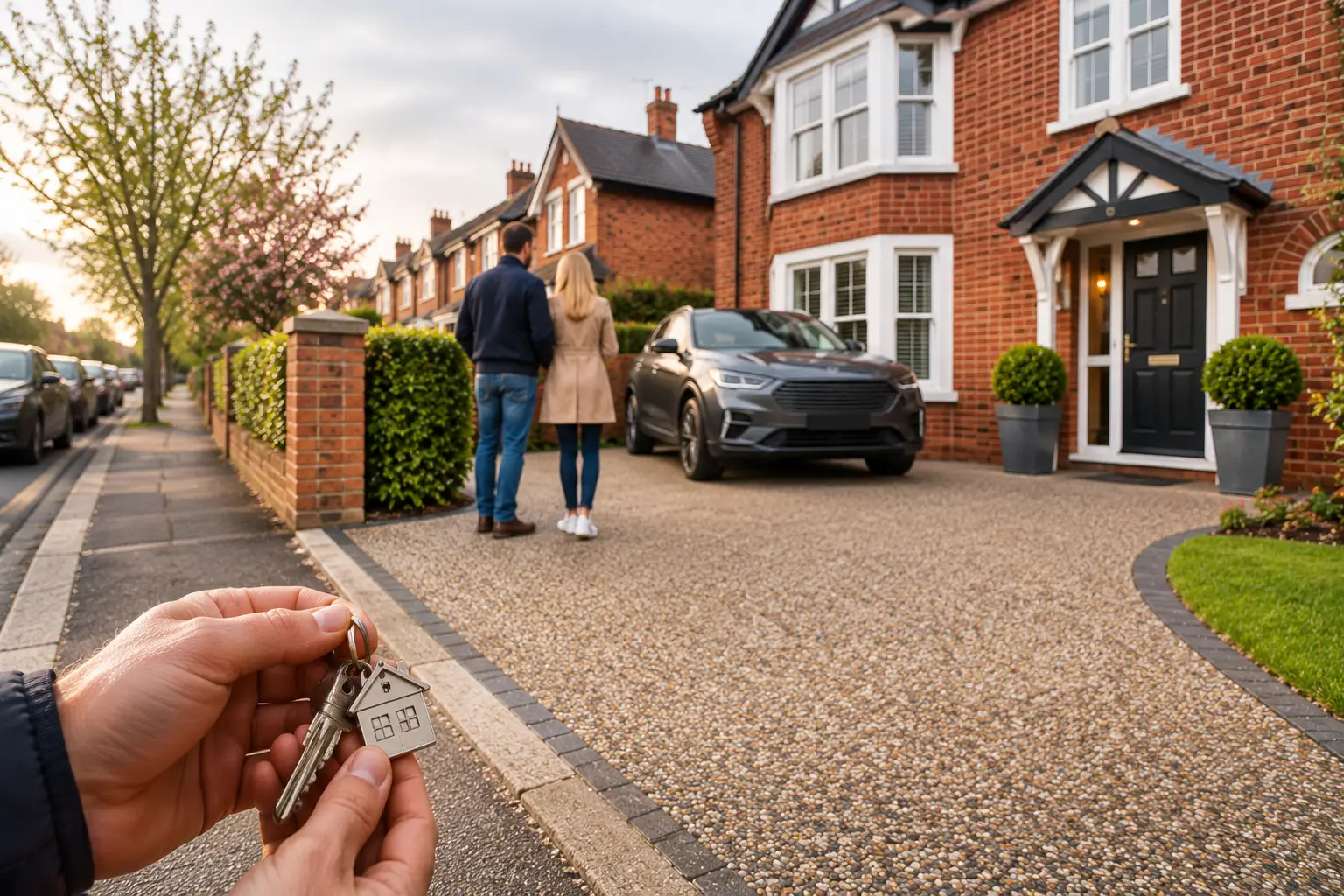
Practically, one household usually signs the contract and takes the lead, with the other contributing according to the agreement. Settle who that will be, how payment is staged and who holds the guarantee paperwork. If either of you sells, the guarantee and any records of the work are useful to hand over, so copies should go to both properties.
Agree How It Will Look
Colour and Aggregate
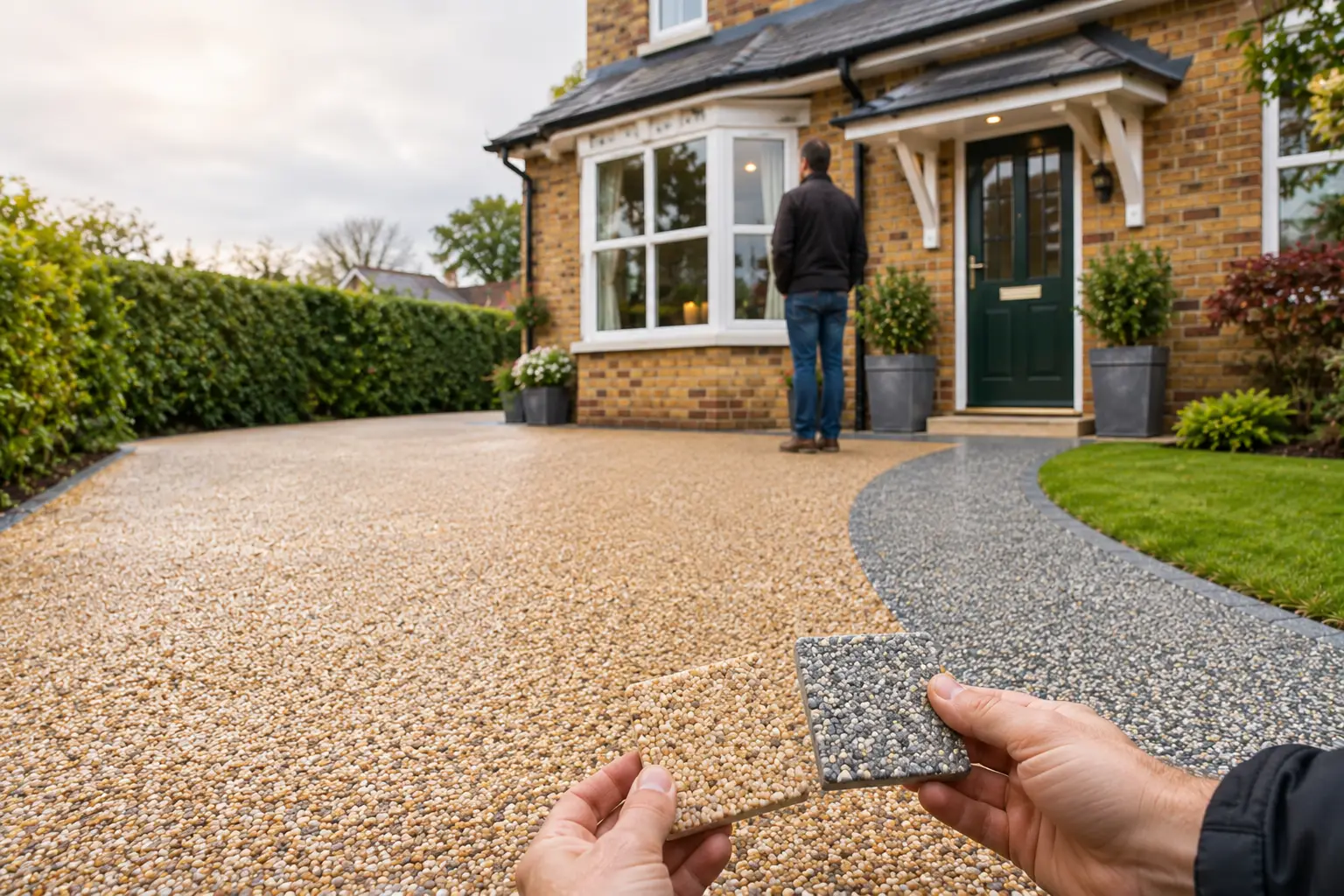
Colour is the issue most likely to cause friction, because it’s personal and permanent. The shared drive sits in front of two homes, possibly with different brickwork, so the colour needs to suit both. A mid-tone blend, such as a natural stone mix or silver grey, usually works with a wide range of buildings and hides everyday dirt well. Ask the installer for samples you can both view outdoors, in daylight, against each house.
Marking the Boundary
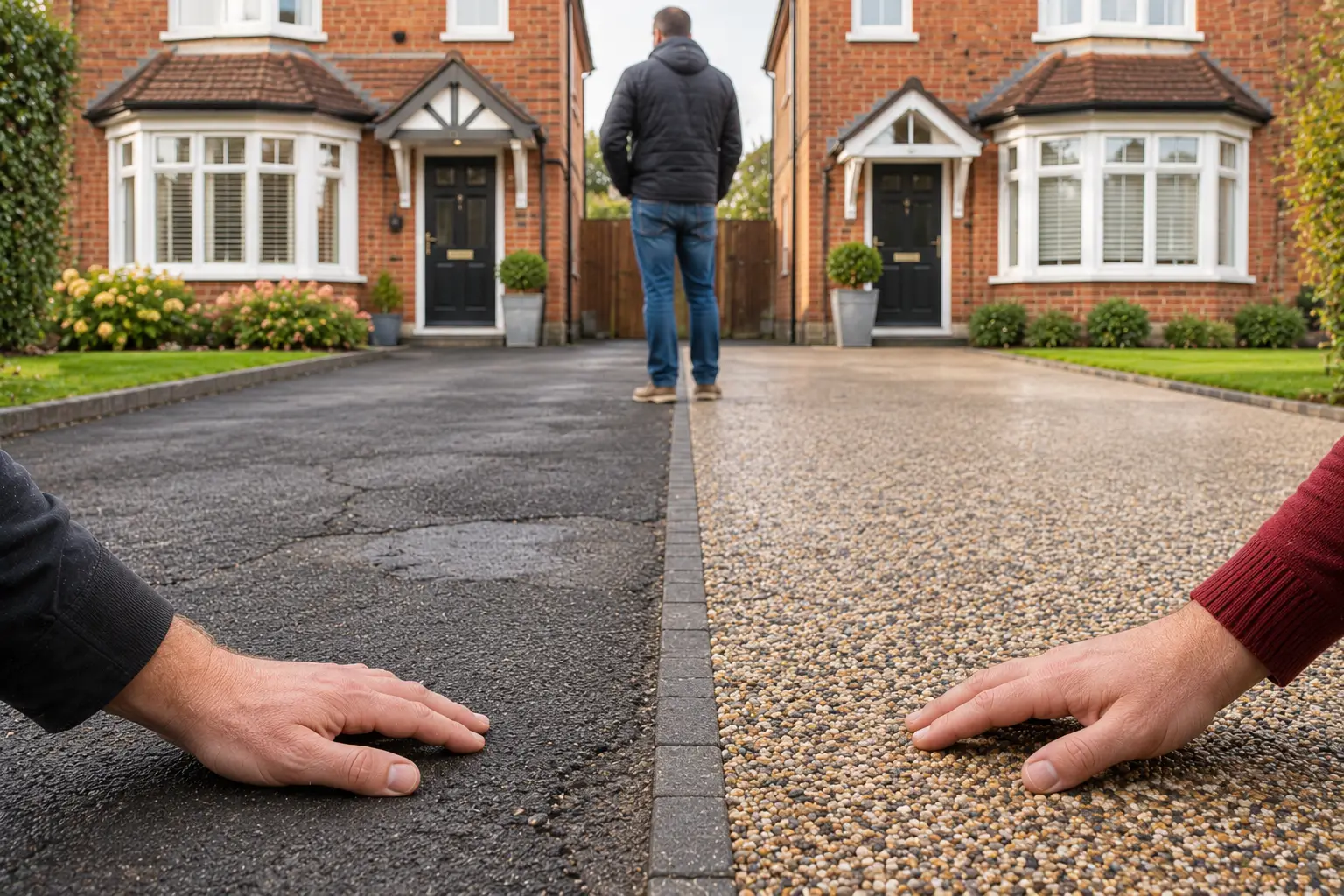
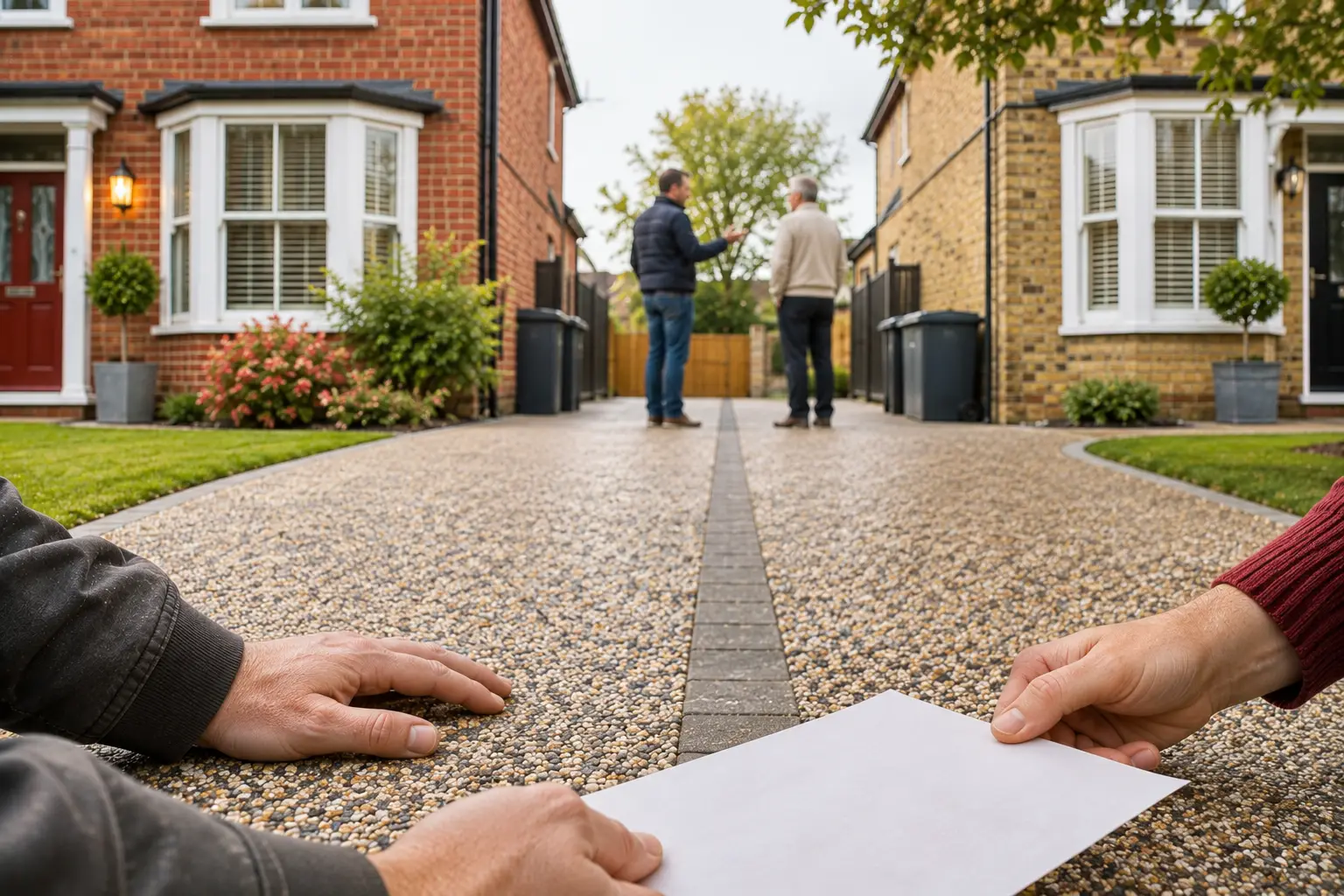
If the driveway is divided between you, think about whether you want the boundary to be visible. Some neighbours prefer a seamless look that makes the space feel bigger, while others like a subtle edge or a narrow contrasting border to show where each side begins. Either can work with resin bound surfacing, but it needs to be agreed before the groundwork starts, since edging is set during preparation, not added afterwards.
Agree How the Work Will Run
Access and Parking During the Job
A resin bound installation involves excavation, building up the base and laying the surface in carefully timed stages. Cars generally can’t be driven on or off during the work, and the new surface needs time to cure before it takes vehicle traffic. Installers can usually tell you the timings for your particular job, and it’s wise to ask early. Agree where everyone will park, how long you’ll be without access, and who will let the installers know about any particular needs, such as school runs or deliveries.
Weather and Delays
Resin needs reasonably dry conditions, so dates can shift. Agree upfront how you’ll handle a postponed start, so neither household feels blindsided if it changes.
Drainage and Planning
If the shared driveway is at the front of the properties, the rules on paving front gardens apply. As explained by the Planning Portal, larger areas of non-permeable surface that drain onto the road may need planning permission, while permeable surfacing generally doesn’t. Resin bound laid over a properly built permeable base normally satisfies this, but it’s worth confirming with the installer. Also discuss where the water goes. A properly designed surface shouldn’t push run-off onto either property, and the falls should be agreed so neither side ends up with a puddle against their wall.
Agree How It Will Be Used and Looked After Afterwards
Parking and Keeping the Way Clear
A beautiful new surface is no use if it becomes a battleground over who blocks whom. Decide on the basic etiquette: whether anyone parks on the shared section, where visitors should go, and keeping skips, vans and building materials off the access. A right of way shouldn’t be obstructed, and agreeing this in advance protects both households.
Gates, Bins and Boundaries
If either of you wants to add a gate or move bins and planters onto the drive, raise it now. A gate isn’t automatically unlawful, but one that substantially interferes with a neighbour’s right of way can be, so agree it in advance rather than discover the disagreement afterwards.
Ongoing Maintenance
Resin bound surfaces need little attention, but not none. Agree who will sweep, clear leaves and treat algae in shaded areas, and how you’ll handle any future repairs. Something as simple as “we’ll each sweep our half and split the cost of professional cleaning” prevents years of quiet resentment.
Put It in Writing
None of this needs to be a formal legal document, though for significant sums it’s sensible to have a solicitor look it over. At the very least, put the agreement in an email or a signed note that both households keep. Cover who is paying what and when, the chosen colour and specification, the start date and access arrangements, who holds the contract and guarantee, and how ongoing upkeep will be handled. If either of you sells, a clear record shows the next owners what was agreed, which helps the sale go through smoothly. Bear in mind that this is general information, not legal advice, so take professional guidance if your deeds are unclear.
If a Neighbour Won’t Agree
Start with a friendly conversation, with the deeds and a couple of quotes on the table. Often a disagreement is about worry over cost or disruption rather than the work itself, and a detailed quote and a clear timetable help. If you’re still stuck, mediation is usually cheaper and less stressful than going to court, and GOV.UK’s guidance on resolving neighbour disputes explains the options. A solicitor can advise on your specific rights and whether work can proceed without agreement.
Conclusion
Resurfacing a shared driveway with resin bound is as much a conversation as a construction job. Check the deeds so everyone is working from the same facts, agree how the cost will be shared, choose a colour you can both live with and settle the practical details of access, drainage and upkeep. Write it all down, and the work itself becomes the easy part, leaving you with a smooth, durable surface that two households can enjoy without friction.
Frequently Asked Questions
Do both neighbours have to agree before resurfacing a shared driveway?
Not always legally, but it’s strongly advisable. Your rights depend on ownership and any rights of way in the deeds, and work that substantially blocks a neighbour’s access can cause problems. Agreement upfront avoids disputes.
Who pays for a shared driveway resurface?
It depends on the deeds. Some contain a maintenance clause, but where they’re silent there’s no automatic rule splitting the cost, so a written agreement between neighbours is the practical solution.
Can one neighbour choose resin bound if the other prefers something cheaper?
They can propose it, but the neighbour isn’t necessarily obliged to fund an upgrade beyond ordinary repair. Agree the specification and who pays for the difference before any work begins.
How do I find out who owns a shared driveway?
Check the title register and plan for both properties through HM Land Registry, which show ownership and any rights of way or maintenance obligations.
What happens if my neighbour refuses to contribute?
Try talking it through with the deeds and quotes in hand, then consider mediation or legal advice. GOV.UK sets out the options for resolving neighbour disputes.