Ask three estate agents whether a new driveway adds value and you’ll probably get three confident yes answers. Ask them how much, and the confidence tends to dissolve into “well, it depends.” That’s actually the most honest answer there is, and it’s worth understanding before you spend several thousand pounds expecting a guaranteed return.
A driveway can genuinely lift what buyers will pay, and it can speed up a sale. But how much it does so depends on what kind of project you’re doing, where your home sits and how hard it is to park nearby. Here’s a clear-eyed look at what a new driveway can and can’t do for your sale price.
The Headline Figure, and Why to Treat It Carefully
What You’ll See Quoted
The number most often repeated across UK property advice is that a driveway adds somewhere between 5% and 10% to a home’s value. On a £300,000 house, that would mean £15,000 to £30,000. Some estimates go higher in expensive city locations, and a few reports claim even larger gains for homes with off-street parking compared with similar ones without.
Why There’s No Reliable National Number
Here’s the catch. There’s no dependable national figure, because parking isn’t worth a fixed percentage. It’s worth whatever it’s worth on your street. Published estimates range from a few per cent to over ten per cent, and they vary with location, property type and how scarce parking is locally. A driveway on a road where everyone already has one adds far less than the same driveway on a terraced street where residents circle the block every evening.
So treat 5% to 10% as a rough ceiling for the right circumstances, not a promise.
Two Different Projects With Two Different Payoffs
Creating a Driveway Where There Wasn’t One
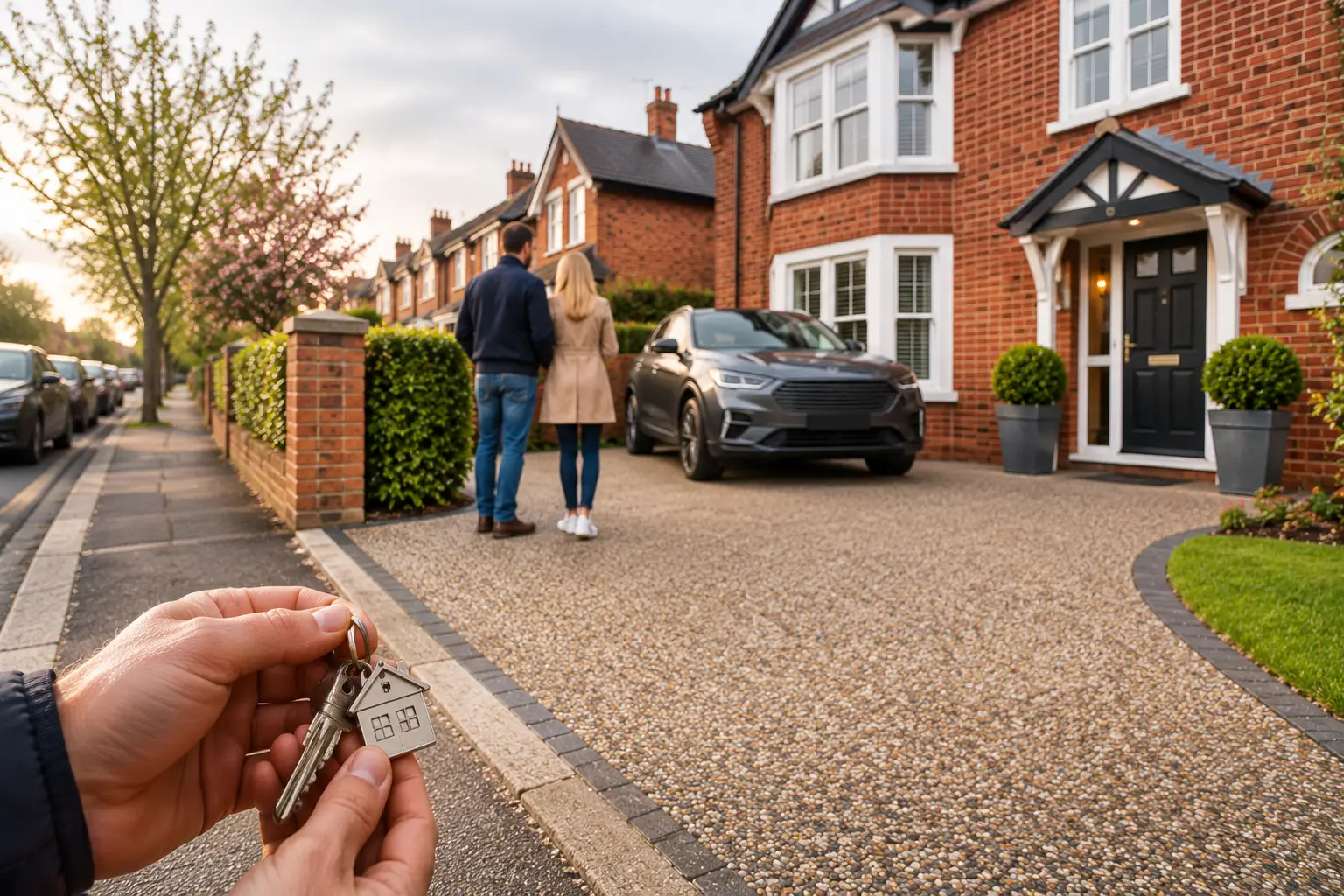
This is where the biggest uplift lives. Converting part of a front garden into off-street parking changes what the property is, because it solves a daily practical problem. For buyers, particularly families, commuters and anyone with a valuable car, a space outside the door is often a deciding factor rather than a bonus. Some surveys of buyers suggest a large majority are reluctant to consider homes without it.
Replacing a Tired Driveway With a New One
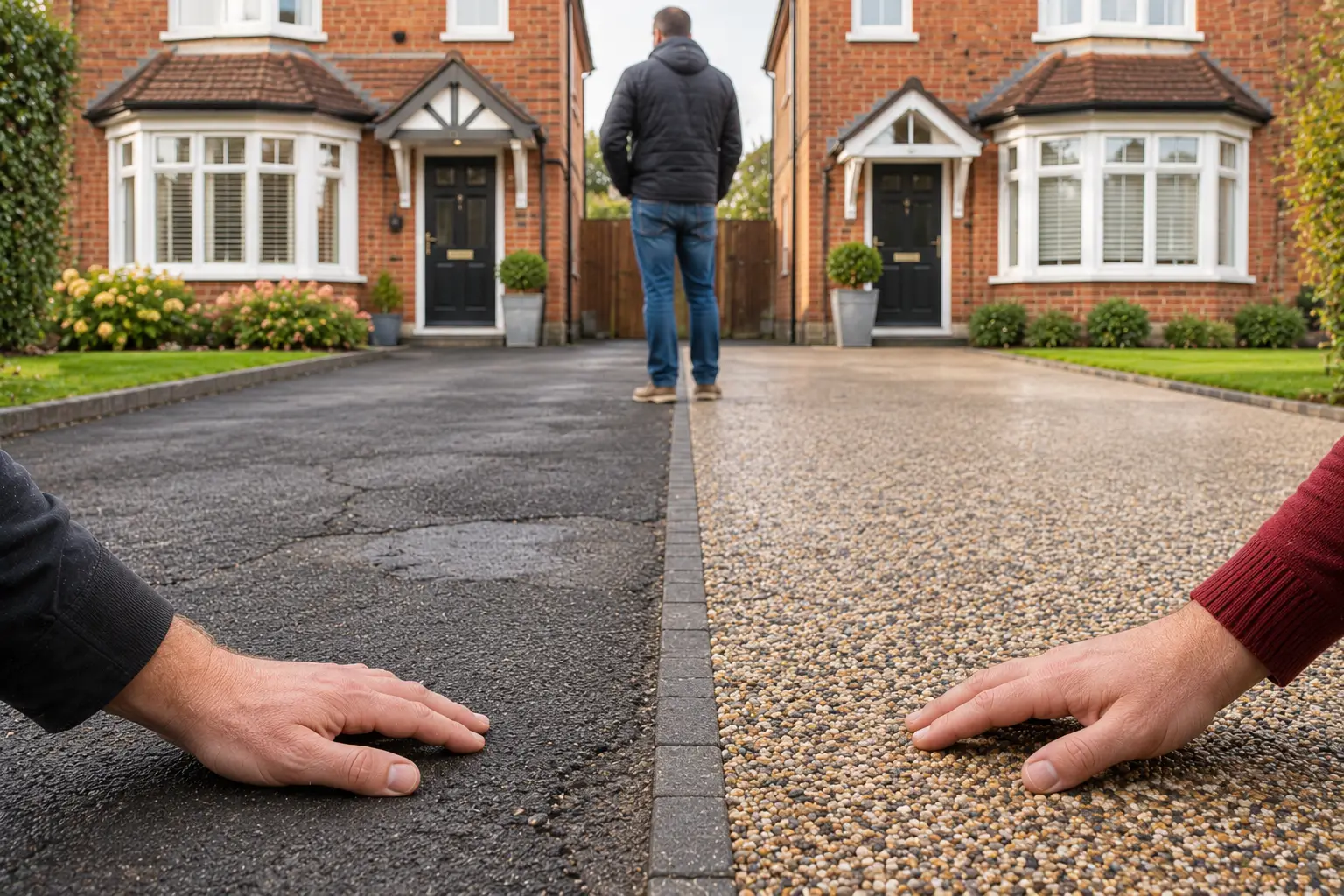
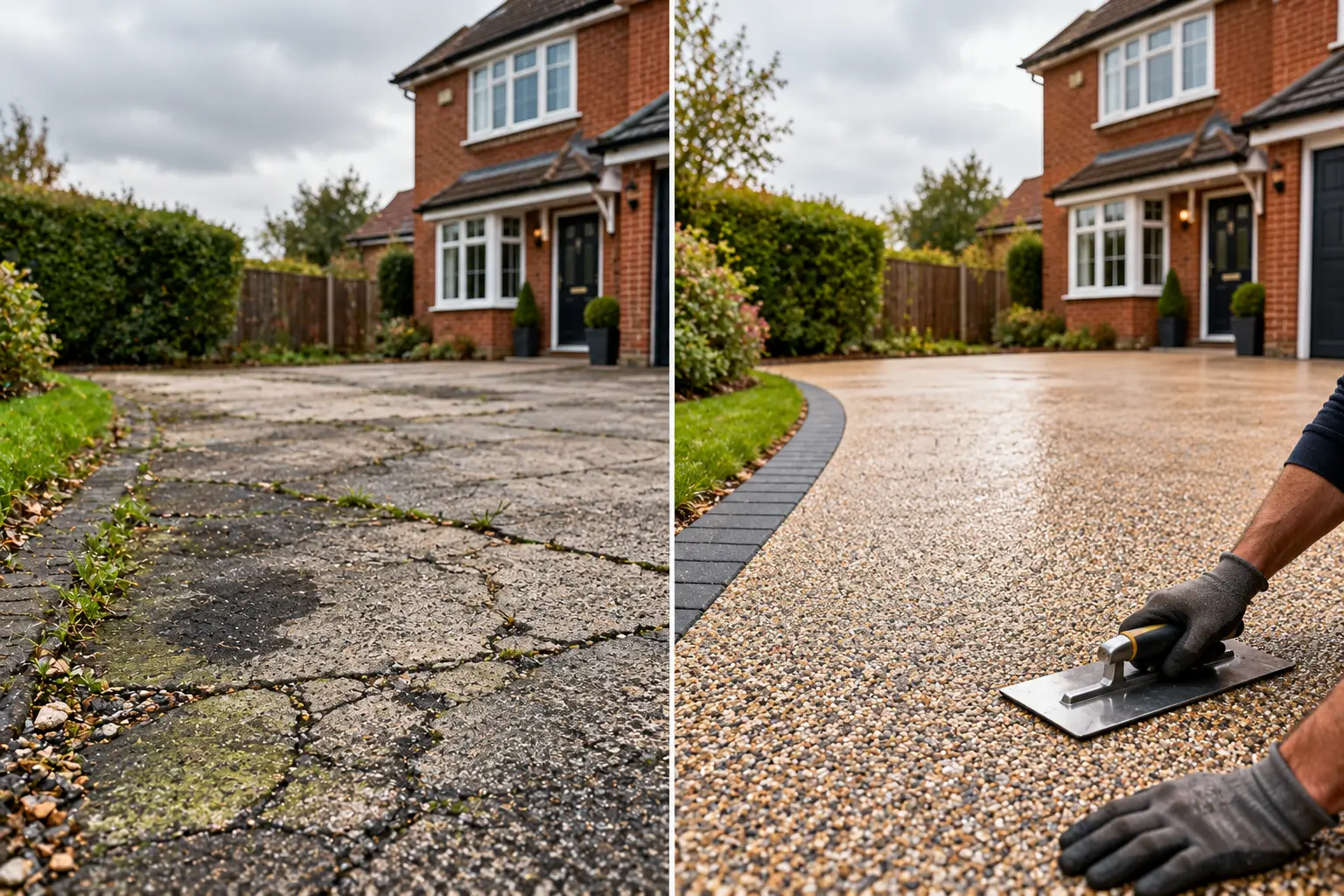
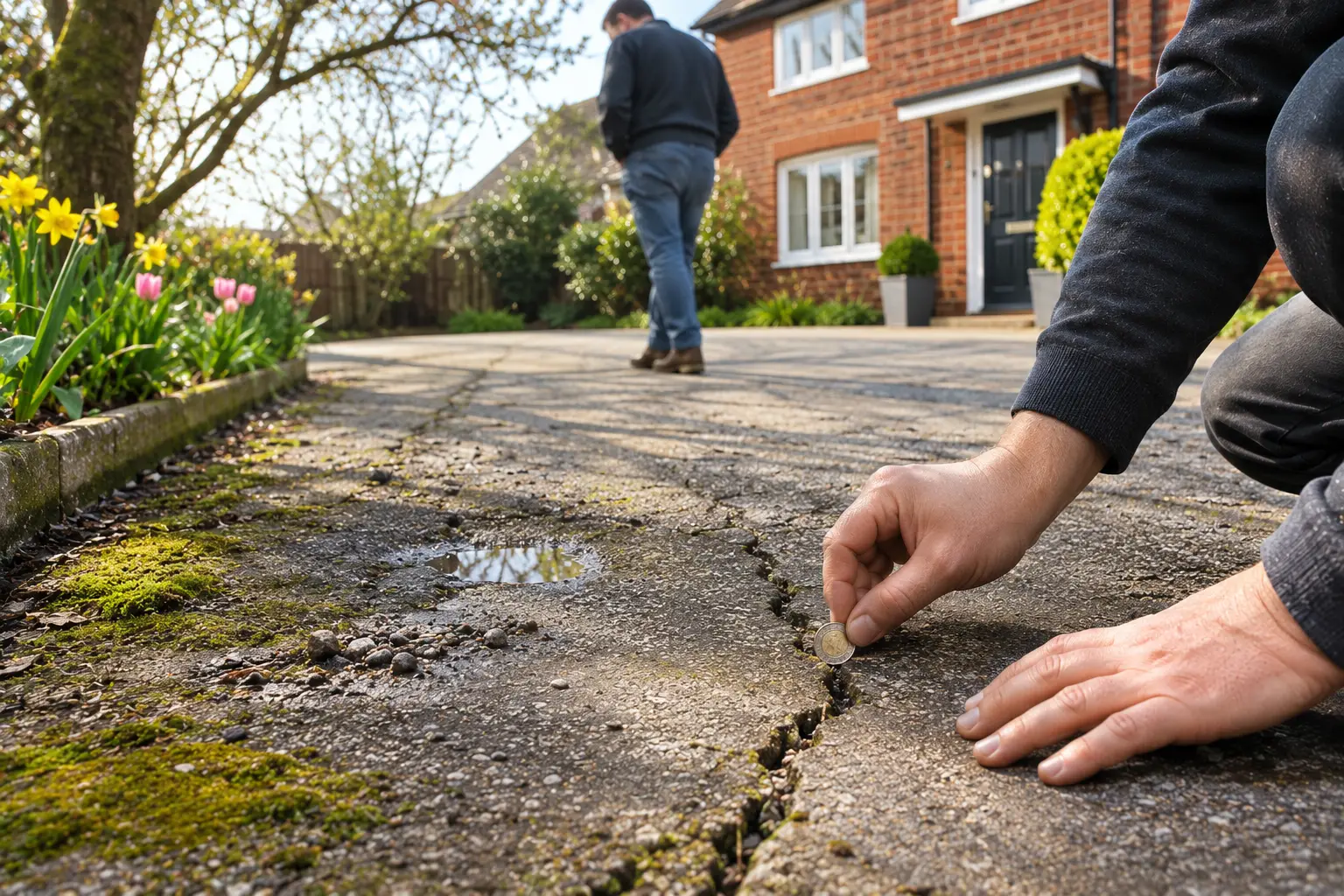
This is the far more common situation, and the logic is different. You’re not adding a feature, you’re removing a negative. A cracked, stained, weed-ridden driveway signals neglect and invites buyers to wonder what else has been put off. Replacing it won’t usually add a fresh 5% to 10% on top of what an existing driveway already contributes. What it does is protect your asking price, improve first impressions and make the house look looked after.
Being clear about which situation you’re in keeps your expectations realistic.
Why Off-Street Parking Carries So Much Weight
It’s a Daily Convenience Buyers Can Picture
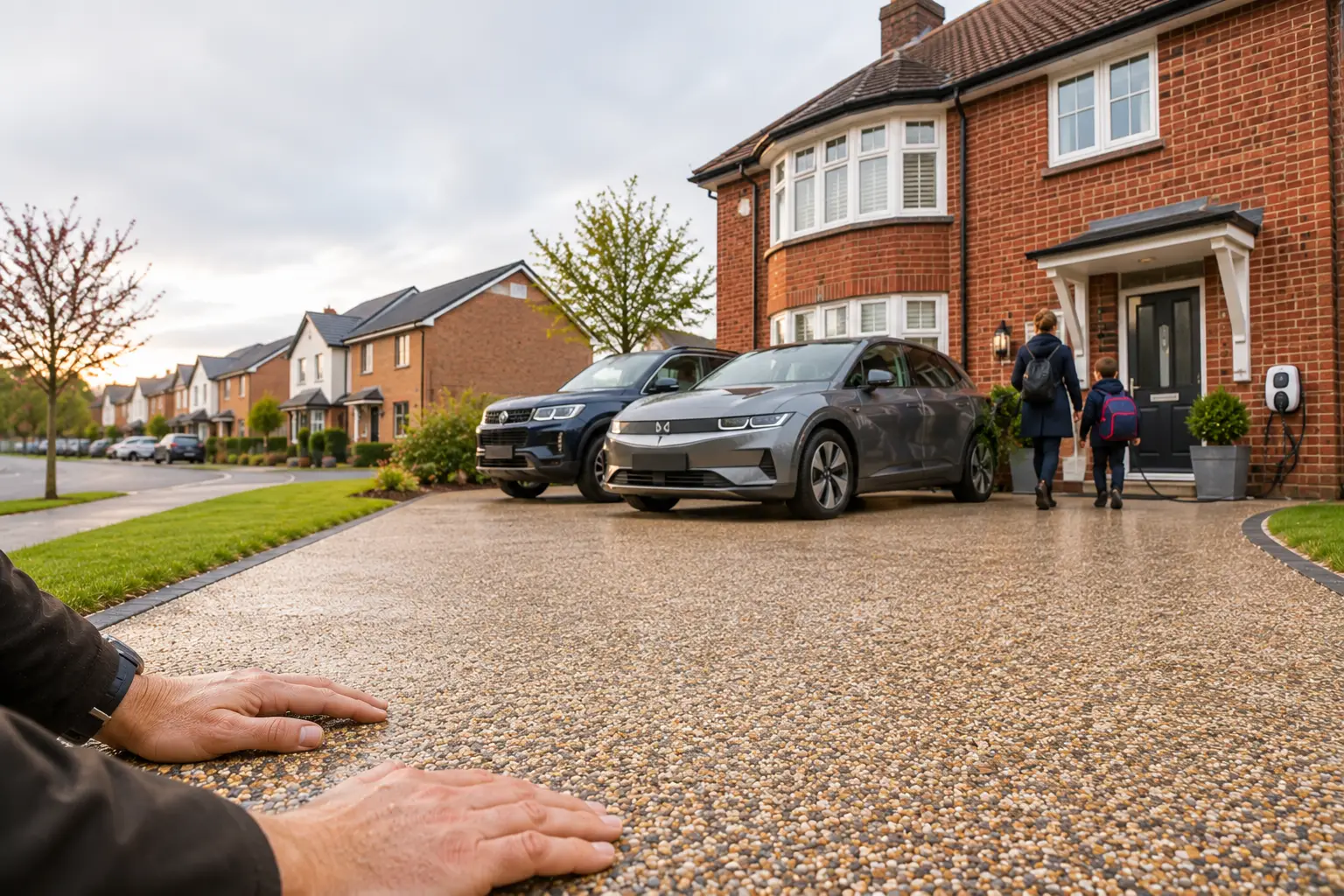
Few features translate into everyday life as directly as somewhere to leave the car. No circling the block, no parking permits to haggle over, no unloading shopping in the rain from three streets away. Buyers imagine that routine the moment they pull up, which is why it influences them so strongly.
It Can Also Affect Security and Insurance
A car parked on your own land is generally safer than one left on the road, and some insurers factor that into premiums. It’s a modest benefit, but it adds to the sense that the property is practical and well set up.
How Location Changes the Equation
Where Parking Is Scarce, Driveways Are Gold
In dense towns and cities, and on older streets built before widespread car ownership, off-street parking is genuinely scarce and buyers pay accordingly. That’s where the highest uplift figures come from.
Where Driveways Are Already Standard, the Premium Shrinks
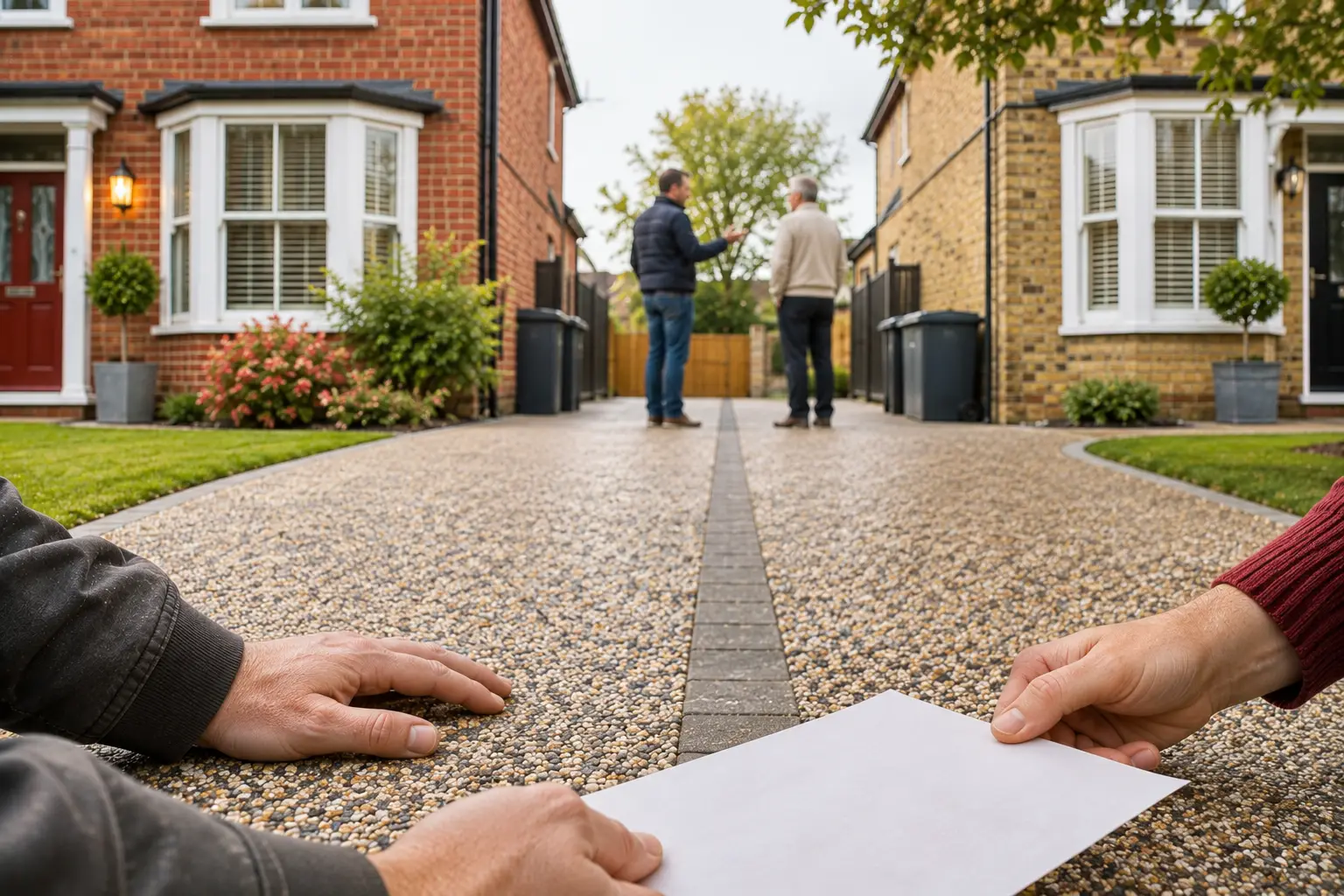
On suburban estates where nearly every house has a drive, buyers simply expect one. You won’t gain much for having it, but you may well lose out if yours is clearly worse than the neighbours’. In that setting, a tidy, modern surface is about staying competitive rather than getting a bonus.
Look at Local Evidence
The most reliable guide is what comparable homes on your own street or in your area have actually sold for, with and without parking. A local estate agent can tell you how much buyers in your postcode care.
What a New Driveway Protects at the Point of Sale
First Impressions and Viewing Numbers
The driveway is one of the first things people see in a listing photo and when they arrive for a viewing. A clean, even surface helps a property stand out online and makes a stronger opening impression in person. When buyers have plenty of similar homes to choose from, visible condition can be the difference between a viewing booked and a listing skipped.
Fewer Awkward Conversations Later
A damaged or poorly drained driveway is the sort of thing that appears in a buyer’s survey and gets used to negotiate the price down after an offer has been agreed. A properly installed, well-drained surface removes that bargaining chip.
A Smoother, Quicker Sale
Homes that present well and have fewer visible problems tend to attract offers faster and with less haggling. That doesn’t always show up as a higher number on the offer, but it can mean less time on the market, which has its own value.
Does the Material You Choose Matter?
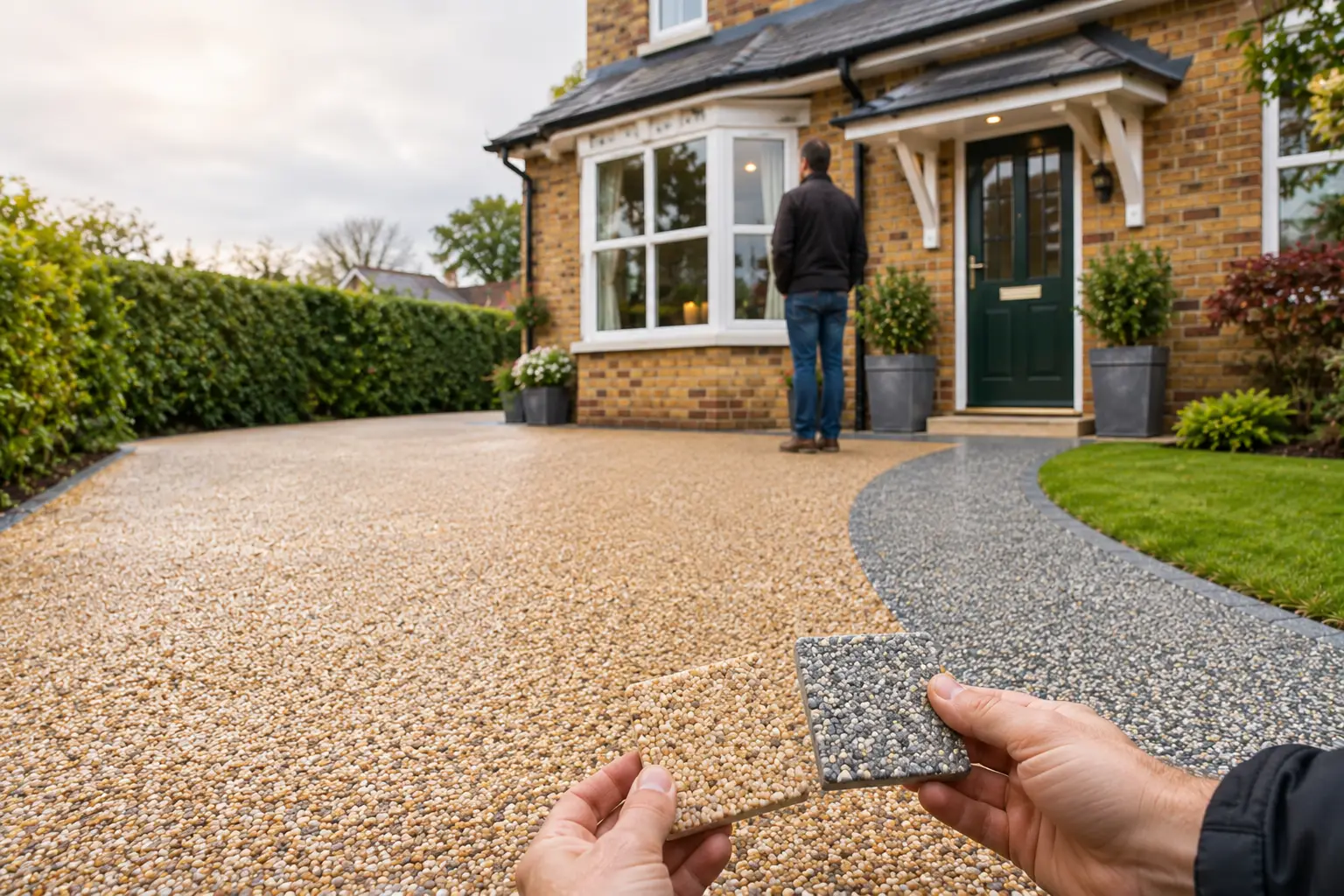
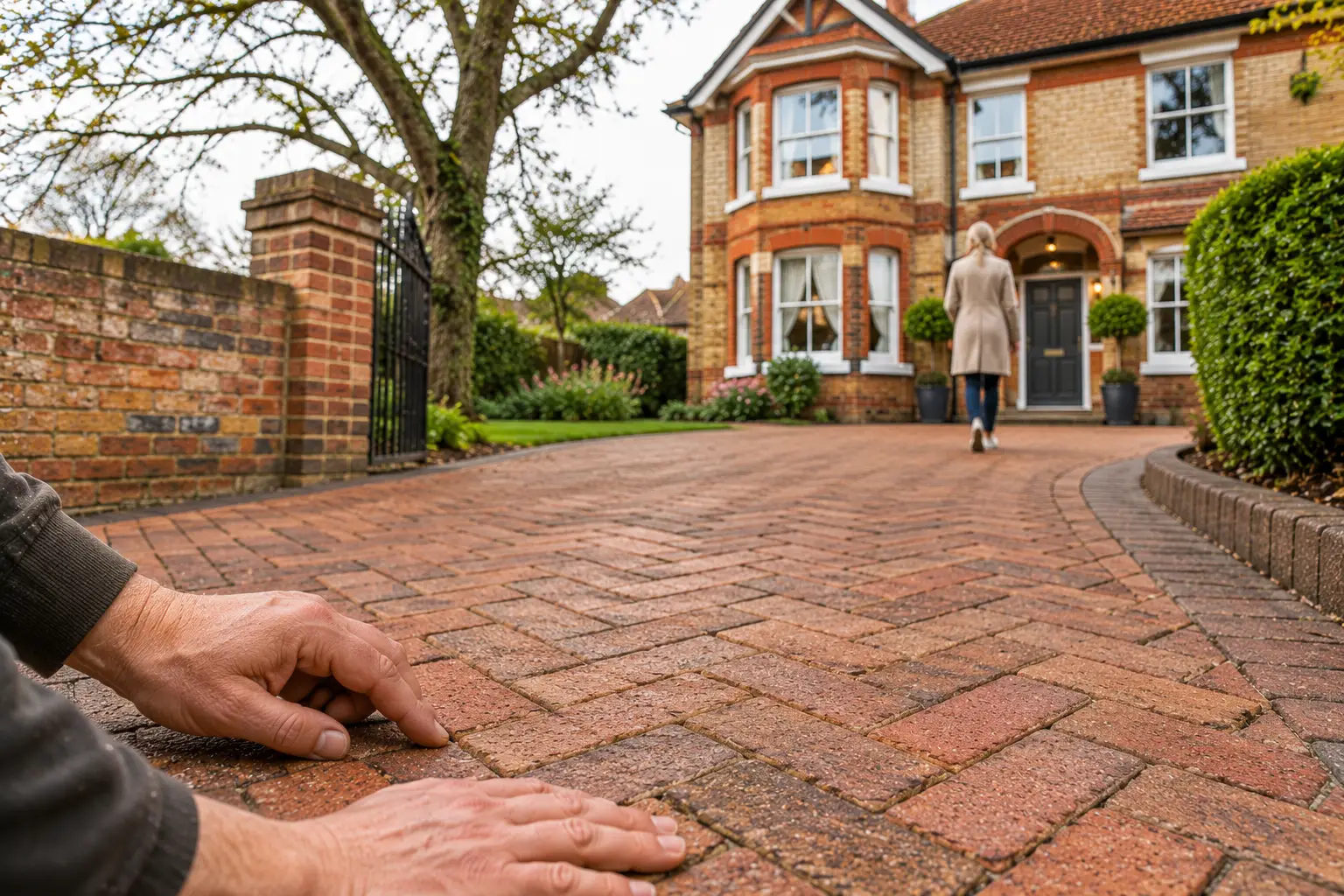
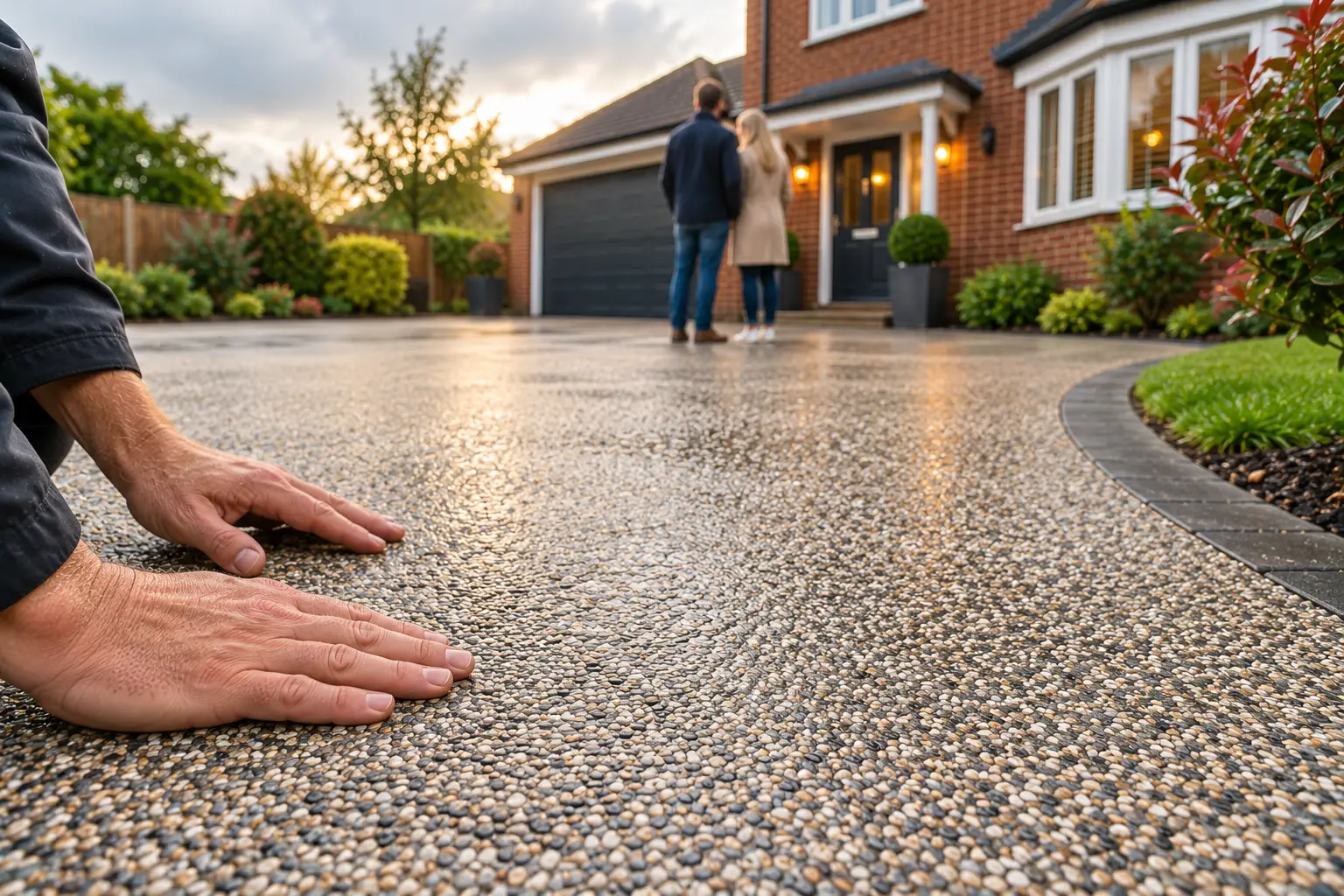
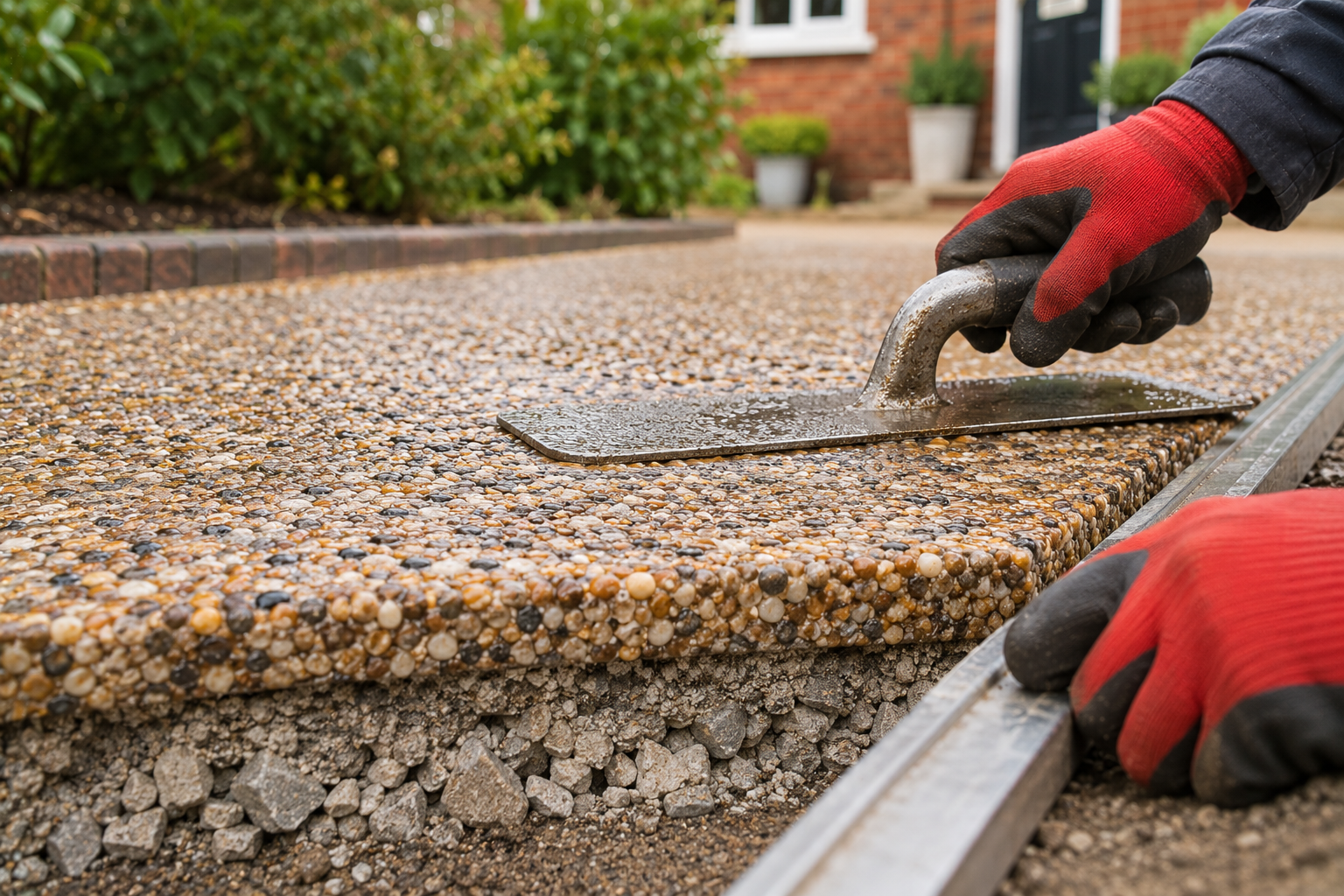
Buyers rarely care about the technical details, but they do respond to condition, appearance and perceived upkeep. A seamless, low-maintenance surface such as resin bound paving reads as modern and easy to look after, while good block paving suits traditional and period homes. Either can help if it’s well chosen and well installed. What hurts is a poor finish, mismatched colours or a surface that already looks tired.
Drainage matters too. If you’re creating or replacing a driveway at the front of the house, the rules on permeable surfacing set out by the Planning Portal are worth knowing, since a non-compliant surface over five square metres can create planning problems that a buyer’s solicitor will spot.
The Legal Bits That Can Make or Break the Value
A Dropped Kerb Is Essential for a New Driveway
If you’re creating a new driveway and your property doesn’t already have a dropped kerb, you’ll need permission from your highway authority to cross the pavement. You can find out how to apply on GOV.UK. Without it, a new driveway can’t legally be used, and it won’t add the value you were hoping for.
Get the Paperwork Right
Homes in conservation areas, flats and listed buildings can face extra restrictions. Keep records of any consents and the installer’s guarantee, because a buyer’s solicitor will want to see them, and a missing document can slow or derail a sale.
When a New Driveway Might Not Pay Off
If You Already Have Enough Parking
If your home already has space for a couple of cars, adding more rarely moves the price. The same goes for rural properties where verge parking is easy and unrestricted.
If You’d Sacrifice Something Buyers Value
Paving over a mature, attractive front garden can backfire. Some buyers prefer greenery, and removing established trees or hedging can reduce kerb appeal rather than improve it.
If You’re Overspending for the Area
A premium finish on a modest home in a lower-value area may not earn back its cost. The sensible aim is to match the standard of the neighbourhood and then present it a little better.
Making Sure Your Money Works Hard
Get at least a couple of detailed quotes, ask for the specification of the groundwork and the guarantee in writing, and choose colours that suit the house rather than whatever’s currently fashionable. A well-built driveway that suits the property is far more likely to be seen as an asset than a showy one that clashes with it.
Conclusion
So, does a new driveway really increase your sale price? Often, yes, but not by a figure you can pencil into a spreadsheet. Creating off-street parking where there was none can make a meaningful difference, especially where parking is tight. Replacing a worn-out driveway mainly protects your asking price and strengthens the first impression buyers form. Whichever applies to you, check local sale prices, get the legal permissions in order and invest in solid groundwork, and you’ll give the project its best chance of paying for itself.
Frequently Asked Questions
How much value does a driveway add to a house in the UK?
Commonly quoted estimates run from about 5% to 10%, but there’s no reliable national figure. The real uplift depends on your location, how scarce parking is and the quality of the finished driveway.
Is it worth replacing an old driveway before selling?
It can be, particularly if the current surface is cracked, sunken, weedy or draining badly. A replacement mostly protects your asking price and improves first impressions, rather than adding a brand-new premium.
Do I need permission to build a new driveway?
You’ll generally need a dropped kerb approved by your highway authority if you’re crossing a pavement, and planning rules apply to front garden surfacing. Conservation areas and listed buildings may have additional restrictions.
Does the type of driveway material affect sale price?
Buyers mostly respond to condition, appearance and how easy the surface looks to maintain. A well-installed driveway in a style that suits the property tends to help, while a poor finish can harm.
When is a new driveway not worth the cost?
When you already have plenty of off-street parking, when parking on your road is easy, or when paving over a valued front garden would reduce your home’s appeal.