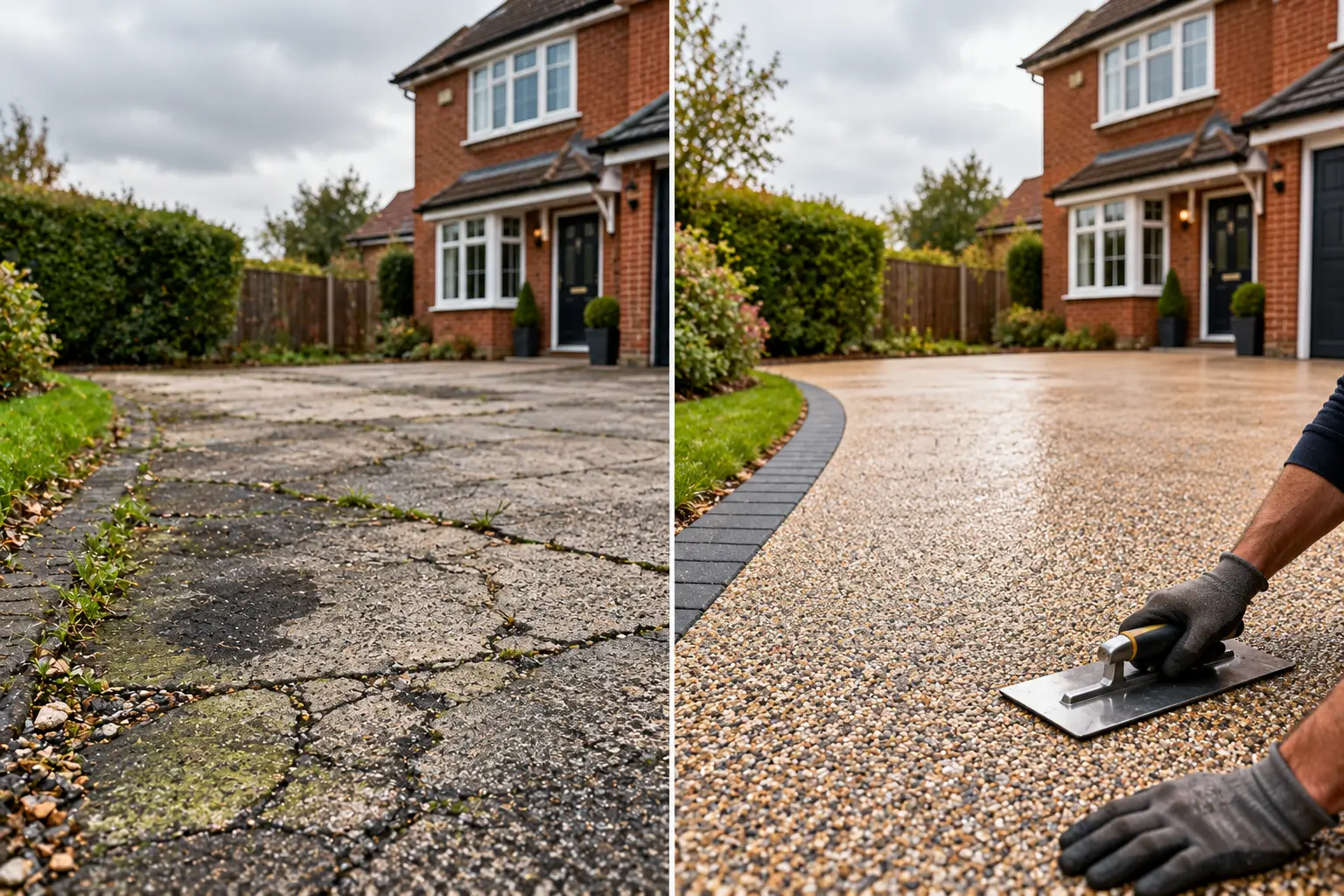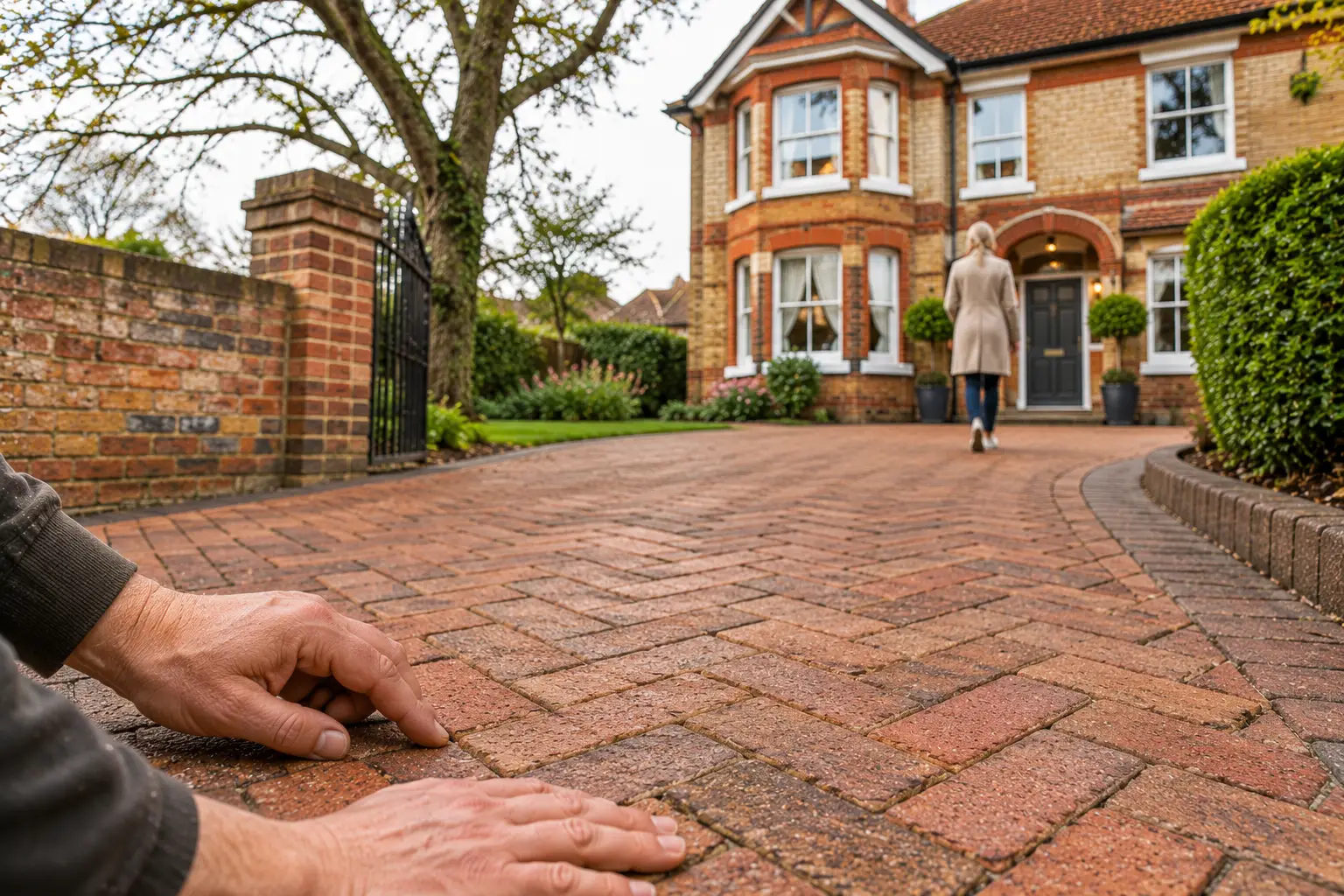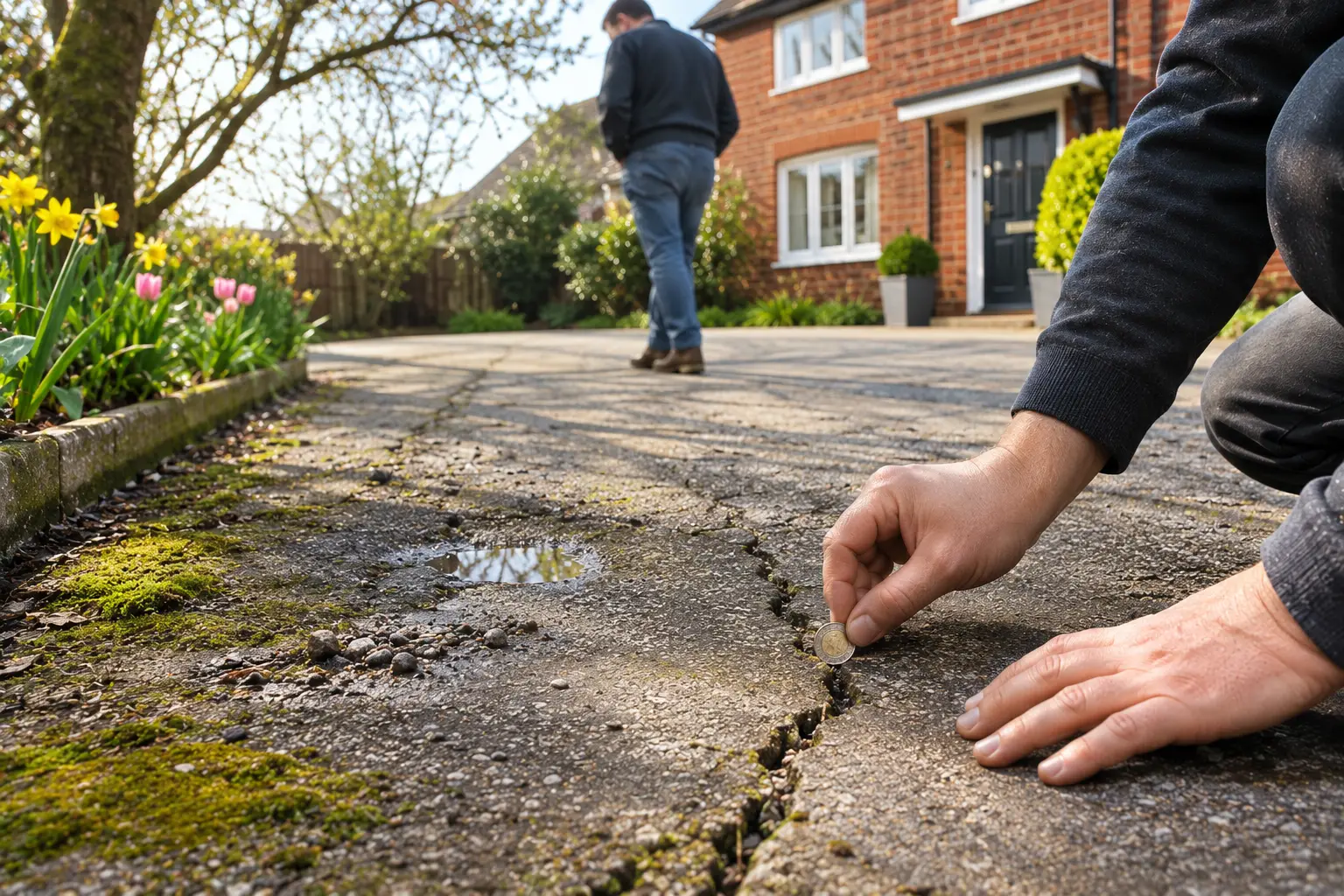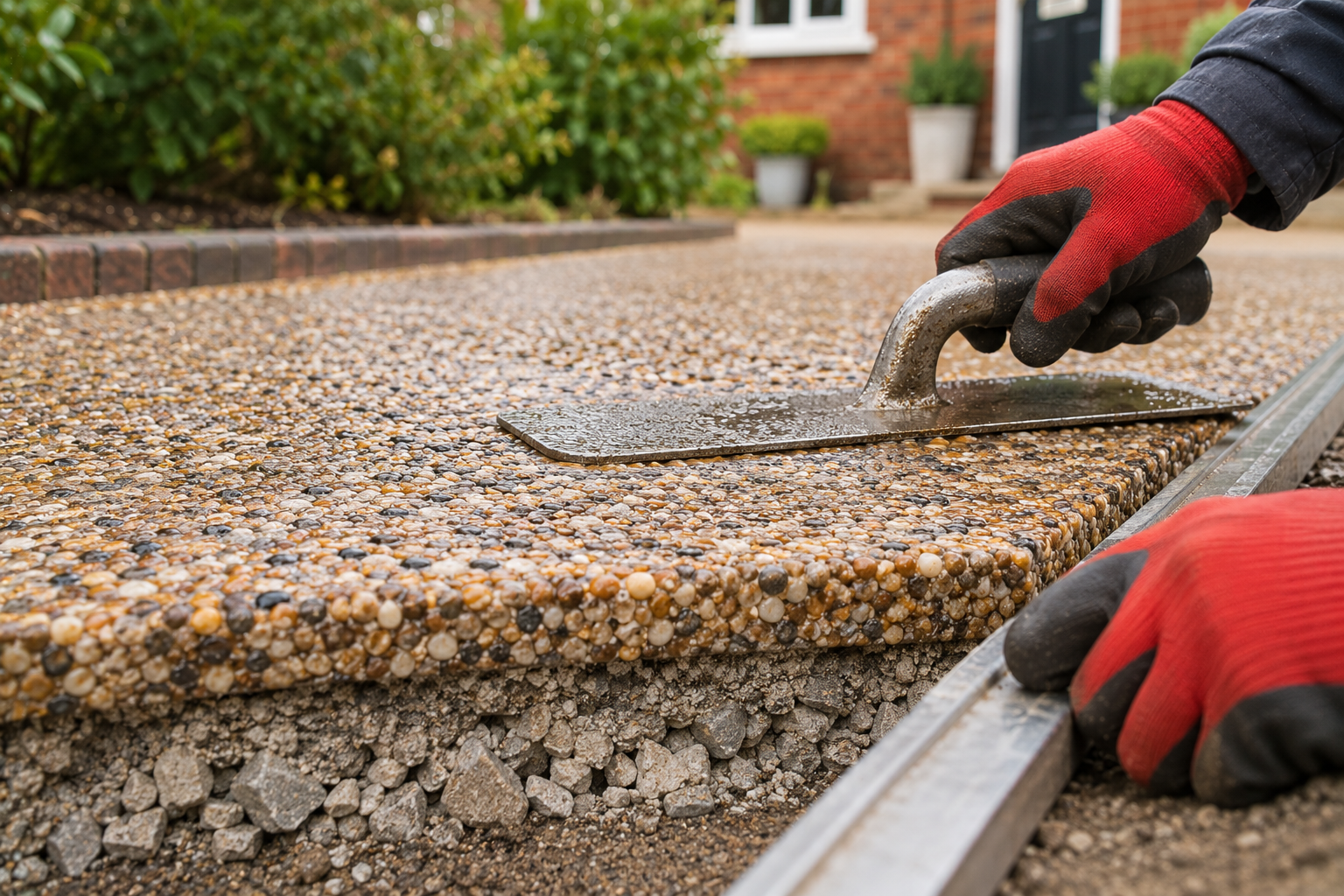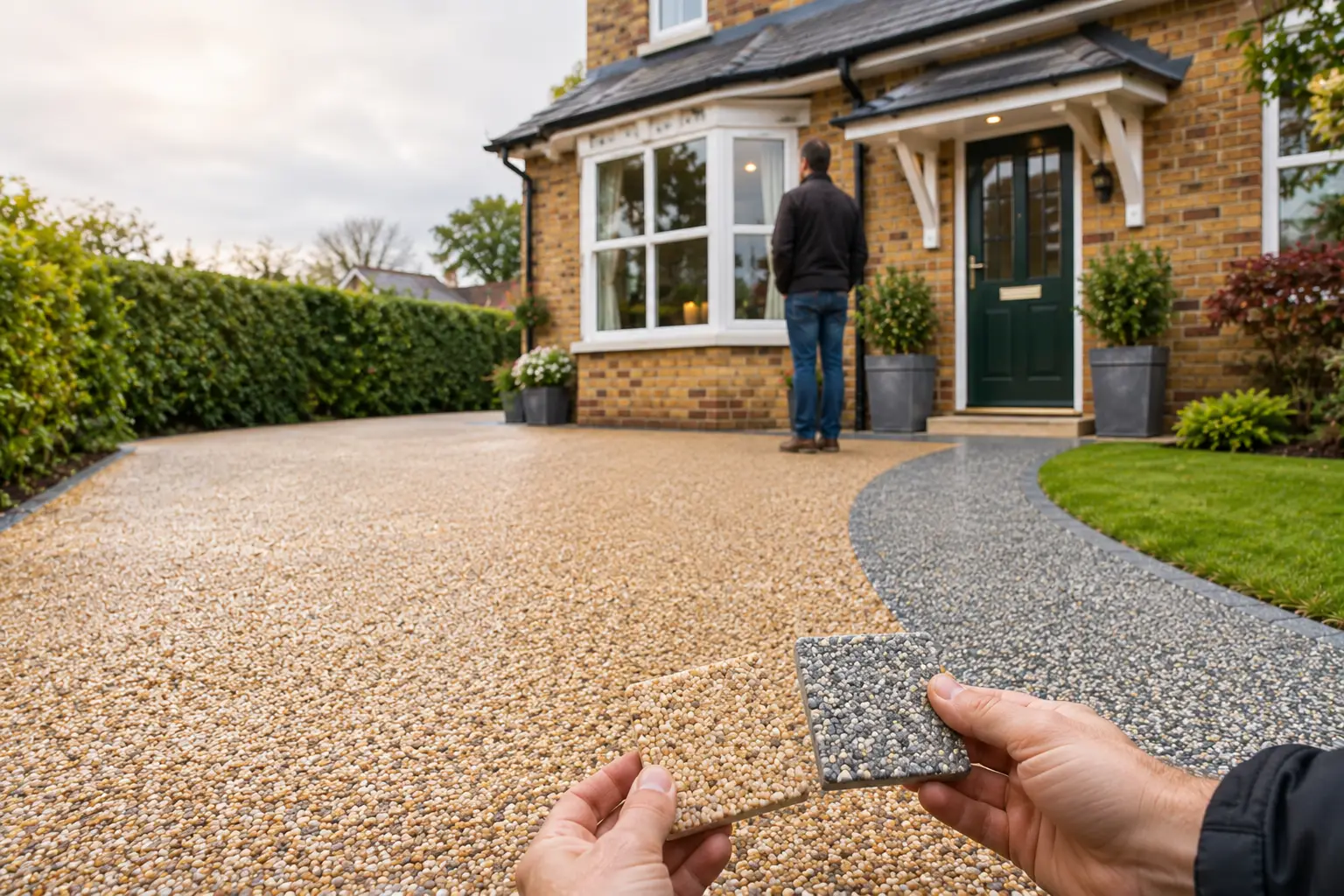
Ask an installer which two resin bound colours come up most often in consultations and there’s a fair chance you’ll hear the same pair: Cotswold buff and silver grey. One is warm, soft and cottage-friendly. The other is cool, crisp and contemporary. They sit at opposite ends of the colour spectrum, which is exactly why choosing between them can feel so tricky.
The good news is that there’s a sensible way to decide, and it has less to do with personal taste than you might expect. Your brickwork, your light and the way you use the driveway will usually point towards one of the two. Here’s how to work it out.
What Each Colour Actually Looks Like
Cotswold Buff: Warm, Soft and Creamy
Cotswold buff is a limestone-based aggregate in pale cream and golden-beige tones, and it’s a classic for a reason. Aggregate producers such as Breedon list Cotswold Buff as a pale cream limestone, with a gentle warmth that feels natural rather than loud. It tends to look slightly different depending on conditions: dry, it reads as a soft cream, while after rain it deepens to a richer honey-gold.
That warmth makes it brighten shaded frontages beautifully. If your driveway sits in the shadow of the house or a mature tree, a lighter buff can lift the whole area without feeling stark.
Silver Grey: Cool, Clean and Modern
Silver grey blends are usually based on granite, giving a speckled mix of whites, silvers and greys, often with a subtle sparkle in sunlight. The effect is crisp and understated, and it’s one of the most versatile shades available. It reads as contemporary without being cold, particularly when mixed with a few darker flecks that add depth.
One thing to watch is that cool greys can look a little flat on dull days, which, in fairness, describes a good proportion of the British year. The right blend, with some variation in tone, avoids that.
Matching Your Colour to Your House
If You Have Red Brick
This is the most common deciding factor, and it’s where the two colours diverge most. Red and orange brick tends to sit comfortably with warm golden and buff tones, which pick up the warmth in the walls. Cool greys can fight with strong red, with the brick pulling the grey slightly towards blue. That said, a very pale Cotswold can occasionally read as a bit chalky against intense red, so a slightly deeper buff or golden blend sometimes strikes a better balance. Always check a sample next to your actual brickwork.
If You Have Cream Render, Yellow Stock Brick or Natural Stone
Here, Cotswold buff comes into its own. Cream render brings out the gold in buff stone, and the combination feels soft and cohesive, particularly on cottages, period homes and anywhere with natural stone walls, timber gates or soft planting. If your property has strong stonework, it’s often worth matching the aggregate to the stone rather than the brick, as it looks more deliberate.
If You Have Grey Brick, Render or Modern Windows
Silver grey is the natural partner for grey brick, white or grey render, slate roofs and anthracite window frames. The cool tones echo the materials already on the house, which gives a clean, unified frontage. On newer builds and contemporary extensions, it tends to look more at home than a warm buff.
Don’t Forget the Roof, Door and Windows
It’s easy to focus on the walls and forget the rest. A driveway that echoes the undertone of your roof tiles, without matching them exactly, tends to look considered rather than accidental. Front doors matter too: a deep green, navy or black door often looks striking against either shade, while a warm wood-effect door tends to sit more naturally beside buff.
How Light and Weather Change What You See
Judge It in Real Light
Colours look very different outdoors than they do under showroom lighting or on a screen. Silver grey can sparkle in sunshine and turn slightly moody under cloud, while Cotswold buff glows warmly in low evening light. A sample board viewed at your own front door, in the morning and again in the afternoon, will tell you far more than a catalogue photograph.
Check It Wet as Well as Dry
Resin bound surfaces change appearance when damp. Buff tends to deepen towards honey-gold, and grey blends usually darken and look richer. Since a UK driveway spends a fair amount of its life wet, wet your sample and see whether you still like it. It’s a small step that prevents a lot of second-guessing.
Practical Differences Worth Knowing
Dirt and Staining
Lighter colours show tyre marks, oil residue and general grime more readily than mid-tones. Cotswold buff isn’t dramatically unforgiving, but if you run two cars or park on the drive daily, a blend with a bit of tonal variation will hide wear better than a very uniform pale one. Silver grey is generally more forgiving, since its mid-tone and speckled texture disguise everyday marks well.
Shade, Moss and Algae
Any resin driveway in a damp, shaded spot can pick up algae, as the Royal Horticultural Society notes for hard surfaces generally. Green tinges can be more noticeable against pale buff, while grey tends to mask them a little better. Regular sweeping and an occasional gentle rinse keep either colour looking fresh.
Stone Type and Durability
It’s worth asking what stone is actually in the blend. Cotswold-style aggregates are often limestone, which is softer than granite. In a resin bound system the stones are locked in place, so this is less of a concern than with loose gravel, but it’s still sensible to ask your installer whether the specific blend suits vehicle traffic. Granite-based silver greys are typically very hard-wearing.
Fading
Resin bound colour comes from the natural stone, not a dye, so the aggregate itself doesn’t fade the way paint can. What matters more is the resin binder. A UV-stable resin helps keep the finish clear and prevents yellowing, which is especially noticeable on lighter colours. Ask your installer to confirm the system they’re using.
What If You Can’t Decide?
A Blend May Be the Answer
You don’t have to choose between pure buff and pure grey. Many aggregate mixes combine tones, such as a grey-buff blend with flecks of cream, silver and tan, which can sit happily between traditional and modern and adapt to different light. These blends are often the most forgiving, since the variation in tone hides dirt and softens any mismatch with your brickwork.
Use Borders and Accents
Another option is to use one colour for the main driveway and a contrasting one for a border or path. A silver grey drive with a warm buff edge, or the other way round, adds definition without extra landscaping and lets you enjoy both.
Stick to Timeless Over Trendy
If you might sell in the next few years, neutral, natural shades have the widest appeal. Both Cotswold buff and silver grey qualify, which is part of why they’ve stayed popular. Very bold or unusual colours can narrow your pool of buyers.
Making the Final Decision
Start with the house, not the sample book. Warm brick, cream render and natural stone usually favour Cotswold buff. Grey brick, render, slate and modern windows usually favour silver grey. Then view samples outdoors, in different light and wet as well as dry, and ask your installer about the stone, the resin and how the colour will look across a full-sized driveway rather than a small chip. Permeability matters regardless of colour, and the Planning Portal explains why a properly built permeable surface generally keeps front driveways within permitted development.
Conclusion
Neither colour is better in the abstract. Cotswold buff offers warmth, softness and a lovely way of lifting shaded frontages, and it suits traditional and period homes particularly well. Silver grey brings a cool, clean, contemporary look, hides everyday dirt well and pairs naturally with grey brick, render and modern windows. Let your house, your light and your daily routine guide the choice, check samples outdoors in all weathers, and you’ll end up with a driveway that looks like it was designed with your home in mind.
Frequently Asked Questions
Is Cotswold buff or silver grey better for a red brick house?
Warm tones like buff or golden blends usually flatter red brick, while cool greys can clash. Very pale buff can look chalky against strong red, so view samples against your brickwork first.
Which colour hides dirt better, buff or grey?
Silver grey and mid-tone blends generally hide tyre marks, oil and grime better. Light buff shows marks more readily, though blends with tonal variation help.
Does Cotswold buff change colour when wet?
Yes, it typically deepens from a soft cream to a warmer honey-gold when damp. Silver grey also darkens when wet, so check samples both ways.
Will my resin bound driveway fade over time?
The natural stone doesn’t fade like dye. Yellowing is more likely to come from the resin, so ask for a UV-stable system, especially if you choose a lighter colour.
Can I mix Cotswold buff and silver grey?
Yes. Blended aggregates or a two-tone design, such as a contrasting border, let you combine both colours and often hide wear well.