Tarmac has been the default British driveway for decades, and for good reason. It’s quick to lay, familiar and kind to the budget. Then along comes a quote for resin bound surfacing, noticeably higher, and you’re left wondering whether you’re paying for a better driveway or just a prettier one.
The honest answer is that the extra cost buys real, practical advantages, but not every homeowner needs them. Here’s how the two compare on the things that actually matter: price, lifespan, upkeep, drainage and appearance, so you can decide whether the premium makes sense for your property.
What’s the Real Price Difference?
Typical Costs Per Square Metre
Prices vary a lot depending on who you ask, your location and the state of the ground, so treat any figure as a guide. Most 2026 price guides put tarmac somewhere between roughly £45 and £90 per square metre installed, while resin bound surfacing typically sits higher, from around £70 to £130 or more. For a typical 40 square metre driveway, one guide puts tarmac at roughly £2,000 to £3,600 and resin bound at around £2,800 to £5,200, while MyBuilder’s price guide offers another useful benchmark.
In the South East, expect prices towards the upper end, since labour and groundwork costs tend to run higher than the national average. The only reliable figure is the one on a written quote after a site survey.
Why Resin Costs More
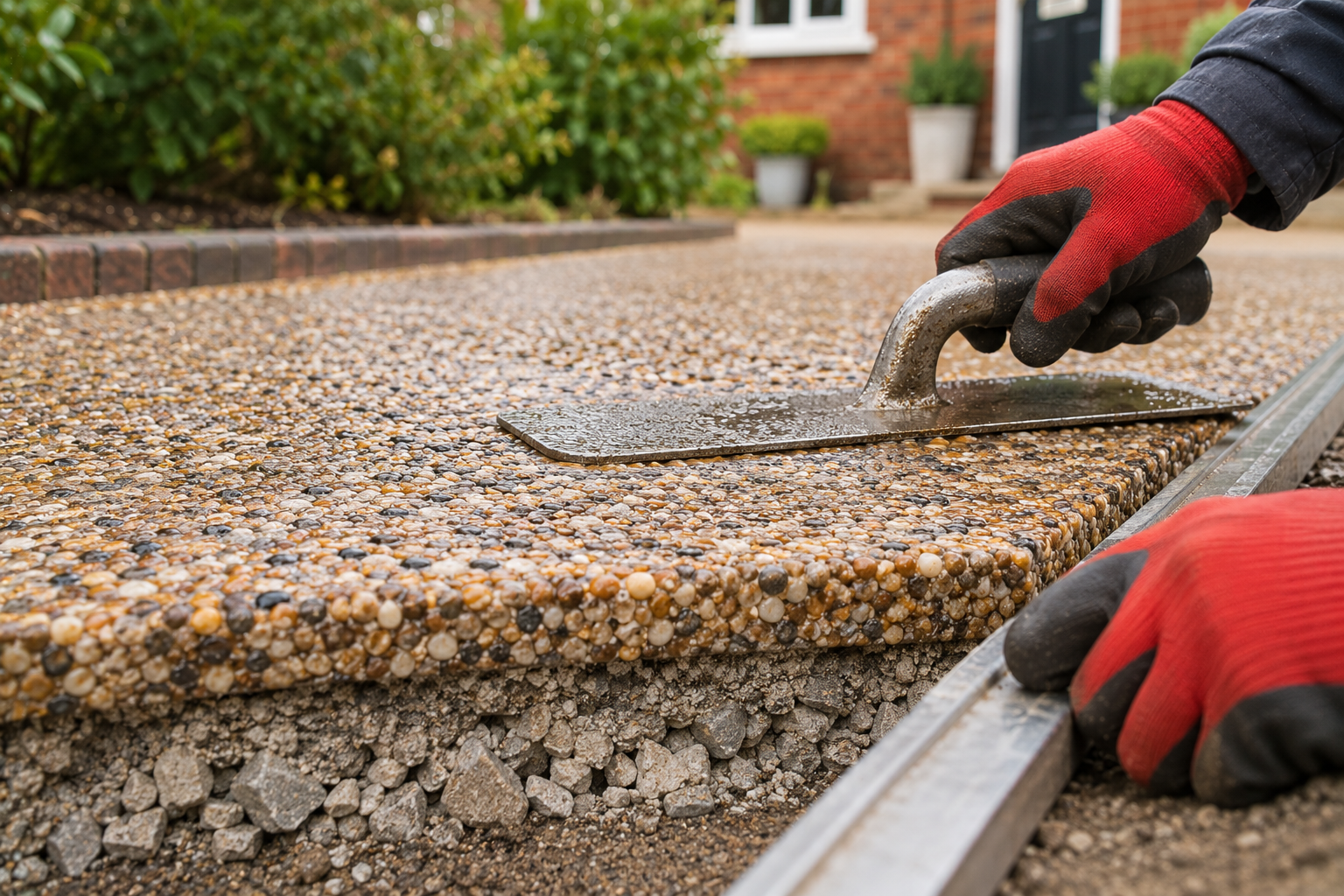
Resin bound surfacing is more labour-intensive and more skilled. The aggregate and resin are mixed in measured batches and trowelled by hand to a consistent depth, while tarmac is laid by machine and rolled, often in a day or two. The materials are pricier too, since you’re paying for kiln-dried decorative stone and a UV-stable resin. That’s the main reason for the gap.
A Way to Narrow It
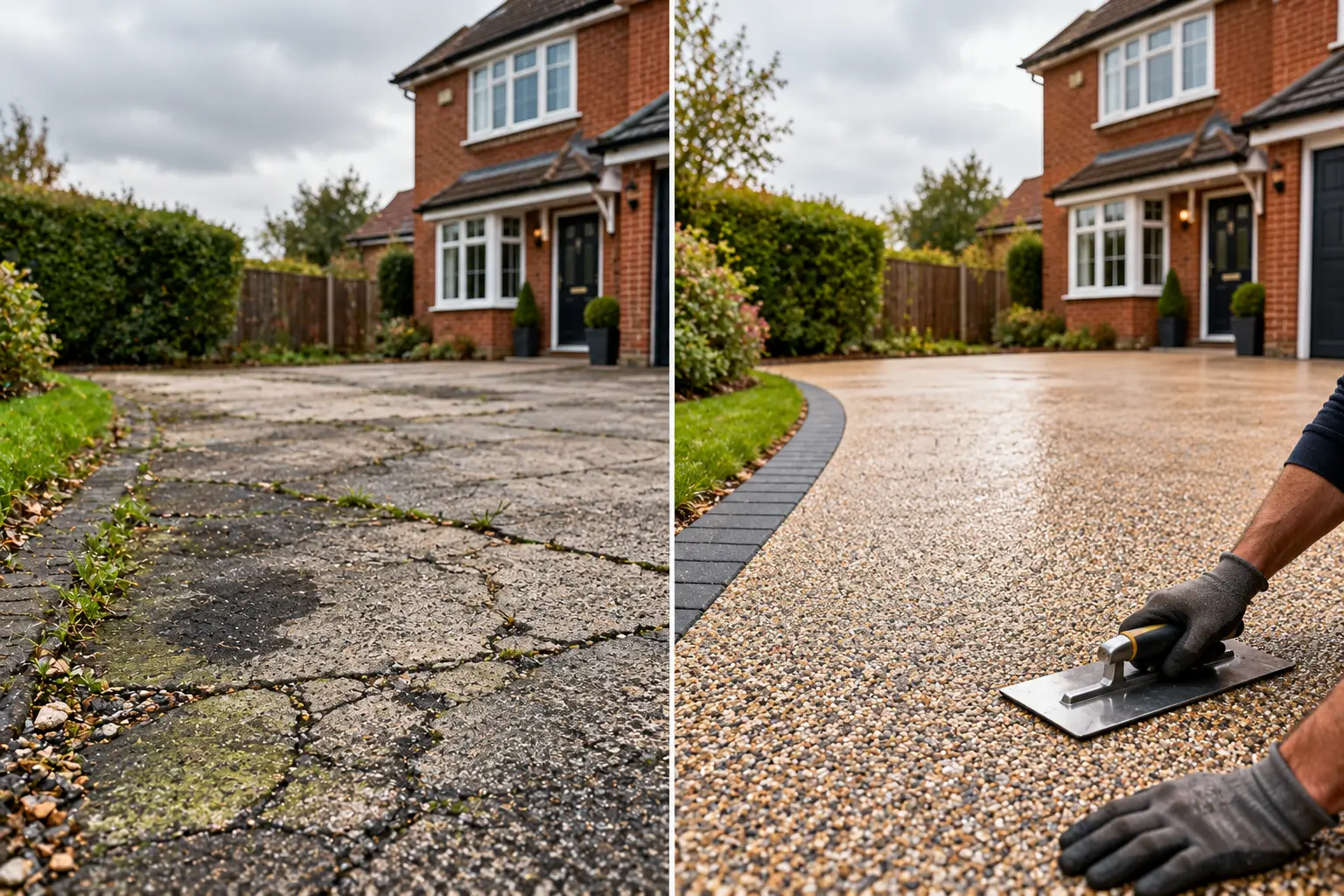
If your existing tarmac or concrete is in good, stable condition, resin can sometimes be laid directly over it, which avoids the cost of full excavation and a new base. That can reduce the bill considerably, though it only works where the base is sound. Cracked, sunken or poorly draining surfaces need to be repaired or removed first, or those problems will eventually show through the new finish.
Appearance and Design Choice
Tarmac Is Functional
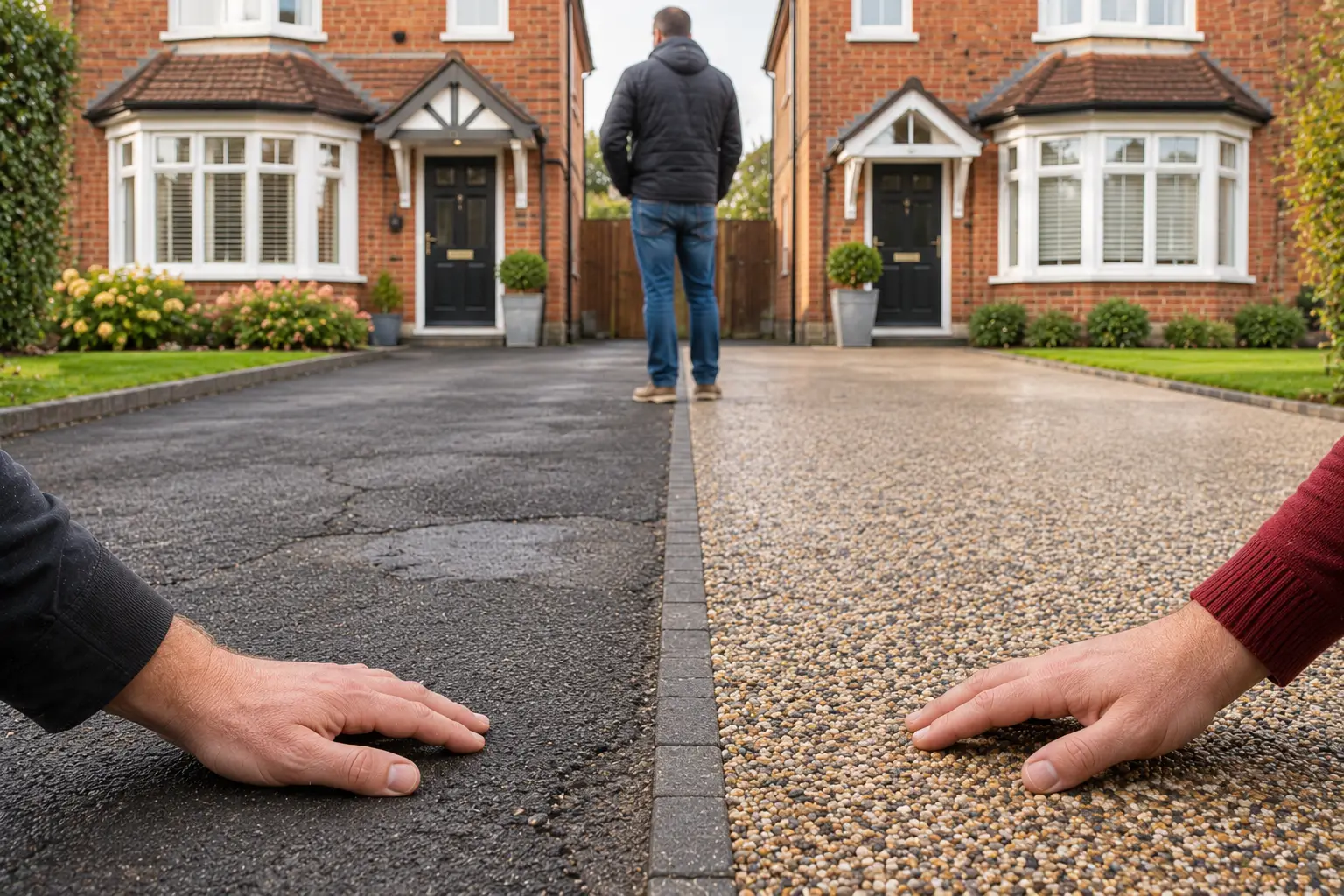
Fresh tarmac looks clean and uniform, but it comes in one colour, black, which fades to grey over the years. It does the job well, but it rarely adds much character to a frontage.
Resin Offers Real Design Freedom
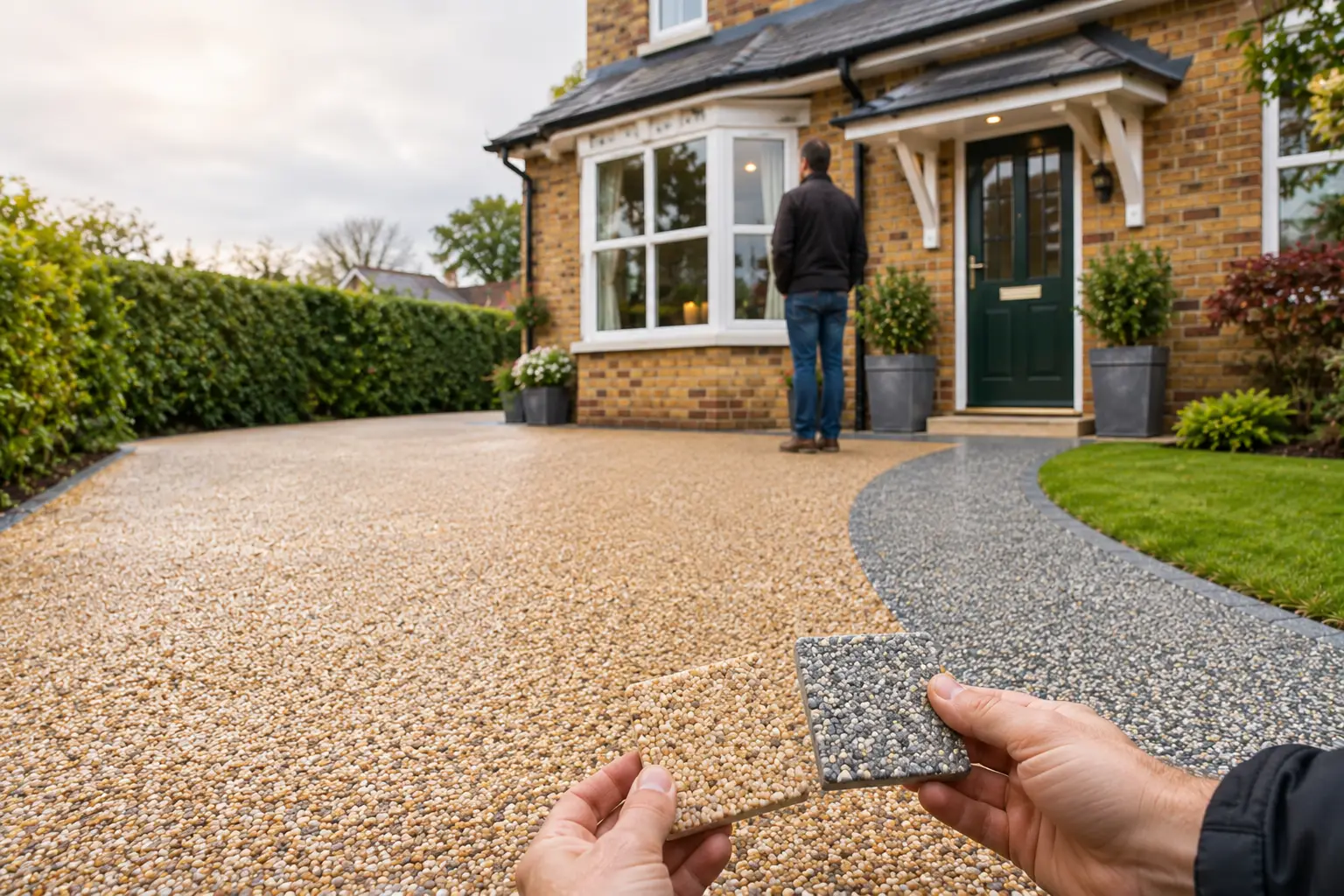
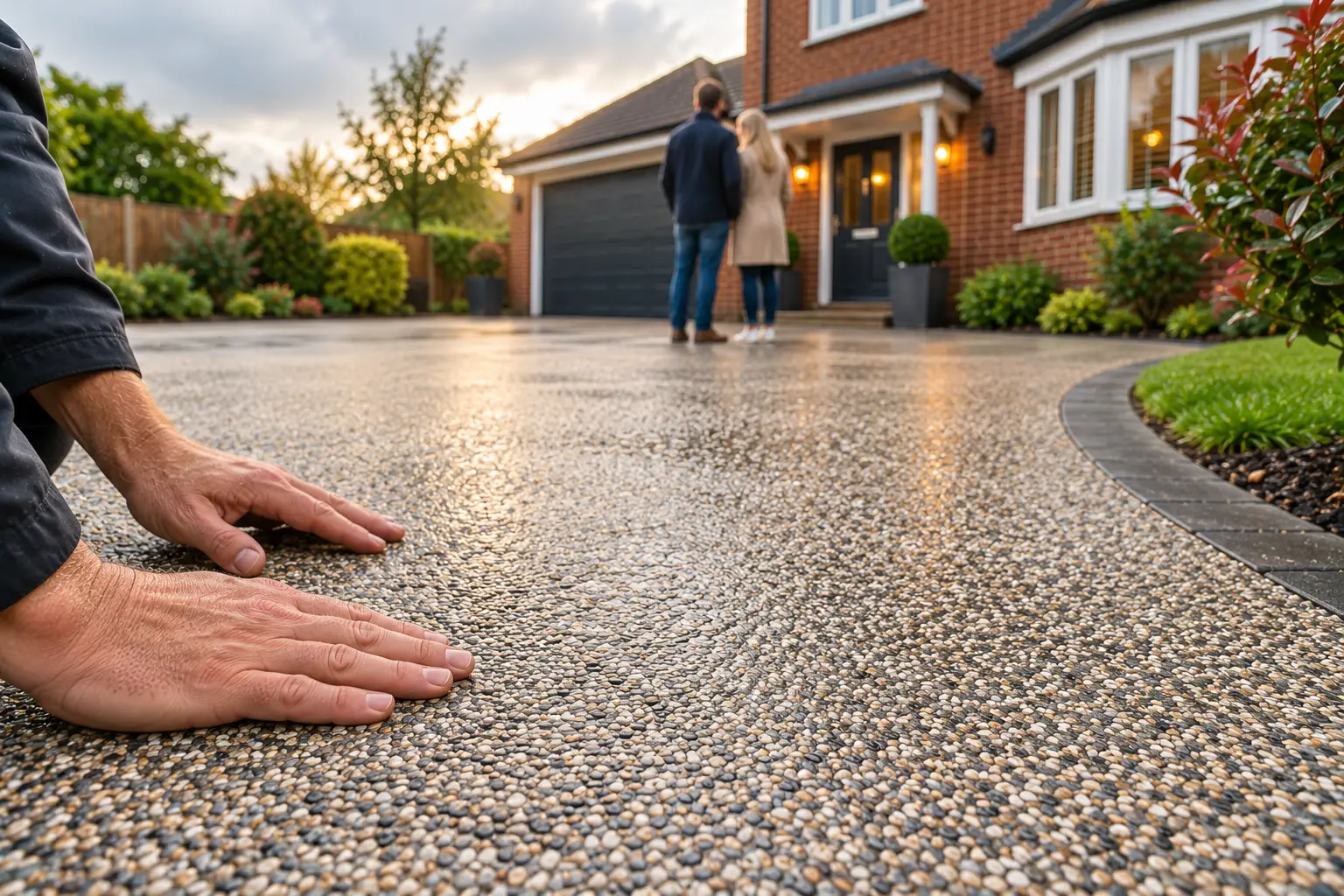
This is where resin earns much of its premium. You can choose from a wide range of natural stone colours and blends, from warm buffs and golden gravels to cool silvers and charcoals, and you can add borders, two-tone designs and contrasting paths. Matching the driveway to your brickwork, roof and front door is something tarmac simply can’t offer, and it can make a noticeable difference to kerb appeal.
How Long Each Surface Lasts
Tarmac’s Realistic Lifespan
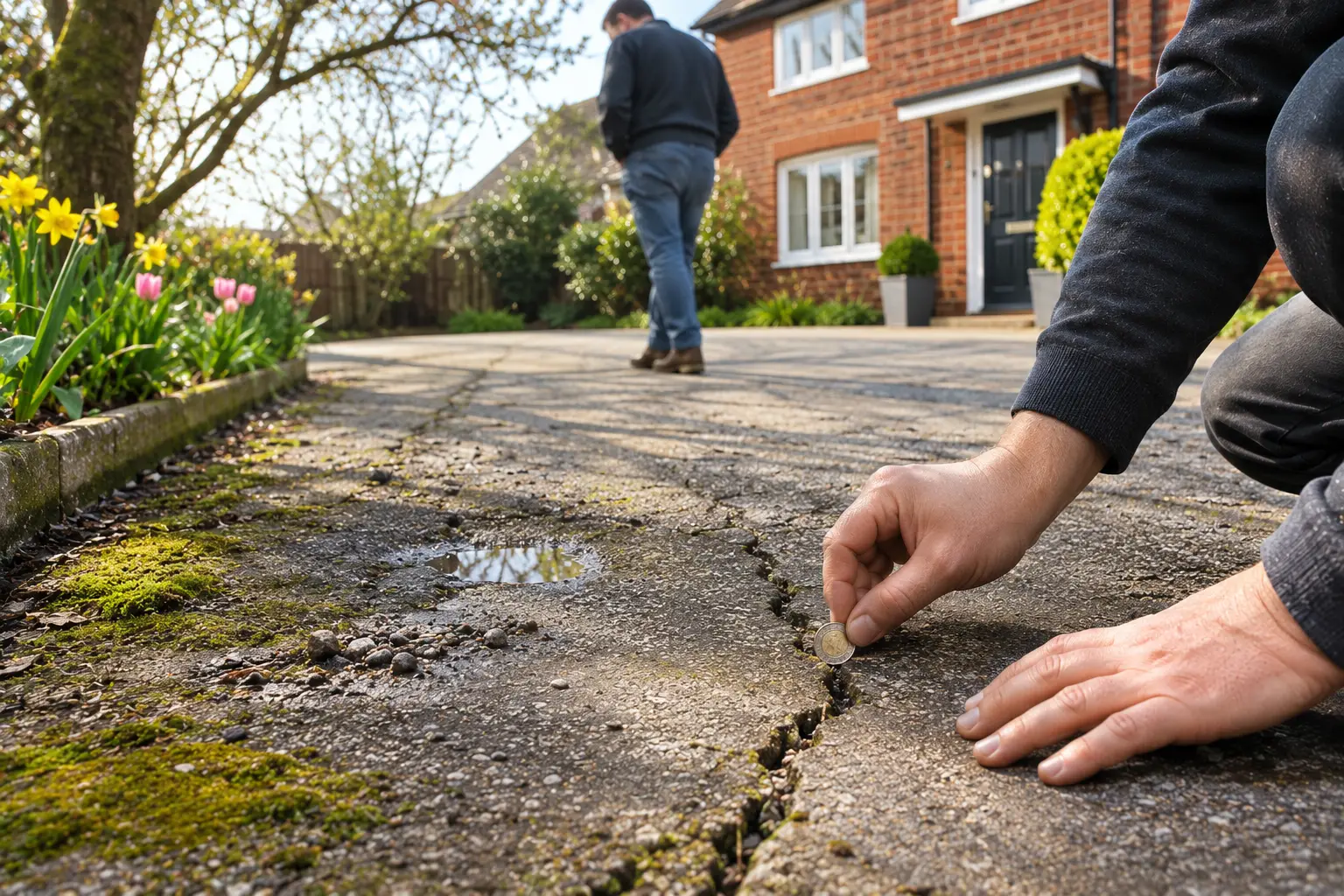
A well-laid tarmac driveway commonly lasts around twelve to twenty years, depending on the quality of the base, the traffic it takes and how well it’s looked after. Over time it tends to crack, develop potholes at the edges and fade, particularly where water gets in and freezes.
Resin’s Realistic Lifespan
A properly installed resin bound driveway typically lasts fifteen to twenty-five years. The qualifier matters, because it’s only as good as the base and the installer. Skimped groundwork, a thin layer or the wrong resin can shorten that dramatically, which is why choosing a reputable installer matters more than the material itself.
What the Numbers Mean in Practice
Spread over its life, the annual cost gap between the two is smaller than the upfront gap suggests, especially once you factor in upkeep and the likelihood of resurfacing tarmac sooner. It won’t always work out cheaper, but it’s closer than the headline prices imply.
Maintenance and Upkeep
Tarmac Needs Periodic Attention
Tarmac is low-fuss in the early years, but it does benefit from resealing every few years to keep water out and slow down ageing. Cracks and potholes need patching, and oil and fuel can soften and stain the surface. Weeds can push through at edges and cracks too.
Resin Asks for Less
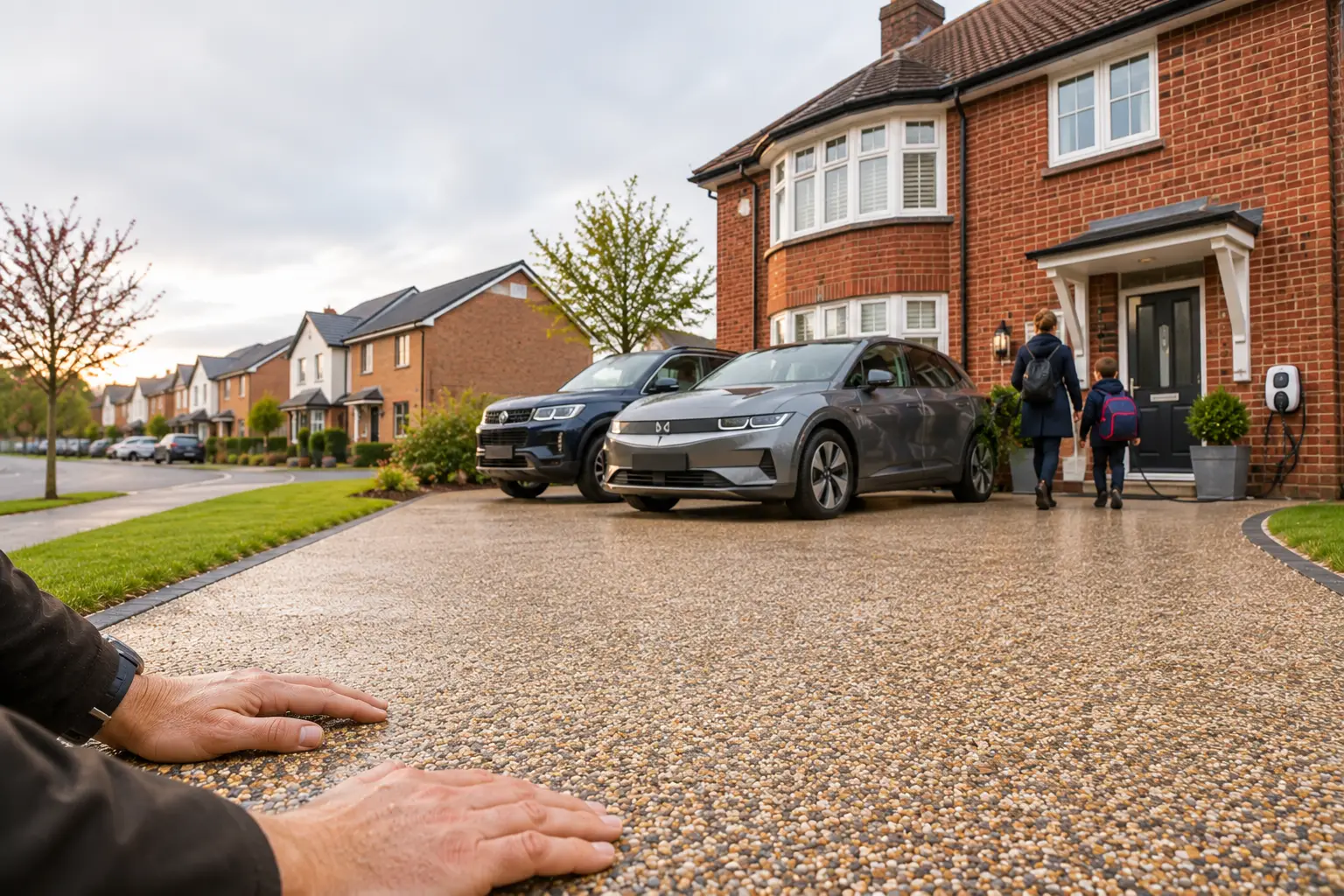
Resin bound surfacing has no joints for weeds to take hold in, and its stone-and-resin finish copes well with everyday staining. Regular upkeep amounts to an occasional sweep and a gentle rinse, with a little extra attention in shaded spots where algae can grow. If you’re tired of weekend maintenance, this is a genuine advantage.
Drainage, Planning and the Rules
Why Permeability Matters
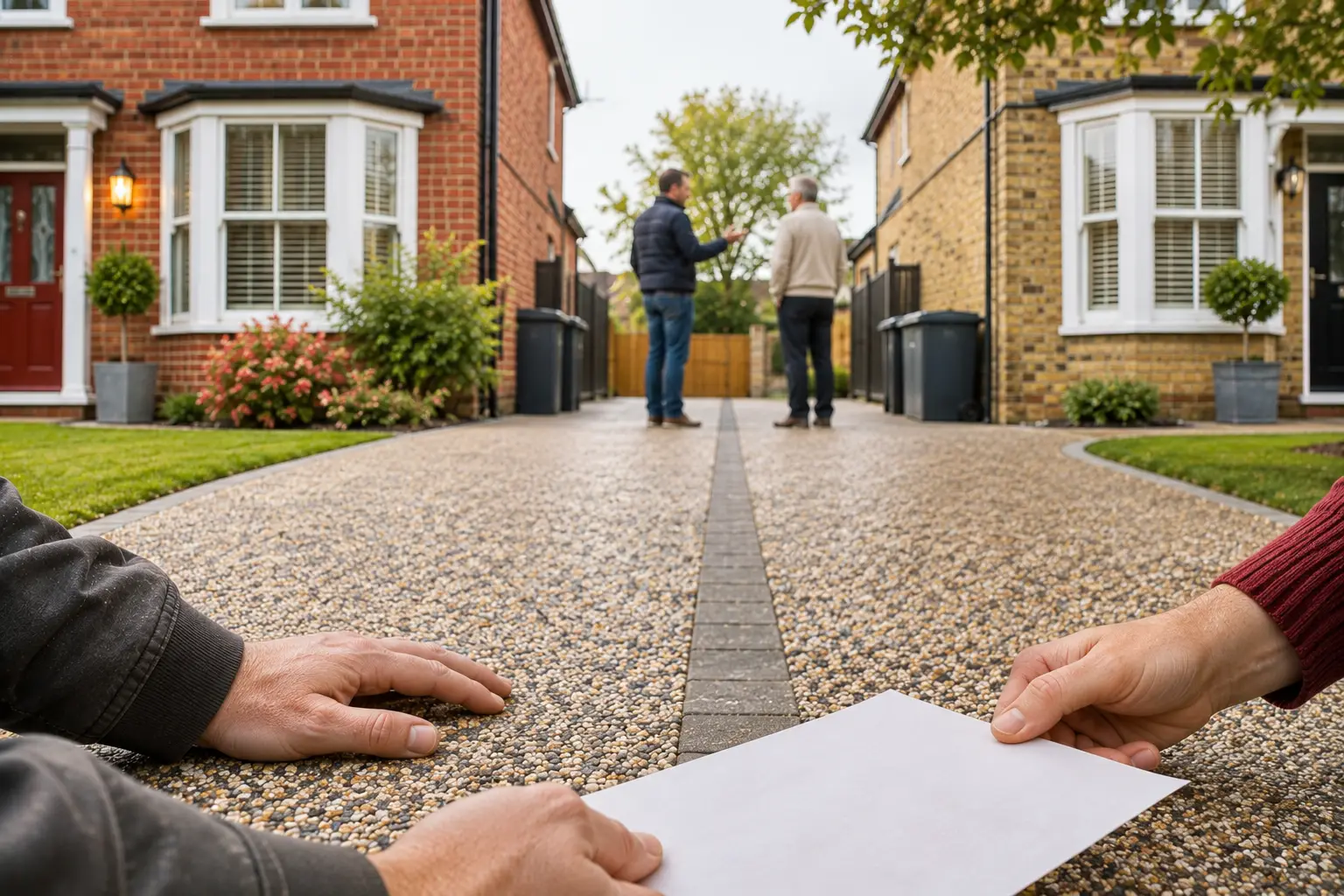
Standard tarmac is impermeable, so rainwater runs off rather than soaking through. Resin bound surfacing is permeable when laid over the right base, which helps prevent puddles and reduces pressure on drains. It also matters for planning. As explained by the Planning Portal, paving more than five square metres of a front garden with an impermeable surface generally needs planning permission unless the water drains to a permeable area within the property.
What This Means for Your Choice
With resin bound surfacing, a correctly built permeable system usually keeps you within permitted development. With standard tarmac, you’ll need to direct run-off to a lawn, border or soakaway, or apply for permission. Porous tarmac exists and can be compliant, but it’s a different product from the standard surface most people picture, and it tends to cost more.
Comfort, Safety and Everyday Use
Heat and Softening
Dark tarmac absorbs heat and, in very hot weather, can soften slightly, which can lead to tyre marks and indentations, especially where cars sit stationary. Resin bound surfacing is more stable in warm weather, though darker aggregates can feel warm underfoot.
Grip Underfoot
Both surfaces offer decent grip when new. Resin bound’s textured stone finish tends to hold its grip well in wet weather, while tarmac can become slick in damp, shaded areas where algae takes hold.
Repairs: One Area Where Tarmac Wins
It’s only fair to say that tarmac is generally easier and cheaper to patch. A damaged section can be cut out and filled without too much fuss, although the repair is usually visible. Resin bound repairs are possible, but matching the colour and texture seamlessly is harder, and it relies on the installer having the same aggregate blend available. If you expect heavy wear or frequent excavation for services, that’s worth weighing up.
Who Should Choose Which?
Tarmac Makes Sense If
Your budget is tight, the driveway is large or awkwardly shaped, you want the quickest possible installation, or you’re not planning to stay long. For a no-frills, hard-wearing surface at the lowest upfront price, it still does the job well.
Resin Makes Sense If
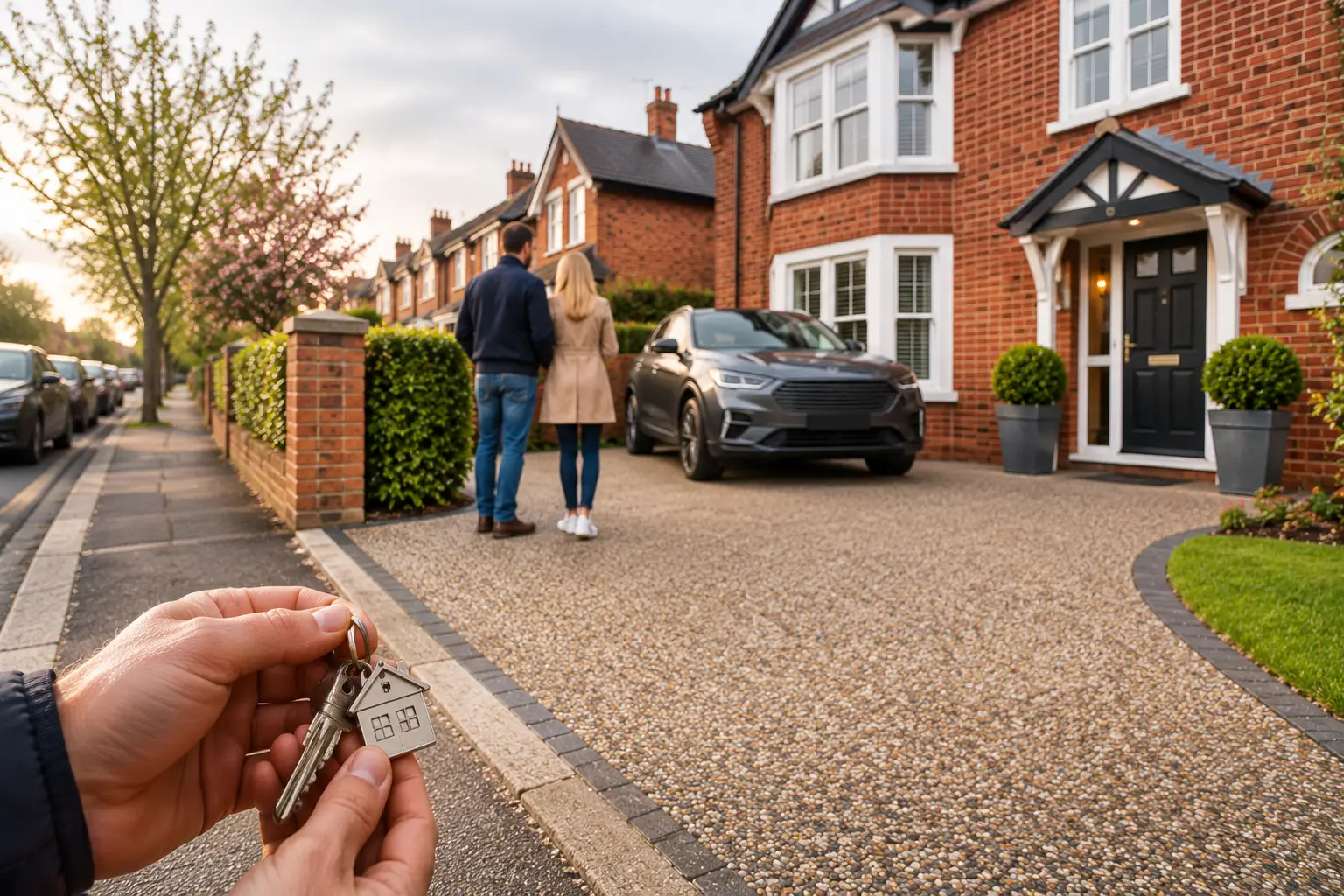
Appearance matters to you, you want something low-maintenance, you value natural drainage and straightforward planning compliance, and you plan to stay long enough to benefit from the longer lifespan. It’s particularly appealing if you’re improving kerb appeal ahead of a sale or giving a tired frontage a proper lift.
The Deciding Factor Is Installation Quality
Whichever you choose, the quality of the groundwork decides the outcome. Ask any installer about sub-base depth, drainage falls, edging and guarantees, and get the specification in writing. A well-laid tarmac drive will outlast a badly laid resin one, and vice versa.
Conclusion
Resin bound surfacing costs more upfront than tarmac, and there’s no way around that. What the extra money buys is a wider choice of colour and finish, lower maintenance, natural permeability and, in most cases, a longer lifespan. Tarmac keeps its place as the budget-friendly, quick and easily repaired option. If kerb appeal, low upkeep and drainage matter to you and you’re staying put, the premium is usually worth it. If you’re working to a strict budget or need a large area covered quickly, tarmac remains a sensible choice. A proper site survey and a couple of detailed quotes will tell you what the difference really is for your property.
Frequently Asked Questions
Is a resin driveway more expensive than tarmac?
Yes, typically. Resin bound surfacing generally costs more per square metre than standard tarmac, though the exact gap depends on the aggregate, the groundwork needed and your location.
Which lasts longer, resin or tarmac?
A well-installed resin bound driveway commonly lasts fifteen to twenty-five years, compared with roughly twelve to twenty for tarmac, although installation quality has the biggest influence on both.
Can resin be laid over existing tarmac?
Sometimes. If the tarmac is stable, sound and draining properly, resin can often be laid over it, which can reduce costs. Damaged or sunken tarmac needs repair or removal first.
Does a tarmac driveway need planning permission?
It can. Impermeable surfaces over five square metres in a front garden generally need permission unless rainwater drains to a permeable area within the property. Resin bound surfacing laid over a permeable base normally avoids this.
Which is easier to maintain?
Resin bound surfacing is generally lower maintenance, with no resealing and no joints for weeds. Tarmac benefits from periodic resealing and patching as it ages.