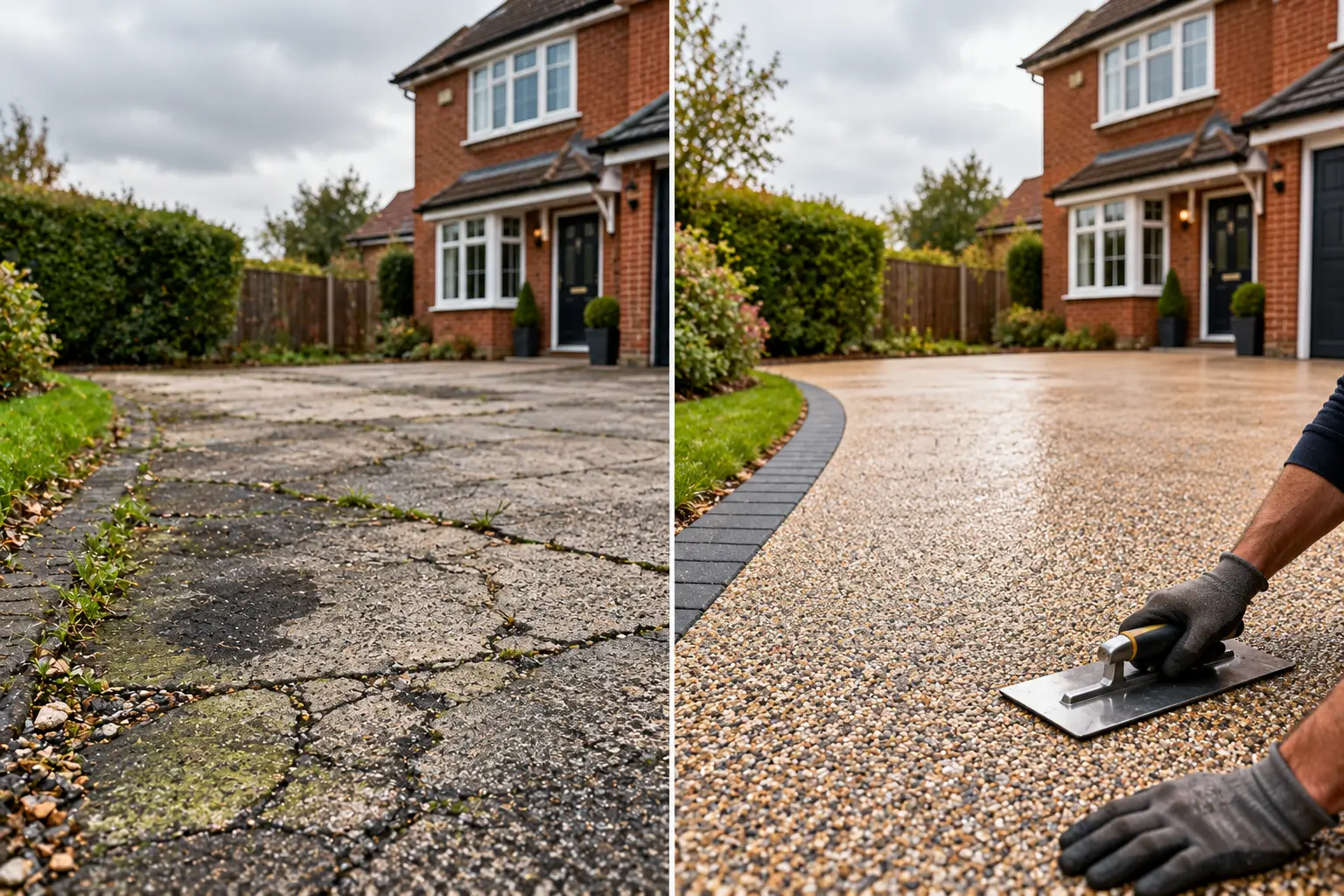
Spring has a way of exposing things. When the winter gloom lifts and the sun finally reaches the front of the house, every crack, stain and patch of moss on the driveway suddenly shows up in sharp relief. It’s a natural moment to ask whether the surface just needs a good clean or whether it’s reached the point where resurfacing makes more sense.
The difference matters, because the two jobs sit at opposite ends of the budget. Spend money resurfacing a driveway that only needed cleaning and you’ve wasted it. Keep patching one that’s genuinely failing and you’ll spend more over the years than a proper fix would have cost. This checklist walks through what to look for, in the order that tells you the most.
Why Spring Is the Right Time to Look
Winter is hard on any hard surface. Water seeps into small cracks, freezes, expands and pushes them wider, and the cycle repeats through every cold snap. By spring, any weakness in your driveway has had months to show itself. It’s also the best moment to book work, since the weather is settling, ground conditions are improving, and installers’ diaries tend to fill up fast as the sunny months approach.
Start With the Cracks
Hairline Cracks Versus Structural Ones
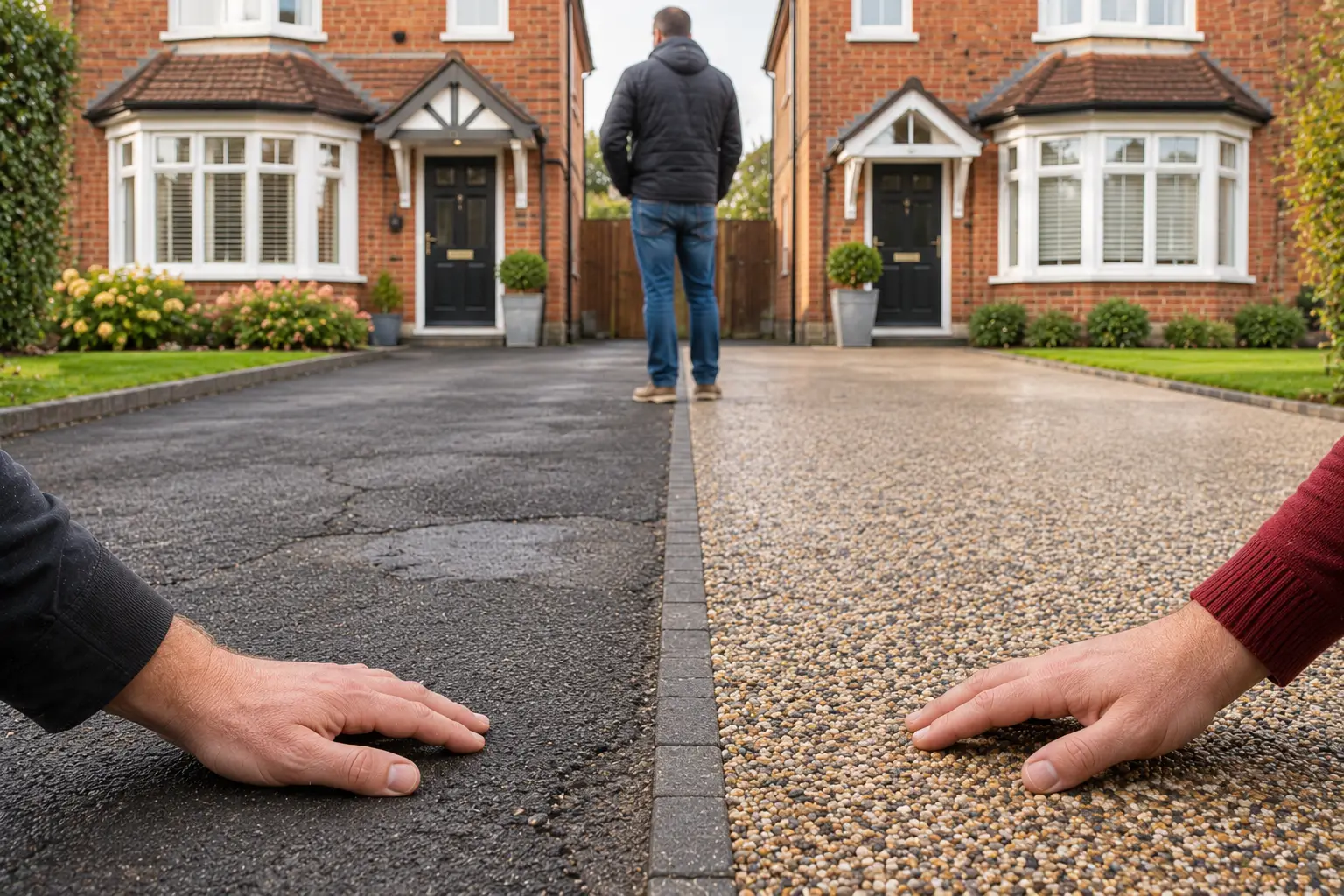
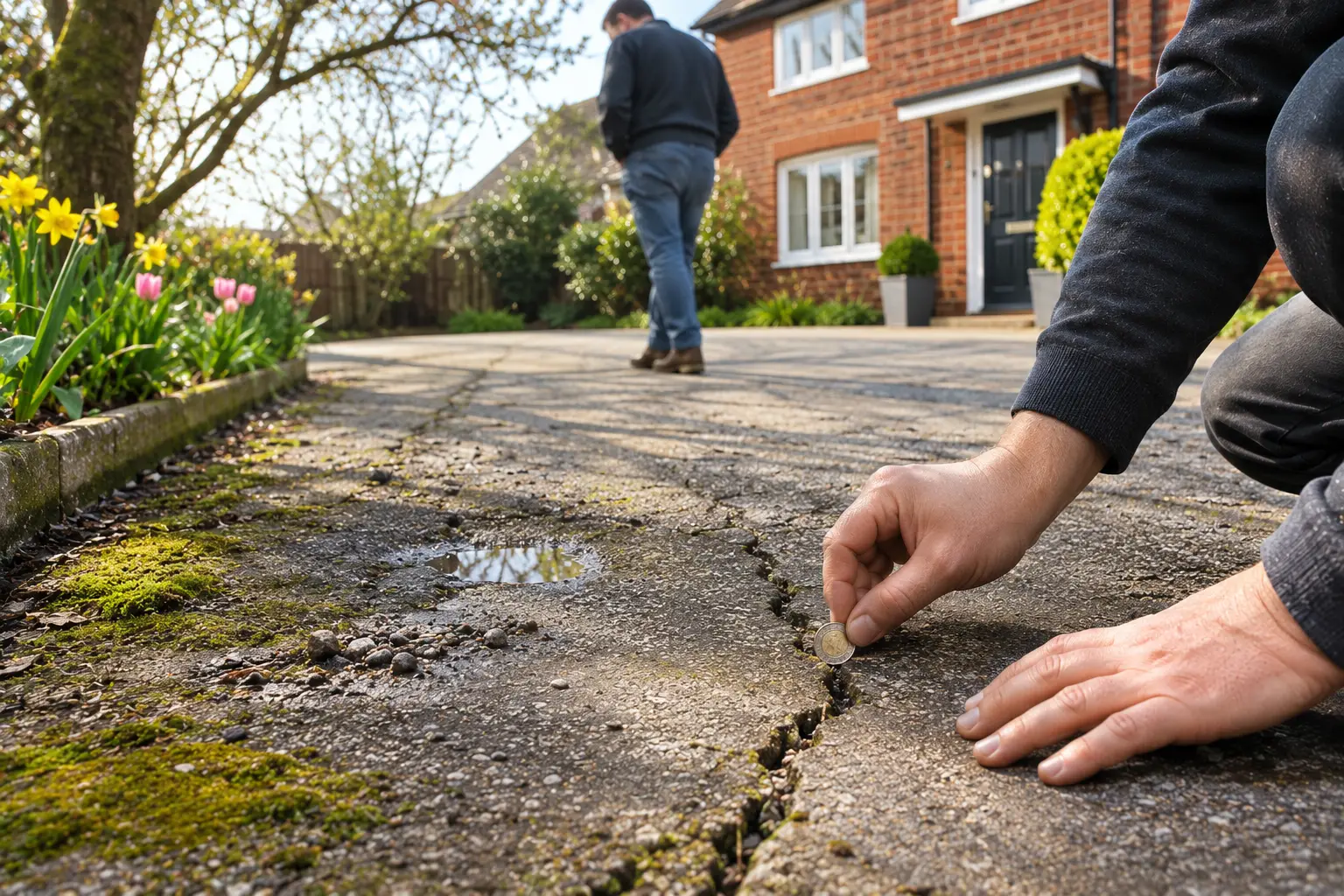
Not every crack means trouble. Fine surface lines that don’t extend deep or wide are common in older concrete and tarmac and can often be sealed or repaired. What you’re looking for are cracks wide enough to fit a coin into, cracks running in long connected lines, or networks of cracking that resemble crazy paving. These suggest the base underneath has moved or failed, and surface repairs won’t fix a problem that starts below.
Why Cracks Keep Coming Back
A crack that’s been filled and reappears within a season or two is telling you something. It usually means the sub-base is unstable or water is getting beneath the surface and doing damage each winter. At that point, the question stops being how to patch the crack and becomes whether the whole driveway needs rebuilding from the foundations up.
Check for Sinking, Dips and Uneven Patches
Walk the Whole Surface Slowly
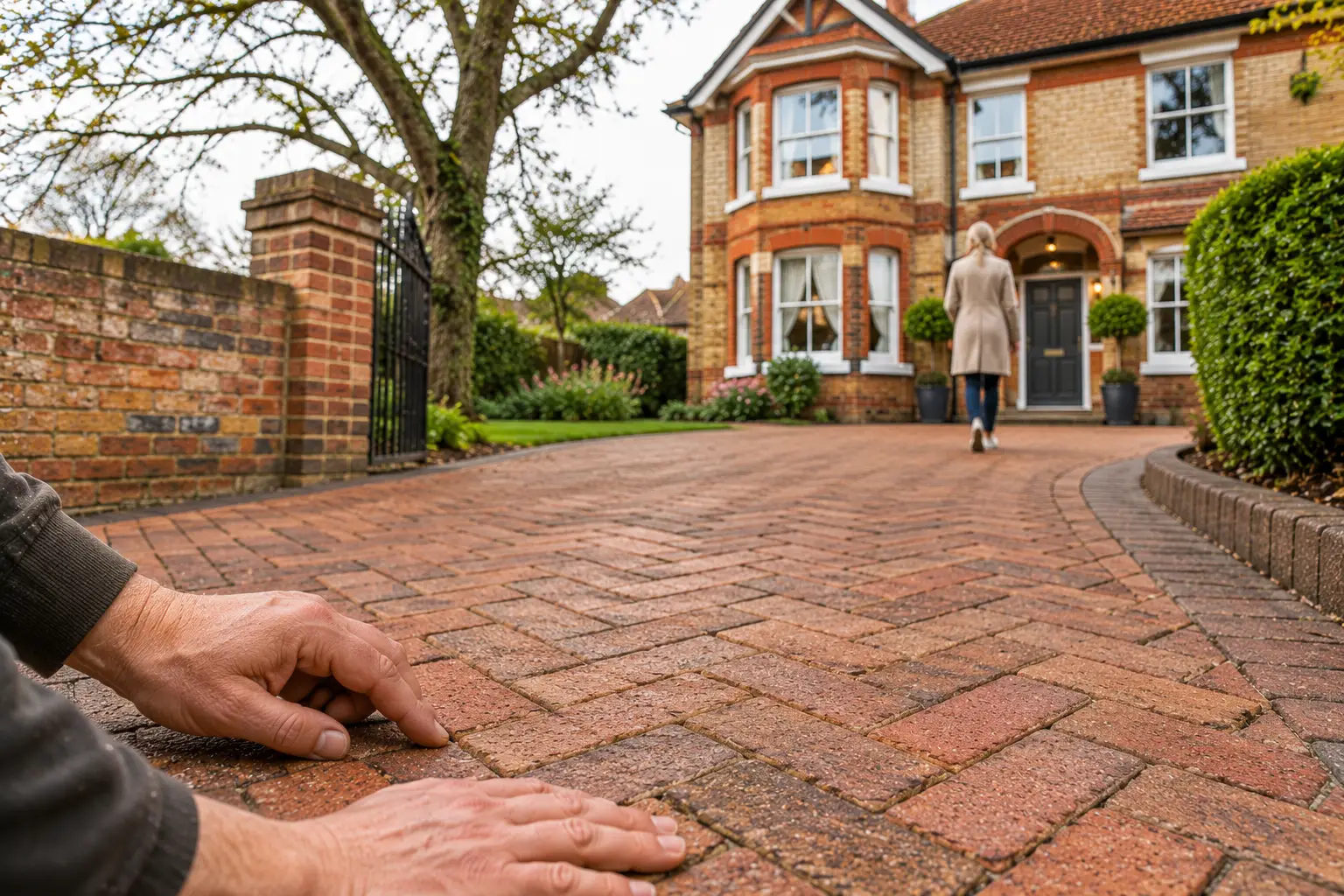
Run your eye along the driveway from a low angle, and then actually walk it. Dips where the wheels usually sit, raised humps near trees, and sections that feel spongy or hollow underfoot all point to subsidence or a poorly compacted base. Block paving is particularly prone to this, with individual blocks sinking or tilting as the bedding layer shifts.
Trip Hazards Are More Than a Nuisance
An uneven driveway isn’t just unattractive. A lifted edge or a sunken section is a genuine trip risk, especially for children, older relatives and anyone carrying shopping. If you’re seeing movement like this, it’s worth taking seriously rather than putting off for another year.
Look Closely at Drainage
Where Does the Water Go?
The next time it rains, watch what the driveway does. Water should drain away steadily rather than sitting in puddles. Pooling in the same spots every time means the surface has settled or was laid without proper falls, and standing water speeds up almost every other problem on this list, from frost damage to algae growth.
Damp Patches That Never Seem to Dry
Even in dry spells, persistent dark, damp patches suggest water isn’t draining properly beneath the surface. That’s often a sign of a blocked or inadequate sub-base, and it’s something cleaning will never cure.
Check for Weeds, Moss and Algae
Surface Growth Isn’t Always a Resurfacing Problem
Green patches and moss are worth dealing with, but they don’t automatically mean your driveway needs replacing. The Royal Horticultural Society explains that algae and moss establish easily on hard surfaces in damp, shaded spots, and while they can make paving slippery, they don’t damage the material itself. Regular brushing and a careful clean will usually clear them, so try that before assuming the worst.
When Growth Points to a Deeper Issue
The picture changes if weeds keep pushing through cracks or joints despite repeated clearing, or if moss and algae return heavily in the same spot no matter how often you clean. That pattern points to poor drainage or failing joints underneath, and it’s a good sign you’ve moved beyond a maintenance problem.
Assess Loose Stones, Fading and Surface Wear
Loose or Shedding Surfaces
If you’re finding stones in the gutter, on the lawn or stuck in your tyre treads, the surface is losing its bond. That’s common with older gravel and thin resin bonded finishes, which tend to shed stone as they age. Once this starts in earnest, it usually gets worse rather than better, and patching rarely holds for long.
Colour Fade and Surface Breakdown
Fading on its own isn’t a failure, since sun and weather soften most outdoor finishes over the years. But widespread discolouration combined with a rough, crumbling or flaking texture, particularly on tarmac, suggests the surface has reached the end of its useful life.
Consider the Age of the Surface
Rough Lifespans by Material
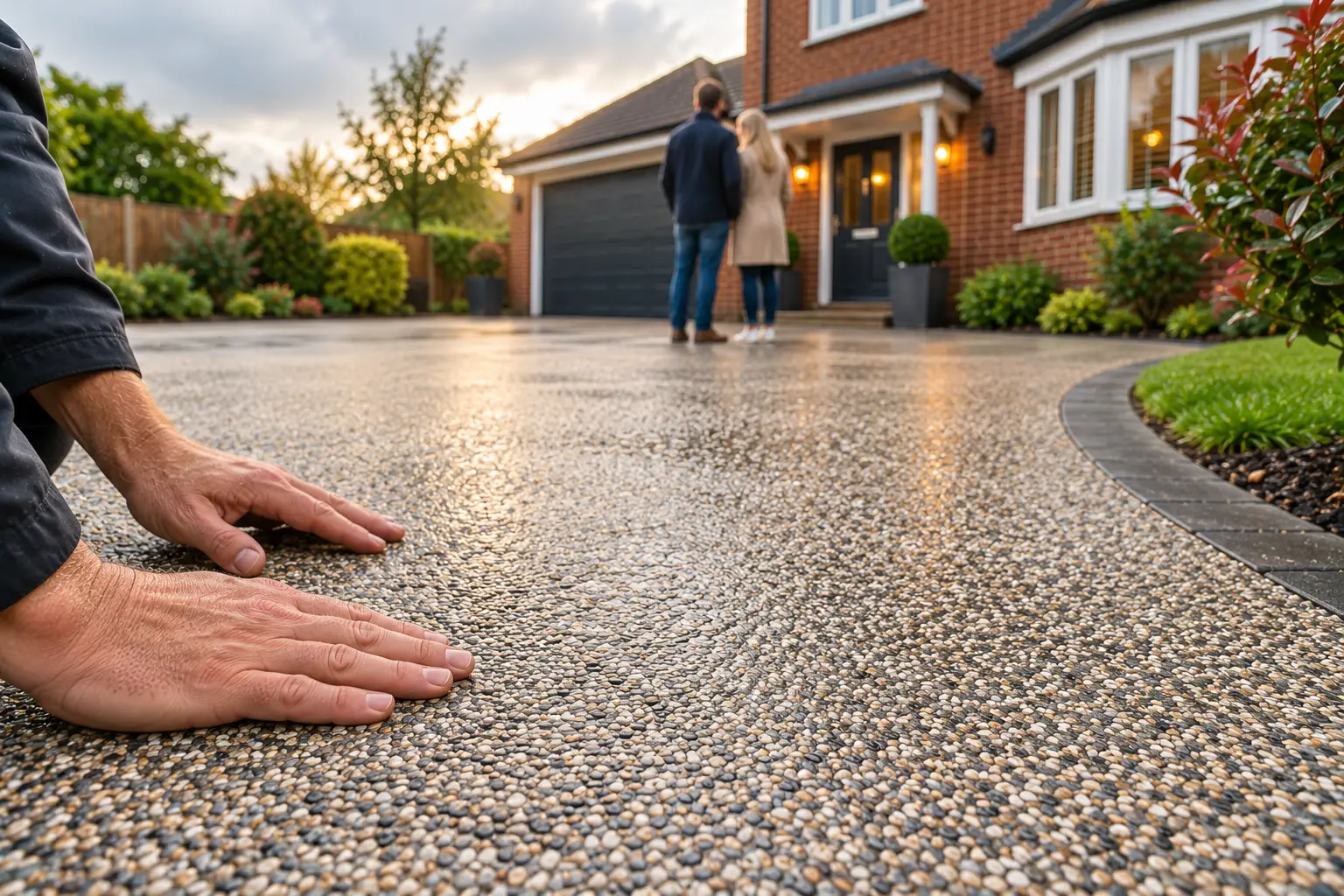
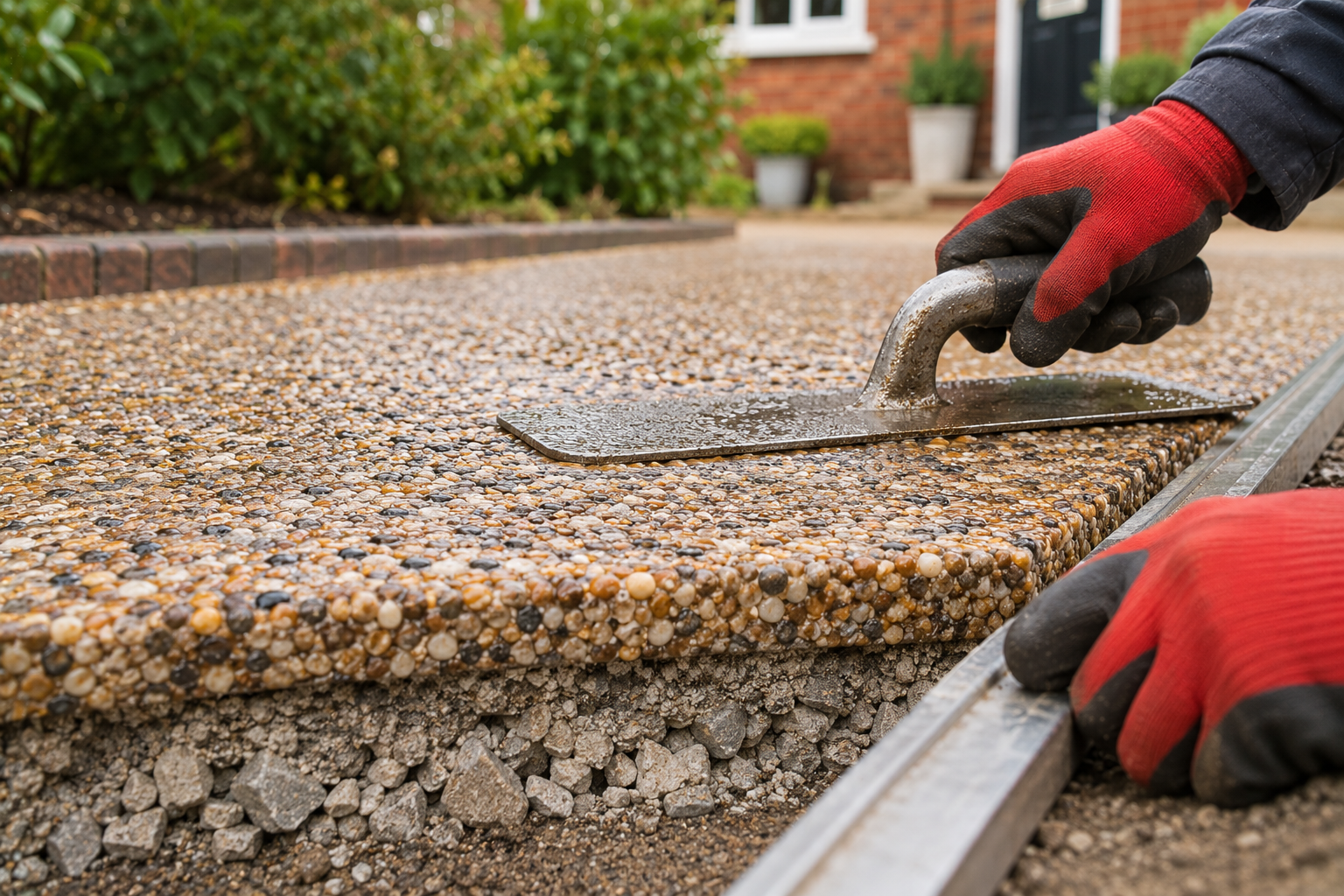
Age isn’t everything, but it gives helpful context. Tarmac typically lasts around ten to fifteen years before it deteriorates noticeably, and block paving can last much longer if it’s well maintained, though it demands regular upkeep. A properly installed resin bound driveway generally lasts fifteen to twenty-five years. If your driveway is approaching the upper end of its expected life and already showing several of the signs above, resurfacing is likely to be more economical than continuing to repair it.
Think About How the Driveway Fits Your Life Now
Has Your Use Changed?
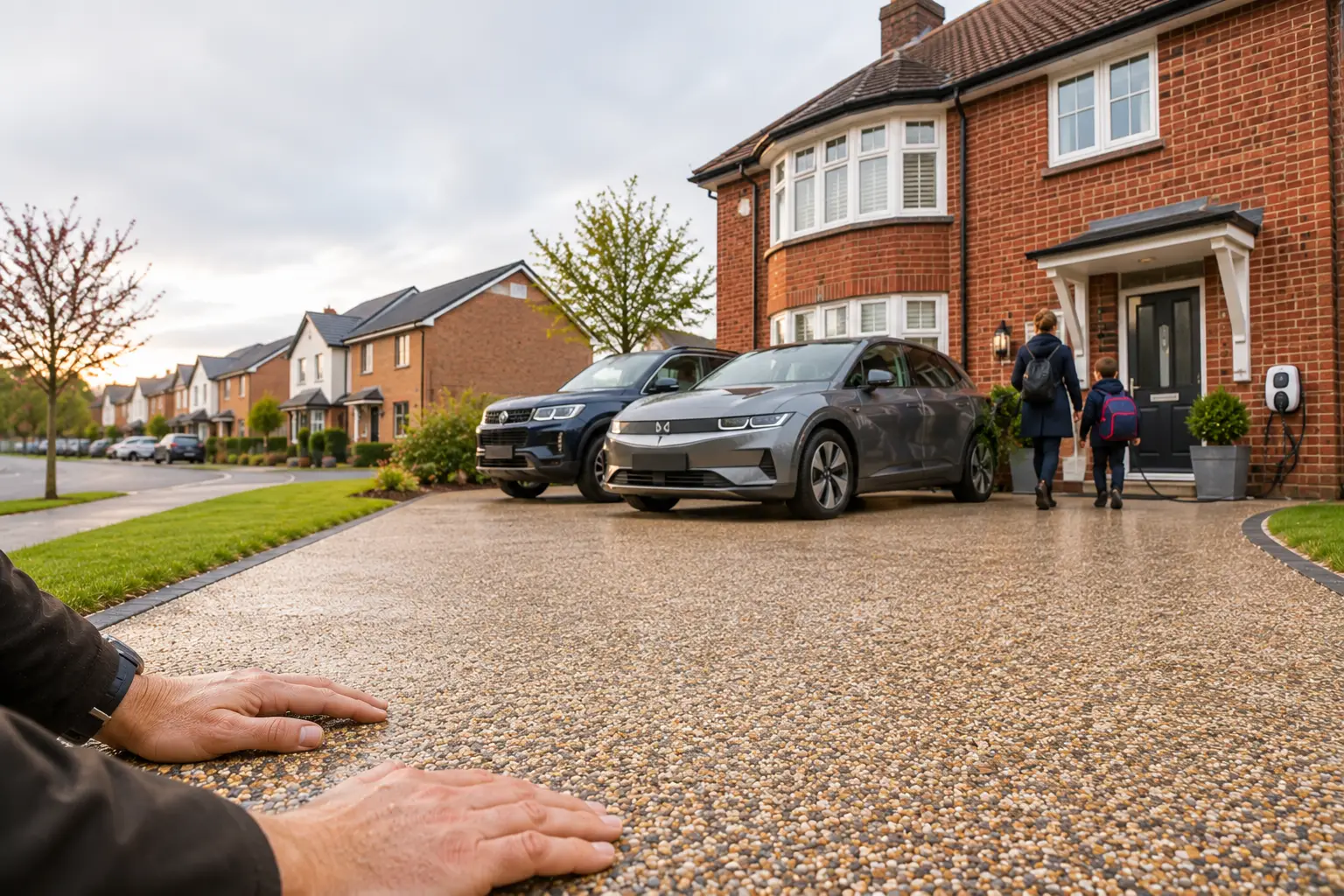
A driveway laid ten years ago may have been designed for a single car and occasional use. If you’ve added a second vehicle, started charging an electric car, or have teenagers and deliveries coming and going, the surface may be under more strain than it was ever built for.
Kerb Appeal and Future Plans
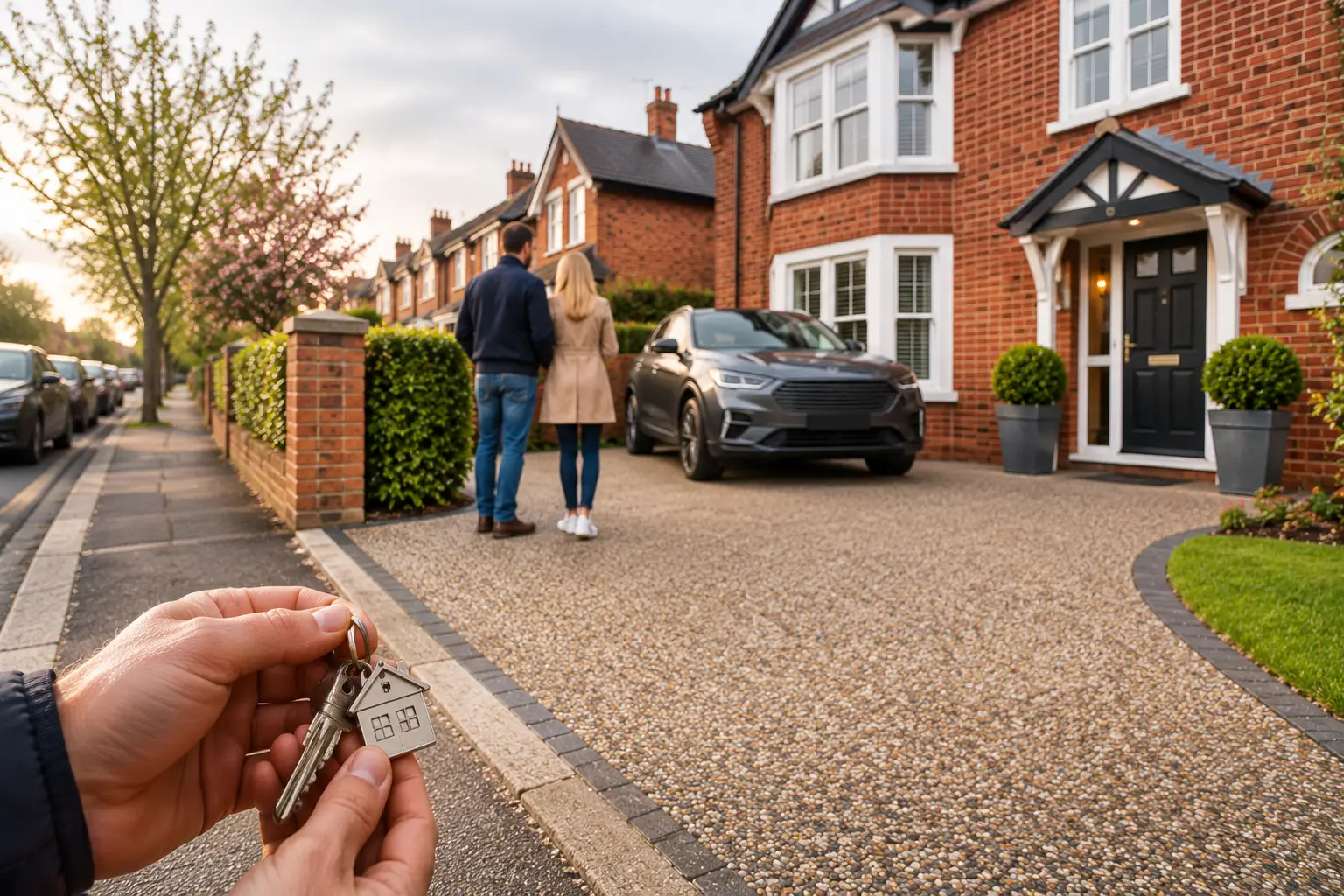
If you’re thinking of selling within a few years, the condition of the driveway matters more than many people realise. It forms part of a buyer’s first impression, and visible cracks, weeds and staining are easy to read as signs of neglect. Spring is a smart time to sort it, as it gives you the whole season to enjoy the improvement.
So, Should You Repair or Resurface?
When a Repair Is Enough
If the structure is sound and you’re dealing with minor surface cracks, light staining or a bit of moss, cleaning and localised repairs will usually do the job and cost far less than resurfacing. The key sign is that the problems are cosmetic and haven’t spread.
When Resurfacing Makes More Sense
Resurfacing is the better choice when you’re seeing several warning signs together: wide or recurring cracks, sinking, poor drainage and loose or crumbling surface. In that situation, repeated repairs cost more over time than a single, properly done job. A site survey will tell you whether the existing base can be reused or whether the old surface needs to come up completely, which makes a big difference to the final price.
A Quick Planning Reminder
If you do go ahead, remember that a replacement driveway generally needs no planning permission when it uses permeable surfacing, as set out by the Planning Portal. Surfaces over five square metres that aren’t permeable are treated differently, so it’s worth confirming the details before work starts.
Conclusion
A spring check takes less than half an hour and can save you a surprising amount of money. Work through the cracks, the dips, the drainage, the surface growth, the loose stone and the age of the driveway, and you’ll have a fairly clear idea of whether you’re looking at a clean-and-patch job or a genuine case for resurfacing. If you tick several of the warning signs, don’t wait for next winter to make them worse. A proper site survey will tell you exactly what’s needed, and booking early in the year means you can have the work finished well before summer.
Frequently Asked Questions
How do I know if my driveway needs resurfacing or just repairing?
If the problems are minor and cosmetic, such as surface staining or a few hairline cracks, repair and cleaning will usually do. Wide or recurring cracks, sinking, standing water and loose, crumbling surfaces suggest a failing base and point towards resurfacing.
Is spring a good time to resurface a driveway?
Yes. Weather is settling, ground conditions are improving and the surface has plenty of time to cure before the busy summer months, although installers’ diaries do fill up quickly.
Can I resurface over a cracked driveway?
Only if the cracking is minor and the base is stable. Wide or moving cracks will usually reflect through a new surface, so they need to be properly repaired or the old surface removed first.
Will moss and algae mean I have to replace my driveway?
Not on their own. They’re common on damp, shaded surfaces and can normally be removed by brushing and gentle cleaning. Persistent regrowth in the same spots may suggest a drainage issue worth investigating.
How long does a resurfaced driveway last?
It depends on the material and installation quality, but a well-installed resin bound driveway typically lasts fifteen to twenty-five years with basic upkeep.