Ask most homeowners what decides whether a resin bound driveway lasts, and they’ll talk about colour, the installer’s reputation or the price per square metre. Hardly anyone mentions thickness. Yet the depth of that decorative surface layer, a measurement most of us never see once the job is finished, is one of the quiet technical details that separates a driveway that looks superb at twenty from one that cracks and sheds stones by year five.
The good news is that it isn’t complicated. Once you understand the basic logic behind resin bound layer thickness, you can read a quote with far more confidence and ask your installer sharper questions before any work begins.
What We Mean by “Thickness”
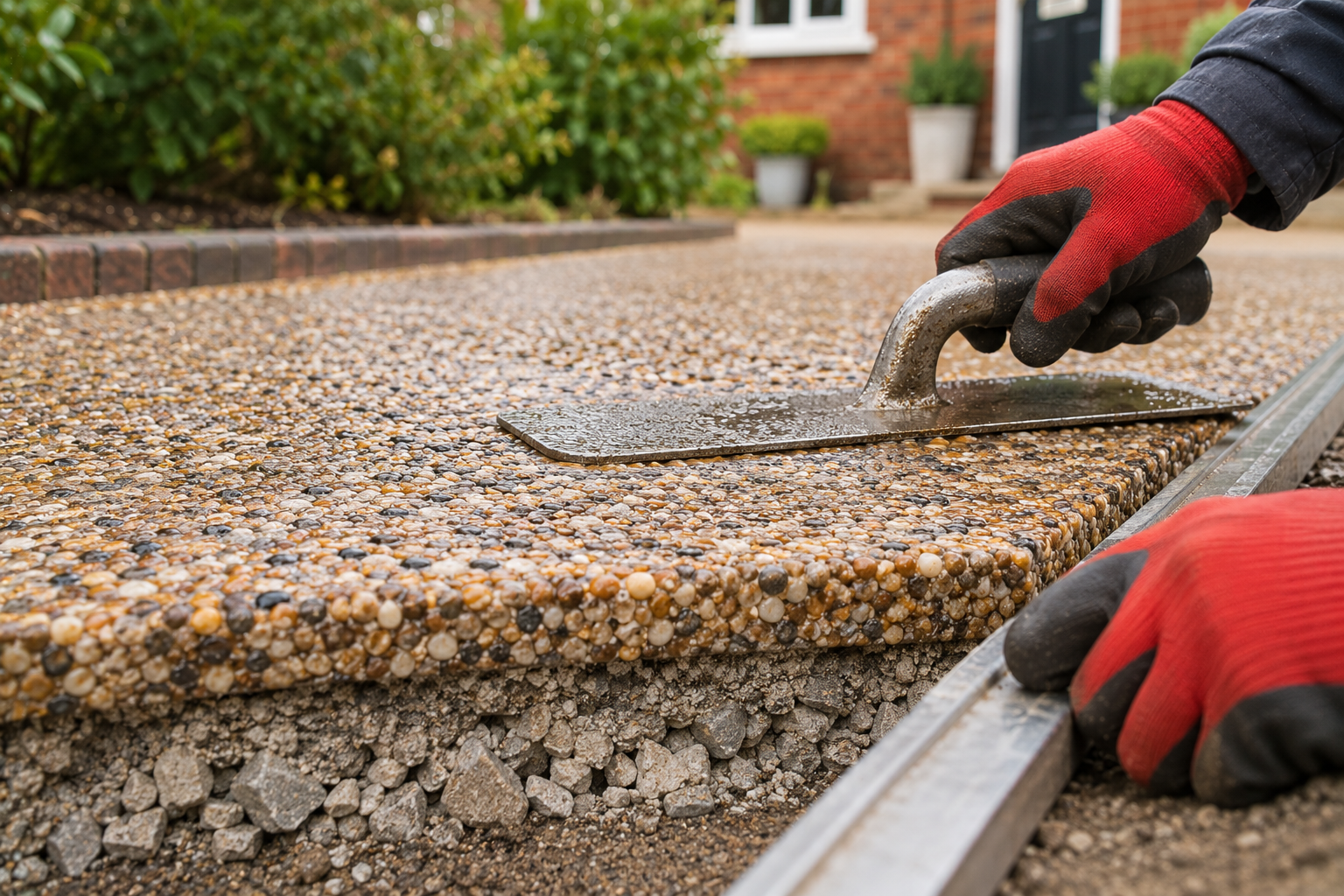
When people talk about resin bound thickness, they mean the depth of the stone-and-resin mix that’s trowelled on top of the base. That’s the visible, decorative layer, and it’s separate from the sub-base underneath, which provides the structural strength. Think of the sub-base as the foundation and the resin bound layer as the wearing surface. Both have to be right, but this guide focuses on the surface, because that’s where homeowners are most likely to be shortchanged without realising.
The Standard Depths You Should Expect
Driveways: Typically 15mm to 18mm
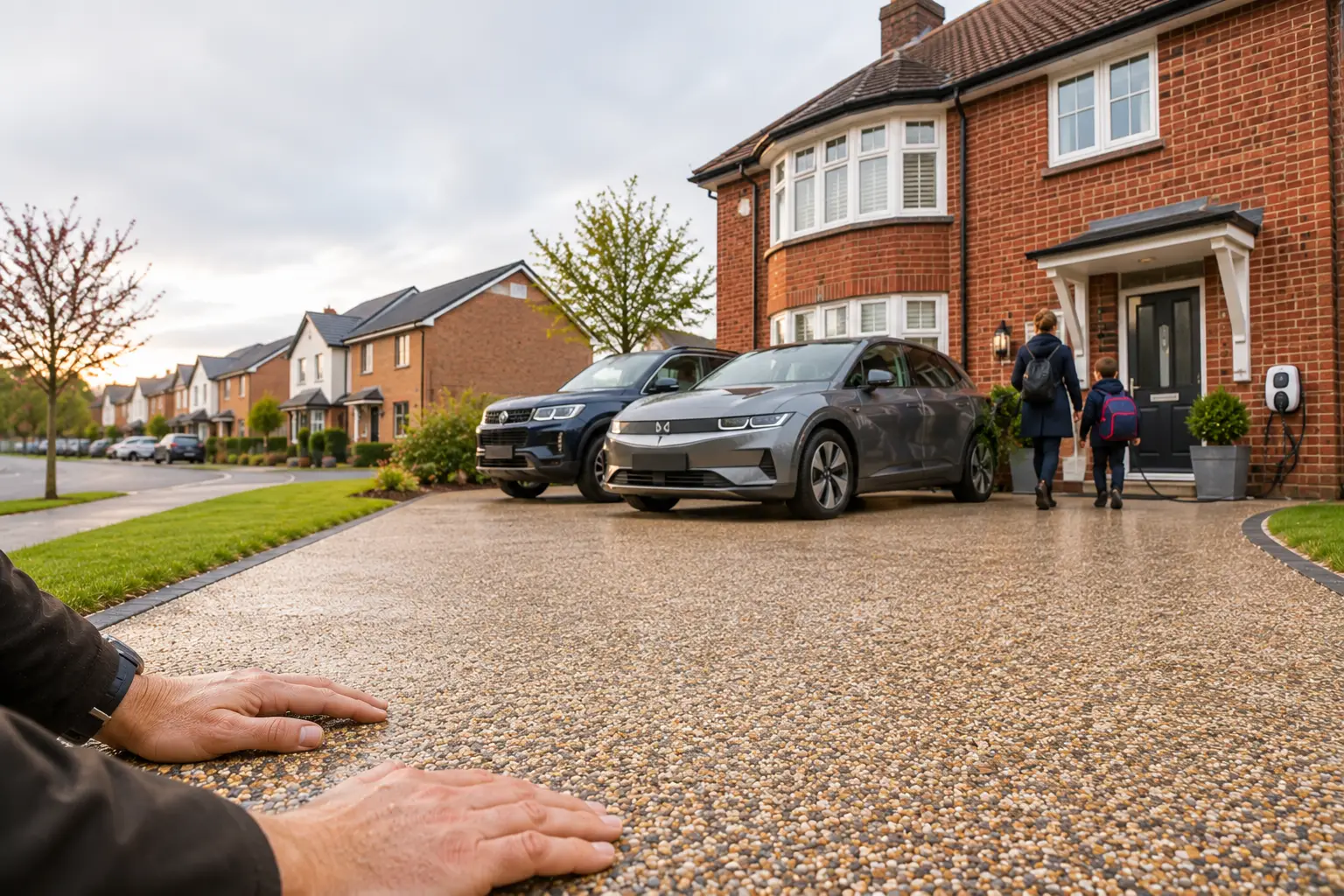
For a domestic driveway taking cars, the widely accepted range is roughly 15mm to 18mm, with 18mm the usual choice among experienced installers. Some specialists go as deep as 20mm when the driveway will see heavier use. This depth gives the surface enough body to cope with tyre pressure, turning wheels and the occasional delivery van without breaking up.
Paths and Patios: Typically 12mm to 15mm
Areas that only see foot traffic can be laid thinner, normally between 12mm and 15mm. A garden path or patio doesn’t have to withstand the weight and twisting forces of a vehicle, so extra depth adds cost without adding much benefit. This is a sensible place to save money, which is one reason a patio or path quote often looks noticeably cheaper per square metre than a driveway.
Heavy-Duty Areas: Deeper Still
Commercial car parks, access roads and anywhere that carries frequent heavy vehicles may call for a deeper layer, sometimes up to around 24mm, alongside a more robust sub-base. If you’re resurfacing a shared driveway or one used by larger vehicles, it’s worth asking whether the standard specification is enough.
The Three-Times Rule Explained
How Stone Size Sets the Minimum Depth
There’s a simple rule of thumb that explains most of this: the layer should be at least three times as thick as the largest stone in the mix. So if your aggregate runs up to 6mm, you need at least 18mm of material. If it’s a finer 3mm blend, you can get away with a thinner layer, though most installers still stick to a driveway-appropriate minimum.
The logic is straightforward. The resin acts as the glue holding each stone in place. If the layer is too thin relative to the stone size, the stones sit proud of the resin, there isn’t enough binder around them, and they start working loose under traffic. Too deep and you’re simply using more material than you need.
Why This Matters When You Choose a Colour
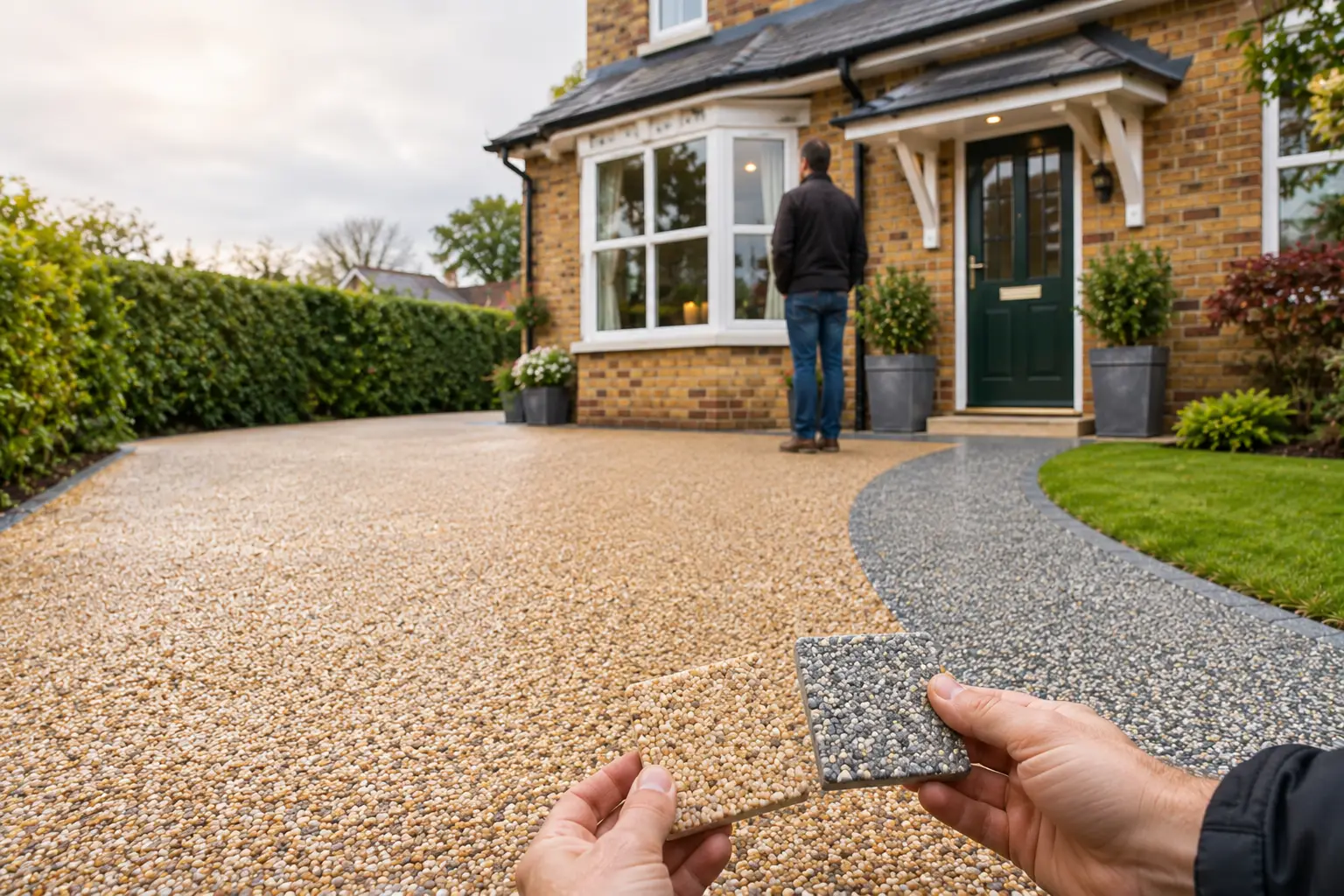
Different aggregate blends use different stone sizes, which means your colour choice can influence the depth your installer should lay. Chunkier, more textured blends need more thickness than fine, smooth ones. A good installer will factor this in rather than applying the same depth to every job.
What Happens When the Layer Is Too Thin
Cracking and Stone Loss
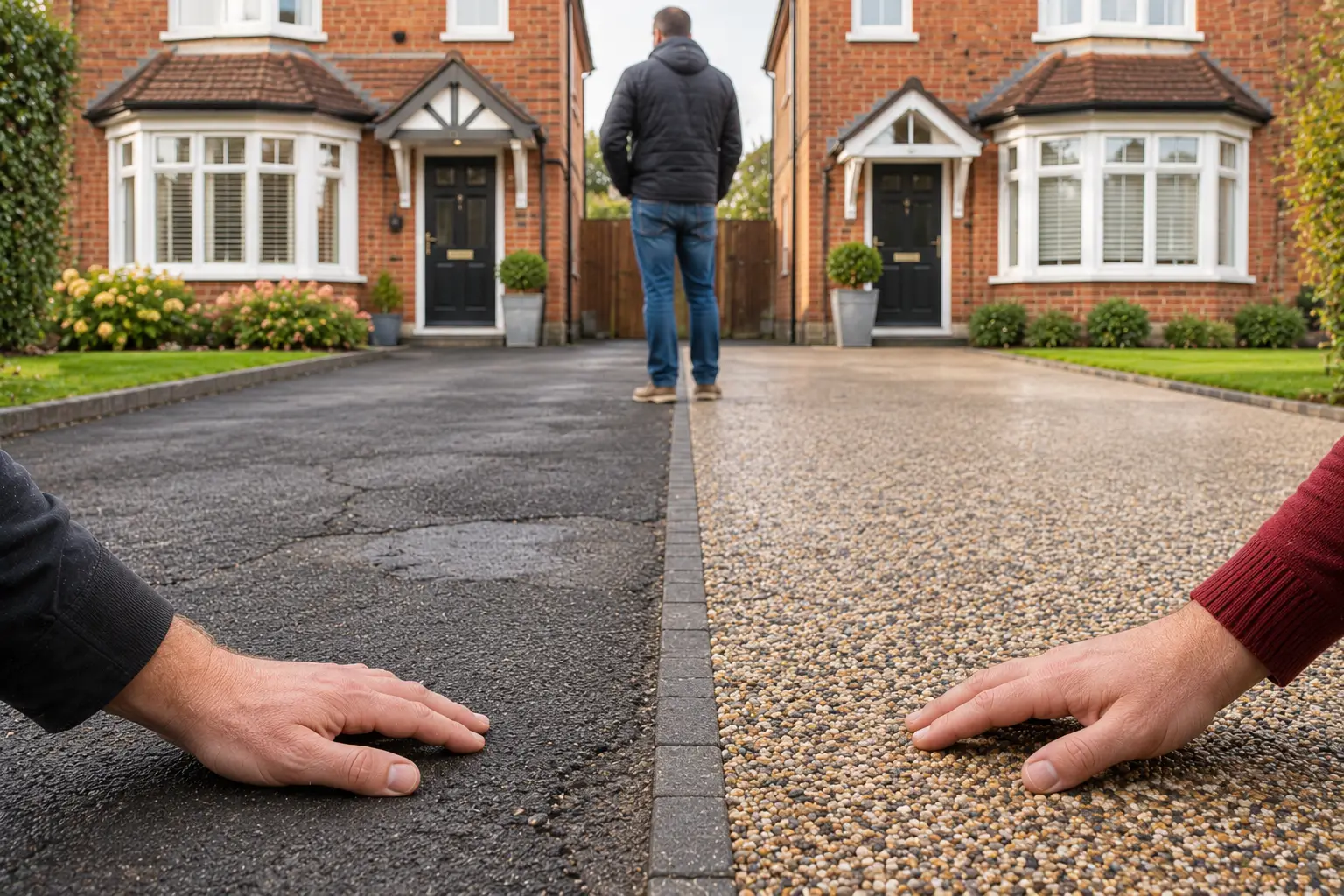
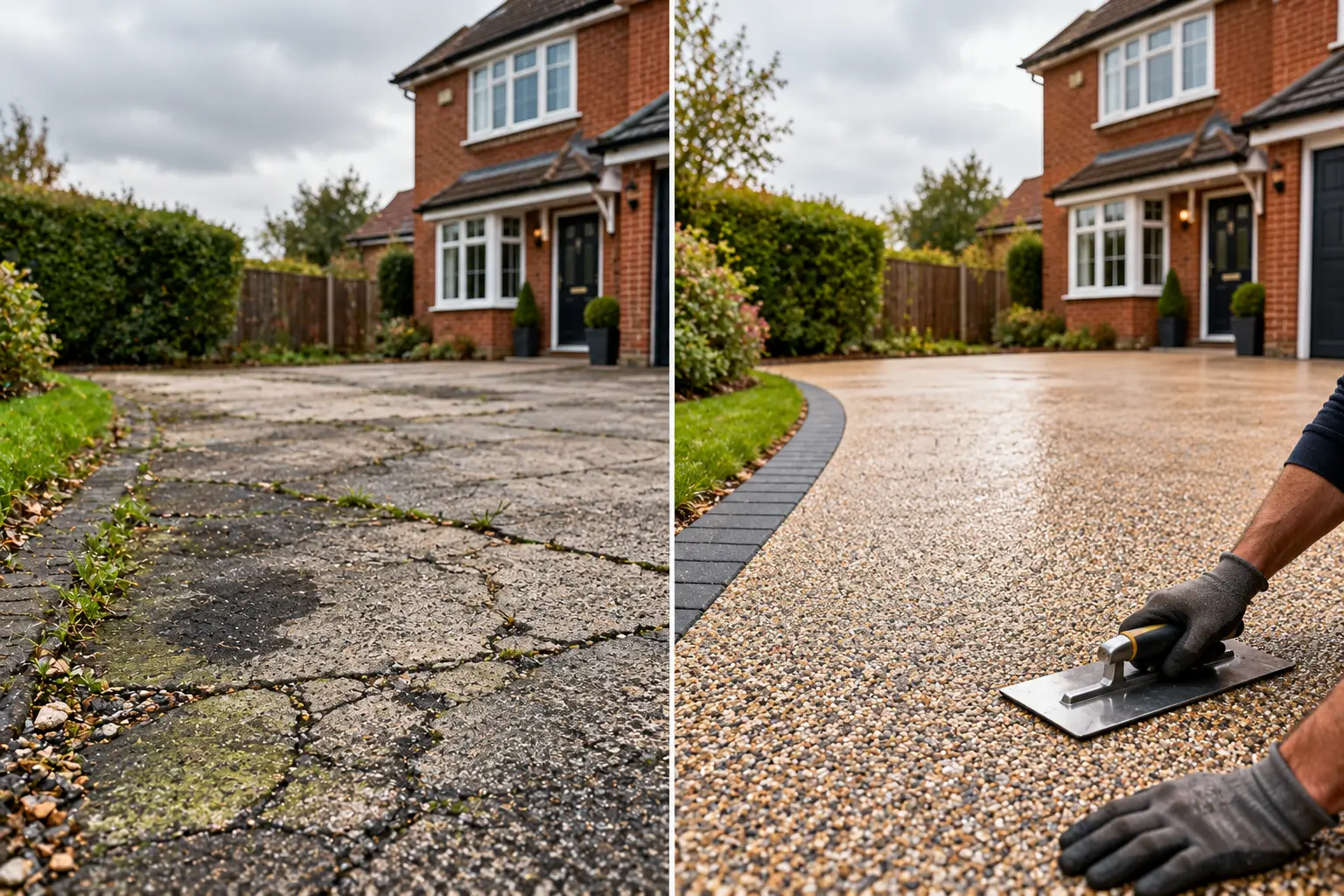
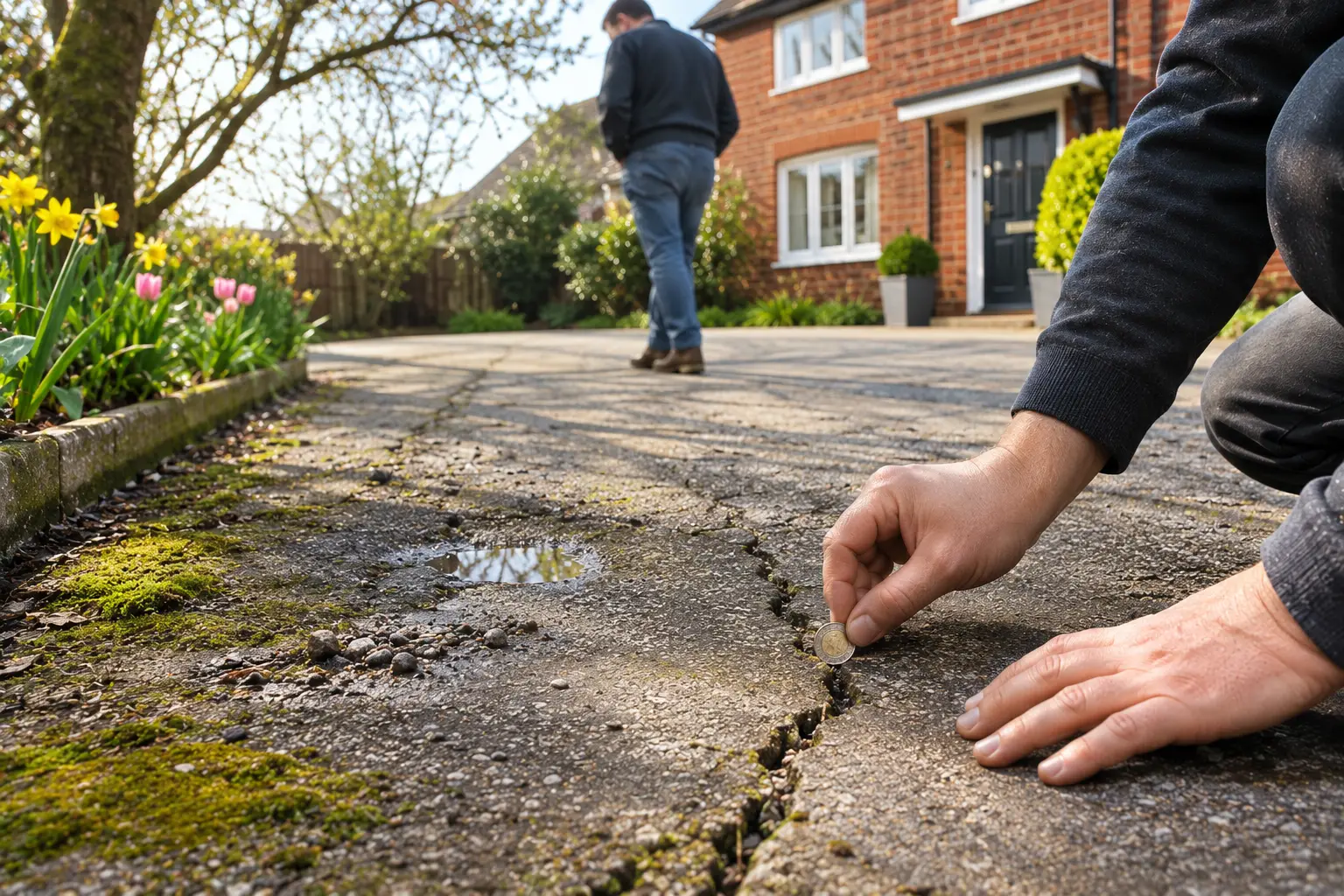
Thin layers are the classic cost-cutting shortcut. Laying 12mm instead of 18mm uses a third less material, which makes a quote look attractive. But a thin driveway layer has little capacity to absorb load, so cracks develop sooner and stones begin to lift and scatter. Several experienced installers describe laying a driveway at 12mm as a red flag, because the surface is unlikely to last anywhere near its expected lifespan.
Premature Wear in the Wheel Tracks
The first places to suffer are the spots under the most stress: where the tyres sit, where you turn the steering wheel while stationary, and the area just inside the entrance. A thin surface starts to look worn and patchy in these zones long before the rest of the drive does, and repairs can be visible because new resin never blends invisibly into old.
Reduced Permeability Over Time
Permeability depends on the right amount of open space between the stones. If the mix is compressed into too shallow a layer, or the proportions are off, drainage can suffer and the surface may hold water or clog more easily. That undermines one of the main reasons many homeowners choose resin bound in the first place, and it can affect compliance with sustainable drainage expectations, as outlined in the national standards for sustainable drainage systems.
Can the Layer Be Too Thick?
Wasted Money, Not Extra Strength
Going deeper than necessary doesn’t make the driveway significantly stronger, because the structural work is done by the base beneath. A pedestrian path laid at 24mm, for instance, simply costs more without delivering a meaningful benefit. Extra thickness uses more resin and aggregate, adds to the price and, if poorly applied, can introduce problems with curing and consistency.
Uneven Depth Is the Bigger Risk
More often than being too thick overall, the real issue is inconsistency. A surface that’s 18mm in one place and 10mm in another will wear unevenly and may crack along the thin areas. Professional installers use screed rails or sledges and carefully measured material per square metre to keep the depth constant across the whole surface.
Thickness Doesn’t Work Without the Right Base
The Surface Can’t Compensate for a Weak Foundation
A perfectly measured 18mm layer will still fail if it’s sitting on a poorly compacted or inadequately drained sub-base. Resin bound surfacing relies on a stable, permeable structure underneath, typically compacted stone with a suitable binder course, built deep enough for the expected loads. A new area generally needs a sub-base of at least 100mm for pedestrian use and considerably more where vehicles are involved.
Why Preparation and Thickness Go Hand in Hand
Think of it as a partnership. The base provides support and drainage, while the surface layer provides the finish and wear resistance. If one is skimped, the other can’t make up the difference. That’s why a thorough site survey matters so much, since it determines both what needs to go down beneath the resin and how thick the finished layer should be.
How to Check Your Quote and Your Installer
Ask for the Specification in Writing
A reputable installer should be able to tell you the thickness they’ll lay, the size of aggregate they’ll use, and the depth and type of the sub-base. Ask for these details in the written quote rather than accepting a general promise that the work will be done “to standard.” Vague quotes make it far easier for corners to be cut without you noticing.
Be Wary of Prices That Seem Too Good
Because thickness drives material use, a quote that’s significantly cheaper than the rest might be reflecting a thinner layer, a cheaper resin, or lighter groundwork. None of those savings is visible on installation day, but all of them show up within a few winters. It’s worth asking pointed questions if one price stands well apart from the others.
Check Depth During the Job if You Can
If you’re at home while the work is under way, it’s perfectly reasonable to ask how the installer is controlling depth. Experienced teams will be happy to explain their process, and many will welcome the interest.
Keeping the Surface in Good Shape Afterwards
Correct thickness gives your driveway the best chance of lasting, but sensible upkeep helps too. Sweep away leaves and debris regularly so the surface stays open and permeable, rinse off algae and moss gently in shaded spots, and avoid blasting the same patch repeatedly with a pressure washer. If you’re thinking about whether any changes need planning approval, the Planning Portal explains the rules on permeable surfaces for front gardens.
Conclusion
Resin bound layer thickness isn’t the most glamorous part of choosing a driveway, but it quietly does a lot of the heavy lifting. For most domestic driveways, around 15mm to 18mm is the right range, while paths and patios can happily sit nearer 12mm to 15mm. The depth should always reflect the size of the stones, and it works only when it sits on a properly built, well-drained base. Ask for the figures in writing, treat unusually low prices with caution, and you’ll be far better placed to end up with a surface that looks good and keeps performing for many years.
Frequently Asked Questions
How thick should a resin bound driveway be?
Most domestic driveways are laid at around 15mm to 18mm, with 18mm the usual choice for a surface that takes regular vehicle traffic.
What thickness is needed for a resin bound path or patio?
Areas used only by foot traffic are normally laid at roughly 12mm to 15mm, which is sufficient for the lighter loads involved.
What is the three-times rule for resin bound depth?
It’s a guideline that the layer should be at least three times the size of the largest stone in the mix, so 6mm aggregate calls for around 18mm of material.
Will a thicker layer make my driveway stronger?
Not significantly beyond the recommended depth. Strength comes mainly from the sub-base, so going much thicker mostly adds cost rather than durability.
Why is my installer quote cheaper than others?
It may reflect a thinner layer, cheaper materials or lighter groundwork. Ask for the thickness, aggregate size and sub-base depth in writing so you can compare like with like.