Introduction
When it comes to upgrading a driveway in Kent, two options dominate the conversation: resin bound surfacing and block paving. Both are popular, both offer a significant improvement over plain tarmac or tired concrete, and both come with their own set of pros and cons. So how do you decide?
The truth is, for most Kent homeowners — particularly those looking for a low-maintenance, high-value finish that will stand up to the unpredictable British weather — resin bound surfacing consistently comes out ahead. But the right choice depends on your property, your budget, and your priorities.
In this guide, we put the two options head-to-head across the factors that matter most: appearance, durability, drainage, maintenance, planning, and cost. By the end, you will have a clear picture of which surface is the better long-term investment for your home.
- Appearance and kerb appeal
- Durability and lifespan
- Drainage and SuDS compliance
- Maintenance requirements
- Cost comparison
- Which is right for your Kent home?
What is Resin Bound Surfacing?
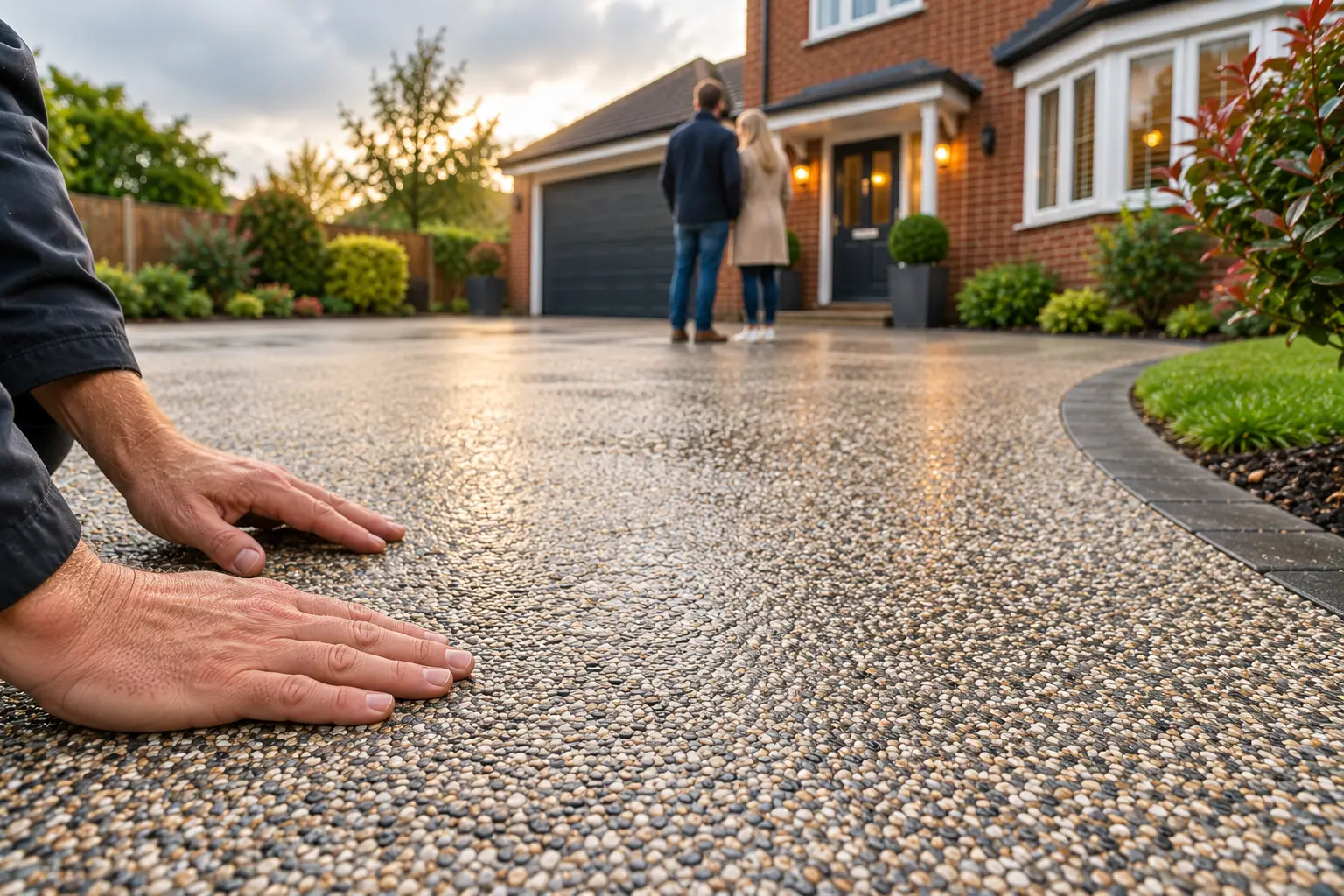
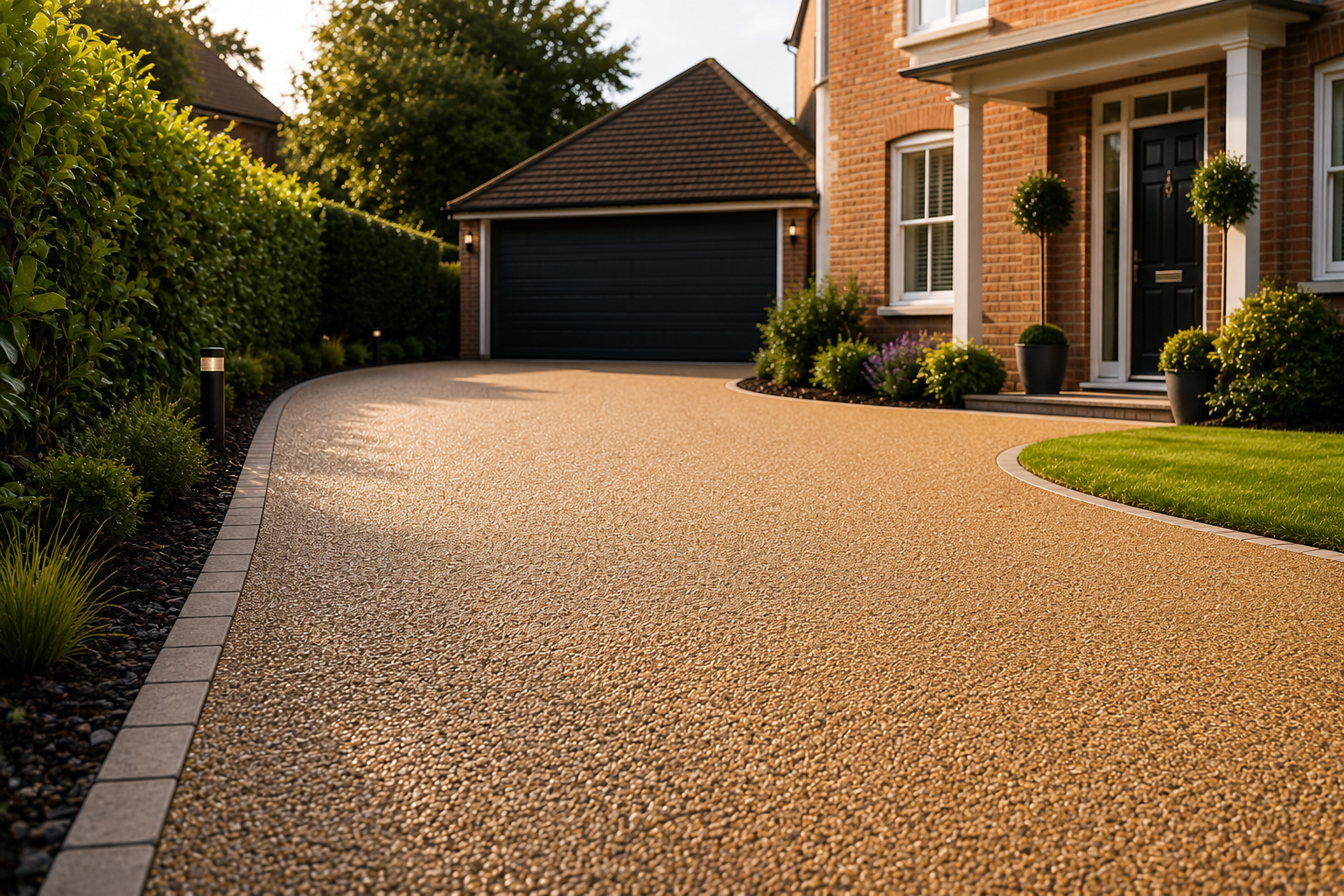
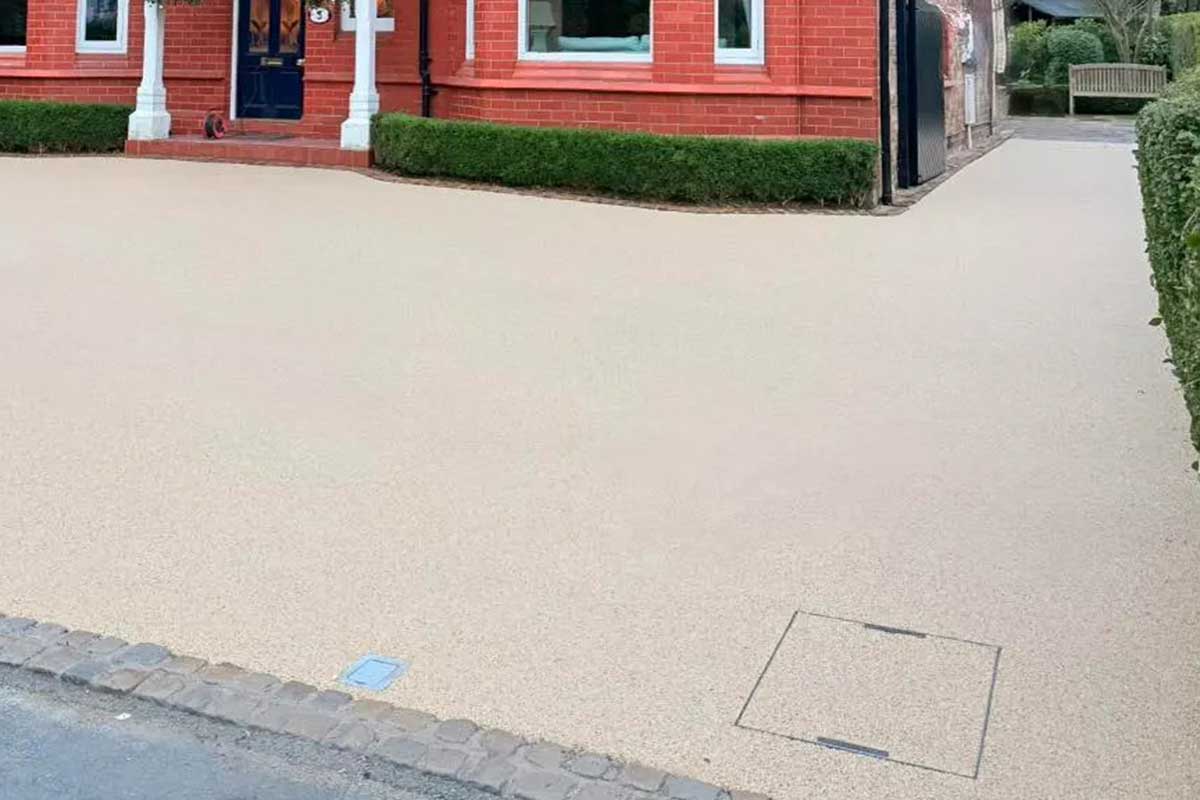
Resin bound surfacing is created by blending natural stone aggregates — pea gravel, granite, quartz, or similar materials — with a clear, UV-stable polyurethane resin. The mixture is hand-trowelled onto a prepared base to create a smooth, seamless, and fully permeable surface.
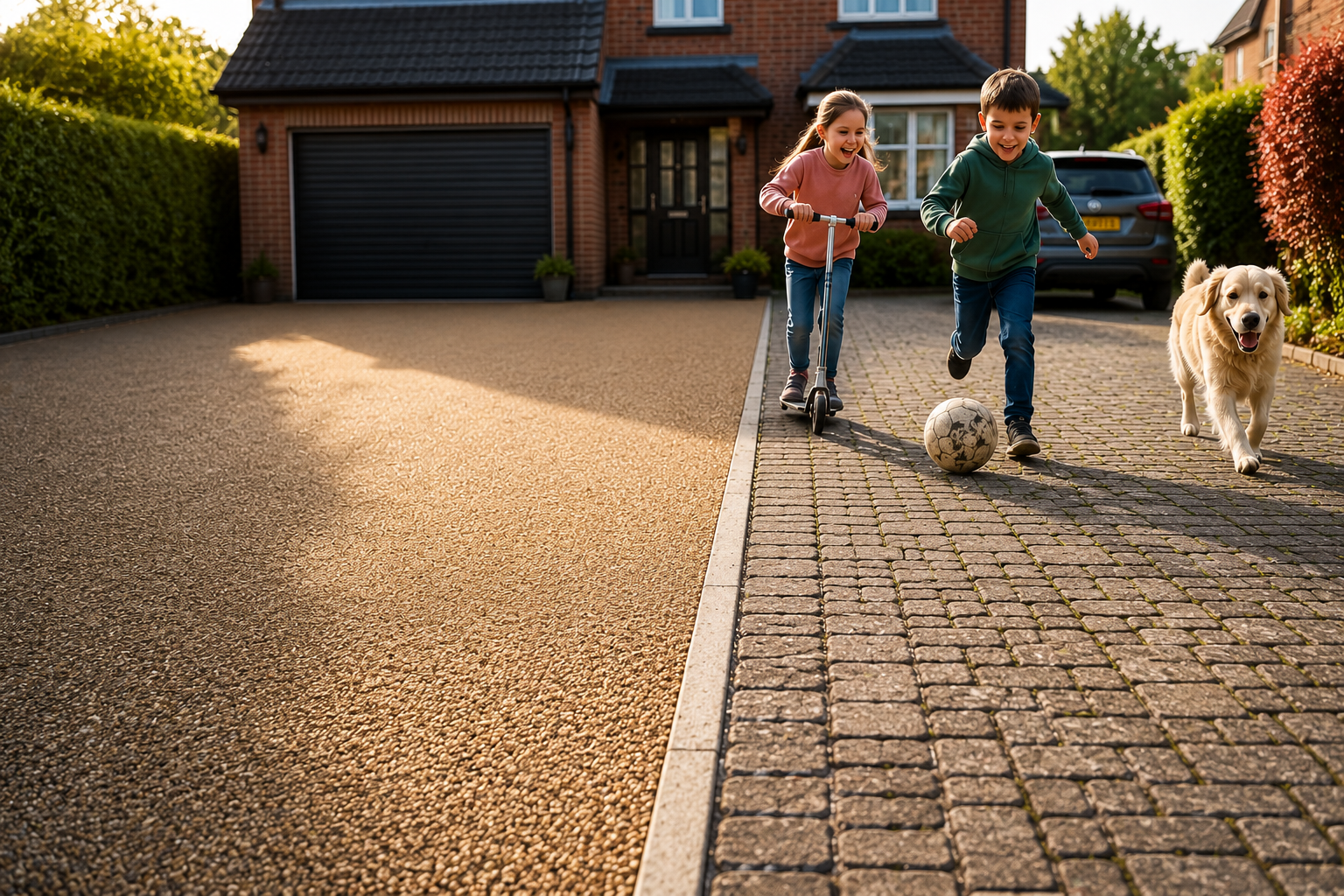
Because the aggregate is bound within the resin throughout the depth of the surface (rather than simply scattered on top), a correctly installed resin bound driveway resists loose stones, offers a flat finish, and allows rainwater to drain through naturally. It is available in a wide range of natural stone colours and blends, making it highly versatile for both traditional and contemporary Kent properties.
Important: Resin Bound is Not the Same as Resin Bonded
Resin bonded surfacing looks similar but is installed differently — stones are scattered onto a layer of resin applied to a base, creating a rougher texture that is not permeable. This distinction matters for planning permission and long-term performance. Always confirm which product is being specified.
What is Block Paving?
Block paving uses individual concrete, clay, or natural stone blocks laid onto a compacted sand and mortar bed. The blocks interlock to form the finished surface, with kiln-dried sand brushed into the joints to stabilise them. It is a well-established technique with a long track record in UK residential driveways.
Block paving offers a structured, traditional appearance with a wide variety of block shapes, sizes, colours, and laying patterns. It is repairable — individual blocks can be lifted and replaced — but this same characteristic means the surface is only as good as its ongoing maintenance.
Resin Bound vs Block Paving: Head-to-Head
Appearance and Kerb Appeal
Resin bound delivers a smooth, contemporary finish that feels genuinely premium. The seamless surface with natural stone aggregate has a quality that is difficult to replicate with concrete blocks. For properties in the mid-to-upper market — which accounts for much of Kent’s housing stock in areas like Sevenoaks, Tonbridge, and Tunbridge Wells — it consistently outperforms block paving on first impressions.
Block paving works well for more traditional aesthetics, particularly with clay pavers in herringbone or basketweave patterns. It suits period properties with formal driveways, though the jointing can look tired if not maintained.
Durability and Lifespan
A well-installed resin bound surface on a sound base will typically last 15–25 years without significant repair. The surface is UV-stable (meaning it will not yellow or fade with sunlight when correctly specified), resistant to freeze-thaw damage, and unlikely to crack under normal load.
Block paving is durable in its own right, but the jointing is its weak point. Sand washes out, weeds grow through, and individual blocks can sink or rock over time — particularly in clay-heavy Kent soils where ground movement is common.
Drainage and SuDS Compliance
This is one of the most significant differences. Resin bound surfacing is fully permeable — rainwater passes through the surface and into the sub-base below, where it can drain naturally. This means it is SuDS (Sustainable Drainage System) compliant and, in most circumstances, does not require planning permission for driveways over 5m².
Standard block paving is not permeable — water runs off the surface and into drainage channels or roads. An impermeable front driveway over 5m² requires planning permission. While permeable block paving exists, it adds cost and requires careful installation to maintain drainage performance.
Maintenance Requirements
Resin bound is genuinely low maintenance. A light brush or leaf blow to remove debris, and an occasional rinse with a garden hose or low-pressure washer, is all that is typically required. Weeds cannot grow through the surface (though occasional surface-level debris and seeds can settle, so prompt sweeping prevents organic build-up).
Block paving requires more active upkeep. Joint sand needs periodic topping up, weed killer treatments are usually needed at least annually, and the surface benefits from periodic jet washing and re-sanding. Left without maintenance, block paving deteriorates visibly within a few years.
Cost Comparison
| Factor | Resin Bound | Block Paving |
| Installation cost per m² | £70 – £120 | £60 – £110 |
| Maintenance costs (per year) | Very low | Moderate |
| Expected lifespan | 15–25 years | 15–20 years (with maintenance) |
| Planning permission needed? | Usually no (permeable) | Yes if over 5m² (impermeable) |
| Weed resistance | Excellent | Poor without treatment |
| Freeze-thaw resistance | Excellent | Moderate |
Over a 20-year period, the lower maintenance burden of resin bound surfacing typically makes it the better value option — even if upfront installation costs are comparable.
Which is Better for Your Kent Home?
For the majority of Kent homeowners — particularly those in Maidstone, Tonbridge, Sevenoaks, Ashford, Tunbridge Wells, and the surrounding areas — resin bound surfacing is the stronger choice. Here is why:
- It avoids the planning permission requirement that applies to impermeable surfaces over 5m²
- It delivers a premium, modern finish that adds genuine kerb appeal
- It requires significantly less ongoing maintenance
- It handles Kent’s clay soils and variable weather more reliably than jointed surfacing
- It is available in a range of natural stone colours to complement any property style
Block paving remains a good option for certain traditional aesthetics or where budget is a primary concern at the point of installation. For homeowners prioritising long-term value, low maintenance, and a high-quality finish, resin bound is the clear recommendation.
How Much Does a Resin Bound Driveway Cost in Kent?
Frequently Asked Questions
In some cases, yes — provided the existing block paving is structurally sound, level, and well-bonded. Your installer will assess the existing surface during a site survey. Overlay installations can reduce groundwork costs, though base quality is critical to the finished result.
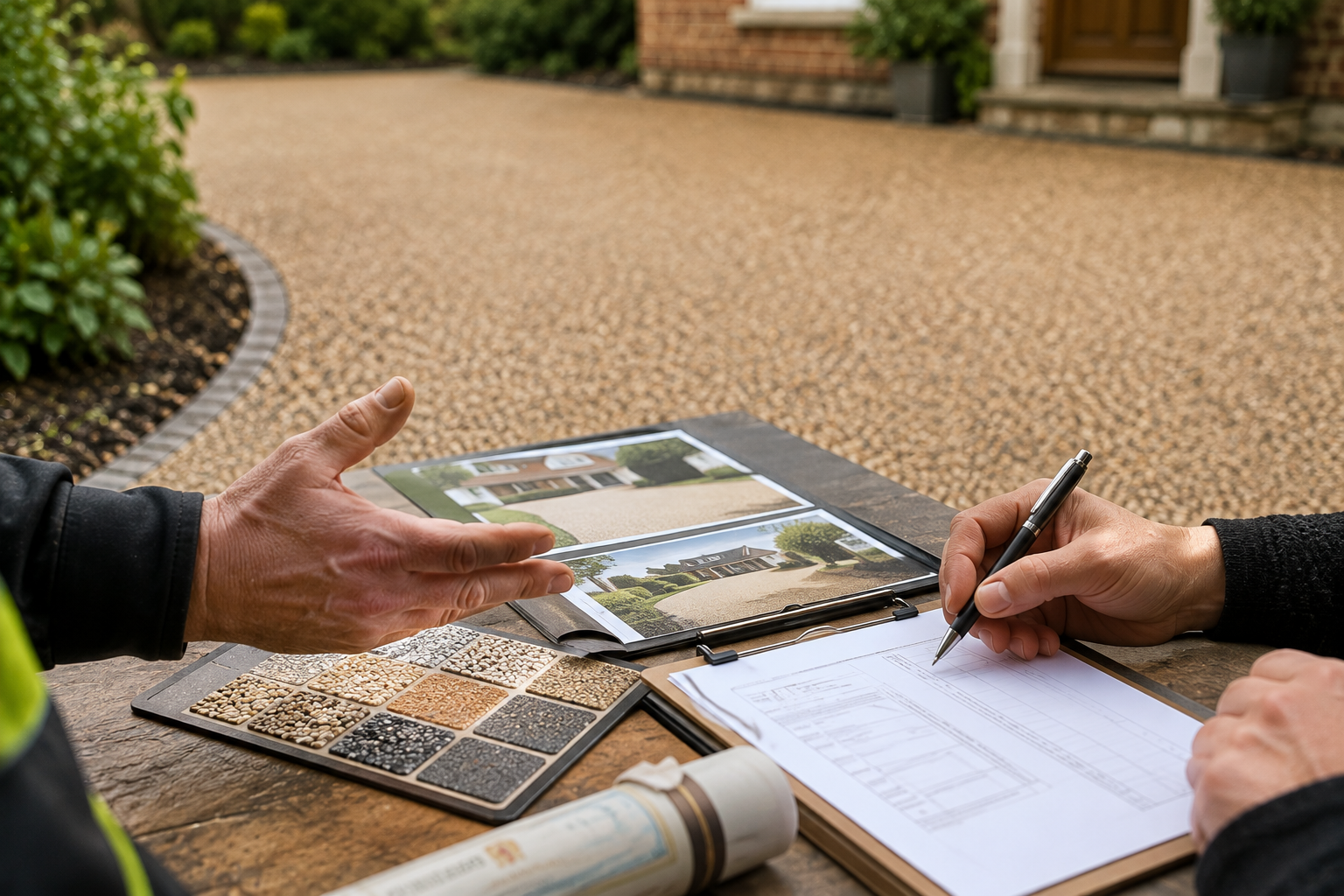
The best starting point is a site survey from a qualified installer. South East Resin offers free, no-obligation surveys across Kent and Surrey — our team will assess your existing surface, discuss your colour and style preferences, and provide a fully written, fixed-price quotation.