Introduction
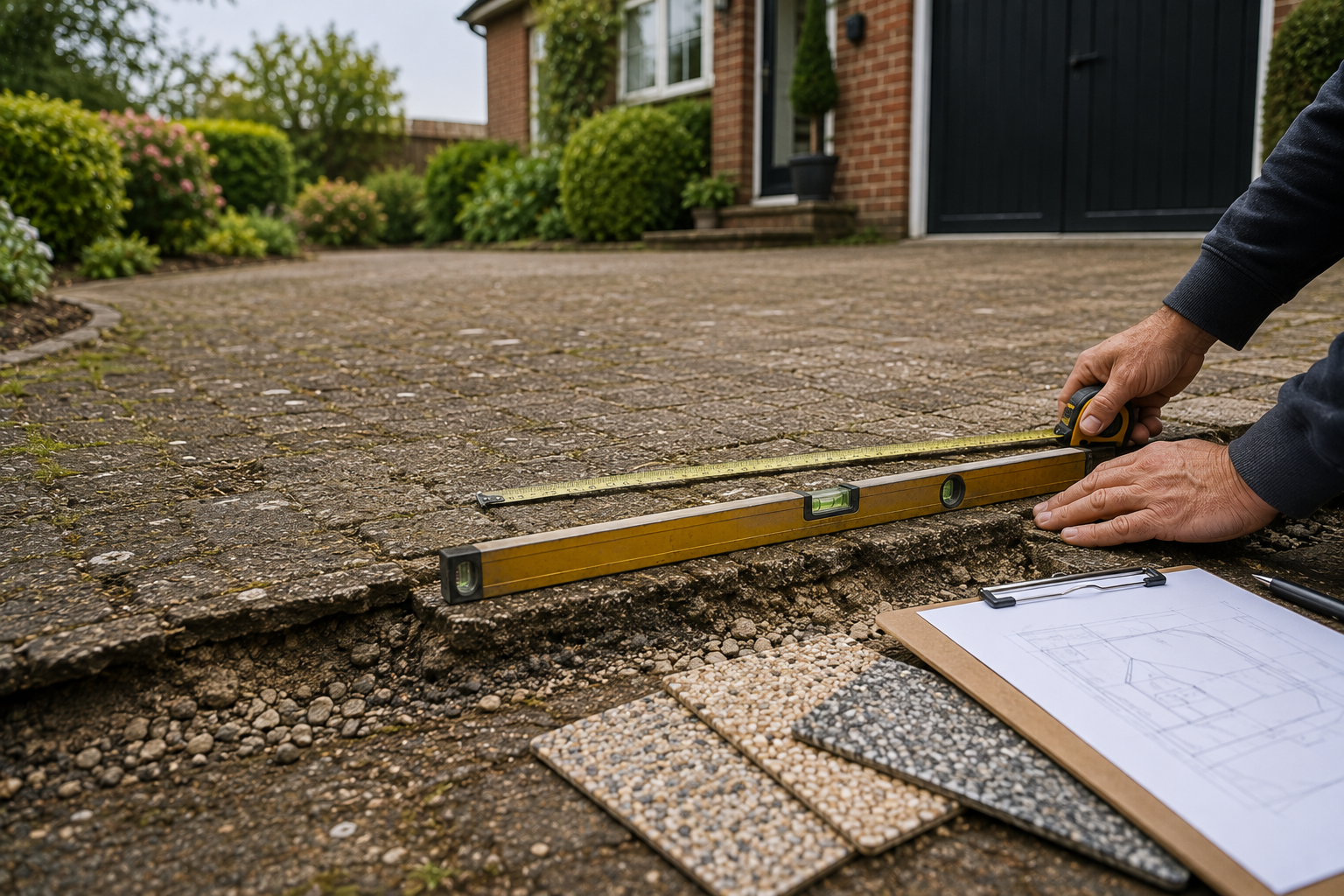
One of the most common questions we hear from Kent homeowners is: do I need planning permission before installing a new driveway? The short answer, in most cases, is no — but the detail matters, and getting it wrong can create real problems down the line.
Since 2008, UK planning rules have required that any new or replacement front driveway over 5 square metres must either use a permeable surface or direct rainwater to a permeable area within your property. The purpose is to reduce surface water run-off and the risk of flooding — part of what is known as Sustainable Drainage Systems, or SuDS.
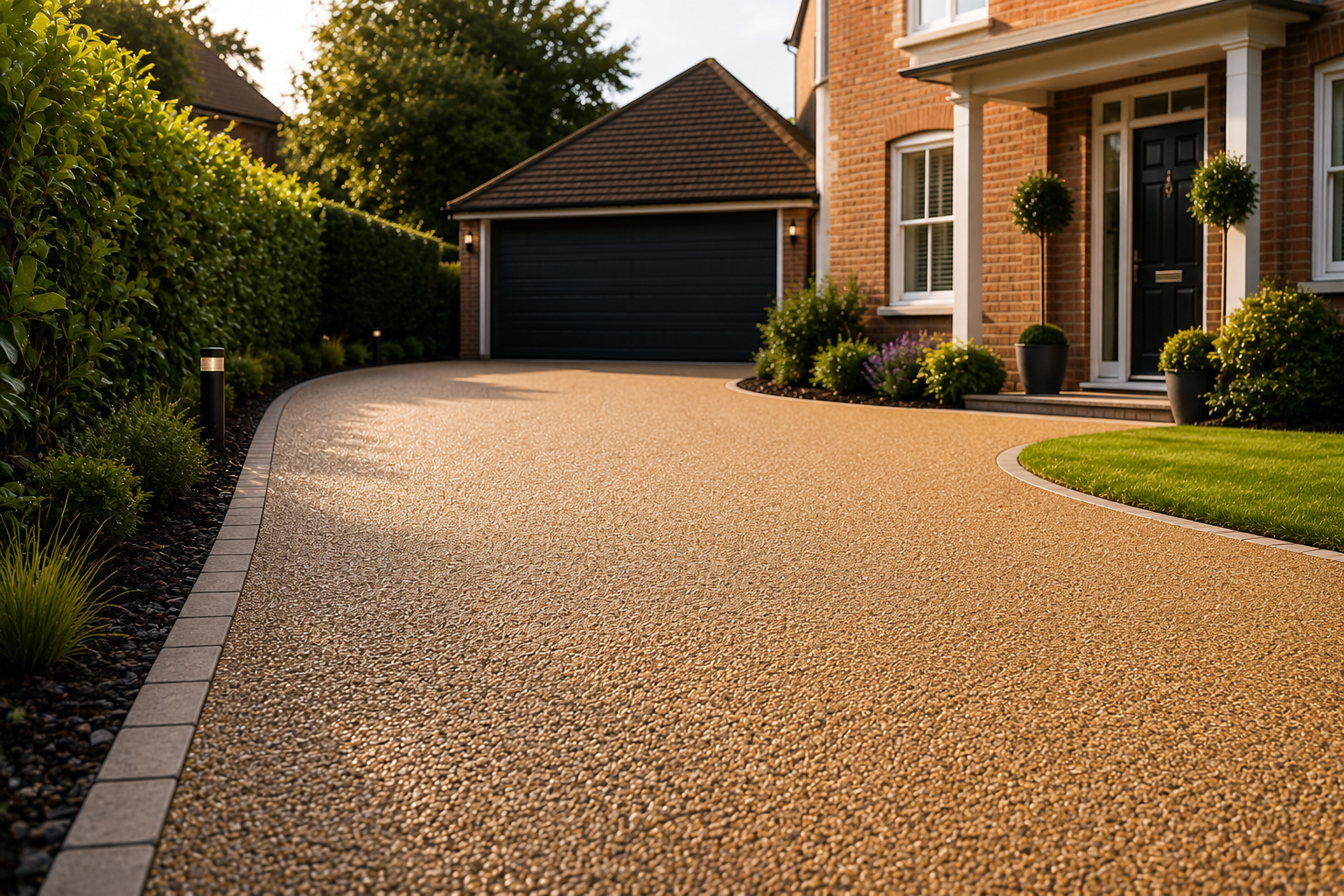
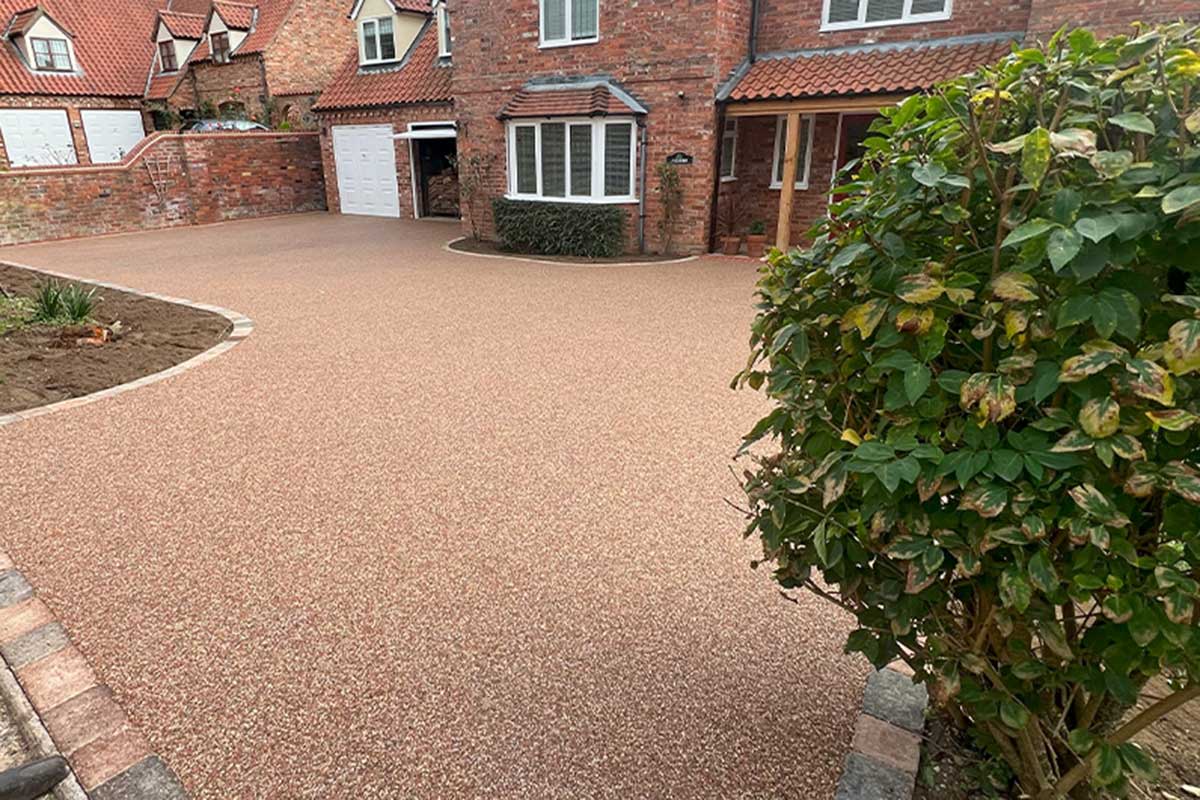
Here is the good news for homeowners considering resin bound surfacing: a correctly specified resin bound driveway is fully permeable, which means it meets the SuDS requirement automatically. In the vast majority of cases, you can proceed without making a planning application.
This guide covers:
- The 5m² rule and why it matters
- Why resin bound usually qualifies as permitted development
- When you might still need permission
- The critical difference between resin bound and resin bonded
- What applies in conservation areas and listed buildings
The 5m² Rule Explained
Under permitted development rights, homeowners can make certain changes to their properties without applying for planning permission. For front driveways, the critical provision is this: if the new surface is impermeable (i.e., water runs off rather than through it) and covers more than 5m², planning permission is required.
For most standard driveways — which typically cover 20m² to 60m² — this rule will apply. An impermeable tarmac or standard concrete driveway at these sizes would require a planning application, which takes time, costs money, and is not always approved.
Permeable surfaces, however, are exempt from this requirement. Because rainwater passes through the surface and soaks into the ground below, they do not contribute to surface water run-off in the way that impermeable surfaces do.
What Counts as Permeable?
Materials that generally qualify as permeable under current planning guidance include:
- Resin bound surfacing (laid over a permeable sub-base)
- Permeable block paving with open joints and permeable bedding
- Porous asphalt
- Gravel over a permeable base
Standard block paving with sealed joints, tarmac, and concrete do not qualify as permeable.
Why Resin Bound Driveways Usually Do Not Need Planning Permission
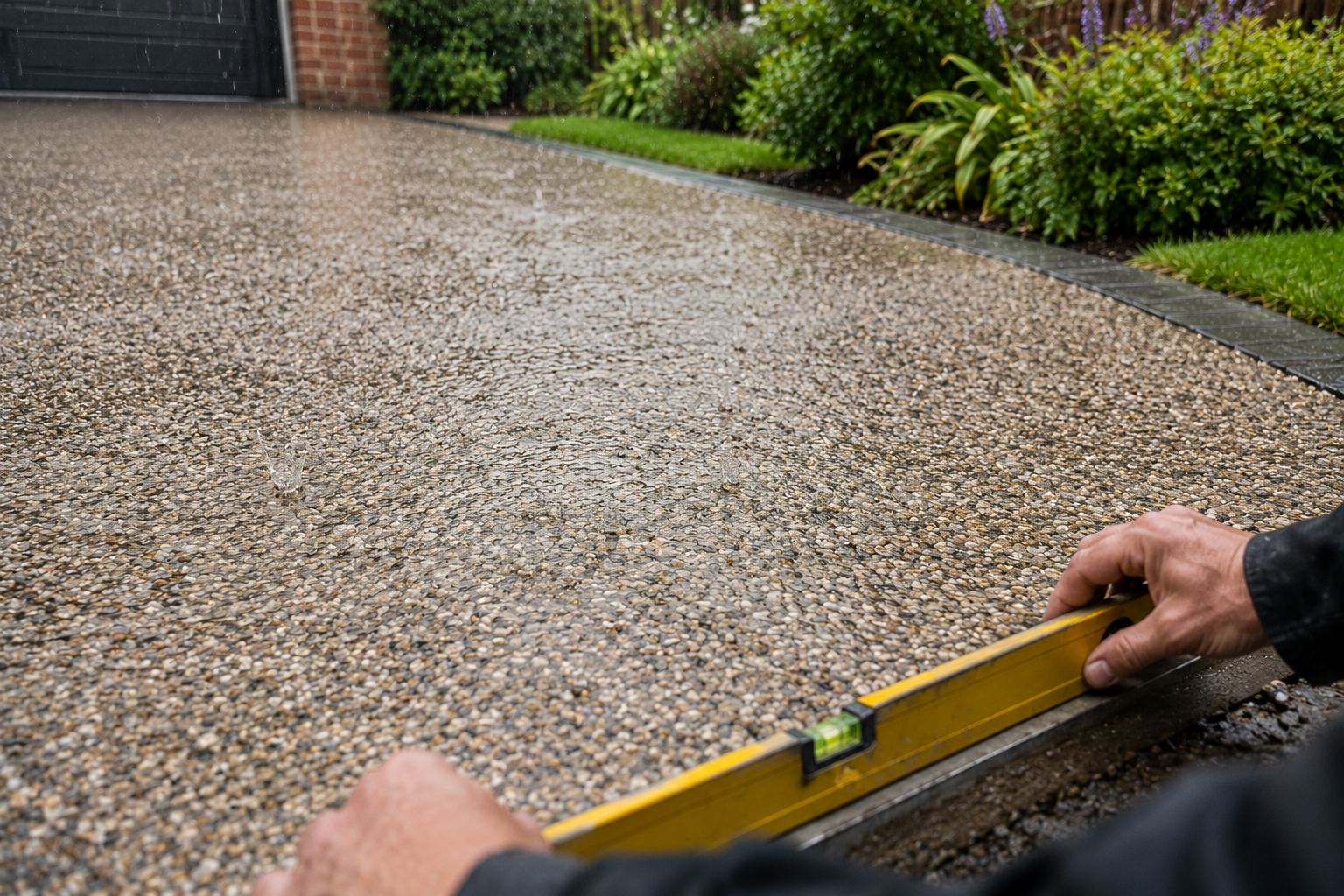
A resin bound surface has a honeycomb-like internal structure that allows water to pass through it vertically into the sub-base below. Provided the sub-base is also permeable (typically open-graded crushed stone), rainwater soaks into the ground naturally rather than running off into roads or drainage systems.
This means a properly installed resin bound driveway:
- Is SuDS compliant by design
- Does not exceed the impermeable surface threshold regardless of its size
- Qualifies as permitted development for front driveways in England
- Does not require a formal planning application in most circumstances
This is a significant practical advantage over tarmac or concrete — and one that catches some homeowners off guard when they receive a notice from their local authority about a non-compliant surface installed by a cheaper contractor using substandard drainage.
When You Might Still Need Planning Permission
Listed Buildings
If your property is a listed building, permitted development rights are significantly restricted. Any changes to the external appearance of the property — including the driveway — may require listed building consent and/or full planning permission, regardless of the surface type. Always consult your local planning authority before proceeding.
Conservation Areas
Kent has a significant number of designated conservation areas — including parts of Sevenoaks, Westerham, Tonbridge, Tunbridge Wells, and many historic village centres. Within conservation areas, permitted development rights for certain changes may be more restricted. While a permeable resin bound surface is unlikely to trigger planning requirements on drainage grounds, you should check whether any article 4 directions apply to your specific street or area.
South East Resin has extensive experience installing driveways within Kent conservation areas and can advise on appropriate aggregate choices and specifications that respect the character of the area.
Dropping a New Kerb
Creating a new vehicle access point from the road — i.e., dropping a kerb — always requires permission from your local highway authority, regardless of the driveway surface. This is separate from planning permission and involves a highway works application. Your local council highways team can advise on the process.
Resin Bound vs Resin Bonded: A Critical Distinction
This is worth emphasising because the two products look similar but behave very differently:
- Resin bound: aggregate is mixed thoroughly with resin and trowelled to create a smooth, permeable surface. Compliant with SuDS requirements.
- Resin bonded: a layer of resin is applied to the base surface, and aggregate is scattered onto it. The finished surface is textured and rough — and typically not permeable.
A resin bonded surface over 5m² is likely to require planning permission for a front driveway, in the same way as tarmac or concrete. If a contractor cannot confirm in writing that they are installing resin bound (not resin bonded) surfacing, request clarification before signing any contract.
Summary: Planning Permission and Resin Bound Driveways in Kent
| Scenario | Planning Permission Required? |
| Resin bound on standard residential property | No (permitted development) |
| Resin bound on listed building | Likely yes — check with LPA |
| Resin bound in conservation area | Check for article 4 restrictions |
| Resin bonded (non-permeable) over 5m² | Yes |
| New kerb drop (any surface type) | Yes — highway authority approval |
Frequently Asked Questions
For a standard permeable resin bound surface on a standard residential property, you do not need to notify your council or submit a planning application. However, you should always confirm that no article 4 directions apply to your property, particularly if you are in or near a conservation area.
If an impermeable surface over 5m² is installed without planning permission, the local planning authority can issue an enforcement notice requiring you to remove it. Always ensure your installer can confirm in writing that the specification is SuDS compliant.
Yes. Every South East Resin installation uses UV-stable resin bound aggregate on an open-graded permeable sub-base, ensuring full SuDS compliance. We provide written confirmation of specification on all projects.