Introduction
One of the most frequently cited advantages of a resin bound driveway is how easy it is to maintain. Compared to block paving — which requires annual weed treatment, periodic re-sanding, and jet washing — or loose gravel, which migrates and needs constant raking, a quality resin bound surface is refreshingly straightforward to keep in excellent condition.
That said, ‘low maintenance’ does not mean ‘no maintenance’. A few simple seasonal habits will protect your investment, extend the lifespan of your surface, and keep it looking as good as the day it was installed. A resin bound driveway can last 15–25 years with the right care.
This guide covers everything you need to know:
- Why resin bound is naturally low maintenance
- Your seasonal maintenance checklist
- How to clean a resin bound driveway properly
- Common mistakes to avoid
- When to call in a professional
Why Resin Bound Driveways Are Naturally Low Maintenance
The characteristics of resin bound surfacing work in your favour:
No Joints, No Weeds
Unlike block paving or pattern-imprinted concrete, resin bound has no joints or gaps for weed seeds to germinate. Weeds cannot push up through the solid, bonded surface. While organic debris (leaves, soil, seeds) can settle on the surface, prompt sweeping prevents it from becoming a problem.
Permeable Surface Stays Cleaner
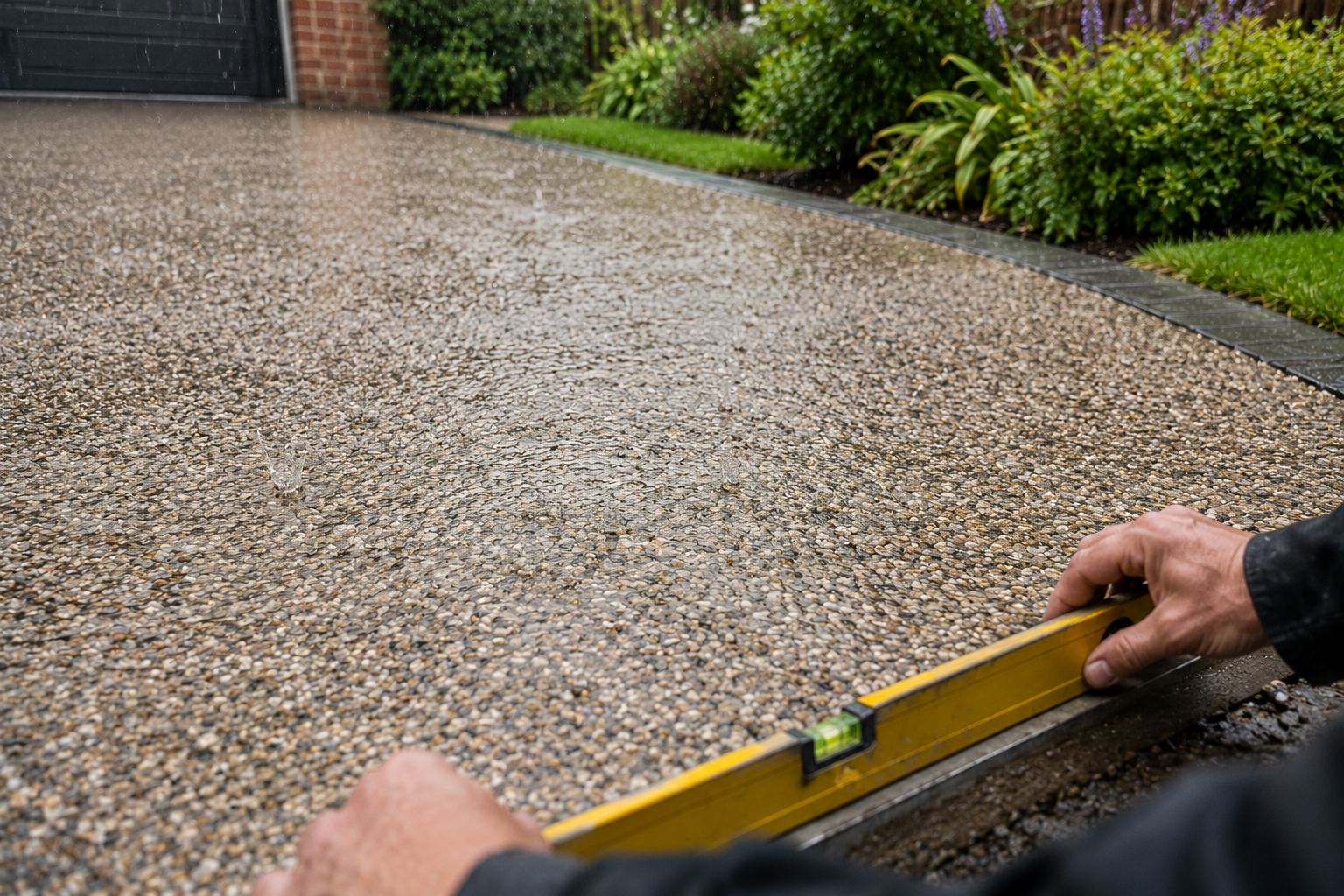
Water drains through the surface rather than pooling on it. This means the surface does not harbour standing water, which would encourage algae and moss growth. In most conditions, rainfall does much of the cleaning for you.
UV-Stable Resin Resists Fading
A correctly specified UV-stable polyurethane resin will not yellow, fade, or lose its clarity when exposed to sunlight. This is why specifying UV-stable resin matters — cheaper non-UV-stable products can discolour within a year or two of installation.
Your Seasonal Maintenance Checklist
Spring and Summer
After the winter months, a light inspection and clean is the best way to start the season:
- Sweep or blow away any accumulated leaves, debris, or organic matter
- Check for any moss or algae growth — particularly in shaded areas or where debris has sat over winter
- Rinse the surface with a garden hose or low-pressure washer (no more than 1,500 PSI / 100 bar)
- Apply a resin-safe biocide to any areas showing early moss growth
- Inspect for any visible surface damage and contact your installer if repairs are needed
Autumn Maintenance
Autumn brings falling leaves, which are the primary cause of organic staining and blocked drainage pores if left to decompose on the surface:
- Sweep or blow leaves from the driveway at least weekly during the leaf fall period
- Pay particular attention to areas near trees, walls, and drainage channels
- A leaf blower is highly effective and avoids any risk of surface abrasion
- Check that drainage channels and soakaways are clear to maintain the surface’s permeable performance
Winter Care
Resin bound surfacing handles the cold well, but a few precautions will preserve the surface:
- Use a plastic shovel rather than a metal spade when clearing snow — metal edges can scratch or chip the surface
- Apply rock salt or grit sparingly — while resin bound is salt-resistant, excessive use can dull the aggregate over time
- Avoid using boiling water to melt ice — thermal shock can stress the resin binder
- Avoid using metal-bladed snow ploughs or machinery not designed for resin surfaces
How to Clean a Resin Bound Driveway
Routine Cleaning
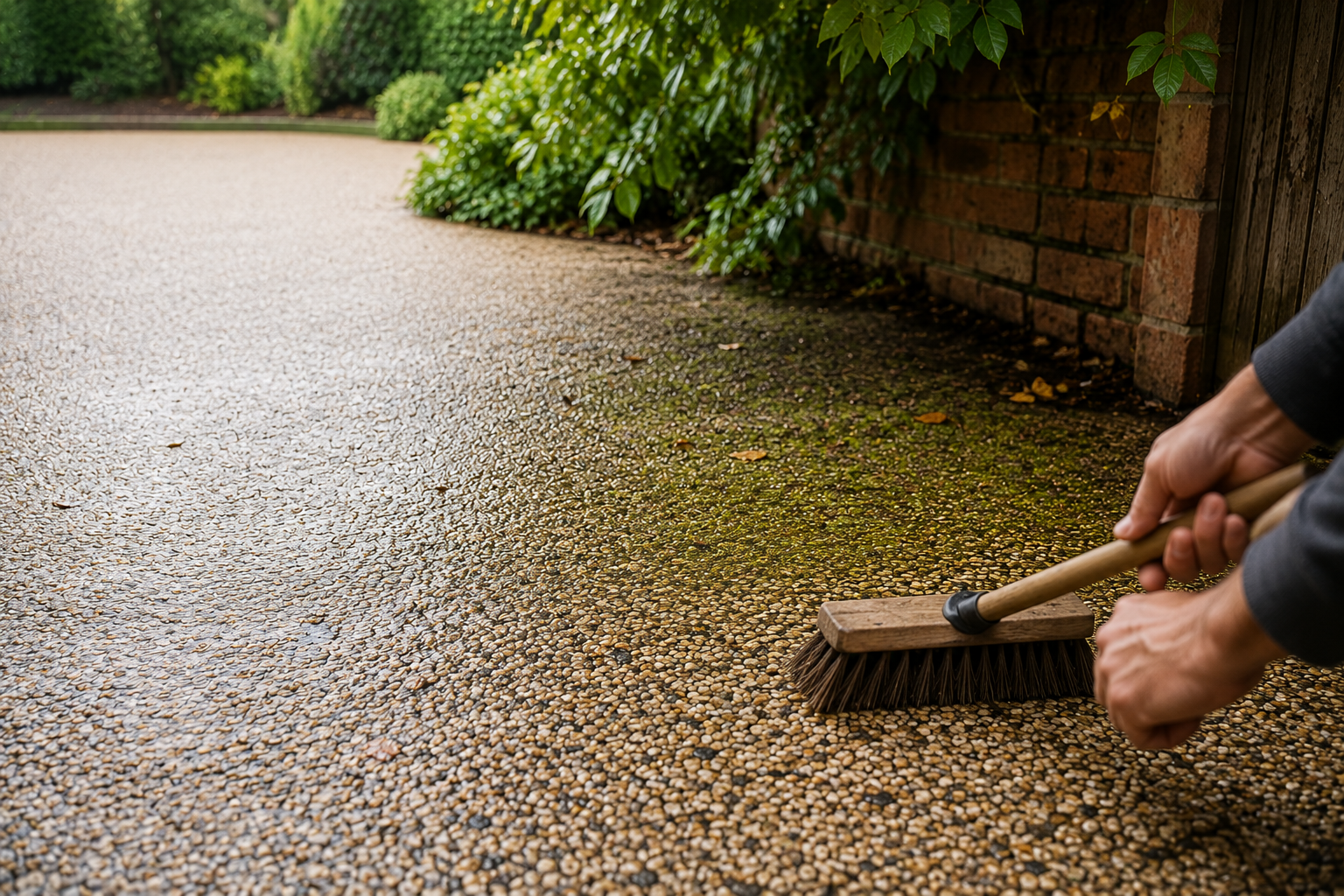
For day-to-day cleanliness, a stiff-bristle brush (not metal) or a leaf blower is all you need. Routine cleaning involves:
- Remove loose debris with a brush or blower
- Rinse with a garden hose to flush fine dust and dirt
- For a more thorough clean, use warm soapy water with a mild detergent and a stiff brush
- Rinse thoroughly with clean water
This can be done as often as needed — weekly in autumn, monthly in summer, or whenever the surface looks dusty or grimy.
Tackling Stains and Oil Spills
Act quickly when stains occur — fresh spills are far easier to remove than dried-in marks:
- Blot or scrape up as much of the spill as possible without spreading it
- Apply warm soapy water and work it in with a stiff brush
- For oil or grease, use a resin-safe degreasing agent — test on a small inconspicuous area first
- Rinse thoroughly with clean water
Always avoid solvent-based cleaners, bleach, and undiluted cleaning products. These can degrade the resin binder, causing discolouration or surface damage.
Dealing with Moss and Algae
In shaded or damp areas, moss and algae can develop on the surface over time. Treat promptly before growth becomes established:
- Apply a proprietary resin-safe biocide or algae remover — follow the manufacturer’s dilution instructions
- Do not use neat bleach — it attacks the resin
- Allow the treatment to dwell as directed, then brush and rinse
- For recurring growth, trim back overhanging vegetation to improve light and airflow
What to Avoid: Common Mistakes
Most driveway damage is caused by well-intentioned but incorrect cleaning. Avoid:
- High-pressure washing above 1,500 PSI — it dislodges aggregate from the surface
- Metal brushes, scrapers, or snow removal tools with metal blades
- Bleach, solvent-based cleaners, or undiluted chemicals
- Allowing leaves and organic debris to decompose on the surface over winter
- Parking very heavy plant machinery or skips on the surface without protective boards
- Pouring boiling water on icy patches — the thermal shock can stress the resin
When to Call a Professional
While routine maintenance is a DIY task, some situations benefit from professional attention:
- Visible surface cracking or delamination — could indicate a sub-base issue that needs addressing
- Large areas of persistent staining that home cleaning has not resolved
- Significant moss or algae colonisation requiring a professional biocide treatment
- Any repairs needed at the edges or around drainage channels
South East Resin provides aftercare advice and professional maintenance services for driveways we have installed across Kent and Surrey. If you have a concern about your surface, contact us and we will advise on the best course of action.
Frequently Asked Questions
A light sweep weekly during autumn and a monthly rinse in other seasons is sufficient for most driveways. Annual jet washing with a low-pressure washer keeps the surface looking fresh.
Yes, but only at low pressure — a maximum of 1,500 PSI (approximately 100 bar). Higher pressure risks dislodging the aggregate. Always use a fan nozzle rather than a jet nozzle, and keep the wand moving rather than focusing on one spot.
A UV-stable resin specification will resist fading and yellowing for the lifetime of the surface. If your driveway was installed with a non-UV-stable resin, some discolouration may occur. Always confirm the resin specification with your installer before work begins.