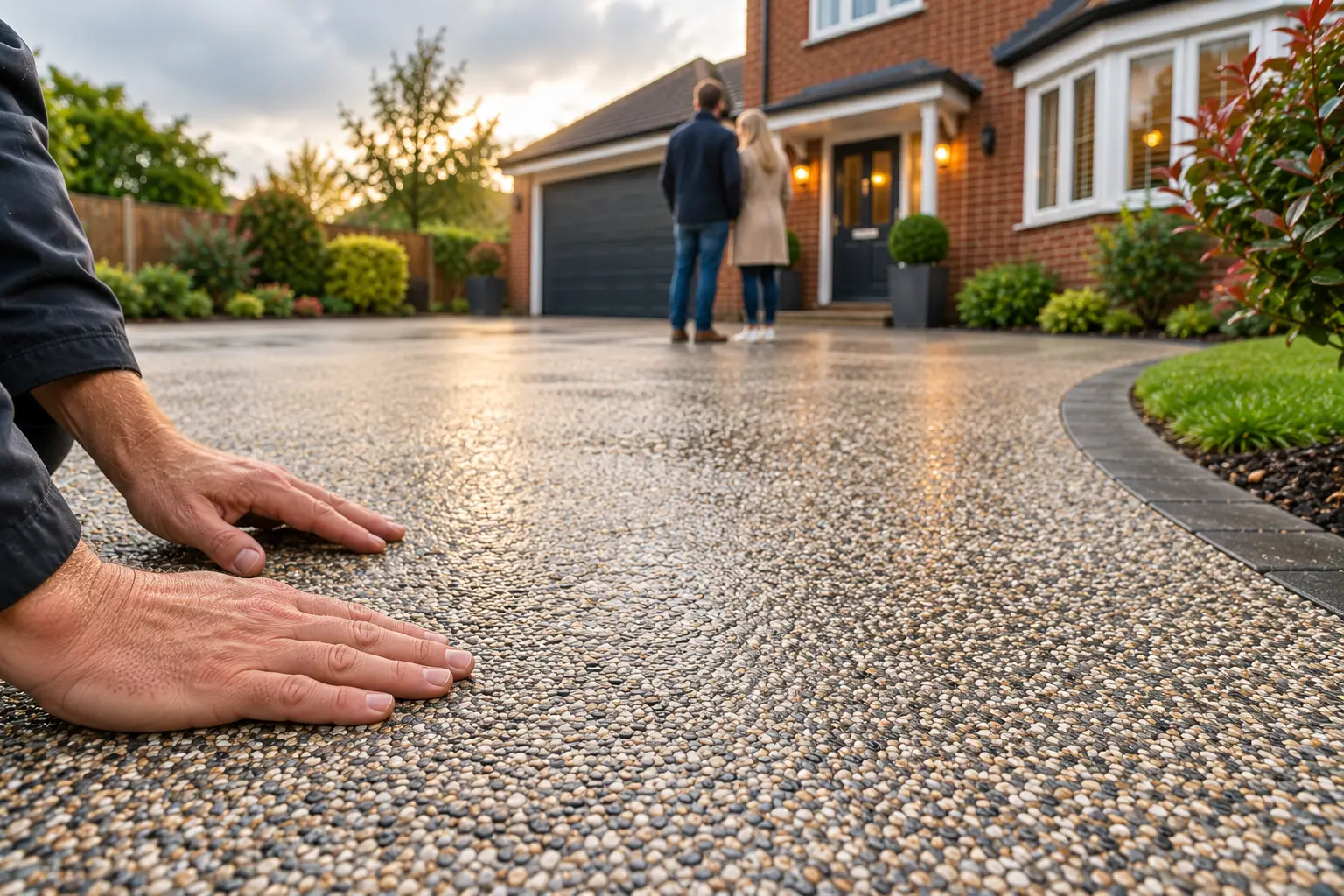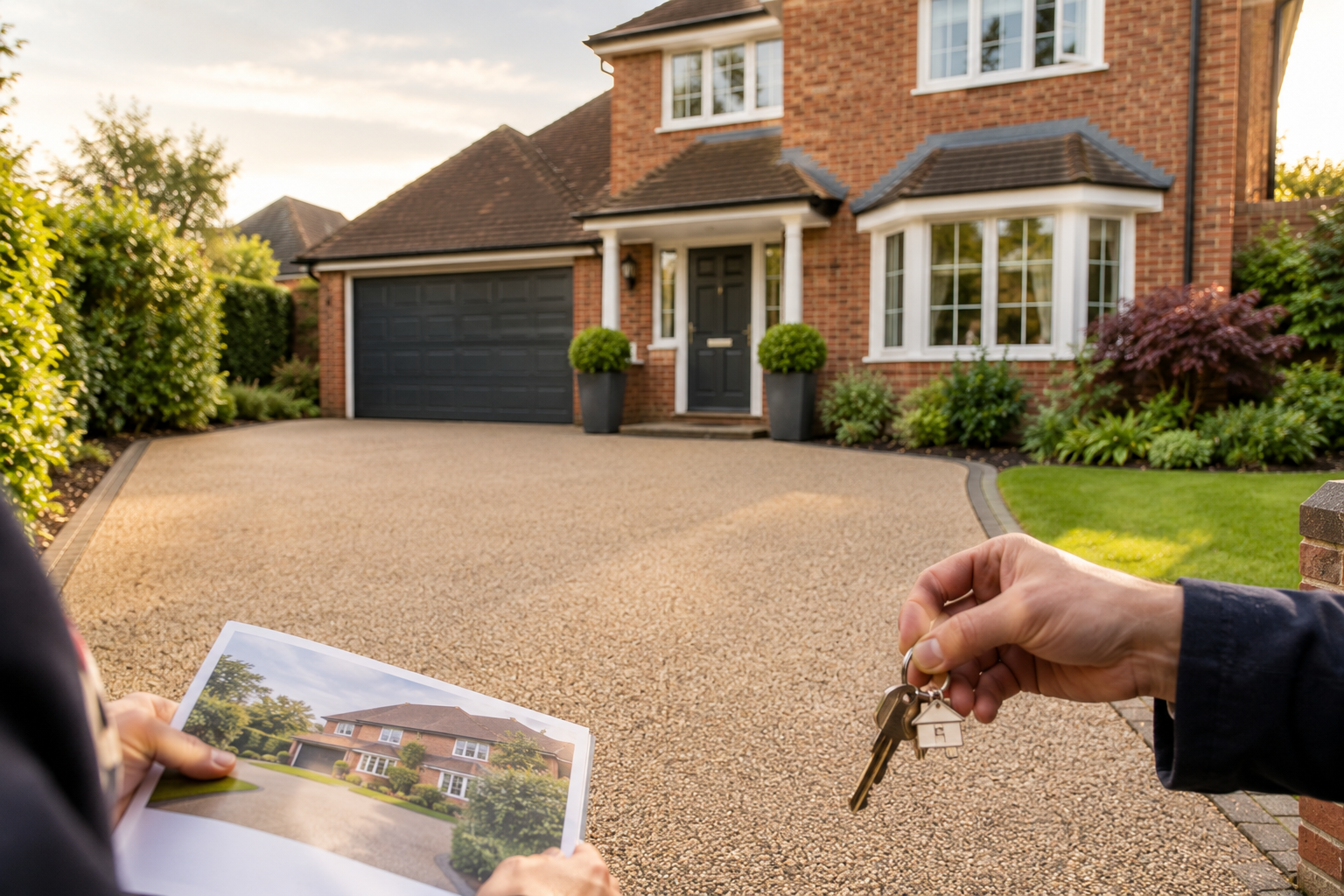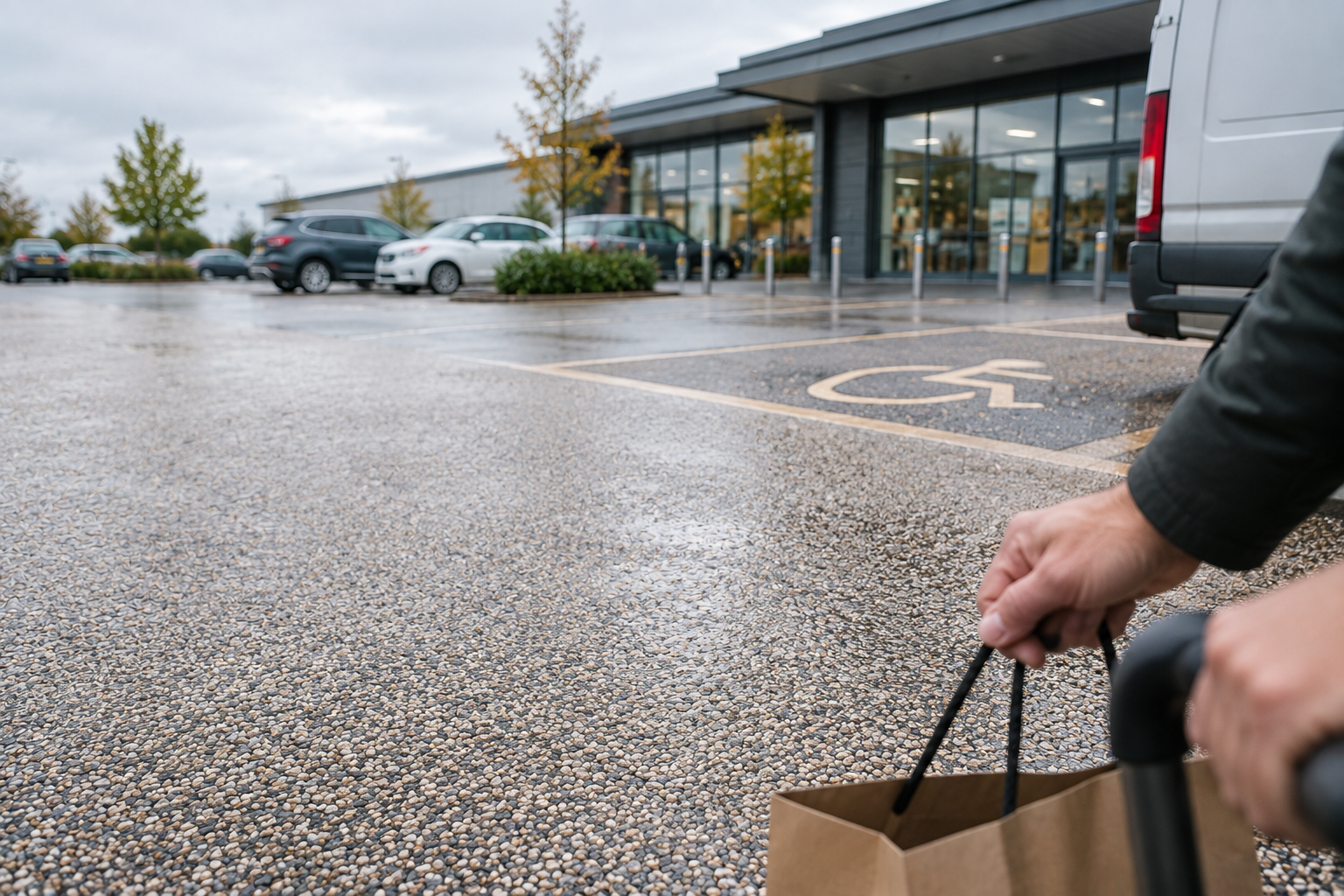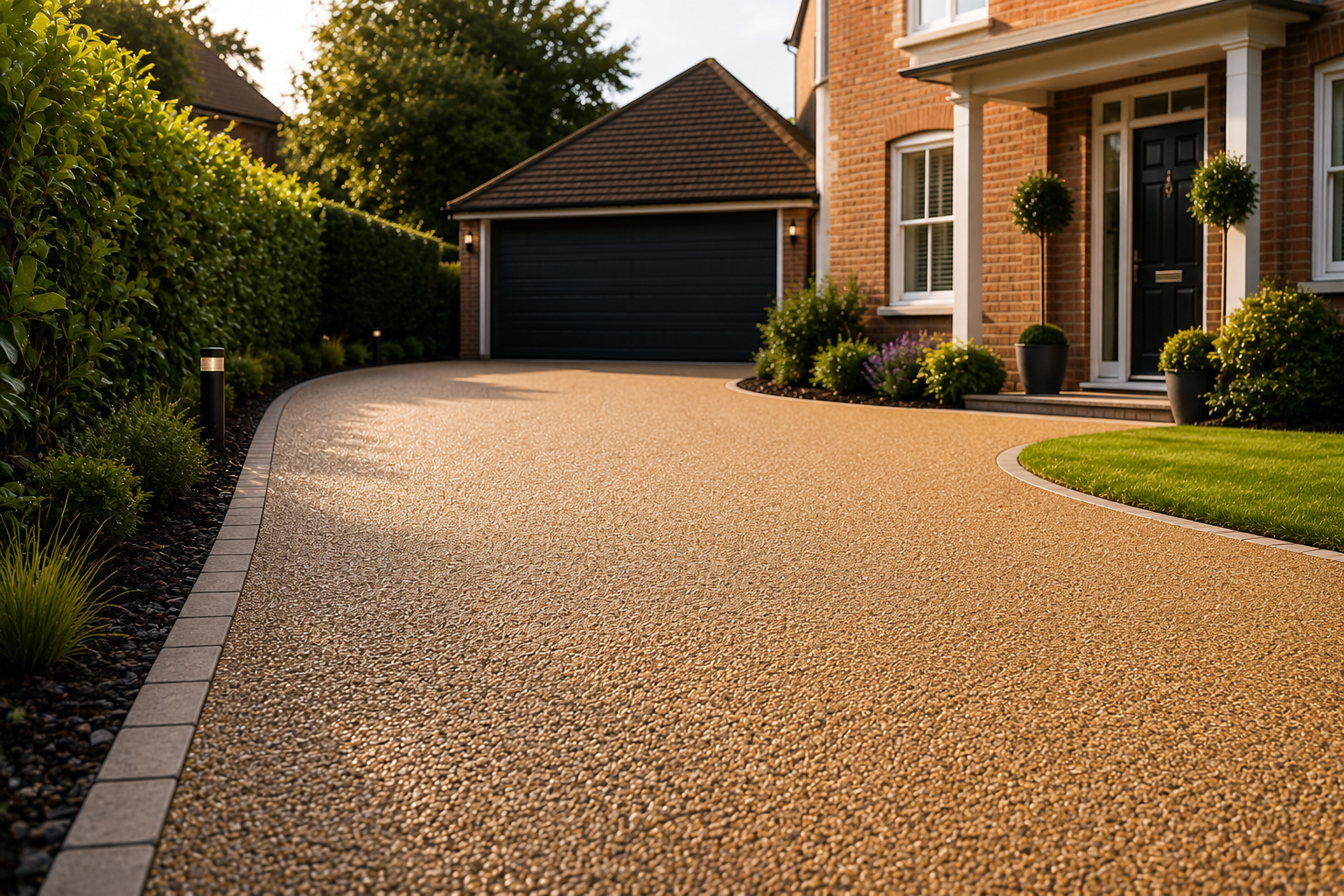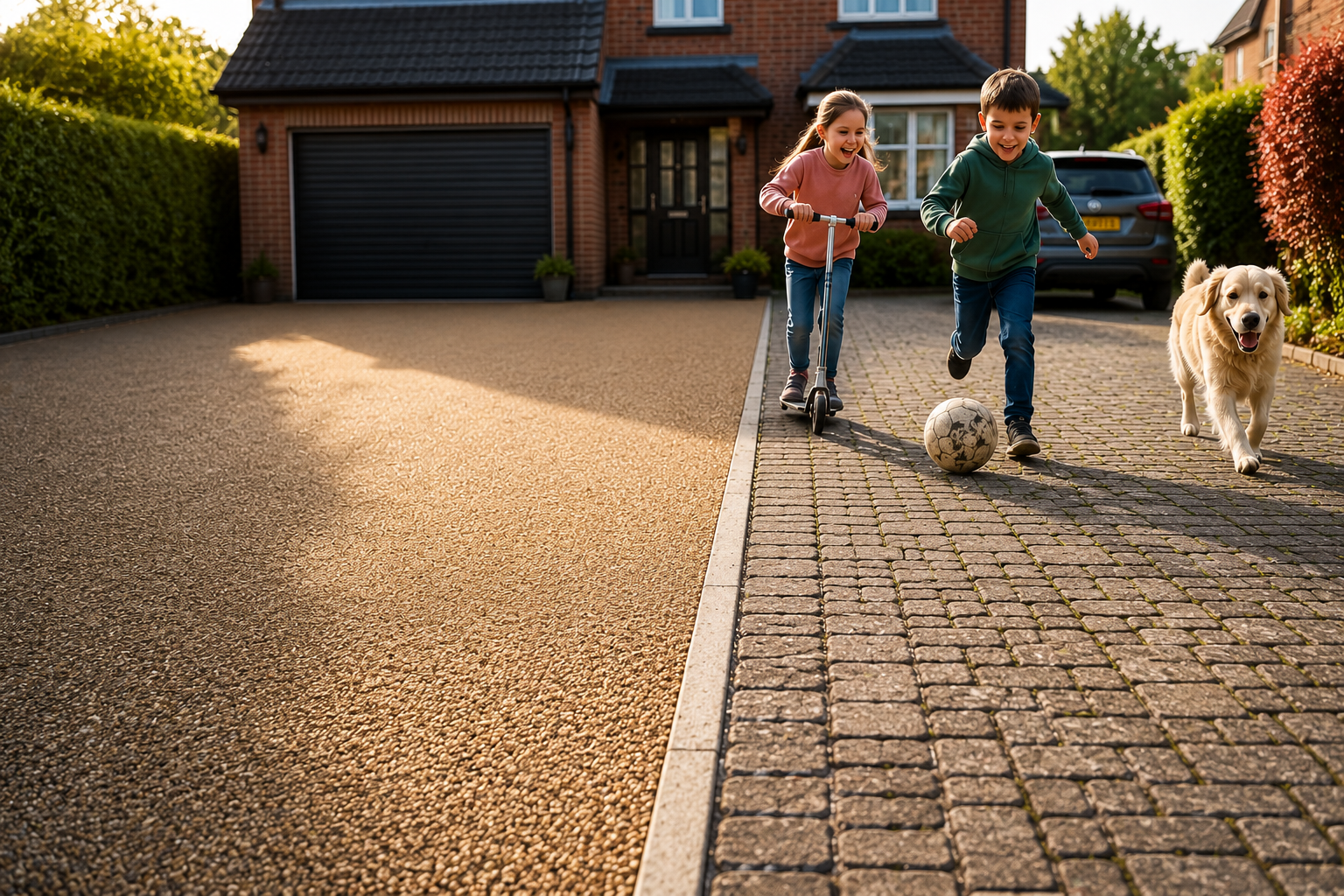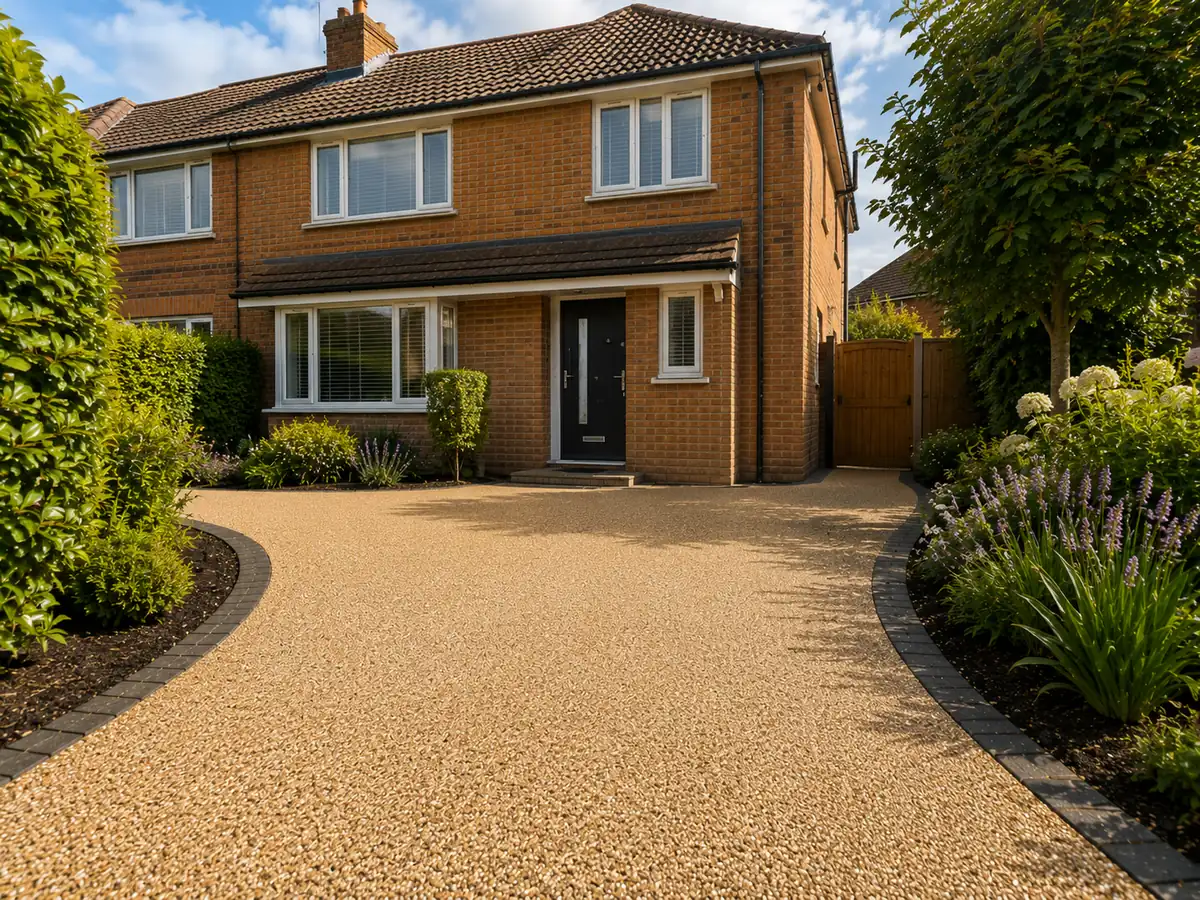
Garden pathways take more daily wear than most homeowners realise — repeated footfall, wheelie bins, prams, and Kent’s wet winters all take their toll on gravel, slabs, and block-paved paths across Maidstone. Resin bound surfacing has become a popular alternative because it solves the two biggest complaints homeowners have about traditional pathways: weeds and loose material.
A resin bound pathway in Maidstone typically costs £50–£90 per square metre installed, depending on length, width and ground preparation. The finish is seamless, permeable, and completely weed-resistant, with no loose gravel to scatter or slabs to become uneven over time. Most residential pathways are completed within a day.
South East Resin & Paving installs resin bound pathways, driveways and patios throughout Maidstone, from the town centre to surrounding villages including Bearsted, Detling and Loose, working with homeowners to find the right width, shape and aggregate for the space.
Why do Maidstone homeowners choose resin bound over gravel or paving slabs?
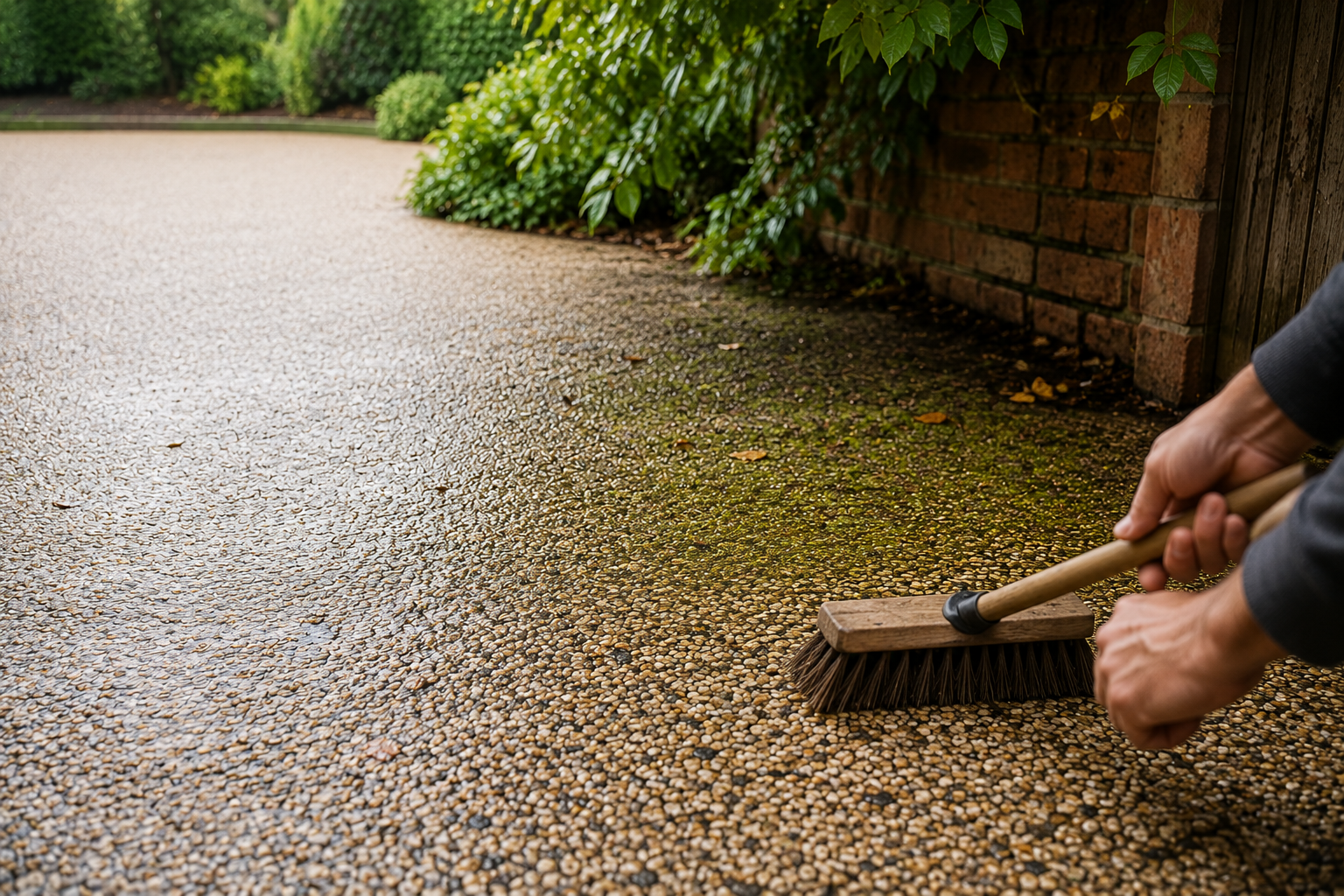
Gravel paths are cheap to lay but need constant upkeep — stones scatter onto lawns and into flower beds, get tracked into the house, and need topping up as levels drop. Weeds also find their way through gravel easily unless a proper weed membrane was installed underneath, and even then, seeds blown in from neighbouring gardens will eventually establish.
Paving slabs solve the loose-material problem but introduce a different one: joints. Every joint between slabs is a potential home for weeds and moss, particularly in the shadier, damper corners of a garden that are common across Maidstone’s older residential streets. Slabs can also become uneven as the ground beneath settles, creating trip hazards over time — a particular concern for pathways used by children or elderly relatives.
Resin bound pathways solve both problems at once: there’s no loose material to scatter, and no joints for weeds to colonise. The surface is laid as one continuous, bonded area, so it stays level and consistent for years with minimal attention.
What does a resin bound pathway cost in Maidstone?
Pathway pricing depends primarily on total area (length multiplied by width) along with ground preparation and access. As a general guide:
- Short pathway (up to 10m²): around £500–£900
- Standard garden pathway (15–25m²): around £750–£2,250
- Longer or wider path, e.g. wraparound side access (30m²+): £1,500 upwards
[VERIFY: confirm current 2026 pathway pricing with the South East Resin quoting team before publishing, as these figures are estimates based on typical resin bound pathway rates.]
Narrow side-return pathways with restricted access can take longer to prepare than open garden paths, which may affect labour cost even where the surfaced area itself is small.
What colours suit a Maidstone garden pathway?
Pathways are often viewed close-up and alongside planting, so resin paving colour choice tends to favour blends that sit comfortably against greenery and existing garden materials:
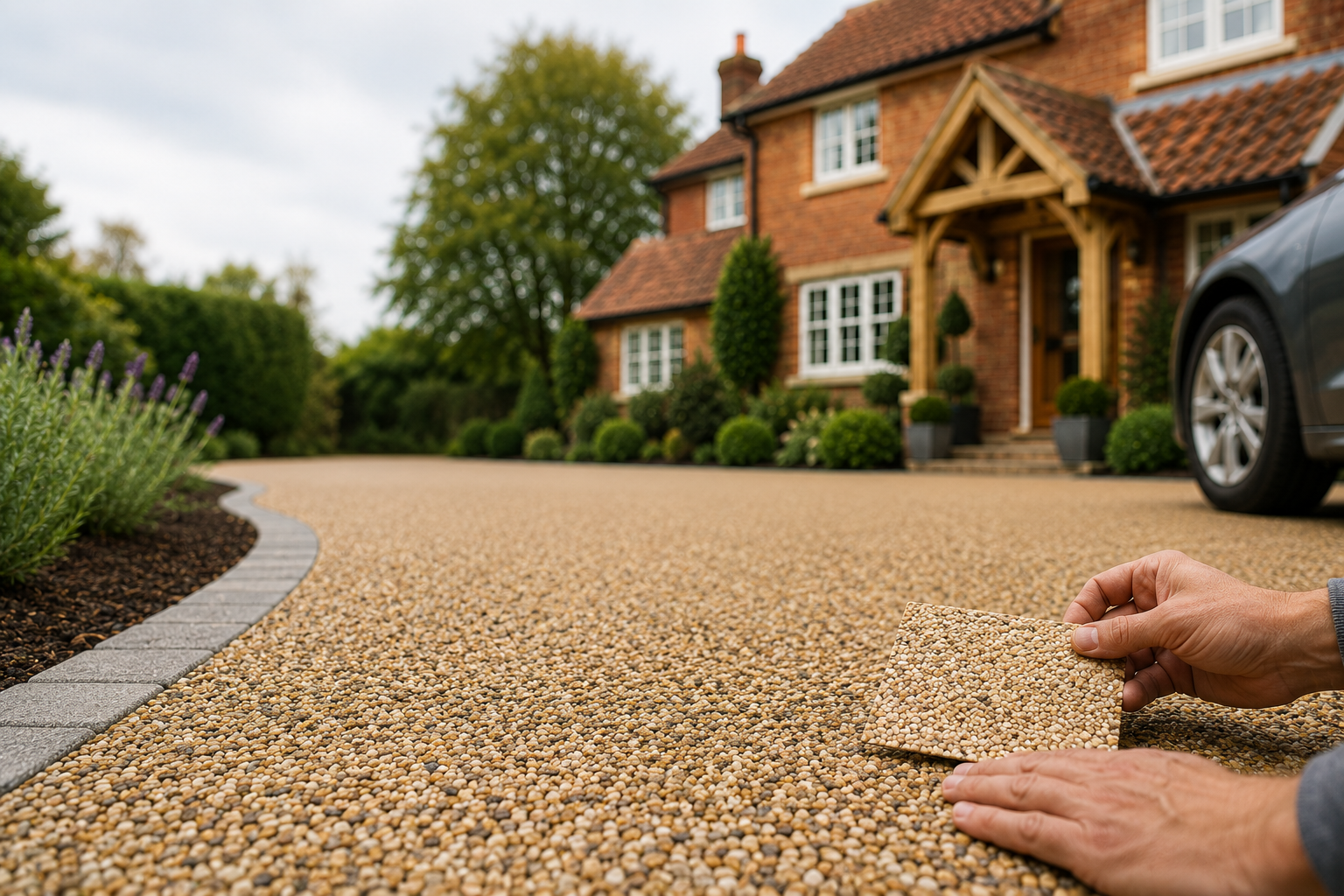
- Natural buff and honey tones — a classic choice that works with most brick and stone garden features
- Soft grey blends — practical and versatile, especially for pathways connecting a driveway to a front door
- Darker, muted tones — useful for a pathway that needs to visually recede rather than draw attention, letting planting take the focus
Because resin bound aggregates are widely available in consistent colours, many Maidstone homeowners choose to match a new pathway to an existing or planned driveway and patio, creating a coordinated look across the whole property.
How does a resin bound pathway handle Kent’s wet weather?
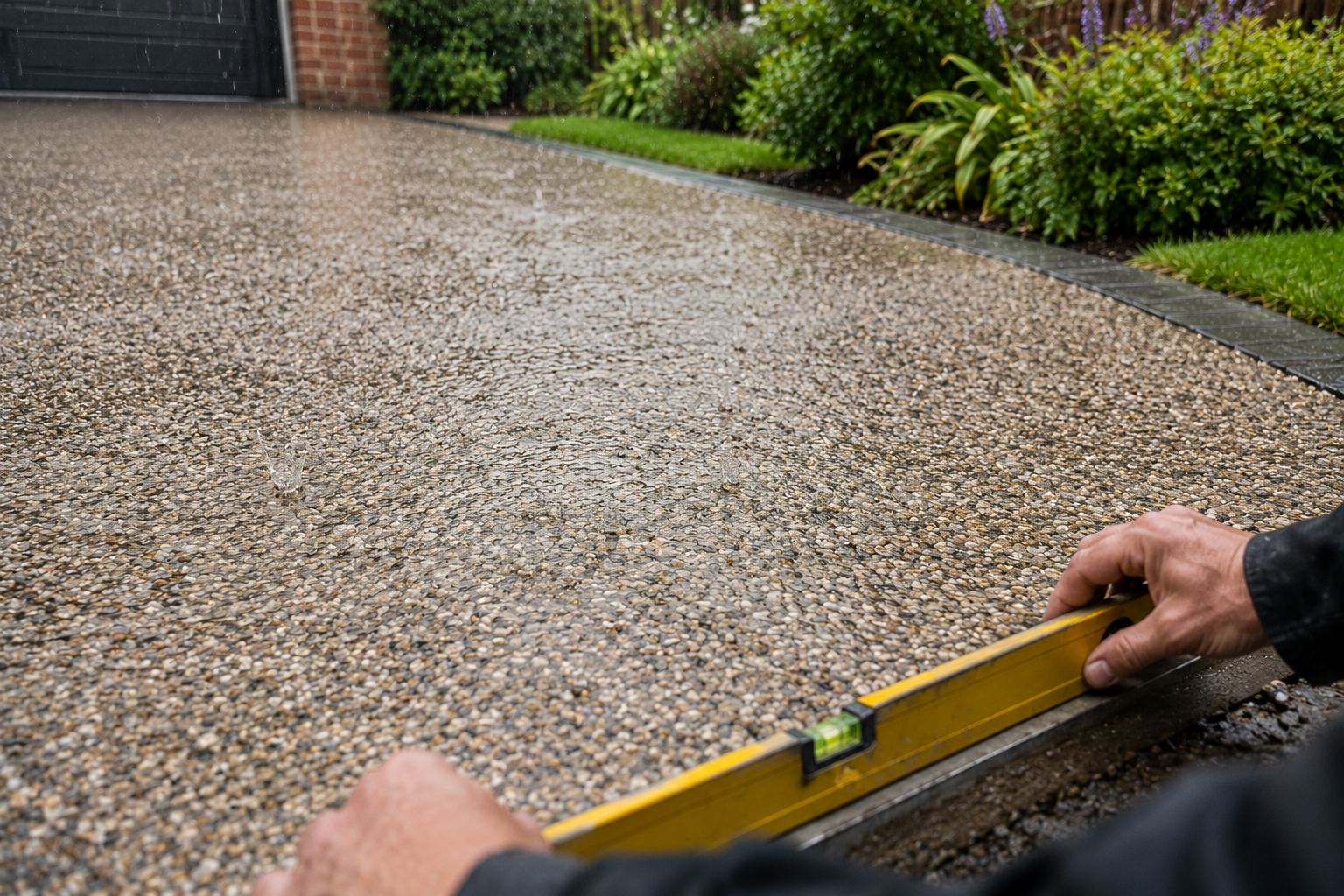
Maidstone sees its share of heavy rain, and resin bound surfacing’s permeability is a genuine practical advantage here. Rather than water pooling on the surface — as it often does on compacted gravel or slabs with clogged joints — it drains through the resin bound layer into the sub-base below. This means fewer puddles, less standing water tracked into the house, and reduced risk of ice forming on the surface in freezing conditions, since there’s less surface water to freeze in the first place.
Is a resin bound pathway safe underfoot?
Yes. The finished surface has a slightly textured, gritty feel from the exposed aggregate, giving it good slip resistance in wet weather — an important consideration for a path used daily, in all conditions, often while carrying shopping, pushing a pram, or walking children to school. This is one of the reasons resin bound has become a common choice for front pathways specifically, where safety and everyday practicality matter as much as appearance.
Can a resin bound pathway be curved or shaped?
Yes — this is one of the material’s practical advantages over paving slabs or block paving, both of which are constrained by the size and shape of individual units. Because resin bound is applied as a flowing, trowelled surface, it can follow any curve or shape a garden design calls for, whether that’s a sweeping path through a lawn or a narrow, angular route around raised beds. This flexibility makes it a popular choice for Maidstone gardens with more organic or informal layouts, as well as for straightforward, direct paths.
What does the installation process involve?
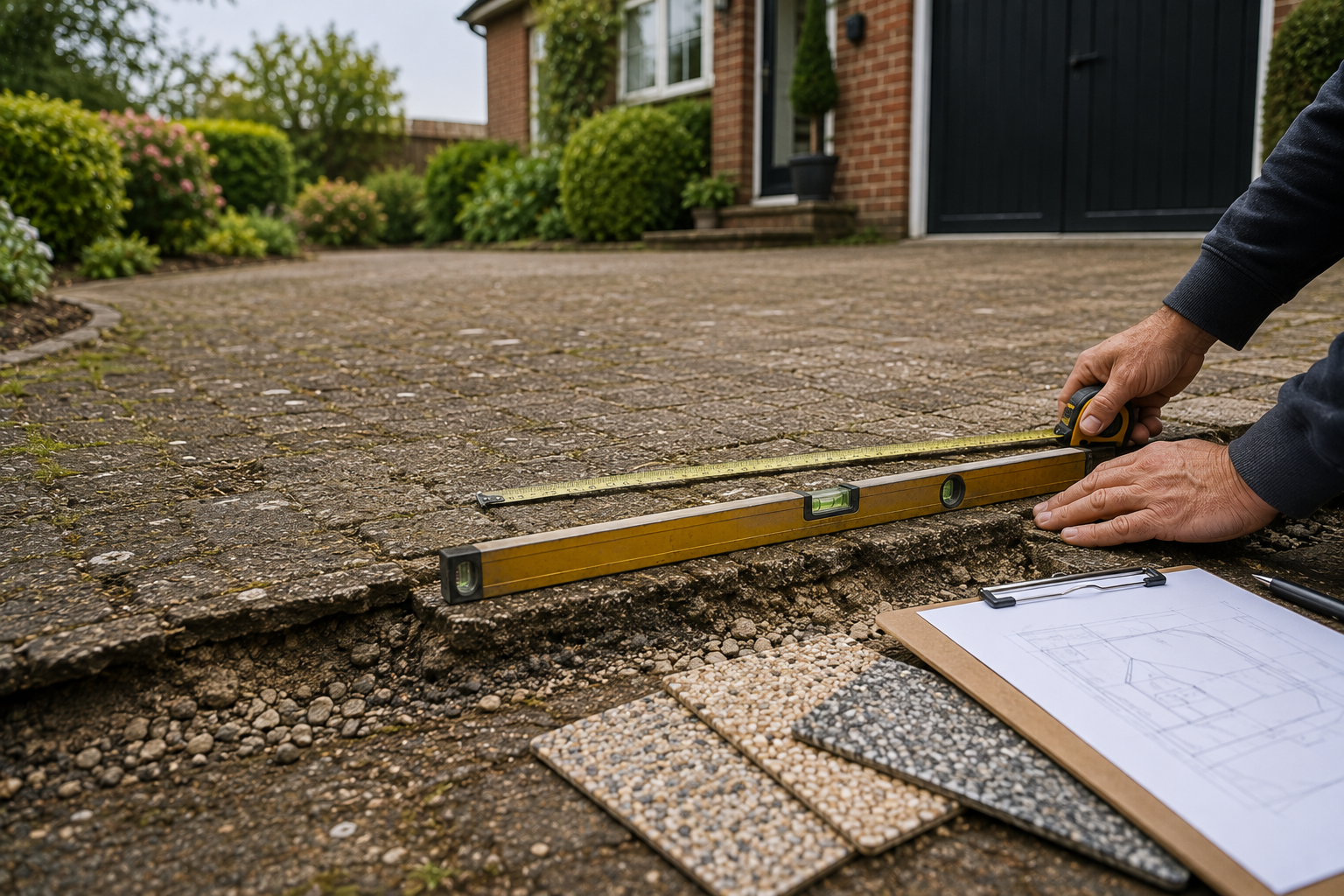
A resin bound pathway is built up in stages, and understanding the process helps explain both the cost and the durability. First, the existing surface — whether that’s grass, gravel, old slabs, or worn tarmac — is excavated to the correct depth. A permeable sub-base is then laid and compacted to create a stable, free-draining foundation, since the long-term performance of any resin bound surface depends heavily on how well this stage is done.
Once the sub-base is prepared, edging is installed to contain the resin bound surface and give it a clean, defined border — this might be a simple metal edge, a block paving border, or a contrasting resin bound strip, depending on the look required. The resin and aggregate mix is then prepared and trowelled across the area by hand to achieve a smooth, consistent finish, before being left to cure. For a typical Maidstone garden pathway, the whole process — from initial excavation to a fully cured, usable surface — is usually completed within a single day, weather permitting, though longer or wider paths may need an extra day.
How wide should a garden pathway be?
Pathway width is worth thinking about before installation, since it affects both cost and everyday practicality. A single-file path for occasional garden access can be as narrow as 600mm, but most Maidstone homeowners opt for something wider for a front pathway used regularly — typically 900mm to 1.2m, which comfortably fits a pram, wheelie bin, or two people walking side by side.
Side-return pathways connecting a front and back garden are often narrower by necessity, constrained by the gap between a house and boundary fence, but even a modest 700–800mm resin bound path is a significant upgrade over bare soil, broken slabs, or patchy gravel in these often-overlooked spaces. South East Resin can advise on the most practical width and layout for a specific plot during a site visit.
Getting started with your Maidstone pathway project
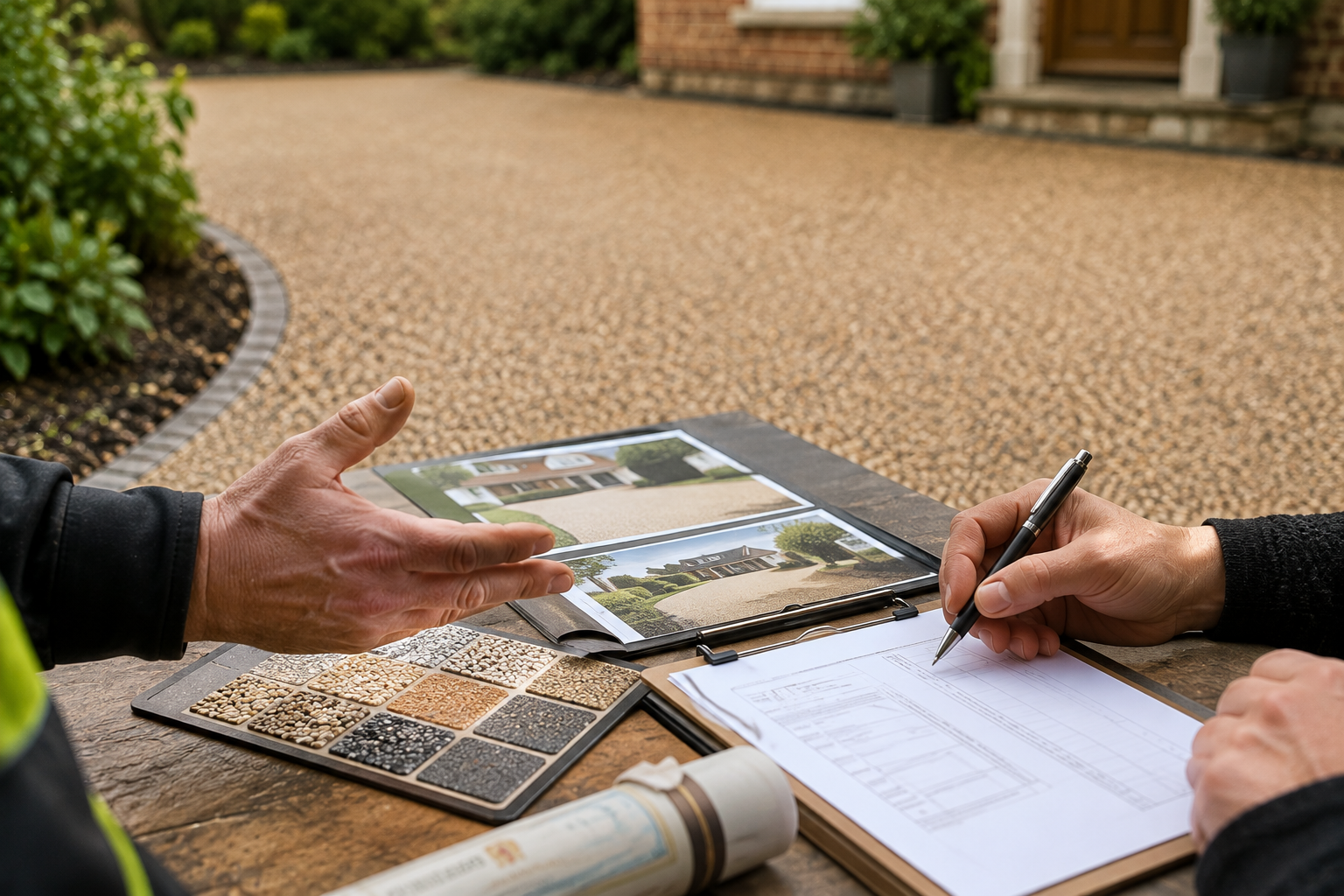
A pathway is a small-scale project compared to a driveway, but it’s still worth getting a proper site assessment, since ground condition and access affect both price and installation approach. South East Resin & Paving offers free consultations for homeowners across Maidstone and the surrounding villages, including aggregate samples to view against your garden before you commit, and a written quote based on the actual site.