If you’ve been researching a new driveway recently, you’ve probably stumbled across the term “SuDS compliant” somewhere along the way — usually attached to a claim that a particular surface will save you from needing planning permission. It’s one of those phrases that gets thrown around a lot without much explanation, which is a shame, because understanding it properly can genuinely save you time, money, and a fair bit of hassle before any work even begins.
SuDS stands for Sustainable Drainage Systems, and it’s not just planning jargon — it’s the framework that decides whether your shiny new driveway needs council approval or not. Get this wrong and you could end up with an unauthorised structure, a retrospective planning headache, or worse, a driveway that contributes to flooding on your own street. Here’s what it actually means, and why it matters more than most homeowners realise.
What SuDS Actually Stands For
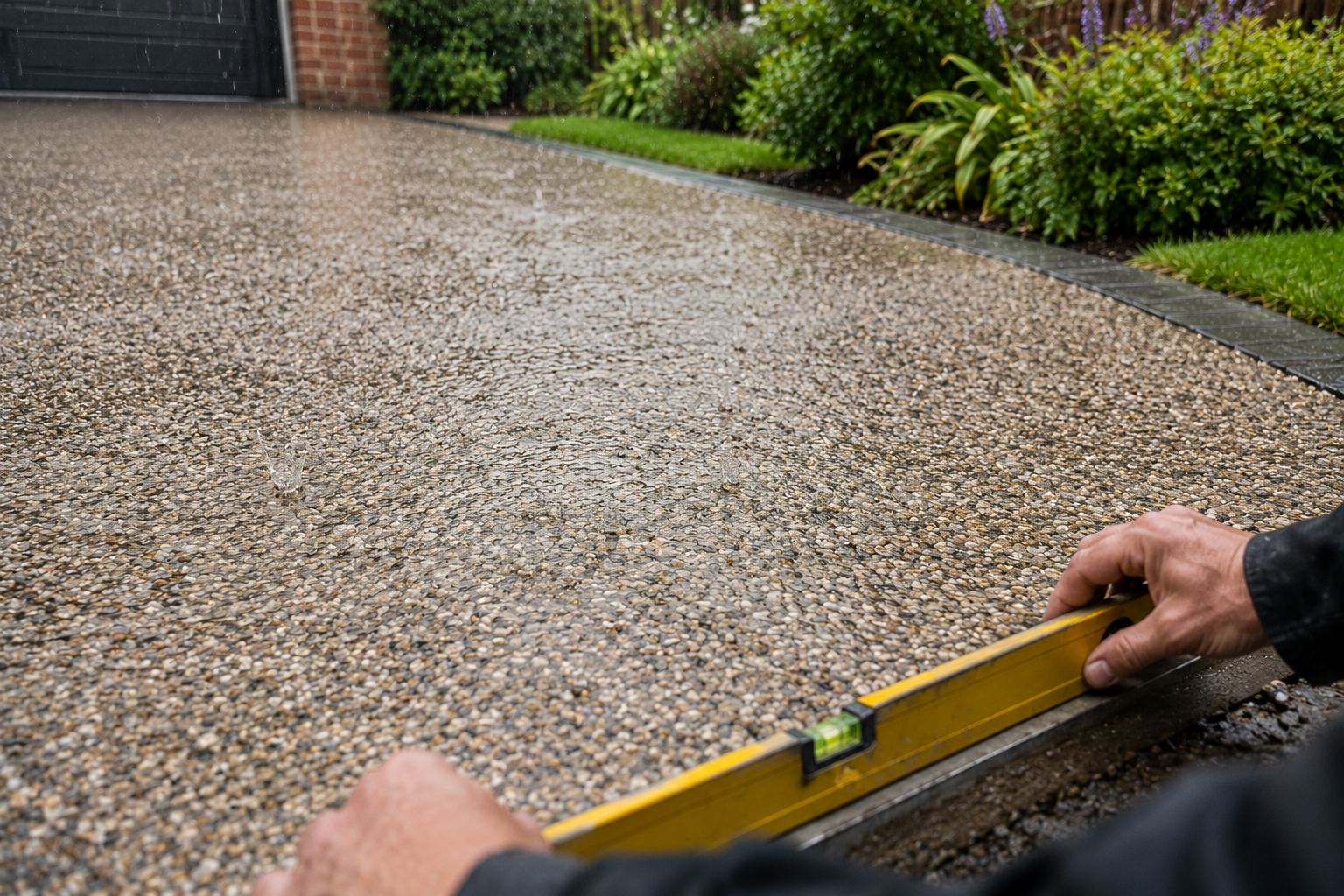
Sustainable Drainage Systems are techniques designed to manage rainwater in a way that mimics how it would naturally behave before a garden or driveway was ever built there. Instead of water hitting a solid surface and rushing straight off into the road and public sewers, SuDS-compliant surfaces allow rainwater to soak into the ground gradually, much as it would across grass, soil, or gravel.
Why the Rules Exist in the First Place
The logic behind this isn’t abstract. Every hard, impermeable surface added to a front garden increases the volume of water that has to go somewhere fast during heavy rain. Multiply that across an entire street of paved-over driveways and you start to see exactly the kind of surface water flooding that’s become increasingly common in residential areas. National guidance published by GOV.UK sets out the technical standards for how these systems should perform, and while much of it is aimed at developers and larger projects, the underlying principle applies just as much to a single household driveway.
When Do You Actually Need Planning Permission?
This is the part homeowners search for most, and thankfully it’s fairly straightforward once it’s laid out properly.
The Five Square Metre Rule
Under permitted development rights, you can pave an area smaller than five square metres without needing planning permission, regardless of the material used. This covers most small parking spaces or single-car driveways outright, no drainage considerations required.
What Happens Above Five Square Metres
Once your driveway exceeds five square metres, the material and drainage design start to matter a great deal. According to the Planning Portal, no planning permission is needed if the surface is permeable and allows water to drain through naturally, or if the surface is impermeable but rainwater is directed to a lawn, border, soakaway, or other permeable area within your property rather than out onto the road. Planning permission is only required where an impermeable surface is used and water is allowed to run off directly onto the public highway.
Why This Rule Has Been Around Longer Than You’d Think
These principles aren’t new — they’ve formed part of UK planning policy since 2008, and recent updates have reinforced them further, with additional emphasis now placed on the wider ecological and amenity benefits of sustainable drainage rather than flood prevention alone. For homeowners, though, the practical rule of thumb hasn’t really changed: permeability is what determines whether you need to apply.
What Makes a Surface “Permeable” in Planning Terms?
Resin Bound Surfacing
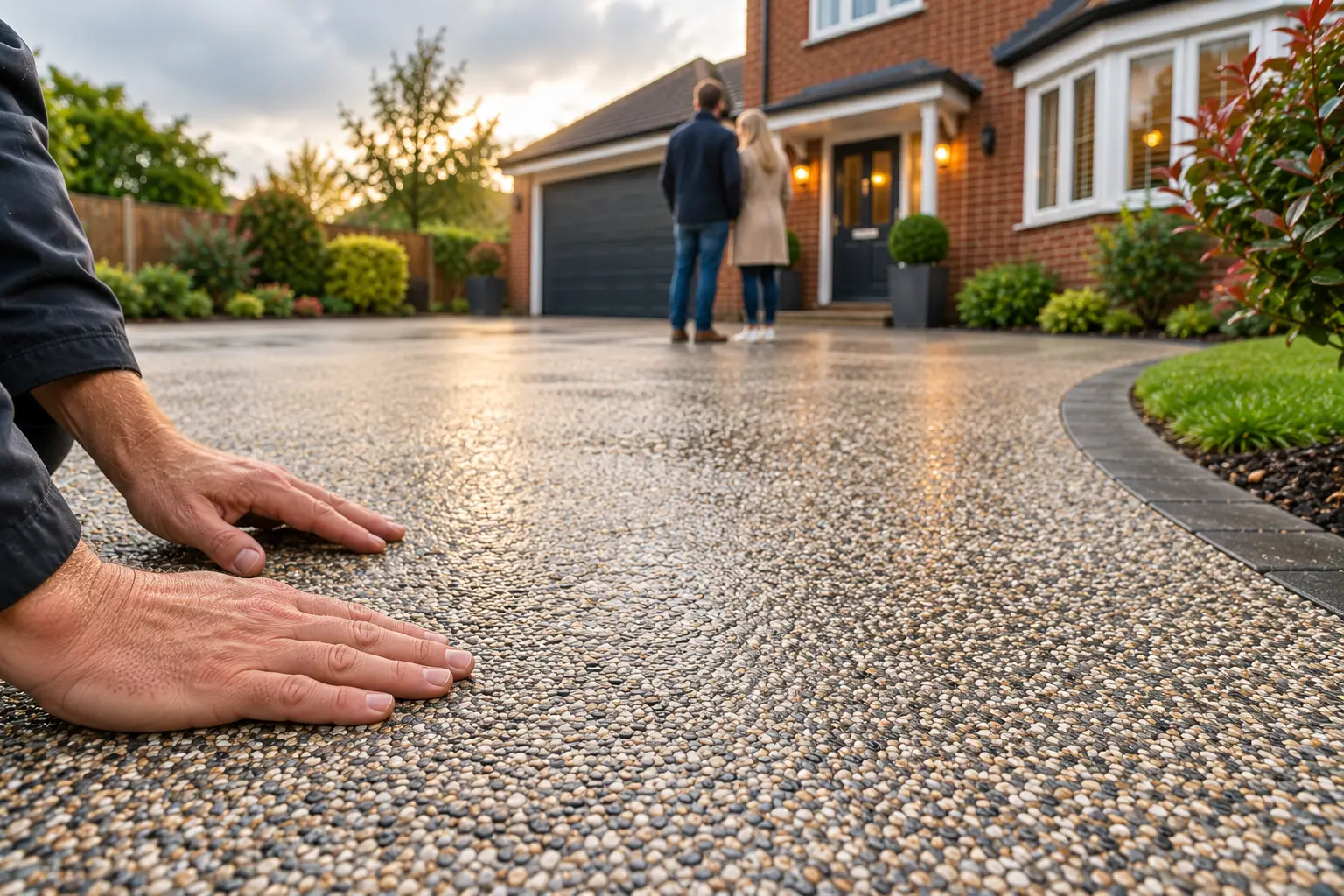
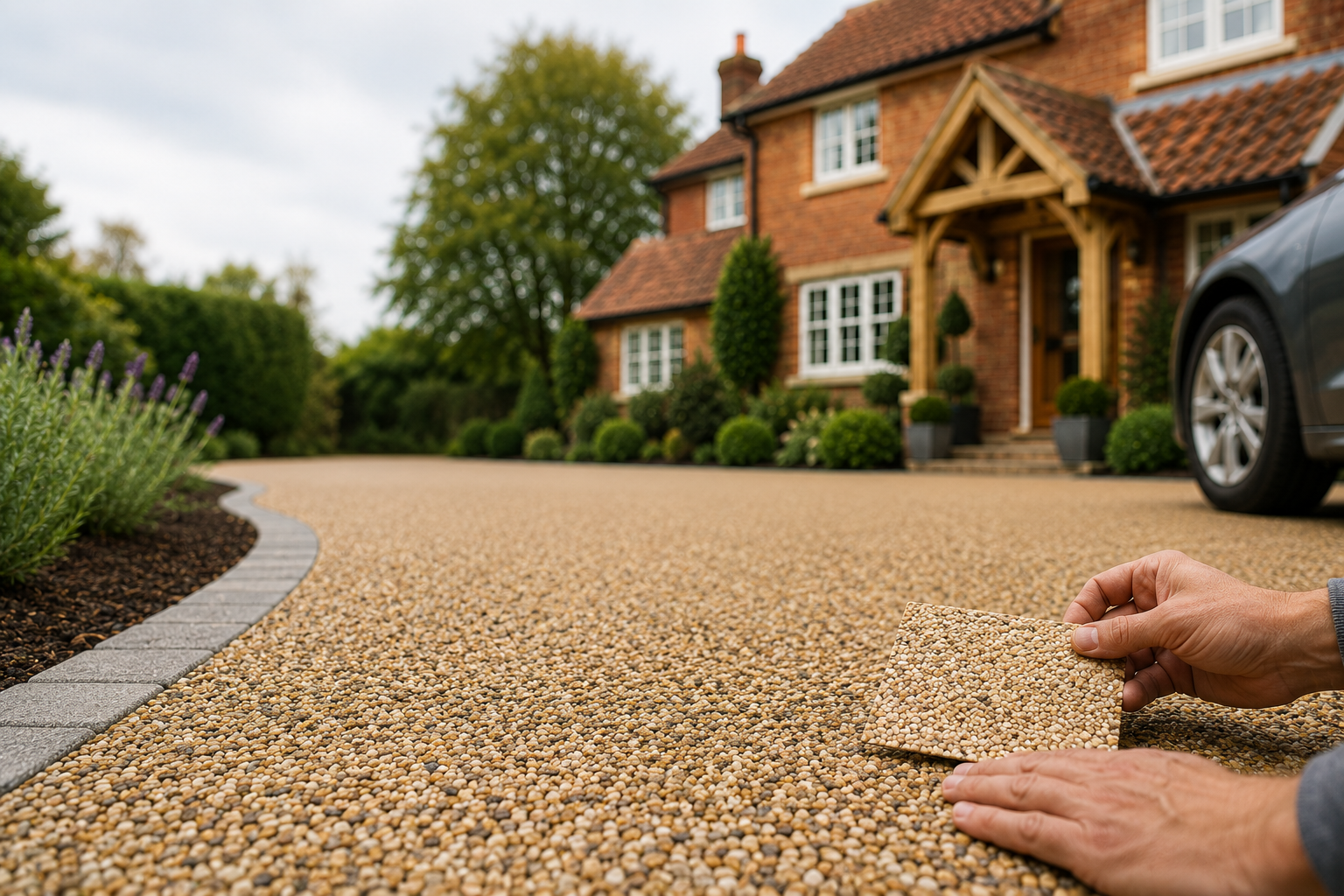
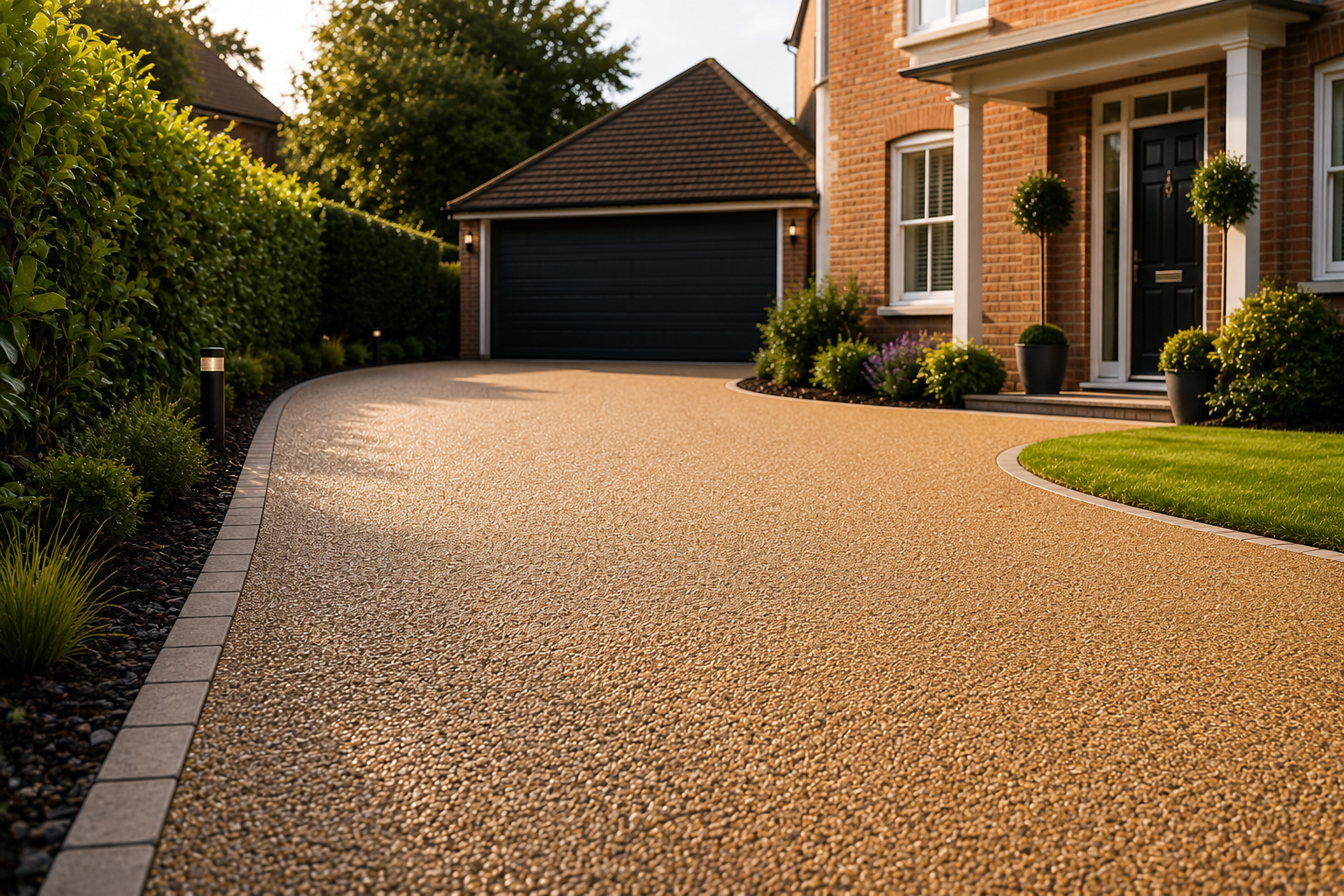
Resin bound paving, laid correctly over a properly designed permeable sub-base, allows rainwater to pass through the surface itself and filter down into the ground below, rather than pooling or running off. This is a large part of why it’s become such a popular choice for homeowners specifically trying to avoid the planning permission process — provided the installation is done properly, it typically qualifies as SuDS compliant without any additional intervention needed.
Permeable Block Paving
Standard block paving, jointed with sand in the usual way, is generally treated as impermeable. However, permeable block paving systems exist, using specially designed joints or nibs that allow water to pass between the blocks into an engineered sub-base beneath. These systems are also recognised as SuDS-compliant solutions, though they rely on the jointing remaining clear and functional over time.
Gravel and Porous Surfaces
Loose gravel is one of the simplest ways to achieve a permeable surface, since water naturally filters through the stones and into the ground. Porous asphalt, a less common but genuinely permeable variant of standard tarmac, also exists and can meet SuDS requirements when installed over the correct sub-base, though it offers considerably fewer design and colour options than resin bound surfacing.
What If You Want an Impermeable Surface Anyway?
Directing Water to a Permeable Area
You don’t necessarily have to choose a permeable material to avoid planning permission. If your chosen surface is impermeable, but you arrange for rainwater to drain into a lawn, border, or dedicated soakaway on your own property rather than out onto the street, this also satisfies the rules without requiring approval.
Installing a Soakaway
For larger driveways with limited surrounding green space to absorb runoff, a soakaway — essentially an underground storage system that releases collected rainwater slowly into the surrounding soil — is a common solution. These typically need to be positioned a suitable distance from buildings and boundaries to avoid affecting foundations, so it’s worth having this properly assessed rather than guessed at.
Why SuDS Compliance Matters Beyond Avoiding Planning Permission
Reducing Local Flood Risk
Even beyond the paperwork, a properly draining driveway genuinely reduces pressure on public drainage systems and lowers the risk of localised flooding during heavy rainfall — something that’s become an increasingly relevant concern given how much more frequent intense rainfall events have become across the UK in recent years.
Protecting Your Own Property
Poor drainage doesn’t just affect the street — it can cause water to pool against your own foundations, walls, or garage entrance if it isn’t managed properly. A SuDS-compliant surface, correctly installed with the right falls and sub-base, actively works to prevent this rather than simply pushing the problem elsewhere.
Avoiding Costly Retrospective Issues
Installing an impermeable driveway without the required drainage measures, and without planning permission where it was needed, can lead to enforcement action from your local council further down the line. This is a considerably more expensive and stressful outcome than simply choosing the right surface and sub-base from the outset.
Getting the Sub-Base Right Is Non-Negotiable
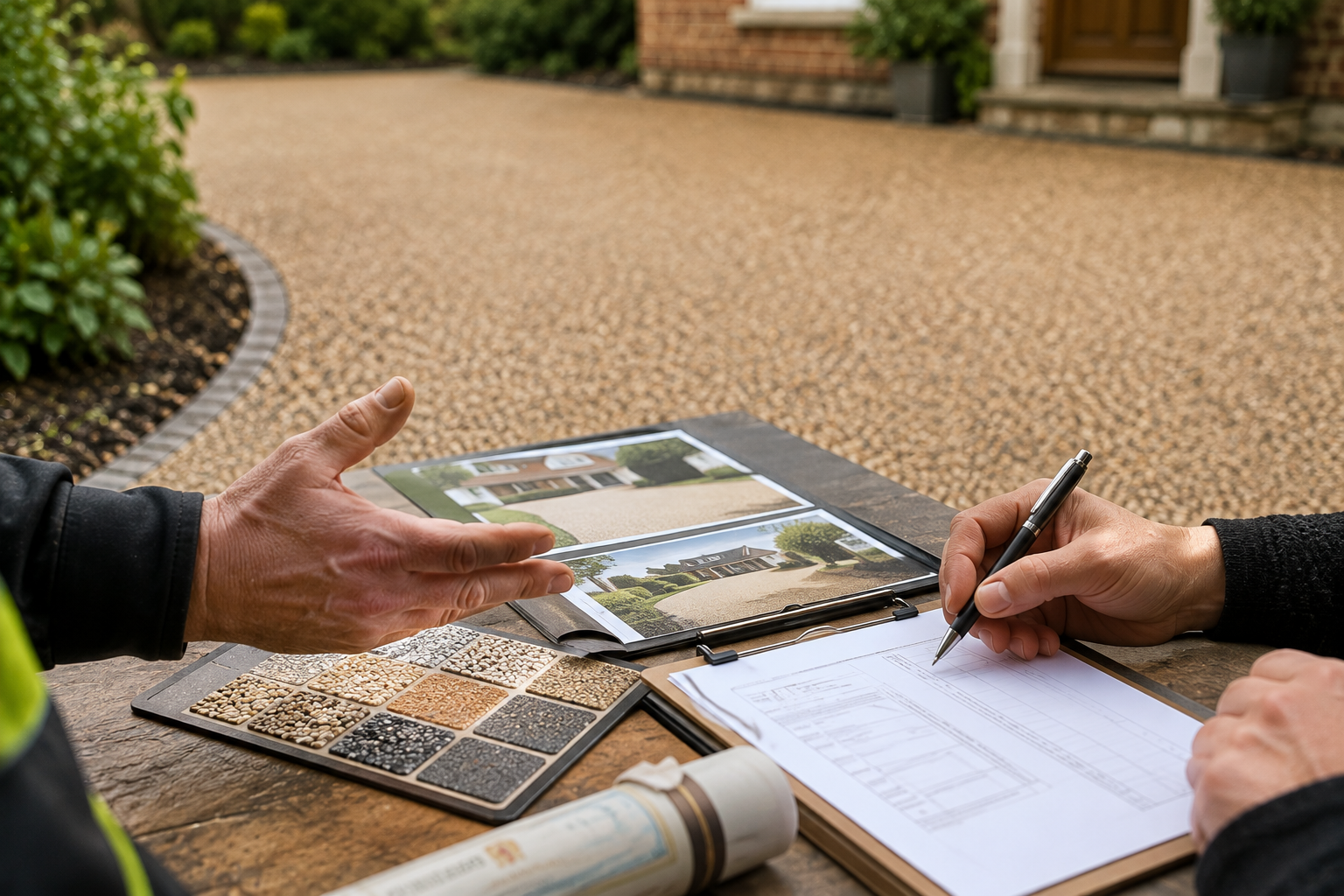
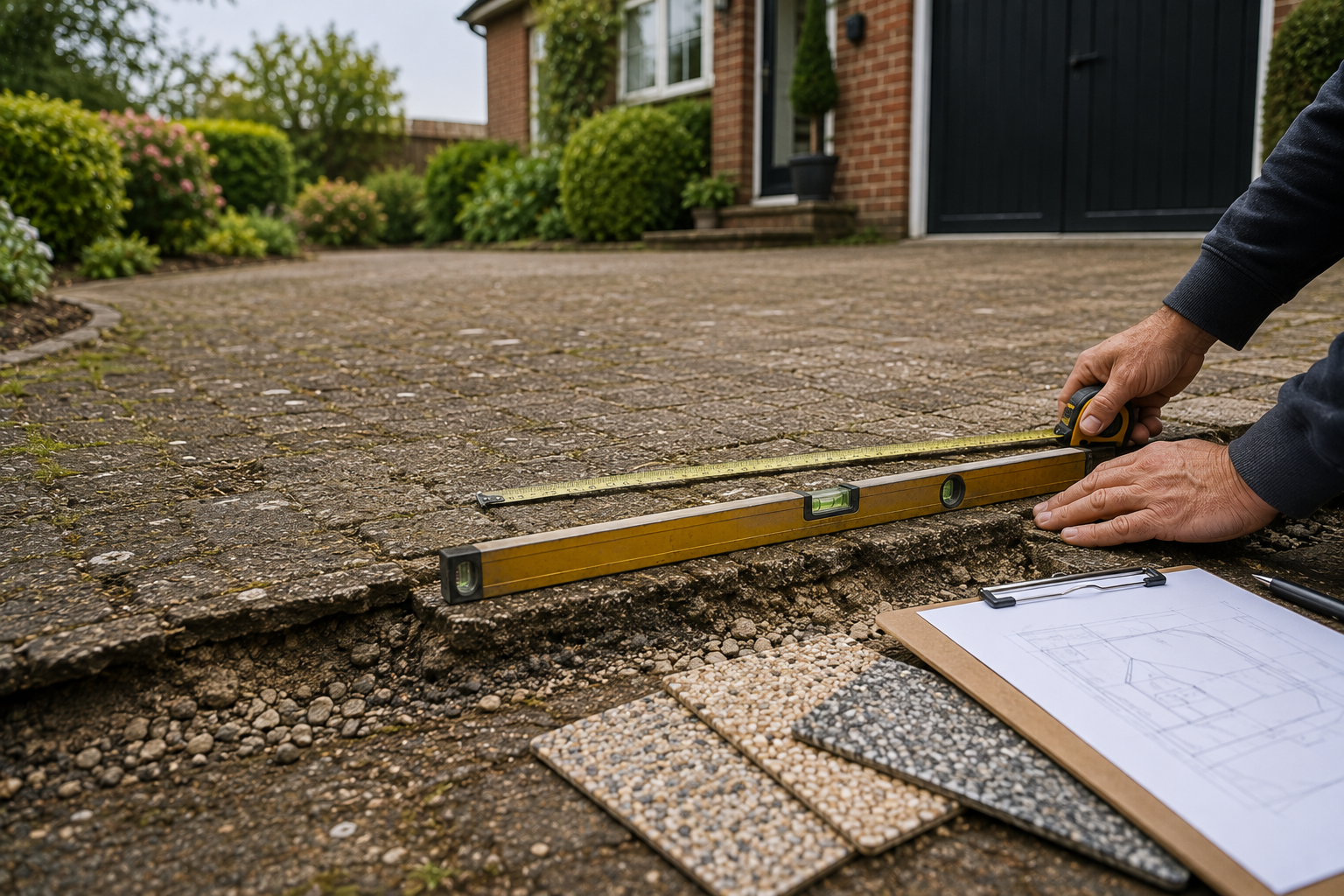
Whatever surface you choose, none of this works without a properly specified sub-base beneath it. A shallow, poorly compacted, or incorrectly designed sub-base can undermine even a genuinely permeable surface material, leaving you with pooling water and drainage failures despite having chosen the right product. This is precisely why the quality of your installer matters just as much as the material itself — a professional survey should always assess your soil type, existing drainage, and site conditions before any work begins.
Conclusion
SuDS compliance isn’t just a box-ticking exercise for avoiding planning permission — it’s a genuinely sensible approach to managing rainwater responsibly on your own property. For most homeowners, choosing a properly installed permeable surface like resin bound paving, or directing runoff to a lawn, border, or soakaway, is the simplest way to stay compliant without ever needing to apply for permission. Whatever you choose, insist on a proper site survey and a correctly specified sub-base, since that’s ultimately what determines whether your driveway performs as it should for years to come.
Frequently Asked Questions
Do I need planning permission for a resin bound driveway?
Usually not, provided the surface is properly permeable and installed over a suitable sub-base, allowing rainwater to drain through naturally rather than running off onto the road.
What size driveway needs planning permission in the UK?
Driveways under five square metres never need planning permission, regardless of material. Above this size, permission is only required if the surface is impermeable and water drains directly onto the public highway.
Is block paving SuDS compliant?
Standard block paving is generally impermeable, but permeable block paving systems, designed with special jointing to allow water through, can meet SuDS requirements.
What happens if my driveway isn’t SuDS compliant and needed permission?
You could face enforcement action from your local council, which may require costly remedial work or a retrospective planning application.
Can I make an impermeable driveway compliant without changing the material?
Yes, by directing rainwater to a lawn, border, or soakaway on your own property instead of letting it run onto the street.