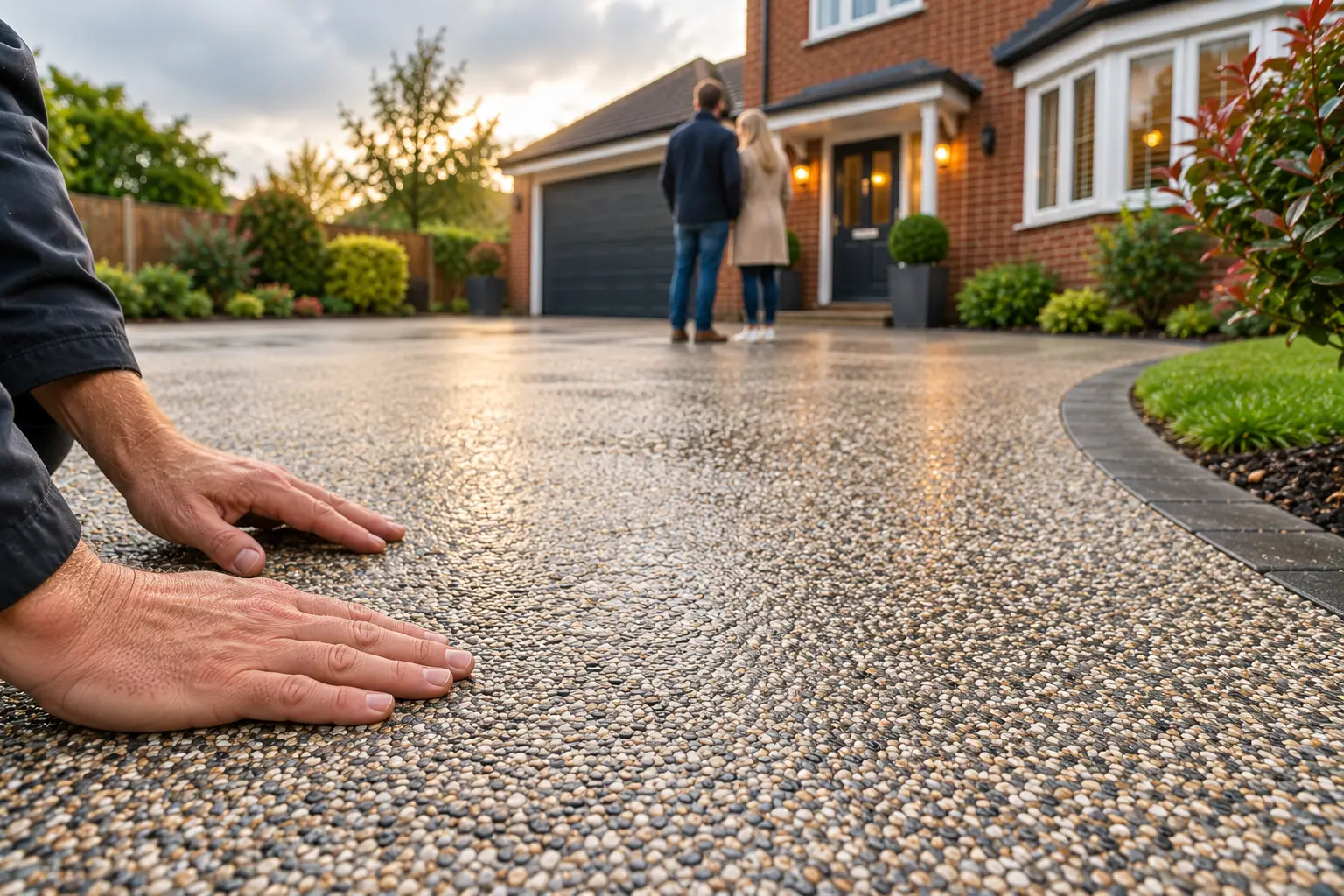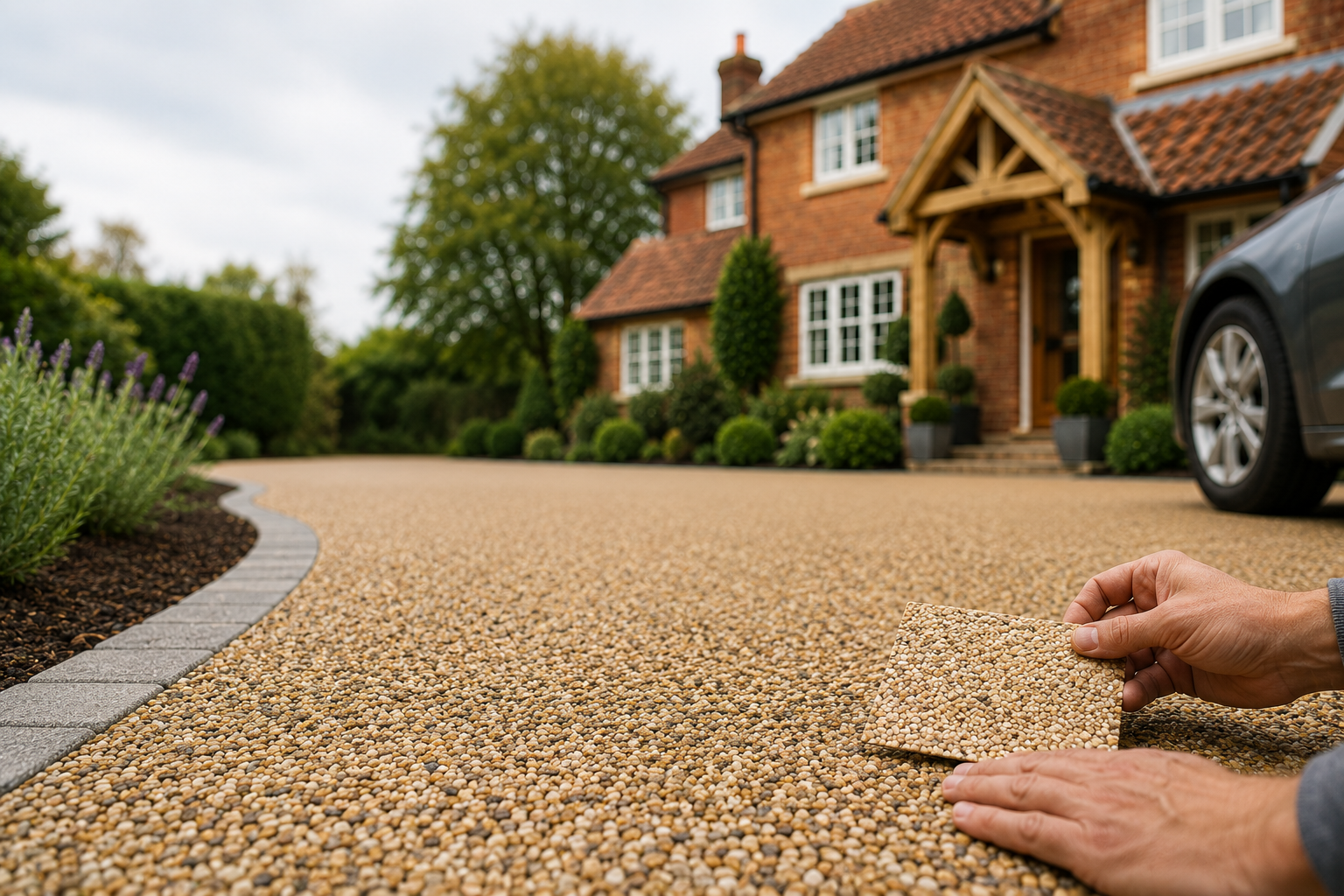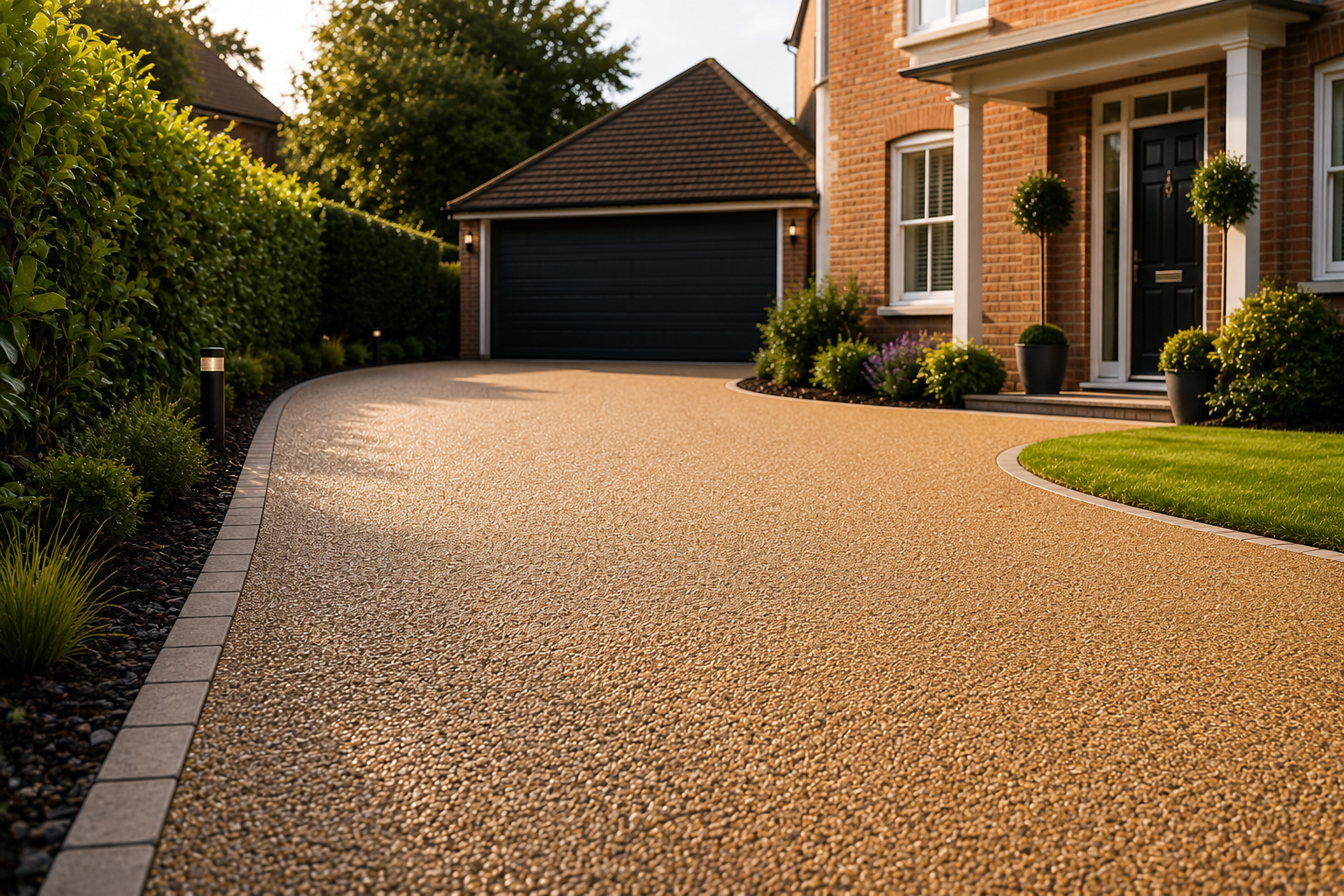
Resin bound driveways look fantastic when they’re done properly. The trouble is, there’s currently no official regulation governing who’s allowed to install one, which means the market is genuinely mixed — from highly experienced specialists who’ve fitted hundreds of driveways, right through to general landscapers who’ve picked up resin work as an add-on with very little formal training behind it. Checkatrade’s own guidance confirms this directly, noting that because there are no official regulations surrounding resin bound installation, quality can vary significantly between companies.
That puts the burden of due diligence squarely on the homeowner. The good news is that a handful of well-aimed questions, asked before you sign anything, will tell you almost everything you need to know about whether a company is worth trusting with your driveway. Here’s exactly what to ask.
Why This Matters More Than It Might Seem
A resin bound driveway isn’t a quick, forgiving job. Precision matters at every stage, from base preparation through to mixing and laying the resin itself, and even small mistakes during any of these steps can lead to cracking, poor drainage, or an uneven, patchy finish that only becomes obvious once the resin has fully cured. Because so much of the work — the excavation, the sub-base, the compaction — is invisible once the job’s finished, you’re relying heavily on the installer’s competence rather than anything you can easily inspect afterwards. That’s exactly why the questions below focus on process and evidence, not just price.
How Long Have You Been Installing Resin Bound Surfacing Specifically?
Why General Landscaping Experience Isn’t Quite the Same
Plenty of general landscapers and driveway contractors have added resin bound surfacing to their list of services over the past several years, simply because demand has grown so quickly. That’s not necessarily a problem, but it’s worth distinguishing between a company that specialises in resin systems and one offering it as a secondary service alongside block paving, tarmac, and general groundworks. Specialists tend to have refined their sub-base preparation and mixing process specifically for resin, which is a genuinely different discipline to laying blocks or tarmac.
What a Confident Answer Sounds Like
A reputable installer should be able to tell you clearly how many years they’ve specifically worked with resin bound systems, roughly how many driveways they install each year, and ideally point you towards a portfolio of completed local projects rather than stock photography.
Can I See Examples of Recent Local Work?
Photos Aren’t Always Enough
Ask specifically for addresses or photos of driveways completed in the last year or two, ideally nearby, so you can see how the surface has settled and weathered rather than judging it fresh off a phone camera on installation day.
Why Recency Matters
A driveway installed five years ago that’s still holding up well tells you far more about an installer’s long-term quality than one installed last month. If a company is reluctant to share recent local examples, that’s worth noting.
Are You a Member of Any Trade Accreditation Schemes?
What to Look For
Membership with recognised trade bodies such as Checkatrade, TrustATrader, or TrustMark gives you a level of external accountability that an unlisted or unaccredited company simply doesn’t offer. These schemes typically involve vetting processes covering trading history and reference checks, and crucially, they give you somewhere to turn if a dispute arises later.
Why This Matters When Something Goes Wrong
Accreditation isn’t a guarantee of perfect work, but it does mean there’s a formal complaints process available if things don’t go to plan, rather than being left to negotiate directly with a company that has no external oversight at all.
What Sub-Base Will You Be Using, and How Deep Will It Be?
This Is the Question That Separates the Professionals
Anyone genuinely experienced with resin bound installation should be able to explain their sub-base specification clearly and confidently, without hesitation — typically referencing a compacted MOT-graded stone base of an appropriate depth for your specific ground conditions and expected use. A vague or uncertain answer here is a significant red flag, since the sub-base is the single biggest factor in whether your driveway lasts.
Why This Should Be Tailored to Your Property
The correct depth and specification genuinely does vary by soil type, drainage, and vehicle use, so a company reciting the exact same generic answer regardless of your property’s conditions hasn’t necessarily done their homework properly.
Will the Finished Driveway Be SuDS Compliant?
Why This Affects Planning Permission
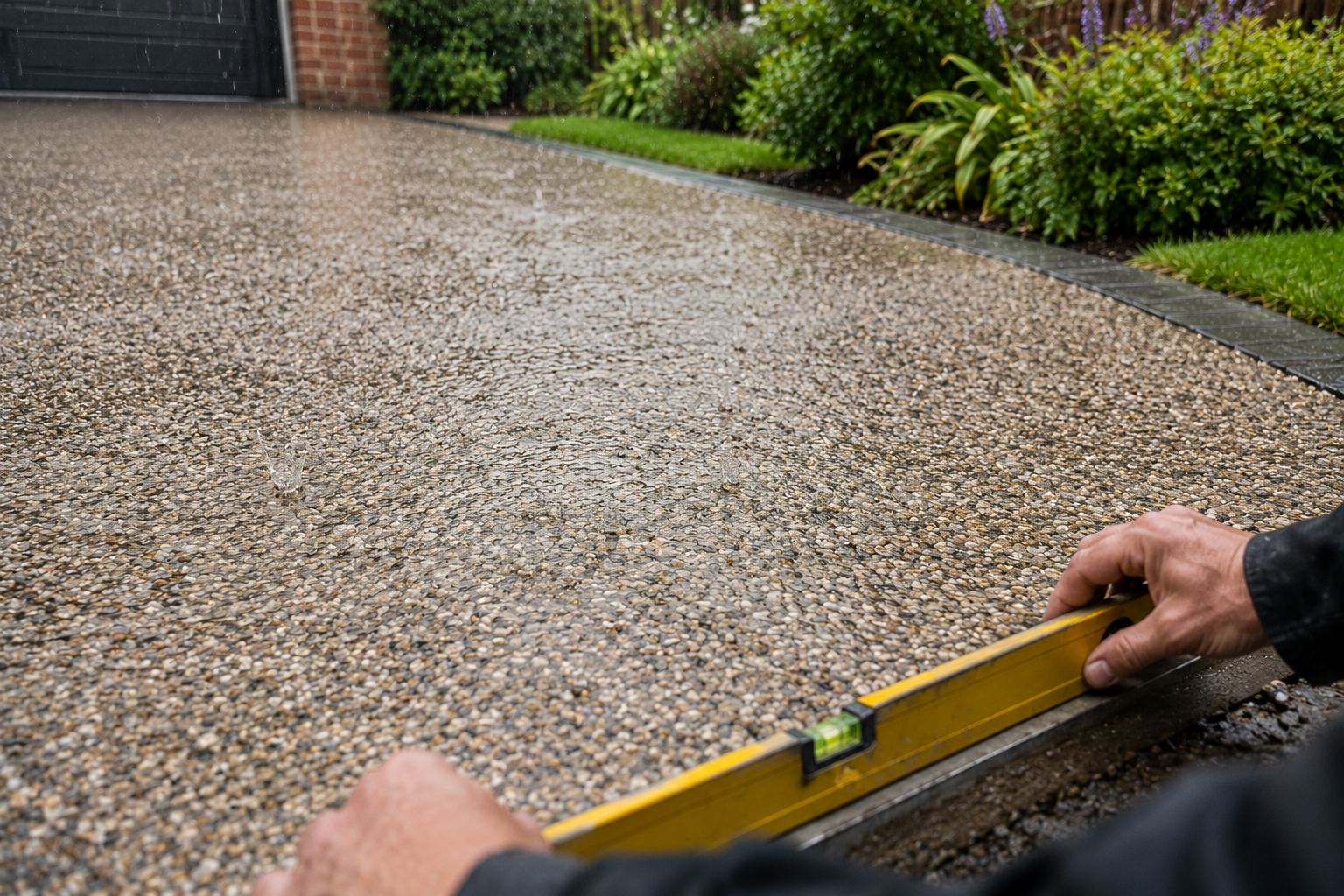
If your driveway is larger than five square metres, whether the finished surface is properly permeable can determine whether you need planning permission at all. A knowledgeable installer should be able to explain clearly how their sub-base and resin system achieve compliance, rather than simply asserting that it “will be fine.”
What Guarantee Do You Offer, and What Does It Actually Cover?
Reading the Fine Print
Guarantees on resin bound driveways vary considerably between companies, both in length and in what’s actually covered. Ask specifically whether the guarantee covers cracking, colour fading, and drainage performance, or only surface-level defects, and get the details in writing rather than relying on a verbal assurance.
Why Longer Isn’t Always Better
A ten-year guarantee is only meaningful if the company is likely to still be trading in ten years’ time, so it’s worth weighing guarantee length against how established and financially stable the business actually appears.
Are You Insured, and Can I See Proof?
Public Liability Insurance Is Non-Negotiable
Any reputable installer should carry public liability insurance as standard, covering accidental damage to your property during the works. Don’t be afraid to ask to see evidence of this directly, rather than simply taking it on trust.
How Will You Handle the Existing Surface?
What Happens to What’s Already There
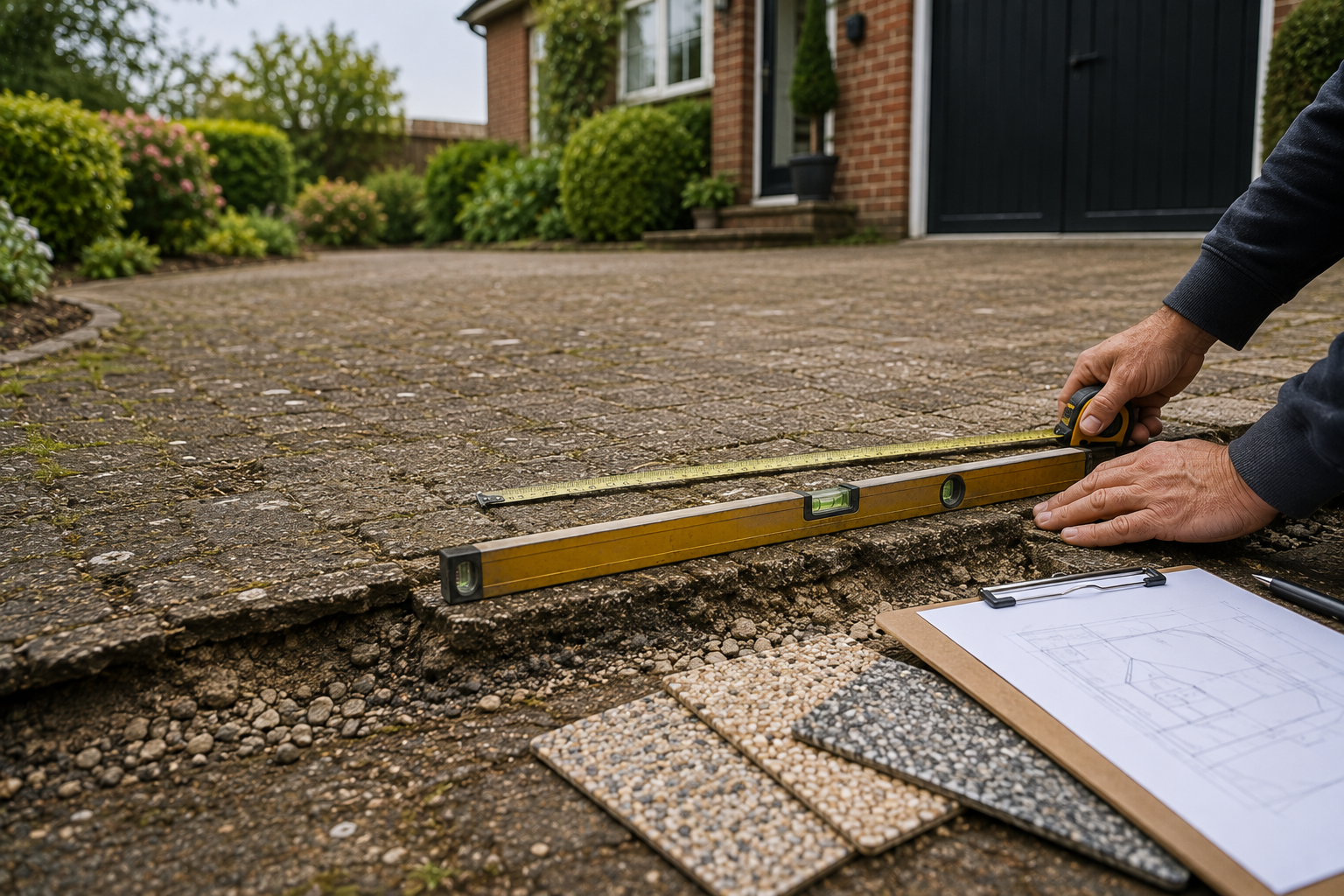
Whether your existing driveway needs to be fully removed, or can be used as a base with some repair, significantly affects both cost and the finished result. A thorough installer will assess this properly during the site survey rather than giving a generic answer before ever seeing the property.
What Happens If It Rains During Installation?
Weather Genuinely Affects the Outcome
Resin needs a reasonably dry period to cure properly, and a professional installer should have a clear contingency plan for weather delays, rather than pushing ahead regardless and risking a compromised finish.
Can I Get a Detailed, Written Quote Rather Than a Verbal Estimate?
Why Detail Matters Here
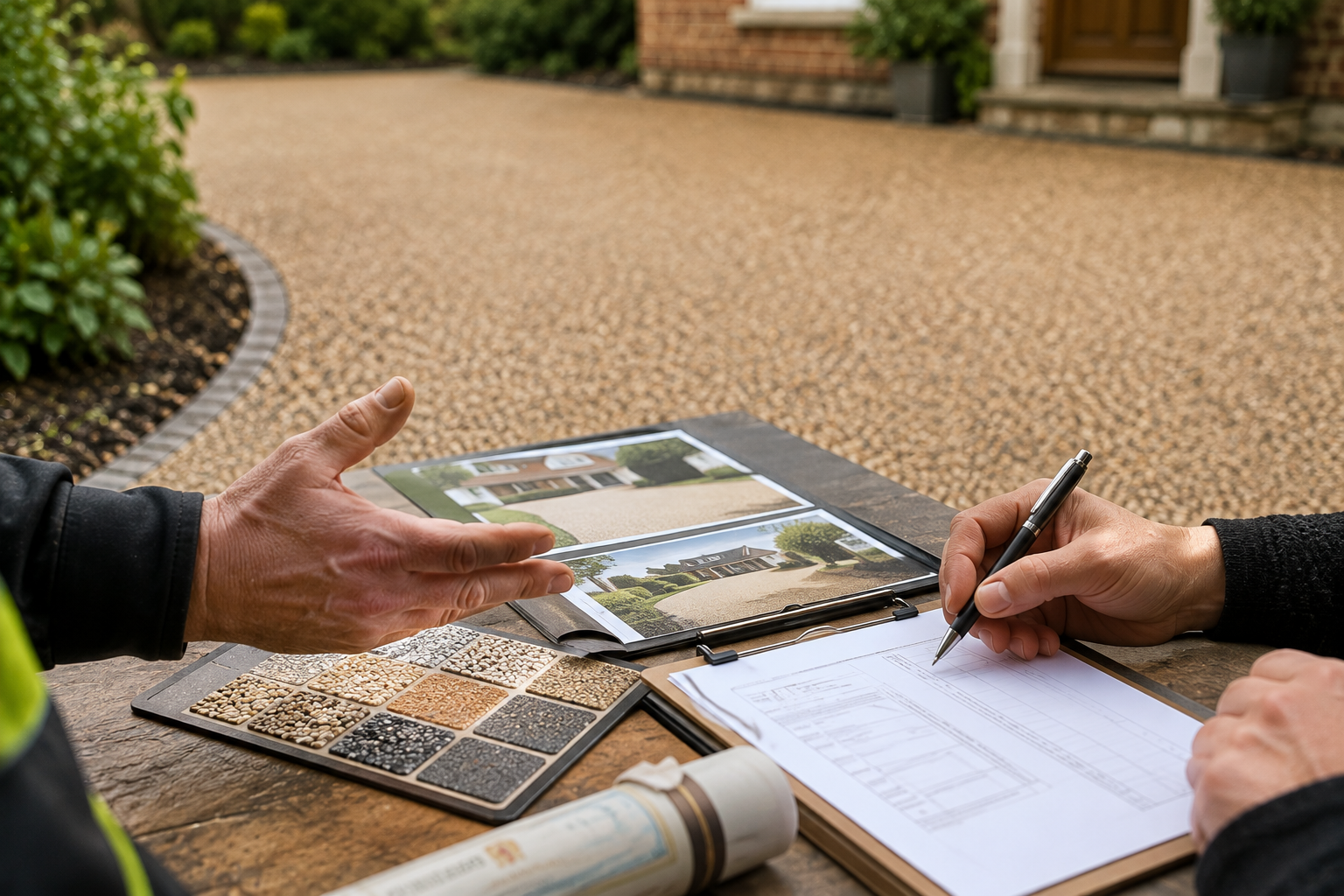
A proper written quote, following an in-person site survey, should break down excavation, sub-base specification, drainage provisions, and aggregate choice individually, rather than presenting a single vague total. This transparency is often the clearest indicator of how seriously a company treats the technical side of the job.
Conclusion
None of these ten questions are designed to catch anyone out — a genuinely experienced, professional resin bound installer will answer all of them clearly, confidently, and without hesitation. It’s the hesitation, the vague answers, or the pressure to sign quickly without a proper survey that should give you pause. Take the time to ask, compare a couple of companies against each other, and check accreditation through resources like Checkatrade before committing. A driveway is a fifteen-to-twenty-year investment, and the right questions upfront are considerably cheaper than fixing a poorly installed one later.
Frequently Asked Questions
Is resin bound driveway installation regulated in the UK?
No, there’s currently no official regulation governing who can install resin bound surfacing, which is why checking experience, accreditation, and references matters so much.
How much should I expect to pay for a quality resin bound driveway?
Prices vary by size, aggregate, and preparation needed, but unusually cheap quotes often indicate corners being cut on groundworks, which is where most long-term failures originate.
What accreditation schemes should I look for?
Checkatrade, TrustATrader, and TrustMark are widely recognised UK trade accreditation schemes that involve vetting and provide a formal route for resolving disputes.
Should I get more than one quote?
Yes, comparing at least two or three detailed, written quotes helps you spot inconsistencies in sub-base specification, guarantee terms, and overall transparency.
What’s the biggest red flag when choosing an installer?
Vague or evasive answers about sub-base depth and drainage are the clearest warning sign, since these details determine whether the driveway will last.