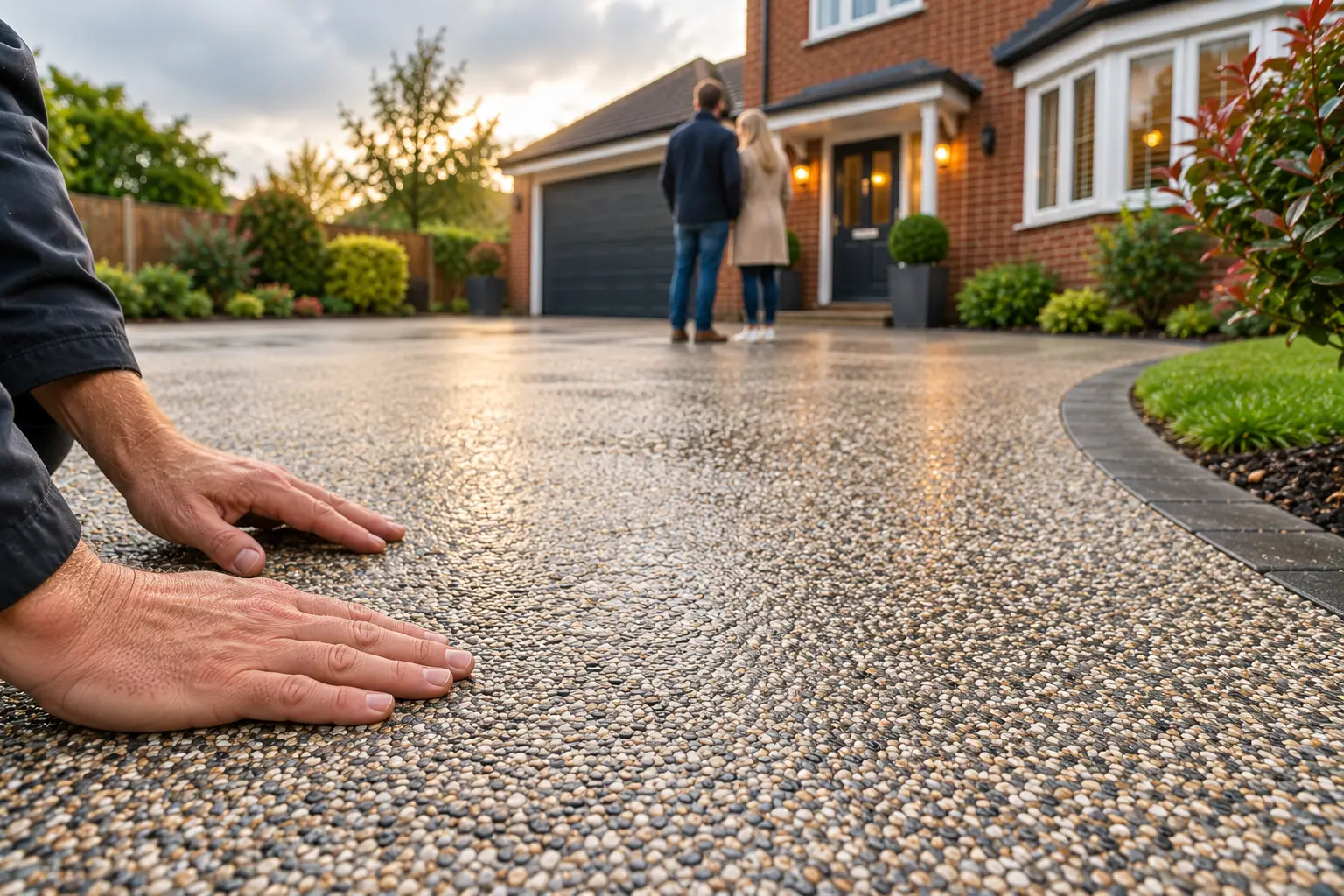
Booking a resin bound driveway usually starts with one appointment that homeowners tend to know surprisingly little about — the site survey. It’s often assumed to be a quick five-minute look at the driveway followed by a price on a piece of paper, but a proper survey is a good deal more thorough than that, and it’s genuinely the single most important step in the entire process. Skip it, rush it, or have it done badly, and everything that follows — the sub-base, the drainage, the finished surface itself — is built on shaky foundations, quite literally.
If you’ve got a survey booked in and you’re wondering what to expect, or you’re trying to work out whether a company you’re considering actually does one properly, here’s exactly what should happen and why each part matters.
Why the Survey Matters More Than People Expect
A resin bound driveway is only as good as what’s underneath it. The resin surface itself is essentially the final, visible layer of a much larger system involving excavation depth, drainage falls, sub-base material, and edging — and every one of those decisions should be made based on what an installer actually finds on site, not a generic, one-size-fits-all approach applied to every property regardless of ground conditions. A rushed or non-existent survey is one of the most common reasons resin bound driveways fail early, developing cracking, pooling, or edge lifting within just a few years.
Assessing the Existing Surface
What’s Currently There Matters
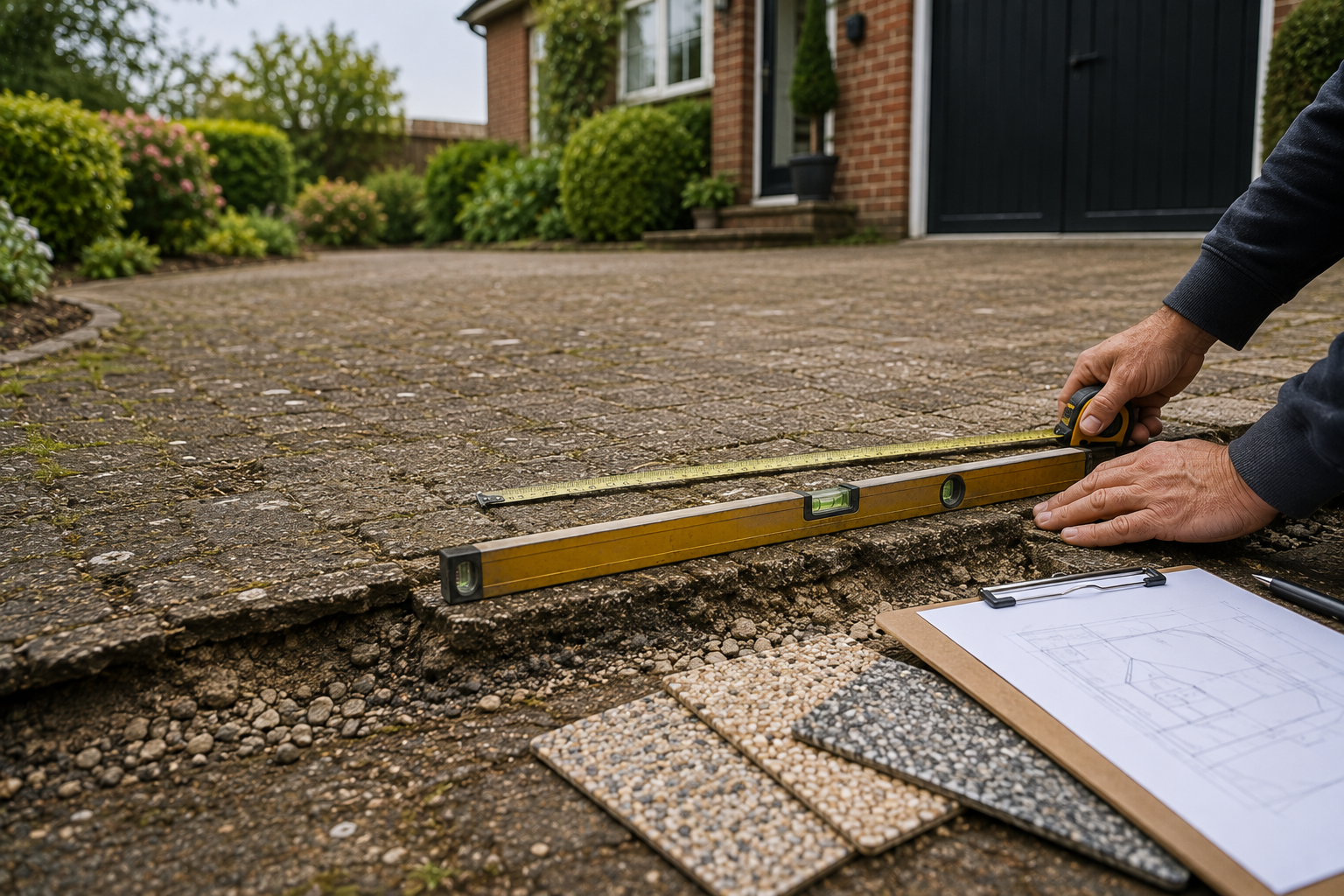
The first thing an installer will look at is what’s already on the ground — whether that’s tired block paving, cracked concrete, old tarmac, or bare soil. This isn’t just a visual check. According to industry guidance on resin bound installation, existing surfaces showing signs of reflective cracking, lifting, or sinking generally need to be repaired or fully removed before any resin work can begin, since laying a new surface directly over compromised ground simply transfers the same problems upward into the new driveway.
Checking for Underlying Damage
Cracking and movement in an existing surface often point to a deeper cause — a poorly compacted original sub-base, tree root movement, or even a collapsed drain beneath the driveway. A good surveyor will investigate the likely cause of any damage rather than simply noting that it exists, because that assessment directly affects what needs to happen during preparation.
Checking Ground Conditions and Soil Type
Why Soil Type Changes the Whole Specification
Different soil types behave very differently when it comes to drainage and stability. Heavier clay soils, common across large parts of the South East, don’t allow water to soak away as freely as sandier or chalkier ground, which affects how deep the sub-base needs to be and whether additional measures, such as a geotextile membrane, are required to stop the soil and sub-base material mixing together over time.
Assessing Drainage and Water Flow
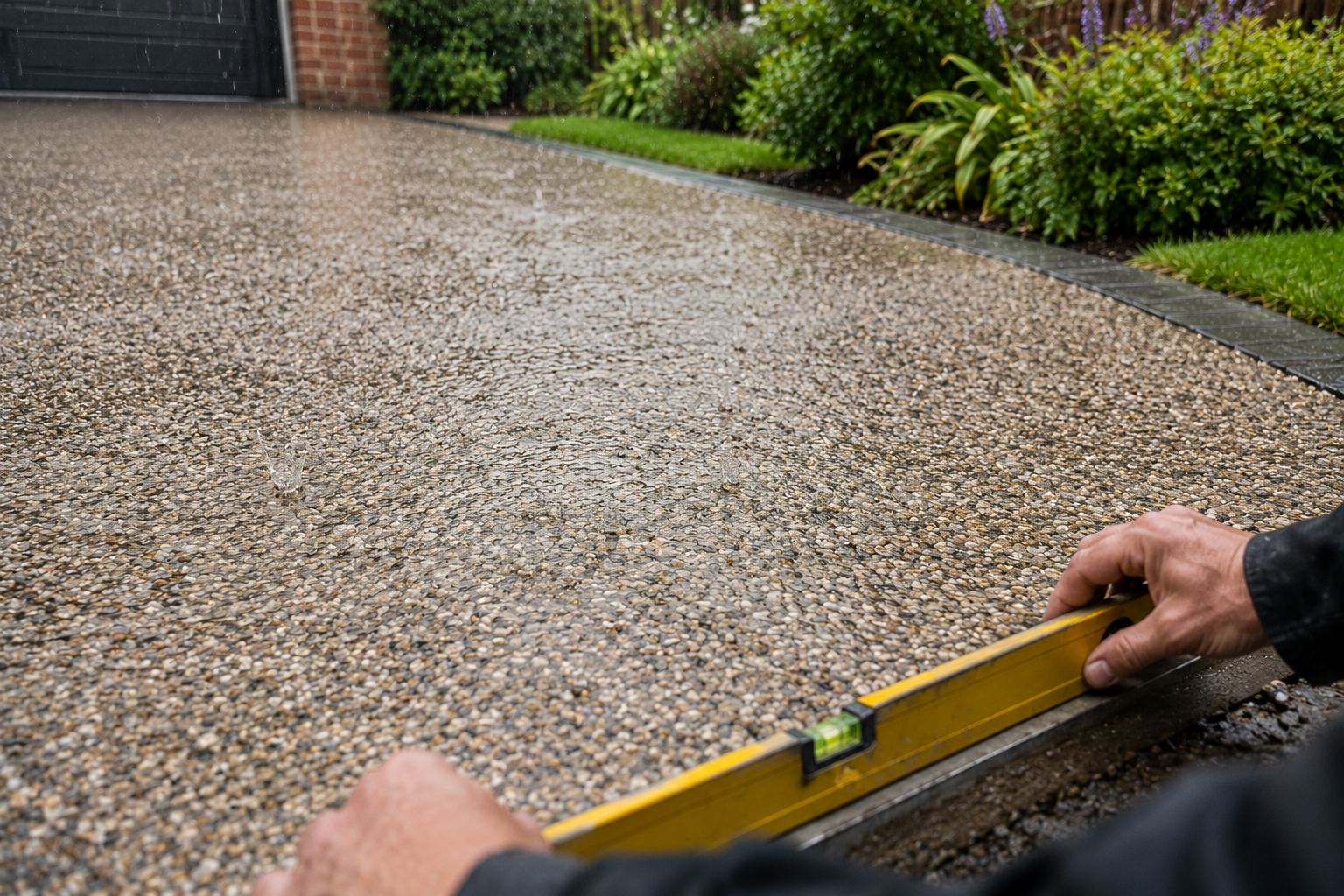
The surveyor should also look at how water currently behaves on the site — where it pools, which direction the ground naturally falls, and whether nearby drains, downpipes, or neighbouring properties affect run-off. This directly informs the falls built into the new sub-base, since a resin bound driveway needs a slight, carefully calculated gradient to shed water effectively rather than letting it collect on the surface.
Measuring and Mapping the Area
Taking Accurate Site Dimensions
Precise measurements of the driveway area are taken to calculate material quantities and identify any awkward angles, curves, or obstacles — manhole covers, drain gullies, tree roots, or steps — that will need to be worked around or incorporated into the design.
Identifying Level Changes
Most driveways aren’t perfectly flat, and any changes in level need to be recorded so the finished surface flows smoothly rather than pooling at low points or creating an uneven transition where it meets a garage, path, or front door threshold.
Determining the Correct Excavation Depth
Why Depth Isn’t a Fixed Number
One of the more technical parts of the survey is calculating how deep to excavate, and this varies considerably depending on what’s being built. A typical resin bound sub-base is excavated to accommodate roughly 150mm of compacted MOT-graded stone beneath a bound base course, though this figure shifts depending on ground conditions, expected traffic, and whether the site needs enhanced permeability for SuDS compliance. Areas with heavier vehicle use, such as a driveway used daily by two cars, generally need a more robust build-up than a garden pathway used only by foot traffic.
Matching Depth to End Use
The resin bound surface itself also varies in depth depending on application — typically around 18mm for driveways and areas taking vehicle weight, compared with roughly 15mm for pathways or patios that only need to handle foot traffic. This isn’t arbitrary; the depth needs to be sufficient relative to the aggregate size used to maintain strength and durability under load.
Discussing Drainage and SuDS Compliance
Confirming Whether Permeability Is Required
A proper survey should also cover whether the finished driveway needs to be fully permeable to satisfy planning rules, which depends on the size of the area and where run-off will ultimately drain to. This is worth raising directly if it isn’t mentioned, since it affects both the sub-base specification and whether planning permission might be needed at all.
Identifying Soakaway Requirements
On sites with limited natural drainage or very little surrounding green space, the surveyor may recommend a soakaway to manage excess water, and should be able to explain roughly where this would sit and how it integrates with the rest of the groundworks.
Talking Through Aggregate, Colour and Edging Options
Choosing a Suitable Aggregate
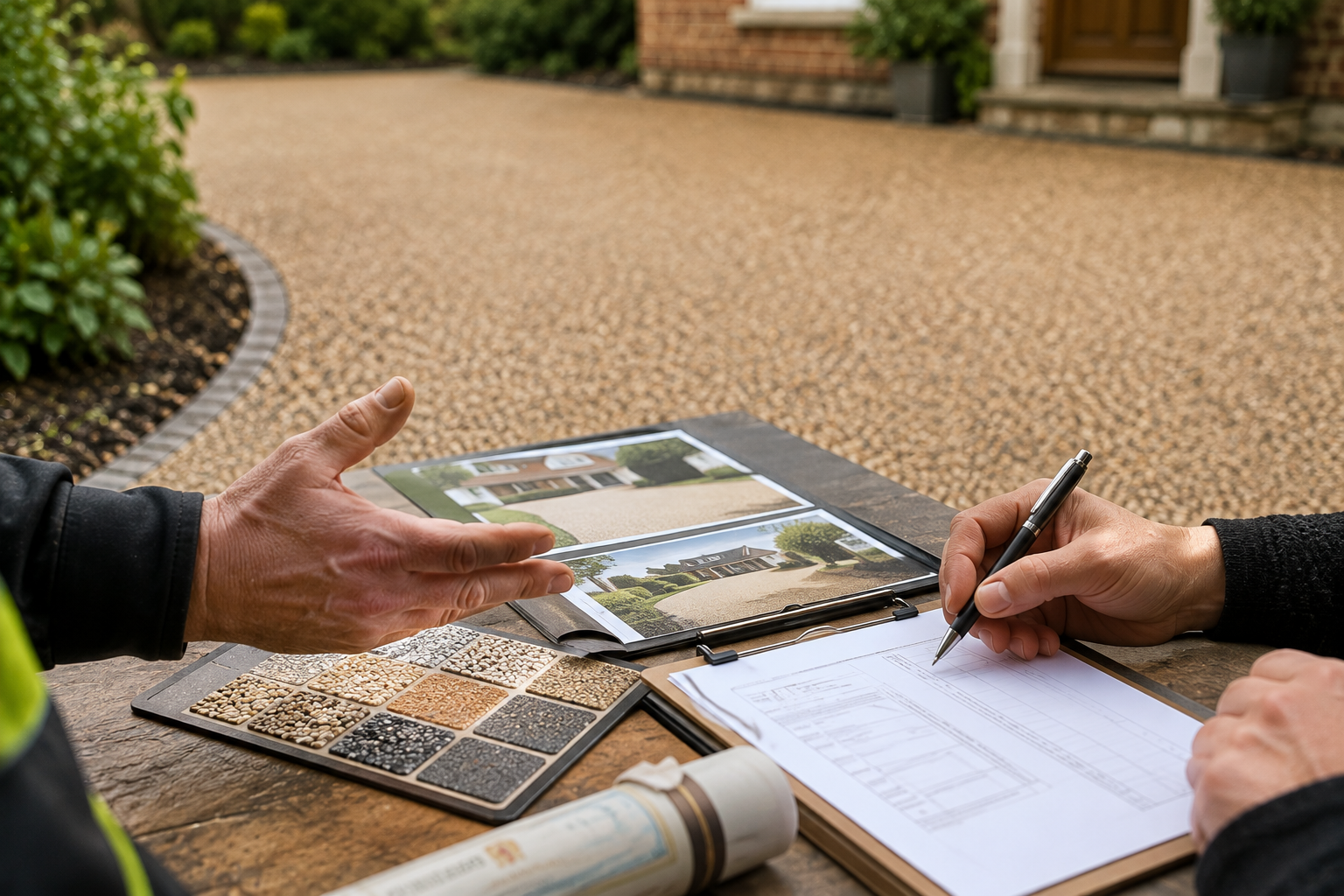
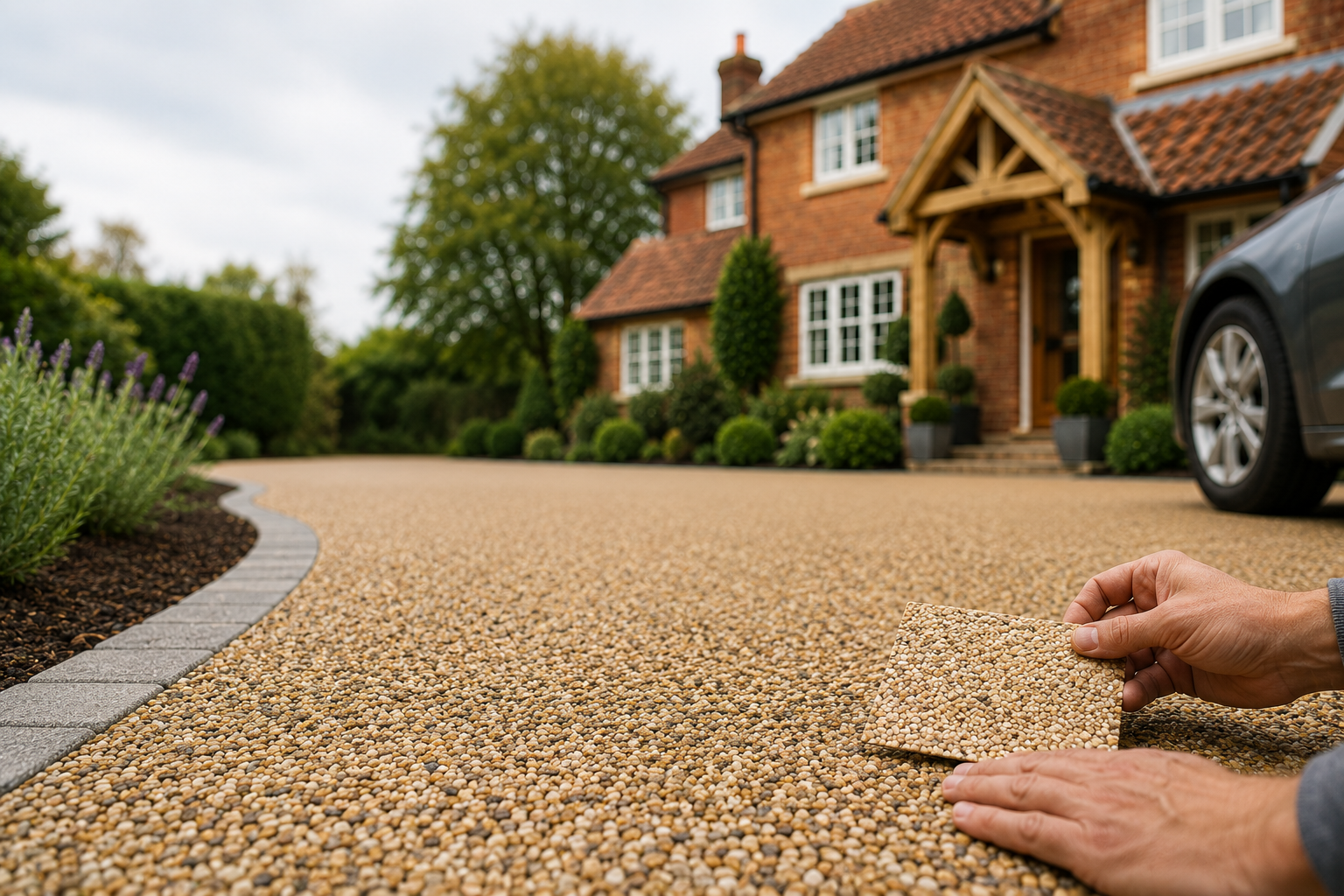
Beyond the technical groundworks, a good site survey is also the point where colour and aggregate choices get discussed properly, ideally with physical samples viewed outdoors against your actual property rather than a screen or brochure indoors.
Deciding on Edging Details
Edging style — brick, kerb, steel, or resin-bound border — is another detail worth finalising at this stage, since it affects both the finished look and the practical containment of the resin during installation.
Providing an Accurate, Written Quote
Why a Proper Survey Leads to a More Reliable Price
Because the survey uncovers exactly what preparation work is needed, it allows for a considerably more accurate quote than one given over the phone or from photographs alone. Any company willing to quote a firm price without seeing the site in person is worth treating with some caution, since hidden groundworks issues are precisely what tend to cause costs to creep up later.
What a Detailed Quote Should Include
A thorough quote following a proper survey should break down excavation depth, sub-base specification, drainage provisions, aggregate choice, edging, and any repair work needed to existing surfaces — not just a single lump sum for “driveway installation.”
Conclusion
A resin bound driveway site survey isn’t a formality — it’s the stage where almost every decision that determines how well your driveway performs over the next fifteen to twenty years actually gets made. A thorough surveyor will assess your existing surface, soil type, drainage, and levels before ever quoting a price, and will be able to explain clearly why a particular depth or sub-base specification is right for your specific property. If a company skips this step, or rushes through it without asking questions about your ground conditions, that’s worth taking as a warning sign long before any resin gets mixed.
Frequently Asked Questions
How long does a resin bound driveway site survey take?
Most surveys take between thirty minutes and an hour, depending on the size and complexity of the site, though larger or more unusual layouts may take longer.
Is a site survey free?
Most reputable installers offer a free, no-obligation site survey as standard, though it’s worth confirming this before booking.
What should I ask during my driveway survey?
Ask specifically about sub-base depth, drainage falls, whether the surface will be SuDS compliant, and what preparation work is needed for your existing surface.
Can a survey be done without me being present?
It’s best to be present, or to have someone who can answer questions about the property, since decisions around access, drainage, and existing issues often benefit from homeowner input.
Does a site survey guarantee an accurate final price?
A proper survey should produce a highly accurate quote, though unexpected issues discovered during excavation, such as hidden drains or unstable ground, can occasionally require adjustments.