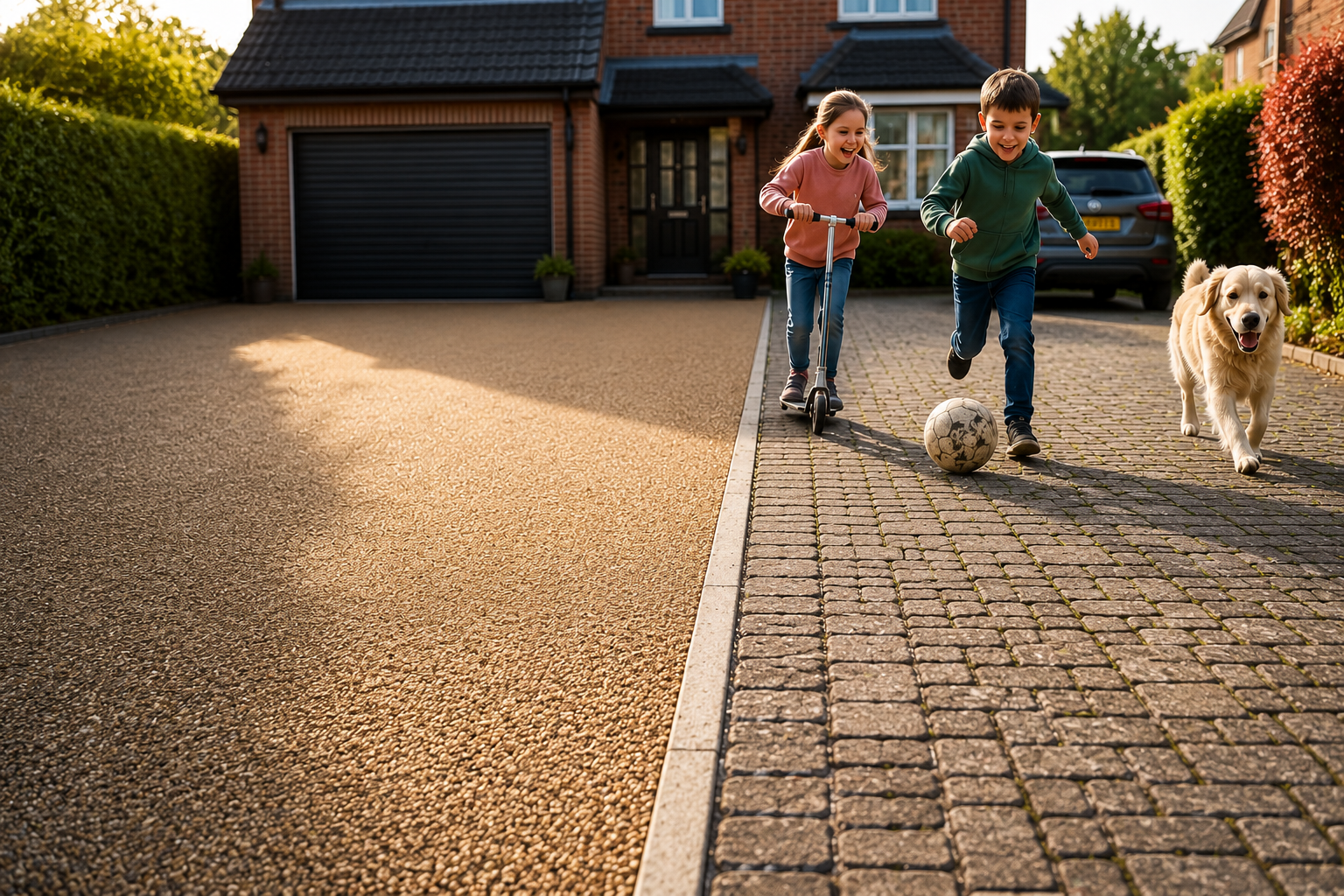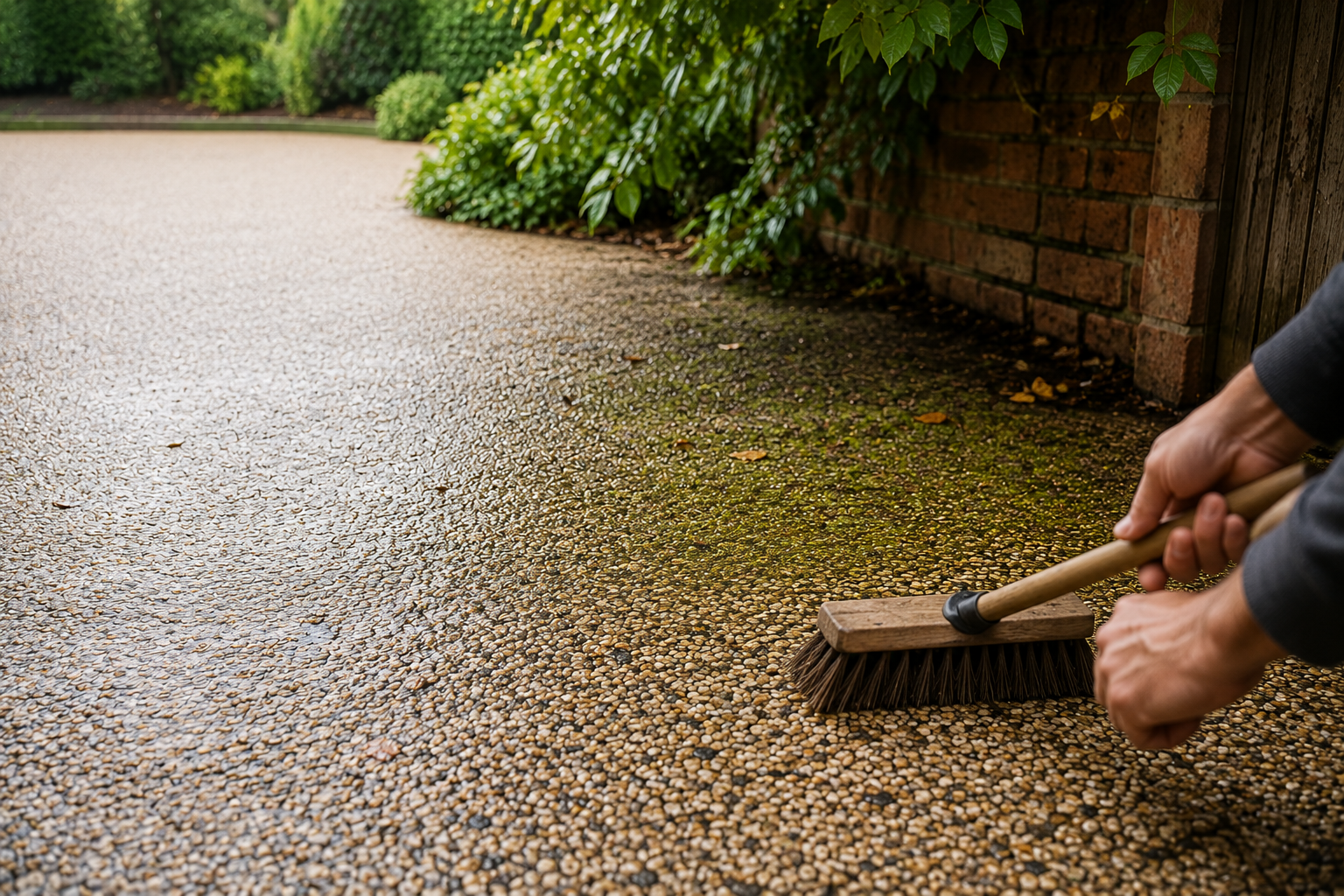
You pull onto the drive one morning and notice it — a faint green tinge creeping across a shaded corner, or a patch near the wall that’s gone from stone-coloured to something closer to moss. It’s one of the most common questions resin bound driveway owners end up searching for, and the good news is it’s rarely anything to worry about structurally. It’s almost always algae, and almost always fixable. But it’s worth understanding exactly why it happens, because cleaning it off without addressing the cause just means you’ll be doing the same job again next spring.
Is It Actually Algae, or Something Else?
Before treating anything, it helps to know what you’re dealing with. Green, slightly slimy growth is typically algae. A darker, almost black, patchy growth is more likely mould or general grime build-up. Fluffy or cushion-like green growth, usually in damp corners or joints, is moss rather than algae. According to the Royal Horticultural Society, algae, lichens, liverworts and mosses are commonly found on hard surfaces in damp or shaded locations, and while they don’t damage the material underneath, they can make surfaces slippery — which is really the main practical concern with a driveway.
Why Resin Bound Driveways Turn Green
Shade Is the Single Biggest Cause
Algae needs moisture and low light to establish itself, which is exactly why the north-facing side of a house, or any area shaded by trees, fences, or the house itself, tends to be where green patches show up first. Areas that get direct sun for a good part of the day dry out far faster after rain, which naturally limits how well algae can take hold.
Overhanging Trees and Shrubs
If your driveway sits beneath or near trees, you’re dealing with a double problem — extra shade, and a steady drop of organic debris like leaves, sap, and pollen that gives algae something to feed on. The RHS notes that reducing shade by thinning tree canopies or removing lower branches makes conditions considerably less favourable for algae and moss to establish in the first place.
Poor Drainage or a Faulty Sub-Base
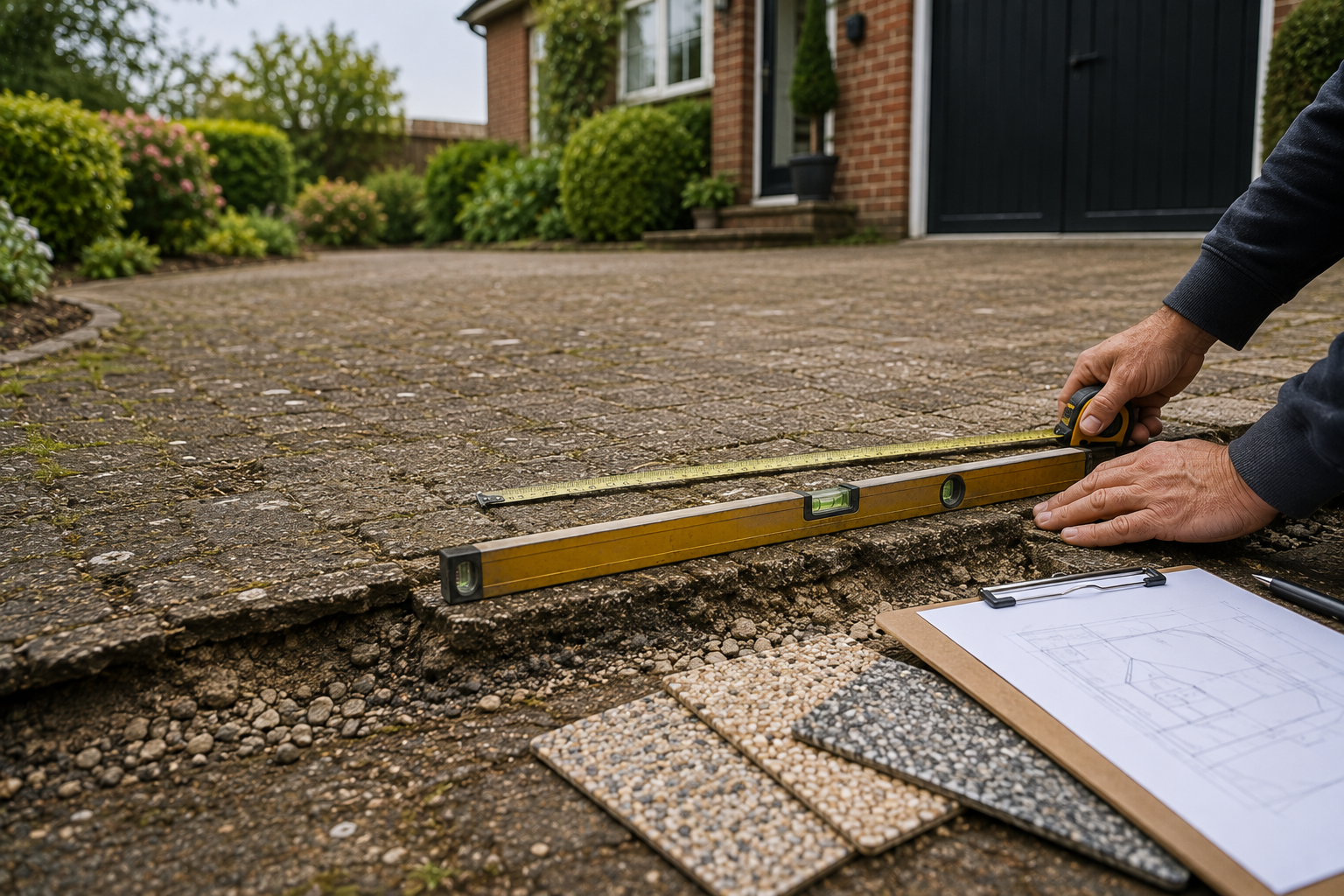
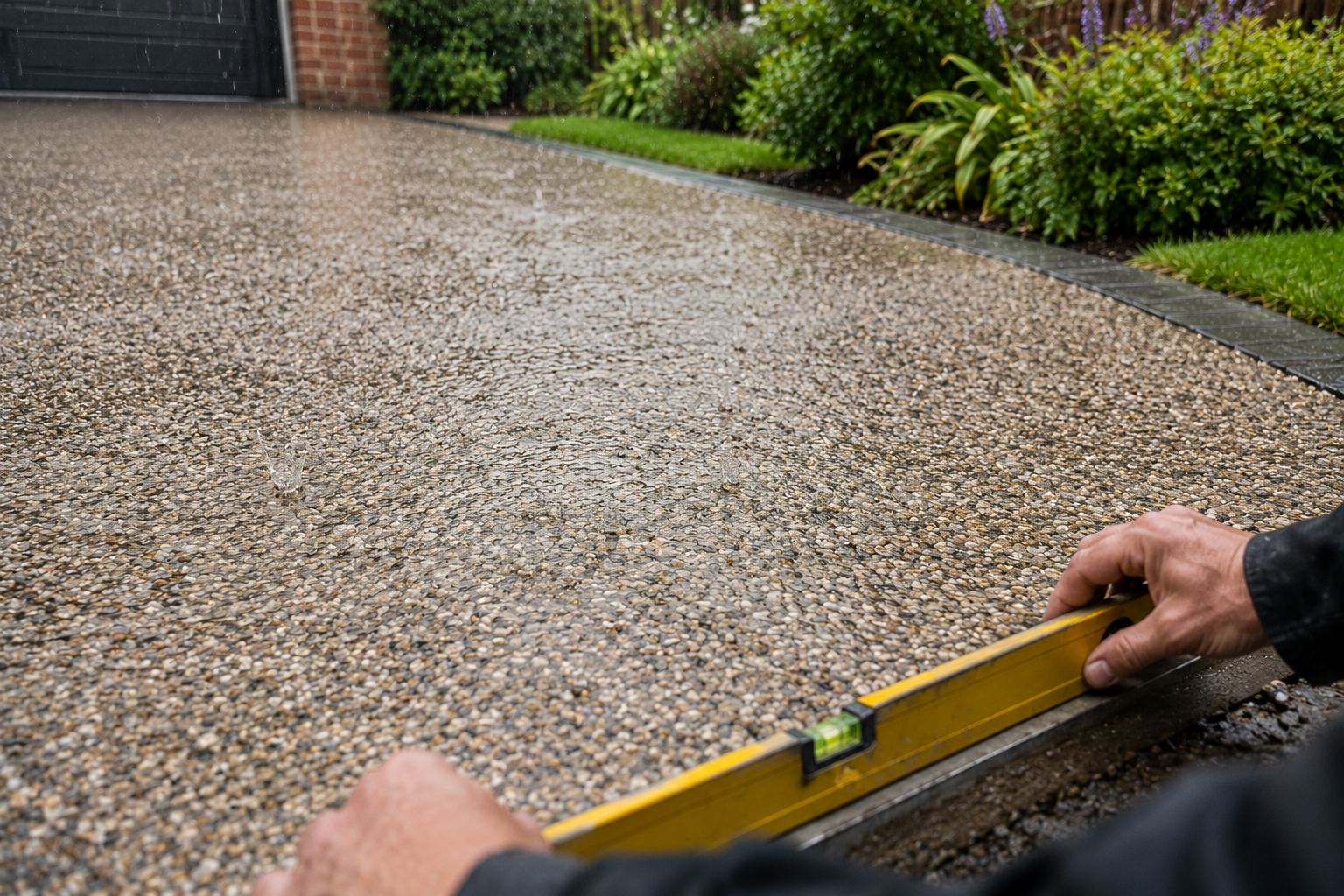
Resin bound surfacing is designed to be permeable, allowing water to pass through rather than sit on top. If a driveway was installed with an inadequate sub-base, incorrect falls, or insufficient depth, water can struggle to drain away properly, leaving damp patches that persist long after the rest of the surface has dried. This is one of the more serious causes, because it points to an installation issue rather than a simple maintenance one, and it’s worth having checked if green patches keep returning heavily in the same spot regardless of sunlight.
General Dirt and Organic Build-Up
Dust, pollen, bird droppings, and general airborne grime all settle on any outdoor surface over time, and this build-up gives algae spores something to cling to and feed on. A driveway that’s rarely swept or rinsed will naturally develop green patches faster than one that gets occasional attention, regardless of how much sun it receives.
Damp Weather and the British Climate
It’s worth saying plainly — the UK’s combination of frequent rain and relatively low winter sunlight is simply a good environment for algae. This isn’t unique to resin bound surfacing; the same green patches show up on concrete, block paving, decking, and roof tiles for exactly the same reasons. It’s a climate issue as much as a driveway one.
How to Remove Algae From a Resin Bound Driveway
Start With a Stiff Brush
For light growth, a stiff outdoor broom or brush is often enough to disturb and remove algae before it becomes established. The RHS recommends regular brushing as both a removal method and a genuinely effective way of preventing growth from taking hold in the first place, since algae struggles to establish on a surface that’s disturbed often.
Use a Pressure Washer, But Carefully
A pressure washer will remove algae quickly and thoroughly, but it needs to be used with care on resin bound surfacing. Keep the nozzle at a reasonable distance and avoid excessive pressure directly on one spot for too long, as overly aggressive washing can, over time, affect the resin’s surface finish. The RHS also flags a useful point that applies well here — in areas where drainage isn’t ideal, pressure washing can temporarily add to the dampness problem rather than solve it, so it’s best followed by a dry, sunny spell where possible.
Try a Specialist Driveway Cleaner
There are cleaning products formulated specifically for resin bound and permeable surfaces that lift algae and general grime without damaging the resin binder. These tend to work well as a periodic deep clean, particularly for driveways that see heavy shade or sit beneath trees.
Household Solutions for Light Cases
For milder cases, a diluted solution of water and mild detergent, applied with a stiff brush and rinsed thoroughly, can shift early-stage algae without needing anything specialist. It’s worth avoiding strong bleach-based products on resin bound surfacing, as these can affect colour consistency over time, particularly on lighter aggregate blends.
Preventing Algae From Coming Back
Increase Light and Airflow Where You Can
If overhanging branches or dense shrubs are contributing to a shaded, damp driveway, thinning them back — even modestly — can make a genuine difference. More light and better airflow both work against the conditions algae needs to establish.
Sweep and Rinse Regularly
Rather than waiting for a visible problem, a quick sweep every few weeks and an occasional rinse keeps organic debris from building up to the point where algae has something to feed on. This is by far the easiest and cheapest form of prevention, and it’s one resin bound surfacing handles better than jointed alternatives, since there are no gaps for debris to collect and hide in.
Check the Sub-Base If Problems Persist
If green patches keep returning heavily in the same area despite regular cleaning and reasonable sunlight, it’s worth having an installer check whether the sub-base or drainage falls are performing as they should. Persistent pooling, rather than simple shaded dampness, is usually the giveaway that something beneath the surface needs attention rather than the resin itself.
Consider a Sealant for Heavily Shaded Driveways
For particularly shaded or tree-lined driveways where algae keeps returning no matter what, a breathable resin sealant applied by a professional can reduce moisture retention on the surface and make future cleaning considerably easier, without compromising the surface’s natural permeability.
Conclusion
A green driveway looks worse than it actually is — in nearly every case, it’s simply algae responding to shade, moisture, and a lack of regular cleaning, rather than a sign anything has gone wrong with the resin itself. A stiff brush, an occasional careful pressure wash, and a bit of attention to nearby trees or shrubs will keep most driveways looking clean year-round. The only time it’s worth digging deeper is if the same patch keeps returning heavily regardless of sunlight or cleaning, which usually points to a drainage issue beneath the surface rather than anything algae-related.
Frequently Asked Questions
Is a green resin bound driveway a sign of poor installation?
Not usually. Algae is most often caused by shade, damp weather, and organic build-up rather than installation quality. Persistent, heavy pooling in one spot is the more likely sign of a sub-base or drainage issue.
Can I pressure wash my resin bound driveway to remove algae?
Yes, but use moderate pressure and avoid holding the nozzle too close to one area for too long, as this can affect the resin’s surface finish over time.
How often should I clean my resin driveway to prevent algae?
A light sweep every few weeks and an occasional rinse is usually enough, with a more thorough clean once or twice a year depending on how shaded the area is.
Will bleach damage my resin bound driveway?
Strong bleach-based products can affect colour consistency, particularly on lighter aggregates, so a specialist driveway cleaner or mild detergent solution is generally the safer choice.
Does resin bound surfacing get greener faster than block paving?
Not typically. Algae affects any hard surface exposed to shade and damp conditions, and resin bound’s joint-free design actually reduces the debris build-up that helps algae establish, compared with jointed surfaces.