Choosing a resin bound colour sounds like it should be the easy part of getting a new driveway. Then you sit down with a sample board of twelve near-identical shades of grey and buff, and suddenly it feels like the biggest decision of the whole project. It’s not an unreasonable worry either — unlike paint, you can’t repaint a driveway next year if you go off it. The aggregate you choose is there for the long haul, so it’s worth taking the time to get it right rather than picking whatever looks nicest under showroom lighting.
This guide walks through the practical, sensible way to choose a resin bound colour — the things that actually affect how it’ll look outside your own front door, not just how it looks on a sample chip.
Why Colour Choice Matters More Than People Expect
A resin bound driveway isn’t just a functional surface — it’s one of the largest visible areas of your property, often the first thing anyone sees before they even reach your front door. Get the colour right and it lifts the whole frontage. Get it wrong and even a beautifully installed, technically perfect driveway can look slightly at odds with the house behind it. It’s also a genuinely long-term choice; resin bound surfacing typically lasts fifteen to twenty years, so this isn’t a decision to rush through in an afternoon.
Start With Your Property, Not the Sample Board
Matching Brick and Render Tones
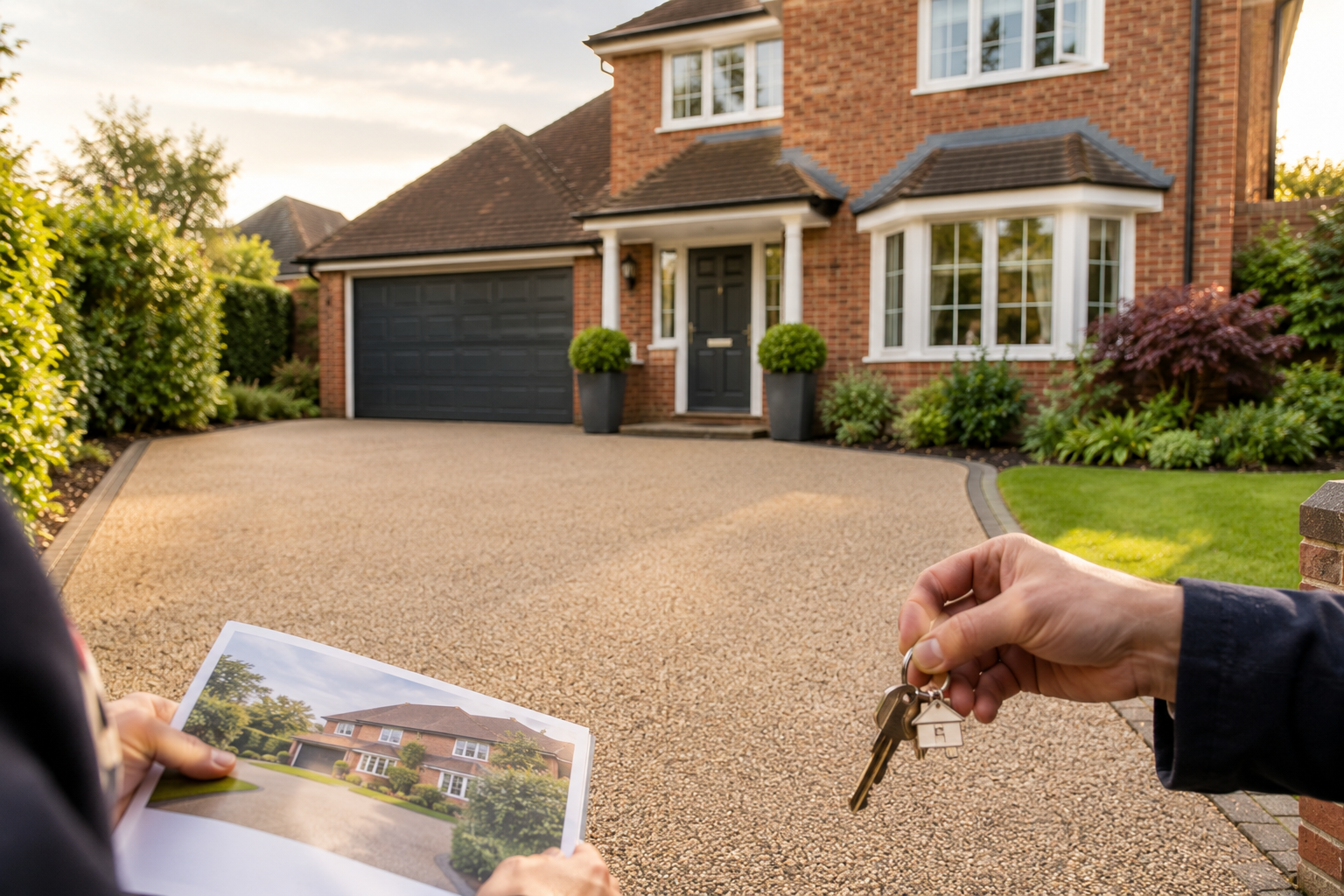
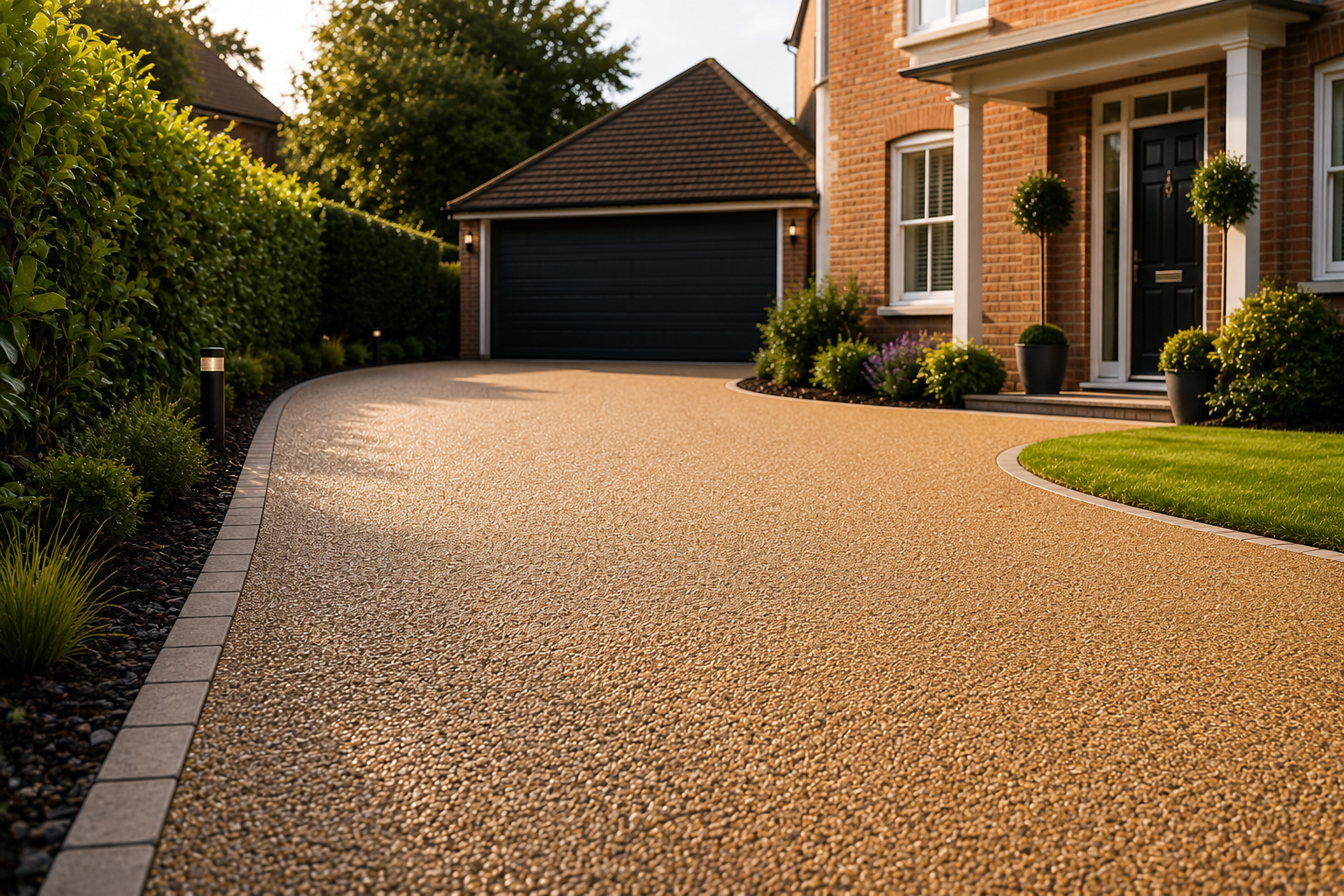
The single biggest factor in choosing a resin colour is what your house is actually built from. Red brick homes tend to sit best with warmer aggregate blends — buffs, golden gravels, and Cotswold-style tones — because cooler greys can create a slightly clashing, stark contrast against warm brickwork. Homes with grey or buff brick, render, or more contemporary cladding generally suit cooler silver, granite, or charcoal blends far better, since warmer tones can look slightly dated against modern materials.
Considering Your Roof and Window Frames
Roof tiles are often overlooked, but they matter almost as much as brickwork. A driveway that echoes the undertone of the roof — without matching it exactly — tends to look far more deliberate and considered than one chosen in isolation. The same logic applies to window and door frames; anthracite grey frames, for instance, pair naturally with cooler resin blends, while cream or white frames tend to sit better with warmer, lighter aggregates.
Light, Dark, or Somewhere in Between?
The Case for Lighter Aggregates
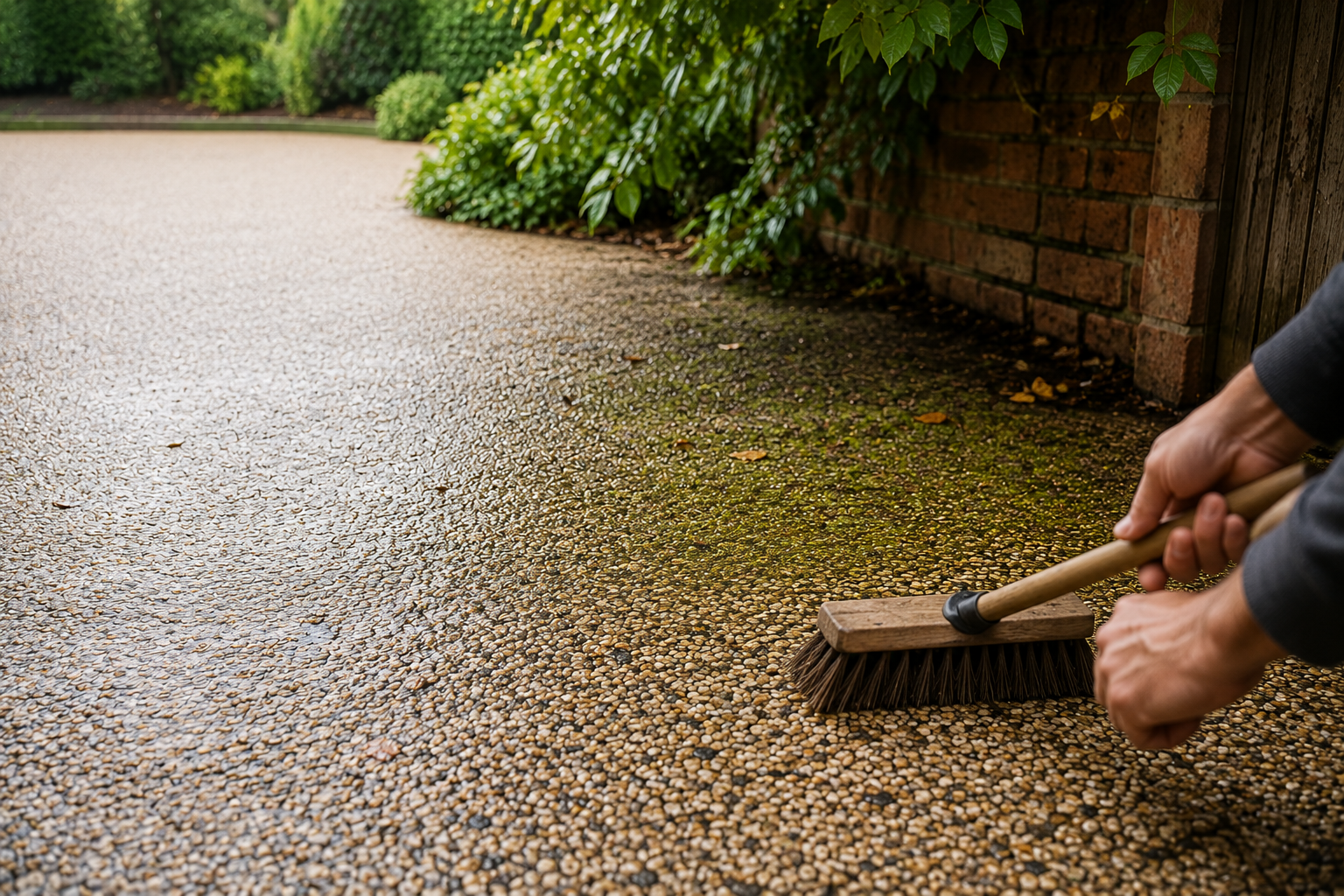
Lighter colours such as buff, cream, or golden blends make a driveway feel more spacious and can brighten a north-facing frontage that doesn’t get much direct sun. They photograph beautifully and tend to suit period and cottage-style properties particularly well. The trade-off is practical rather than aesthetic — lighter surfaces show tyre marks, oil residue, and general dirt more readily than darker blends, so they demand slightly more regular sweeping and rinsing to stay looking sharp.
The Case for Darker Aggregates
Charcoal, graphite, and darker granite blends have become increasingly popular over the past few years, particularly on newer builds and more contemporary homes. They hide everyday marks far more effectively and tend to give a driveway a sleek, low-fuss appearance. The trade-off here is heat and glare — darker surfaces absorb more sunlight, so they can feel noticeably warmer underfoot on a hot summer’s day compared with lighter alternatives.
Why Mid-Tone Blends Are the Safest Bet
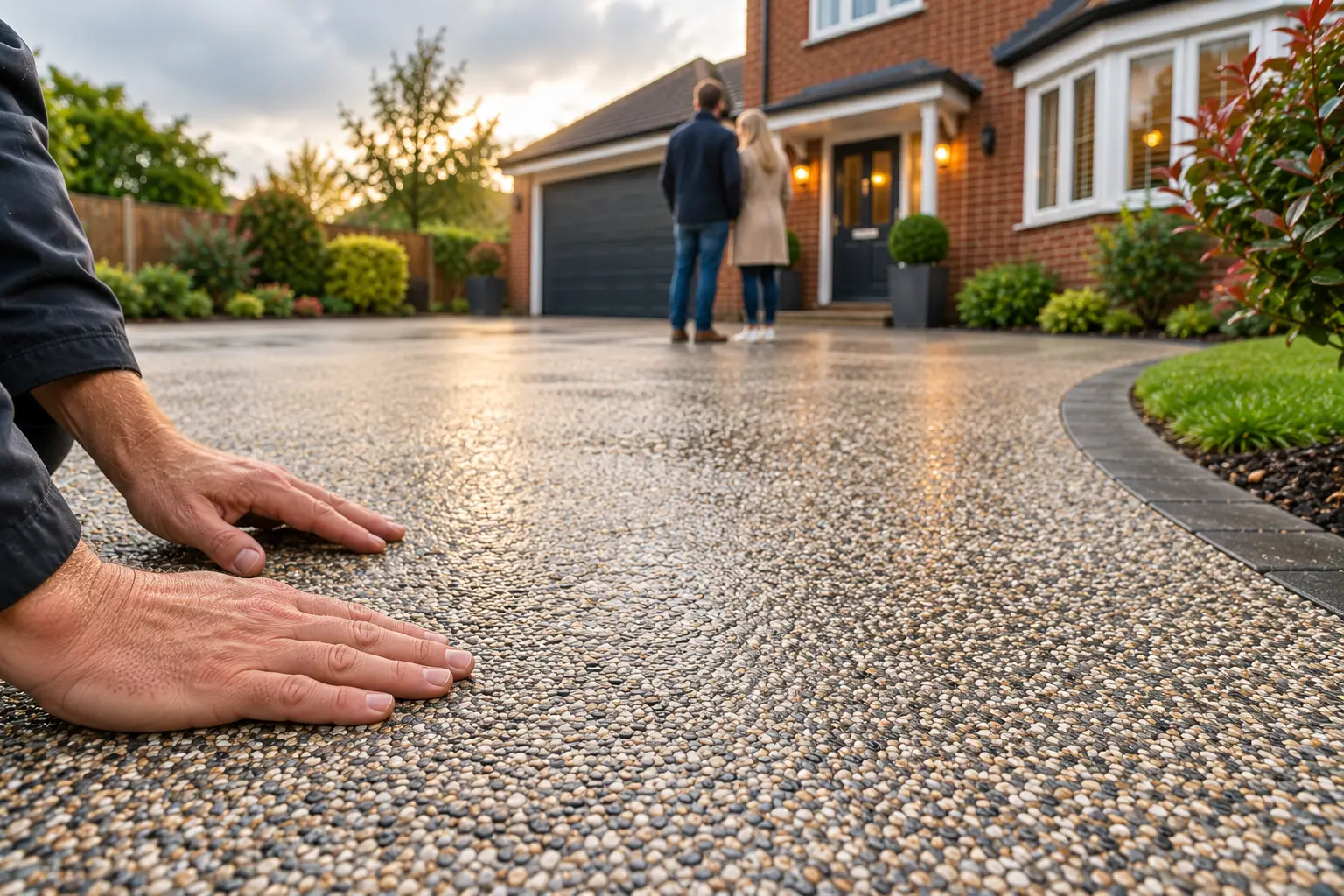
If you’re torn, a mid-tone blend — silver grey, mixed granite, or a balanced natural stone mix — tends to offer the best of both. These shades hide light dirt and staining reasonably well without absorbing as much heat as the darkest options, and they suit a far wider range of brick and render tones, which matters if you’re choosing before any exterior work or repainting is finalised.
Two-Tone and Blended Designs
Why Blended Aggregates Are Growing in Popularity
Rather than a single uniform colour, many installers now offer blended aggregate mixes that combine two or three complementary stone tones within one bag. These tend to hide dirt more effectively than a flat single colour, simply because the natural variation in tone disguises marks and staining far better than a completely uniform surface would.
Using Colour to Define Different Areas
Two-tone designs — a contrasting border around the driveway edge, or a different colour used for a path leading to the front door — can add real definition to a frontage without needing extra landscaping. This works particularly well on larger driveways where a single flat colour can otherwise feel a little featureless.
Practical Factors That Affect Your Final Choice
How Much Direct Sunlight the Area Gets
A resin colour can look completely different depending on how much sun the driveway receives. Shaded, north-facing driveways often benefit from lighter blends to avoid looking flat or dull, while sun-drenched south-facing frontages can carry darker tones without feeling oppressive. It’s always worth viewing a sample outdoors, in your own garden, rather than relying purely on how it looks indoors or on a screen.
Vehicle Use and Everyday Wear
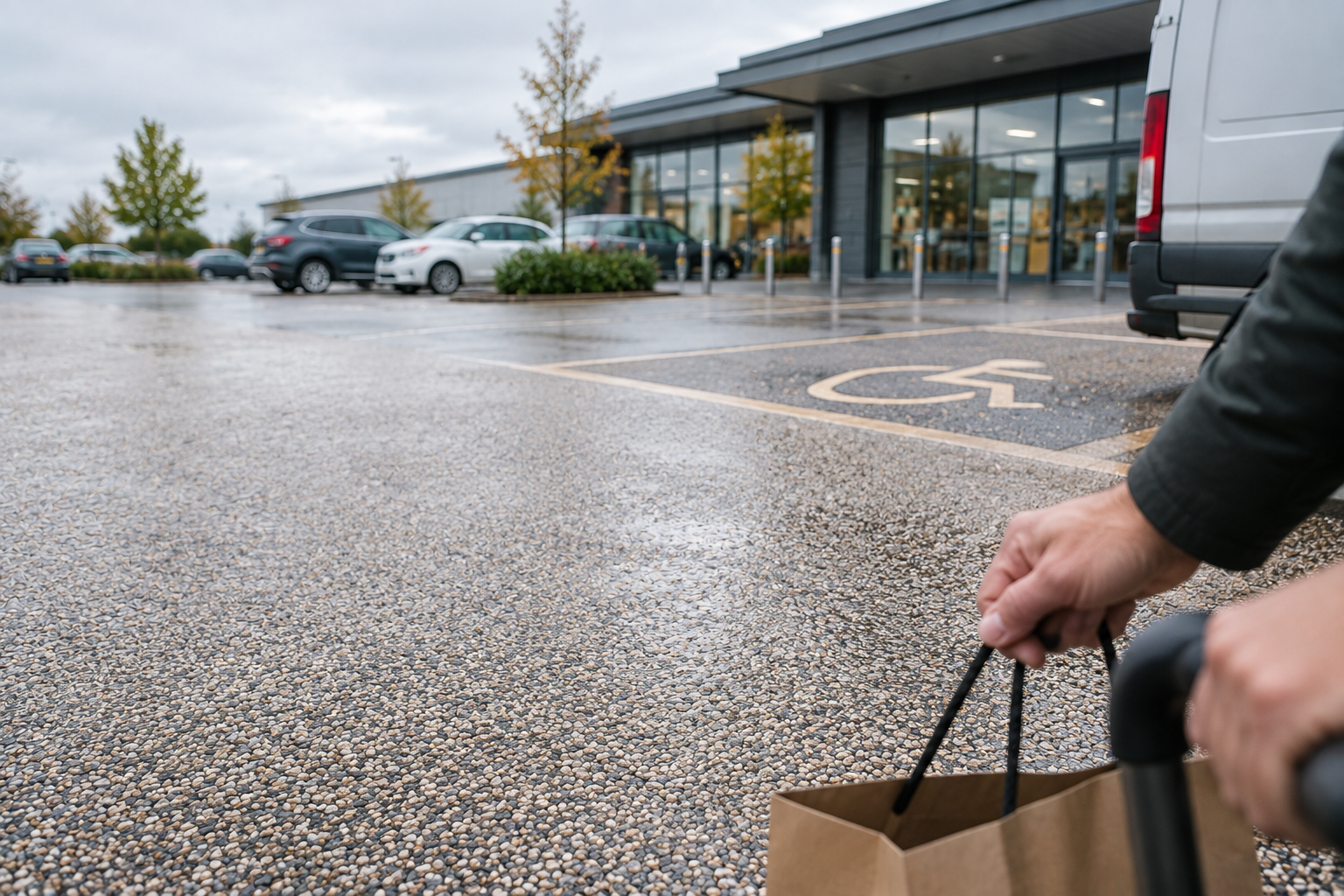
If your household runs two cars, has a driveway doubling as a turning or parking area for visitors, or deals with regular deliveries, a mid-to-dark blend is usually the more forgiving choice. Very light colours can start to look tired faster under heavier daily use, purely because oil, rubber, and general grime show up more visibly.
UV Stability and Long-Term Fading
Not all resins are created equal when it comes to colour retention. UV-stable resin systems are specifically formulated to resist yellowing and fading from sustained sun exposure, which matters far more for lighter and more vibrant colour choices than darker ones, where subtle fading is naturally less noticeable. It’s worth asking any installer directly whether the resin used is UV-stable, as this affects long-term appearance more than the aggregate itself. For further reading on how UV exposure affects outdoor materials generally, the Building Research Establishment publishes useful guidance on material durability testing.
Getting Samples Right Before You Commit
Always View Samples Outdoors
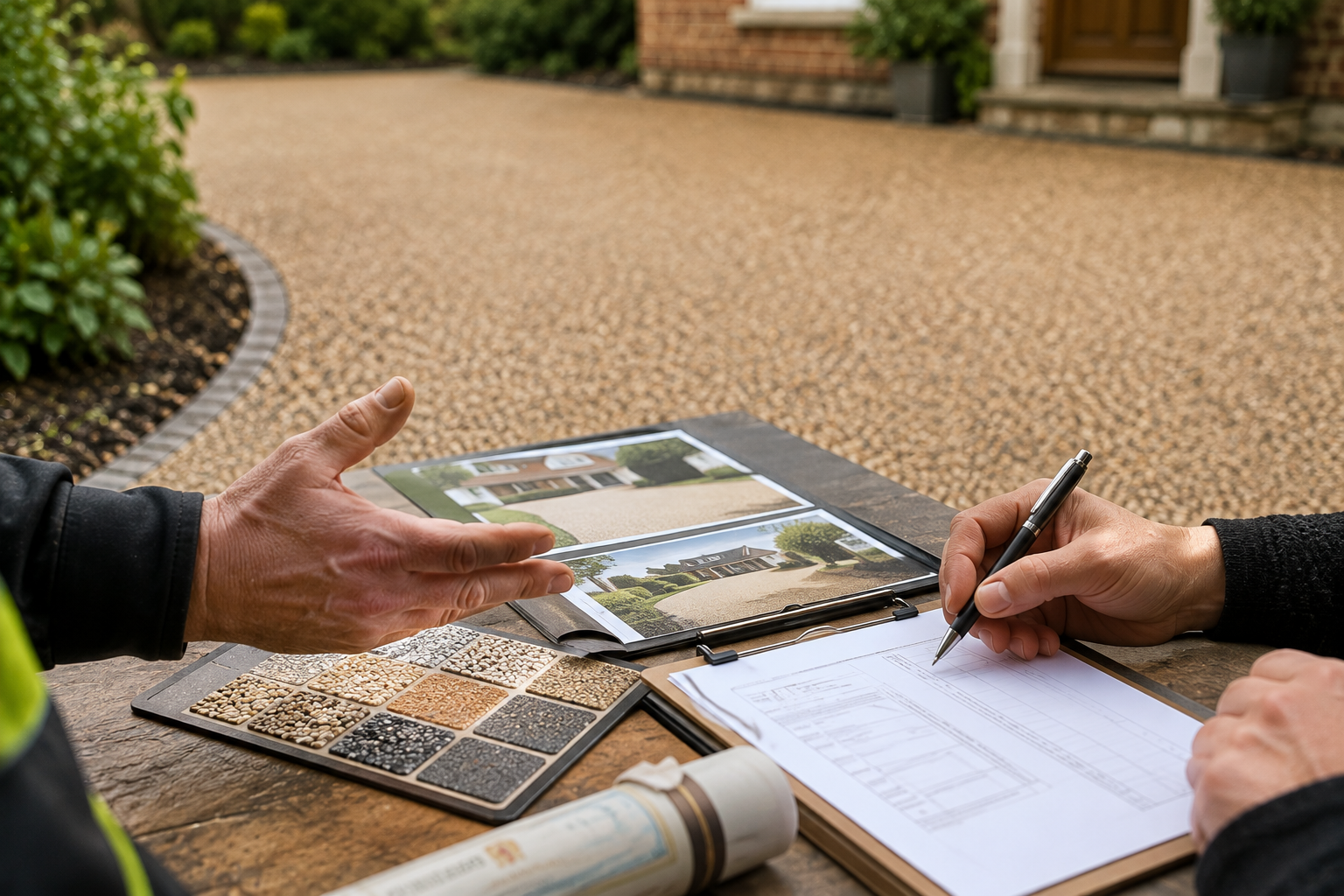
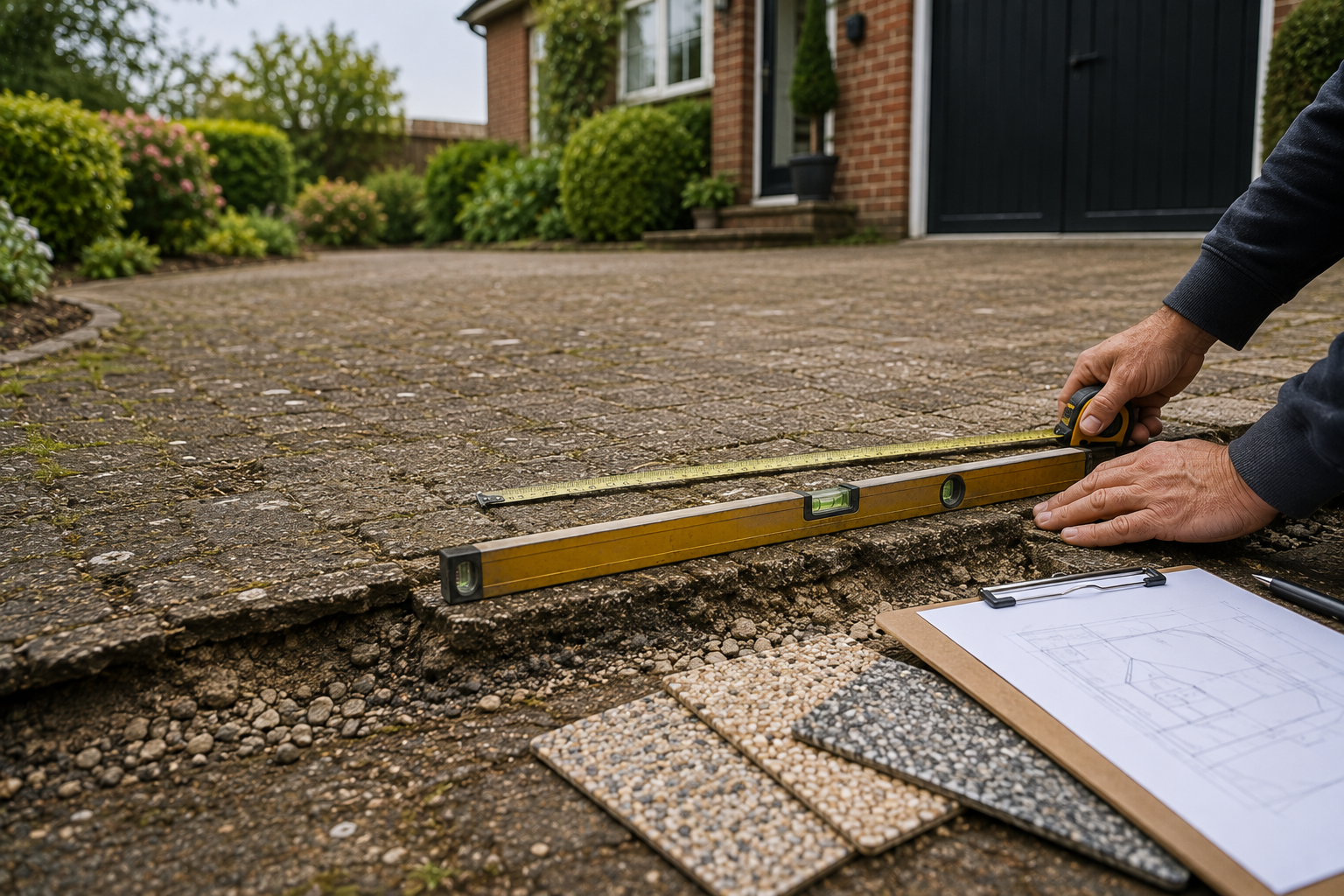
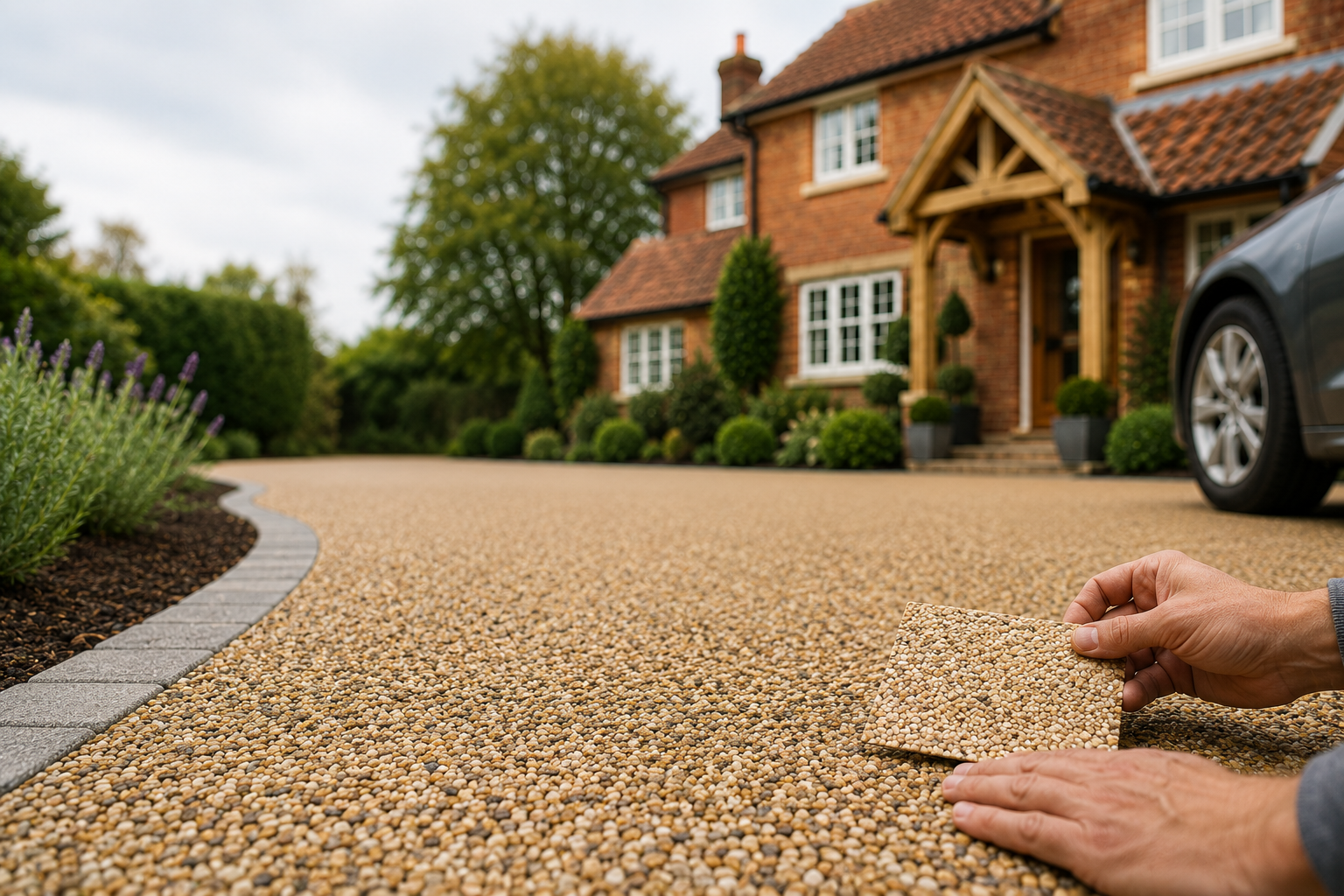
Sample boards under artificial showroom lighting rarely represent how a colour will actually look in daylight. Ask your installer for a physical sample you can take home and view against your actual brickwork, in natural light, at different times of day.
Compare Wet and Dry Appearance
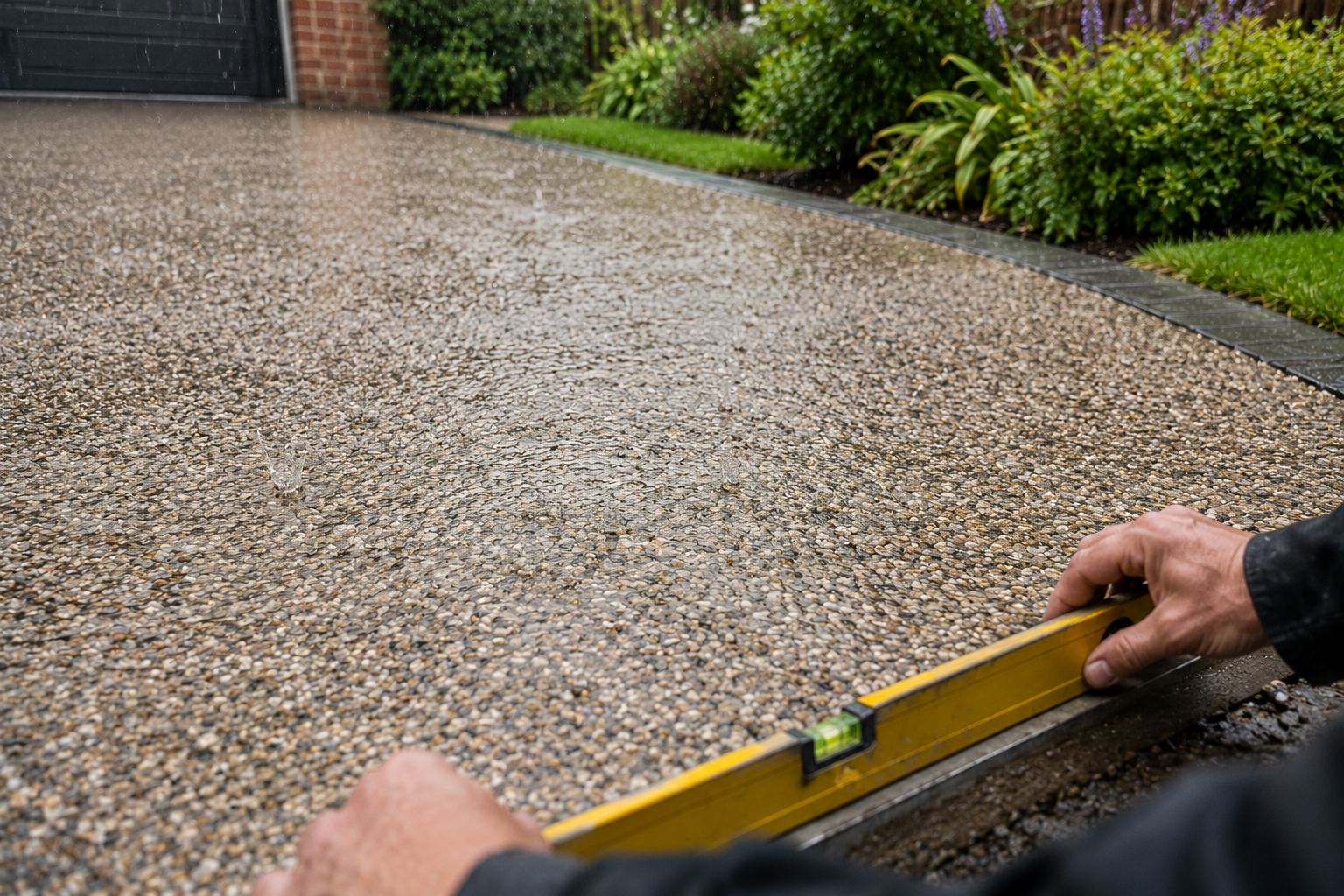
Resin bound surfaces can look noticeably darker when wet than when dry, so it’s worth wetting a sample to see how the colour shifts before making a final decision — particularly important in a country where driveways spend a fair amount of time damp.
Choosing a Colour That Will Still Suit You in Ten Years
Avoiding Overly Trend-Led Choices
It’s tempting to pick whatever shade is currently trending, but driveways are a long-term fixture. A more neutral, timeless blend tends to age far better than something chosen purely because it’s fashionable this year, especially if you plan to sell the property before the driveway’s natural lifespan is up.
Thinking About Kerb Appeal and Resale Value
Estate agents consistently point to kerb appeal as one of the first things prospective buyers notice, so a well-chosen, neutral resin colour can genuinely support resale value down the line, whereas a very bold or unusual shade may narrow your buyer pool slightly when the time comes to sell.
Conclusion
Choosing the right resin bound colour comes down to a handful of practical questions rather than guesswork: what your house is built from, how much sun the area gets, how the driveway will actually be used day to day, and whether you’re prioritising a fresh, bright look or a low-maintenance, forgiving finish. Take a physical sample outdoors, view it in different light and weather, and lean towards timeless over trend-led if you want a driveway that still looks right in a decade. Get that groundwork right and the colour choice becomes far less daunting than that sample board first suggested.
Frequently Asked Questions
What’s the most popular resin bound driveway colour in the UK?
Buff, silver grey, and mid-tone natural stone blends remain among the most requested, largely because they suit the widest range of brick and render colours.
Do dark resin driveways get too hot in summer?
Darker blends do absorb more heat than lighter ones, so they can feel warmer underfoot on particularly sunny days, though this rarely causes any practical issues for driveway use.
Will my resin bound driveway fade over time?
Some fading can occur with UV exposure, particularly on vibrant colours, though UV-stable resin systems significantly reduce this. Always confirm with your installer that a UV-stable resin is being used.
Should I choose a lighter or darker colour if I have two cars?
Mid-tone or darker blends tend to hide everyday tyre marks, oil residue, and general wear better than very light colours, making them a more practical choice for high-use driveways.
Can I mix two resin colours on one driveway?
Yes, blended aggregates and two-tone designs, such as contrasting borders, are increasingly popular and can add definition without extra landscaping work.