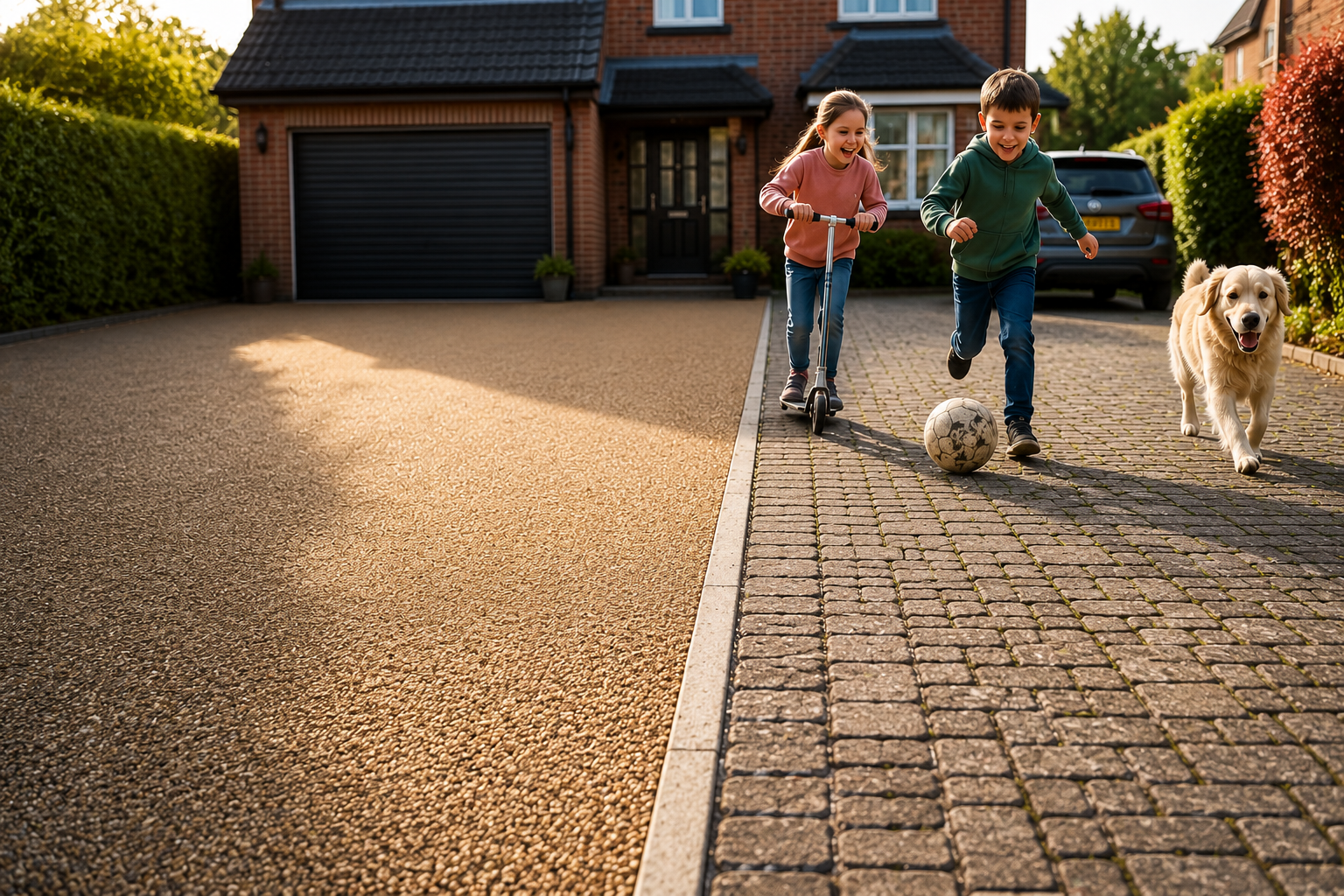
If you’ve got kids on bikes, a dog that thinks every driveway is a racetrack, and two cars that come and go at all hours, you already know your driveway takes more punishment than the average show-home patio in a brochure. So when it comes to choosing between resin bound surfacing and block paving, the question isn’t really “which one looks nicer” — it’s which one will still look decent in five years once real life has had its way with it.
Both surfaces have loyal fans, and both show up constantly in searches from homeowners trying to work out which is the smarter investment for a busy household. This guide cuts through the sales pitch and looks specifically at how each surface performs under the kind of daily wear a family actually generates — spilled bikes, muddy paws, football matches, prams, and the odd oil drip from a car that’s seen better days.
What Resin Bound Surfacing Actually Is
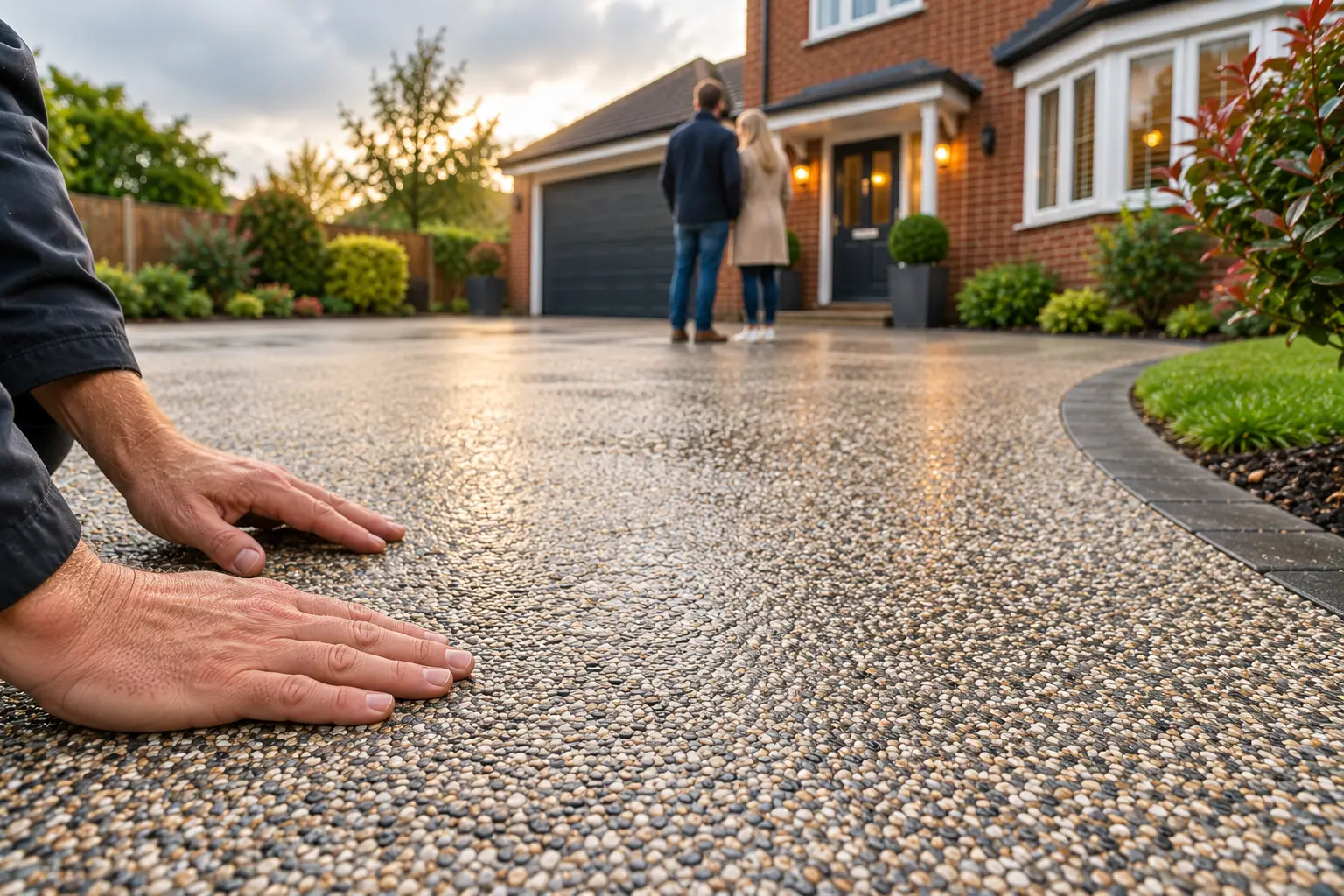
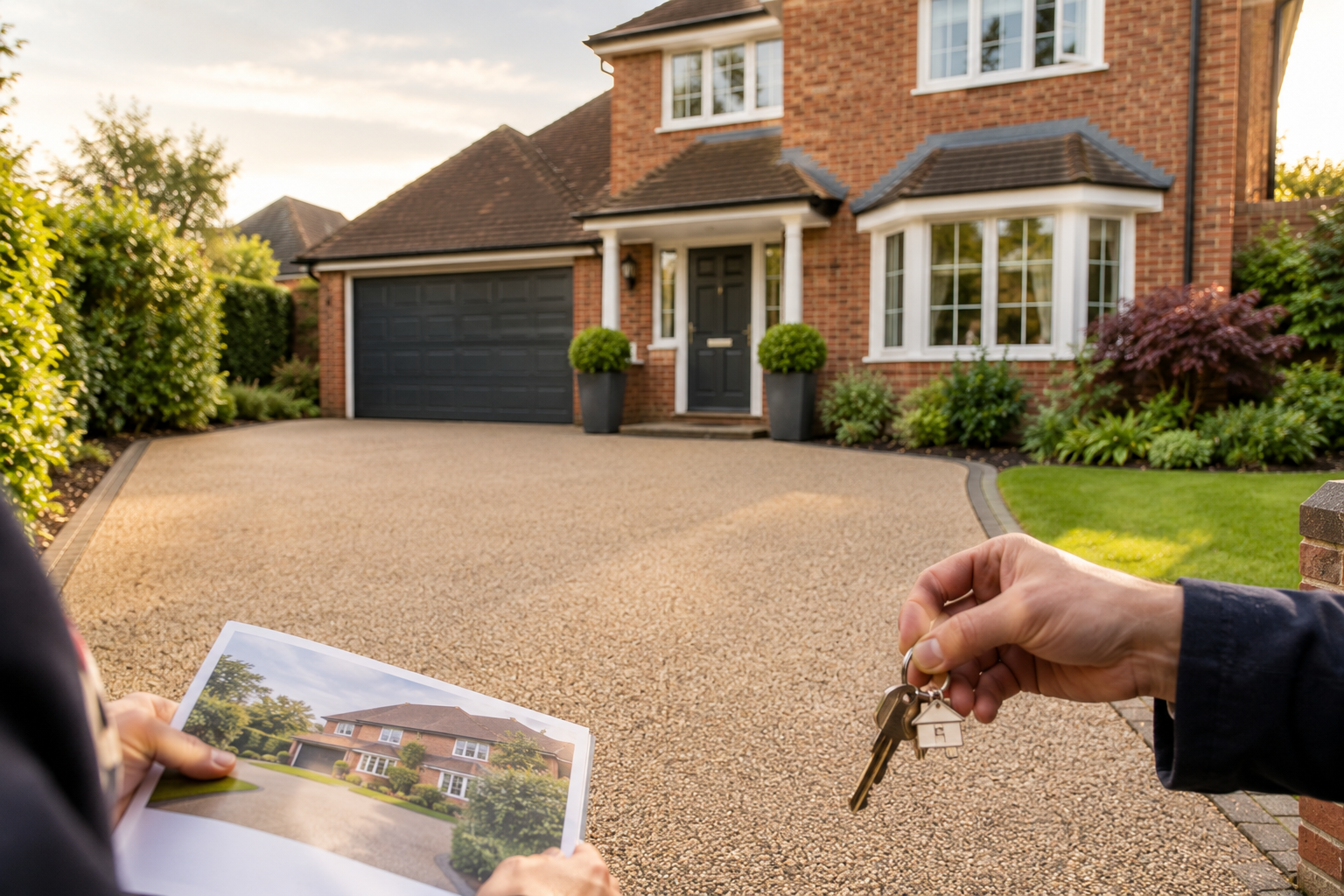
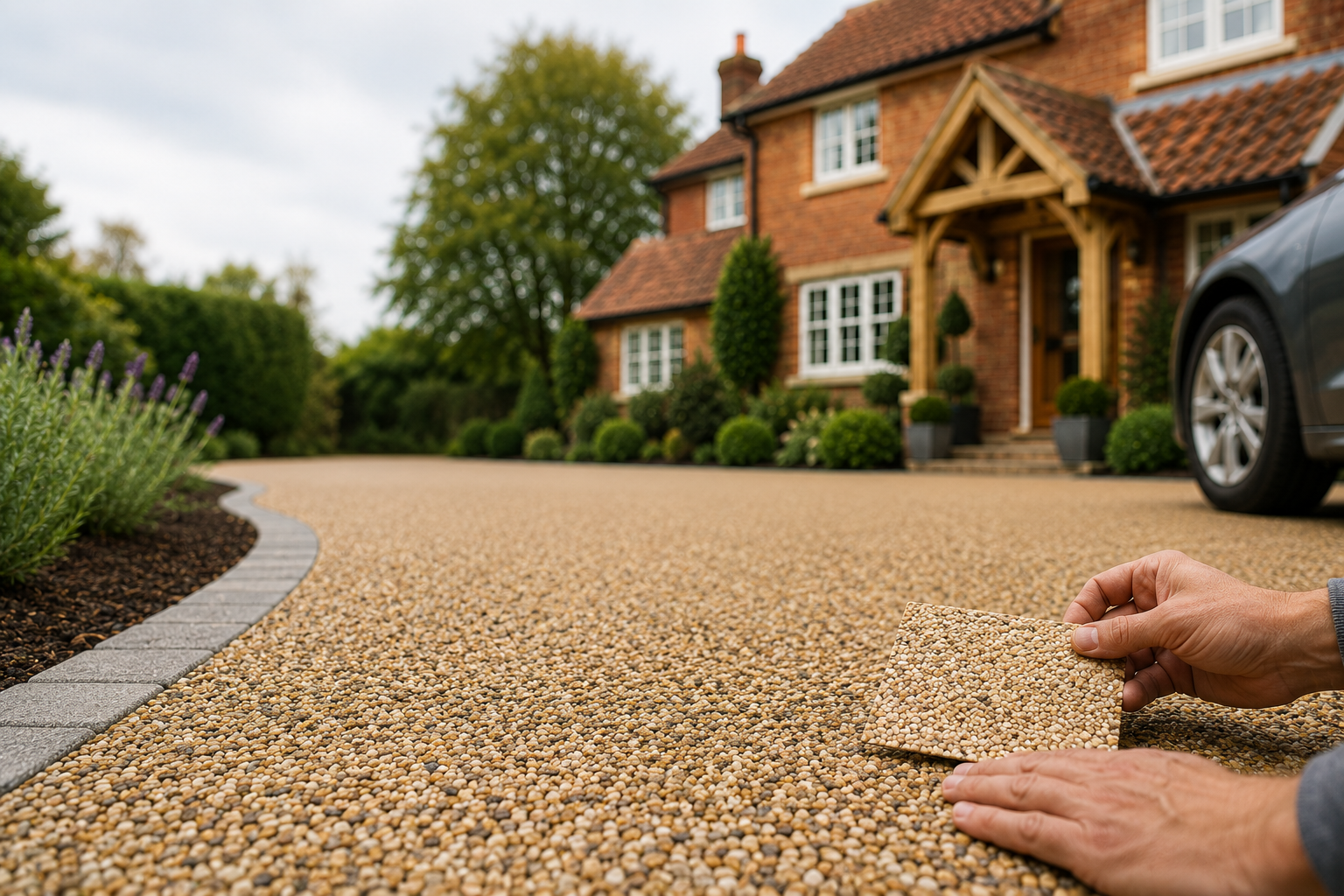
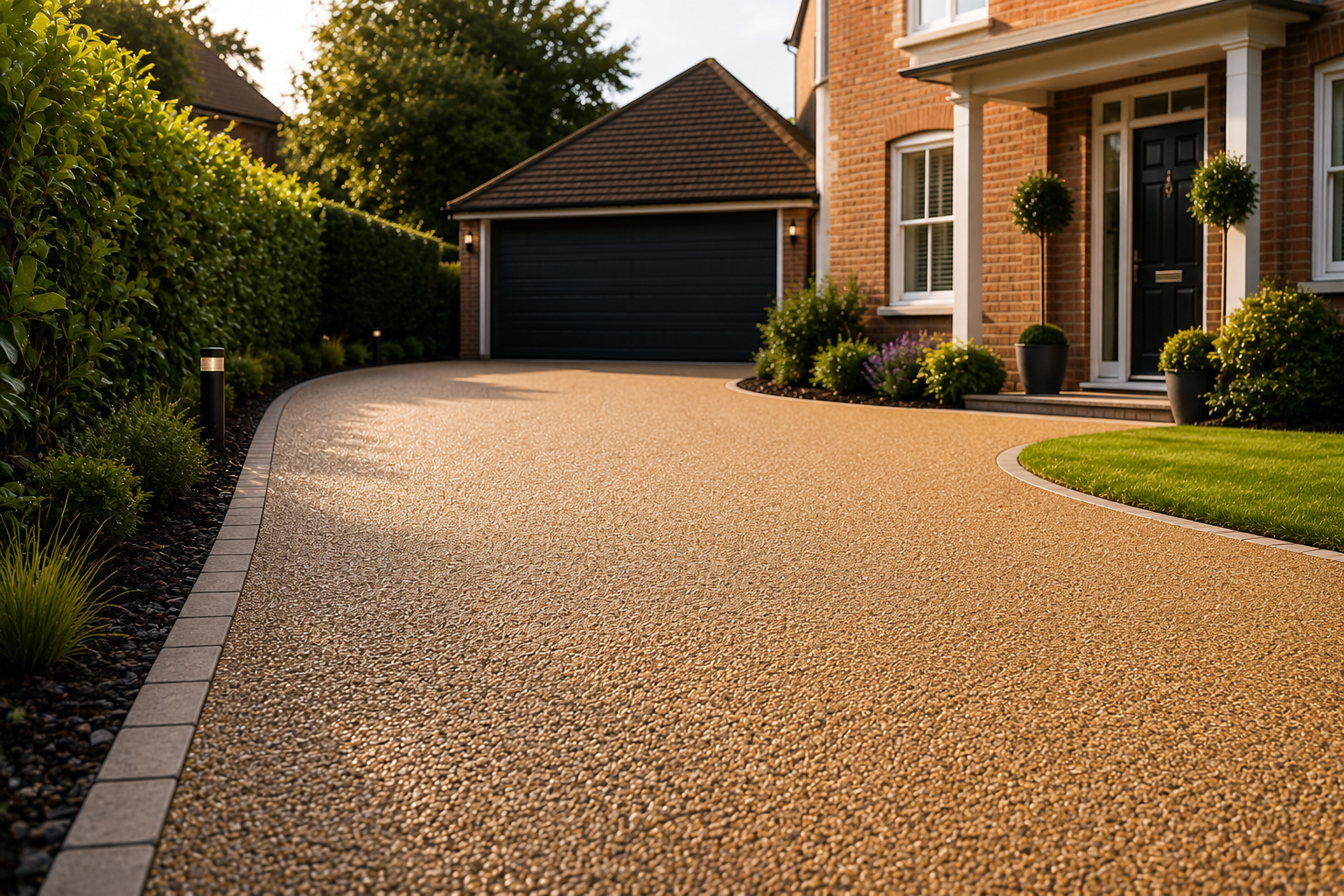
Resin bound paving is a mix of natural aggregate stones bound together with a clear resin, then trowelled over a solid, permeable sub-base to create a smooth, seamless surface. Unlike gravel, the stones are fixed in place, so there’s nothing loose to scatter, kick up, or get stuck in a toddler’s shoe. It’s become one of the most requested driveway finishes in the South East over the last few years, largely because it manages rainwater so well — a genuine concern given how often UK planning rules now hinge on drainage rather than materials, as set out by the Planning Portal.
What Block Paving Brings to the Table
Block paving, by contrast, is built from individual concrete or clay blocks laid in a pattern — herringbone, basketweave, stretcher bond — over a compacted base and jointed with sand. It’s the traditional choice, and there’s a reason it’s stuck around for decades: individual blocks can be lifted and replaced if damaged, which appeals to homeowners who like the idea of a “repairable” surface rather than one continuous finish.
Both approaches are entirely valid. The right one for your household depends on how your family actually uses the space, not just how the driveway looks in a photograph.
Durability Under Daily Family Traffic
How Resin Bound Handles Wear and Tear
Because resin bound surfacing has no joints or gaps, it doesn’t suffer from the same problems as jointed surfaces — no sand washing out between blocks, no small stones working themselves loose over time. For families with prams, scooters, and bikes constantly rolling across the same few metres, that smooth, continuous finish tends to age more evenly, without the sunken or wobbly patches that can develop where a jointed surface takes repeated point-loading.
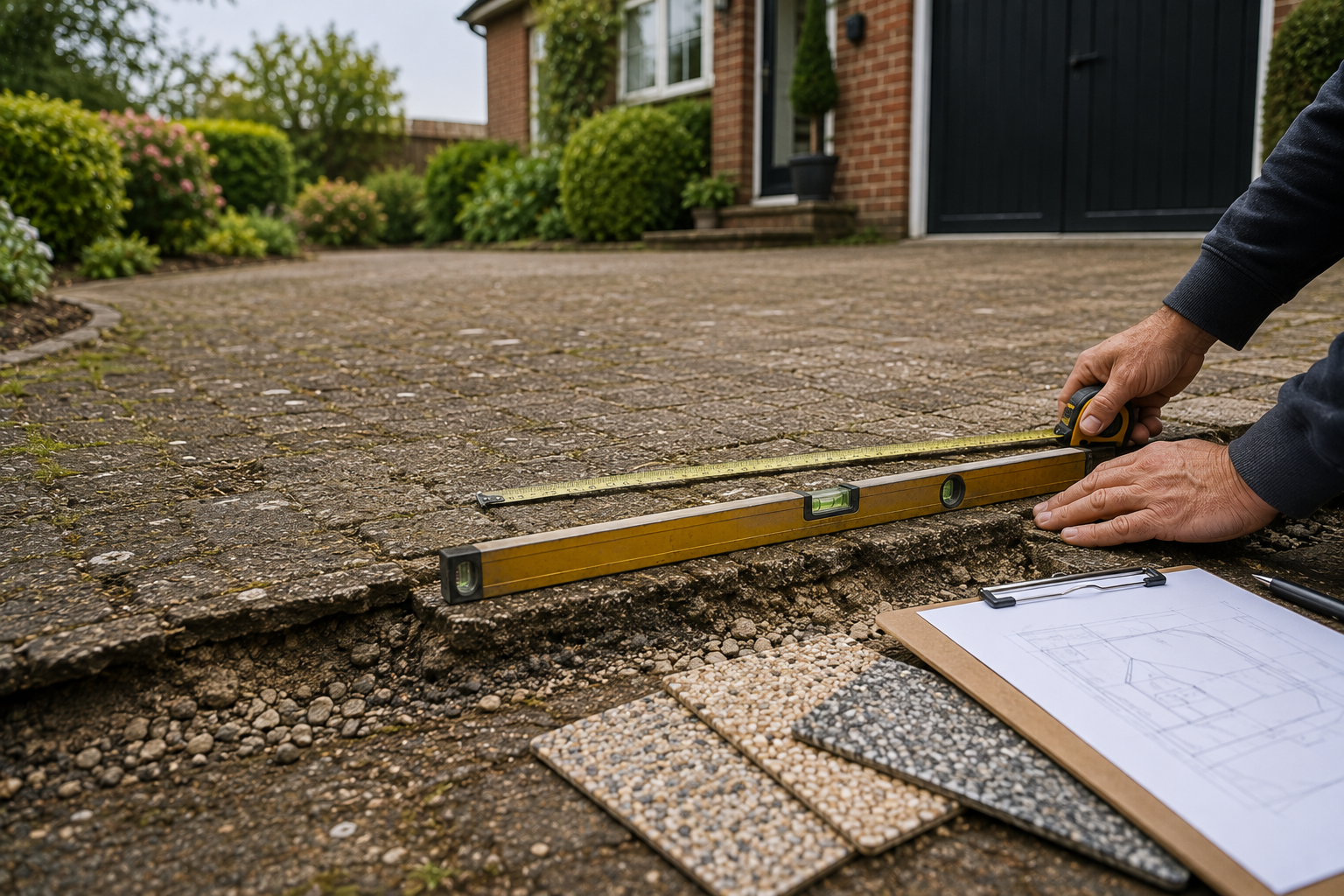
It also copes well with heavier vehicles, provided the sub-base has been installed to the correct depth and specification. A shallow or poorly compacted base is the single biggest cause of resin bound failure, so the quality of groundworks matters just as much as the resin mix itself.
How Block Paving Holds Up Over Time
Block paving is genuinely tough — concrete blocks are dense and hard-wearing, and they’re forgiving of everyday knocks from bikes, scooters, and the occasional dropped tool. Where it can struggle is at the joints. Over years of use, jointing sand can migrate or wash out during heavy rain, and individual blocks can shift slightly under sustained weight in one spot, like a regular parking position. None of this is disastrous, but it does mean periodic re-sanding and the occasional block realignment to keep things looking sharp.
Slip Resistance and Safety for Kids and Pets
This is where a lot of families make their final decision, and understandably so.
Resin Bound Surfaces and Grip
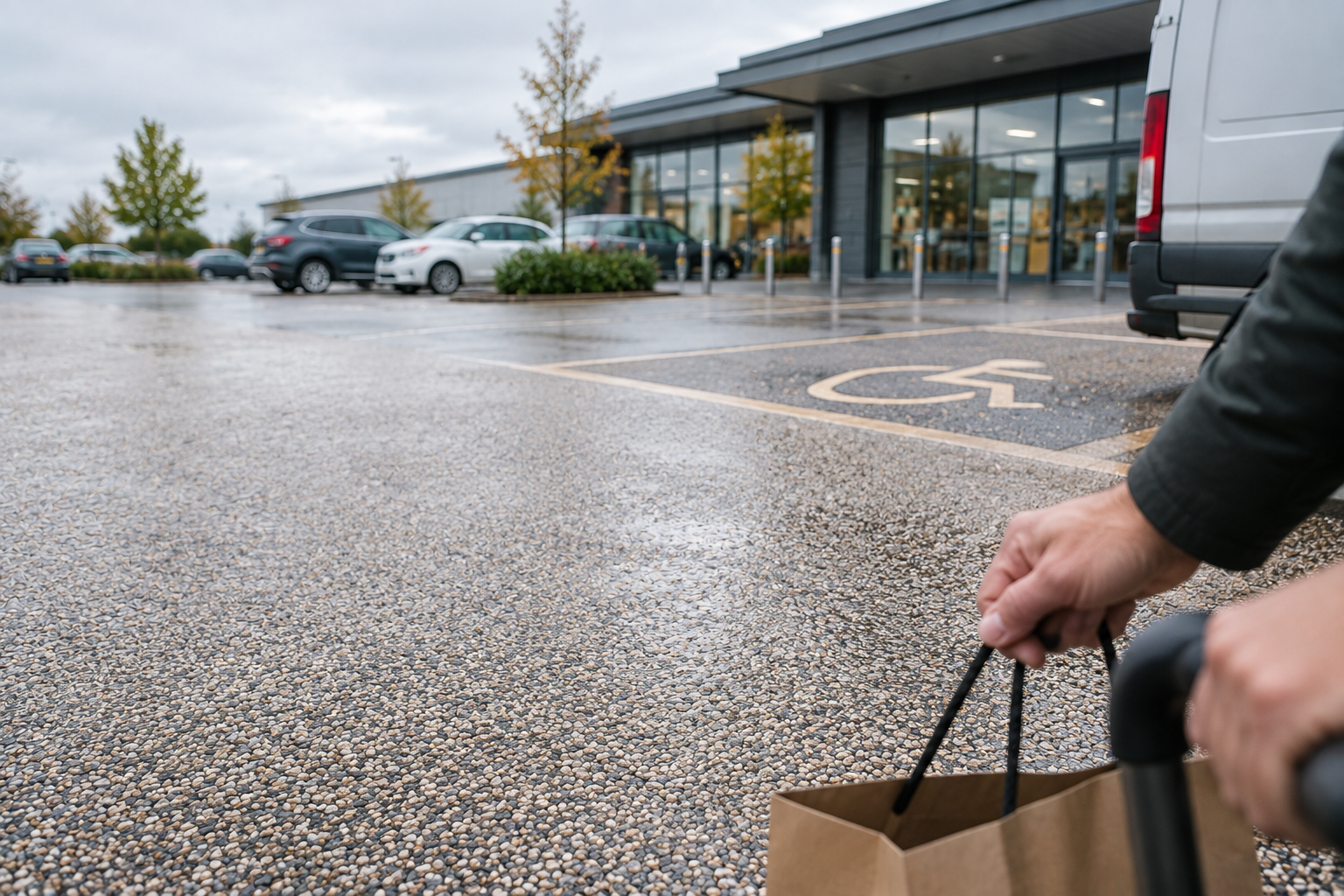
Resin bound paving has a naturally textured, slightly gritty finish that provides good slip resistance even when wet, which matters a great deal if you’ve got children running around in bare feet in summer or a dog bounding out of the car after a muddy walk. There are no joints for water to pool in either, so puddling — and the ice that follows in winter — is far less of an issue than with some traditional surfaces.
Block Paving and Grip
Block paving also offers reasonable grip, particularly with textured or riven-finish blocks, though smoother or older, worn blocks can become slippery when wet or covered in algae. Since block paving relies on joints for drainage, water can sit briefly on the surface after heavy rain before it filters through, which is worth bearing in mind if you’ve got young children playing near the driveway.
Maintenance: What a Busy Family Can Realistically Keep Up With
Nobody with school runs, work, and a house to run wants a driveway that demands constant upkeep. This is arguably the biggest practical difference between the two.
Looking After a Resin Bound Driveway
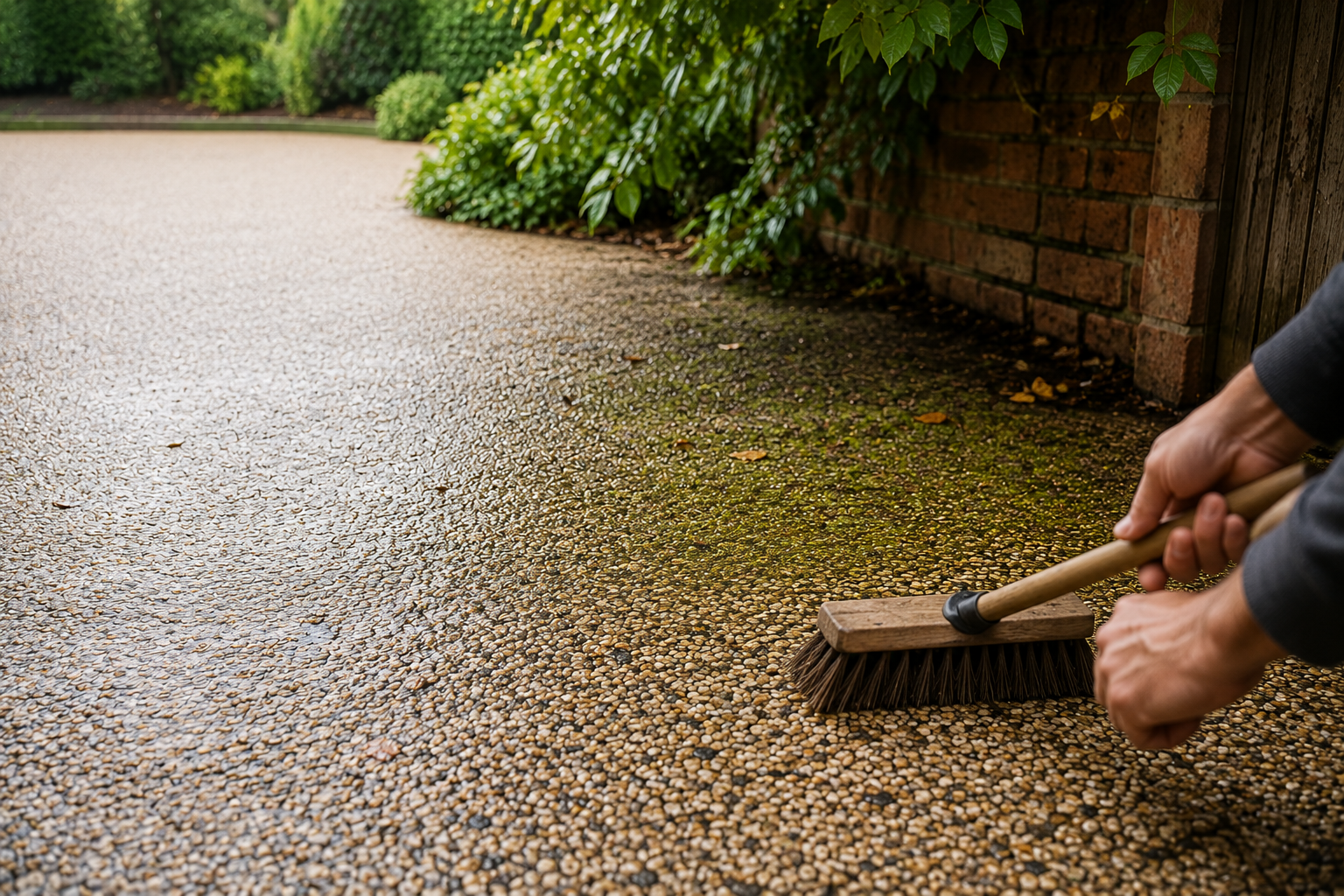
Resin bound surfacing is widely considered the lower-maintenance option. Because there are no joints for weeds to establish in, you’re not spending your Saturday mornings pulling grass out from between stones. A simple sweep and an occasional hose-down keeps it looking presentable, and its permeable structure means it drains quickly rather than holding puddles that attract algae.
Looking After a Block Paving Driveway
Block paving needs a bit more regular attention. Weeds can find their way into joints over time, moss can build up in shaded or damp corners, and jointing sand occasionally needs topping up. None of this is difficult, but it is an ongoing task rather than a set-and-forget surface — something worth factoring in if your weekends are already stretched thin with family commitments.
Drainage, SuDS Compliance and Why It Matters for Families
Beyond aesthetics, drainage performance genuinely affects daily life — nobody wants a driveway that turns into a shallow lake every time it rains, especially with kids trying to get in and out of the car.
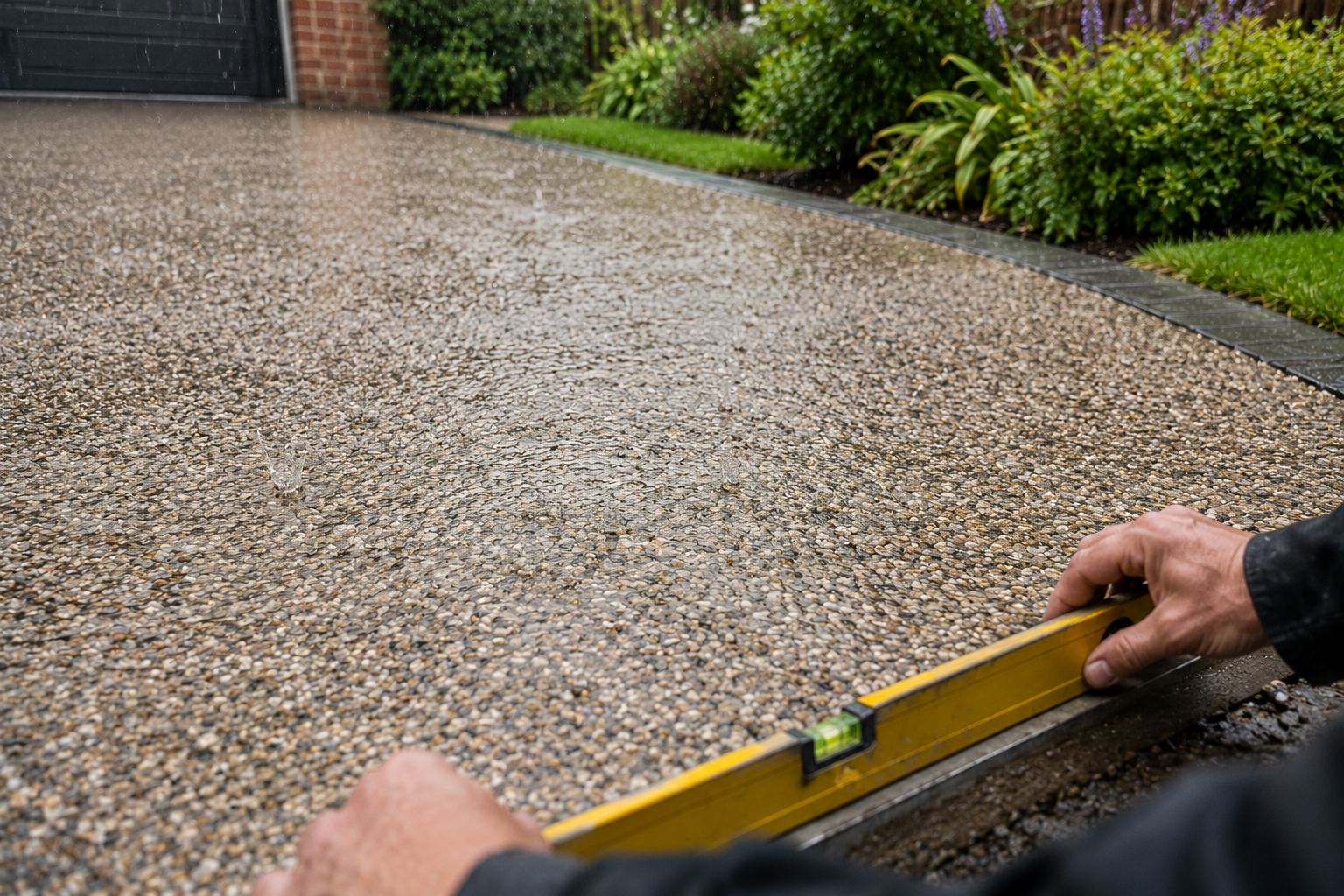
Resin bound surfacing, laid correctly over a permeable sub-base, allows rainwater to soak through rather than run off, which helps it meet UK Sustainable Drainage Systems (SuDS) requirements and, in most cases, avoid the need for planning permission altogether — a point confirmed by multiple local authority guidance notes referencing resin-bound gravel as an accepted permeable surface. Block paving can also be installed permeably, with specially designed jointing that allows water through, but standard block paving without these joints is treated as an impermeable surface, and driveways over five square metres may then require planning permission under the rules set out by the Planning Portal.
For a family driveway, this isn’t just a technical footnote — better drainage means fewer puddles by the front door, less standing water for children or pets to splash through unexpectedly, and one less thing to think about before applying for any building work.
Cost Considerations for Family Budgets
Resin bound surfacing typically carries a higher upfront cost per square metre than standard block paving, largely due to the material and the skilled labour needed to lay it correctly. Block paving tends to be more budget-friendly at the point of installation, particularly for larger driveways, and its per-block repairability can make small fixes cheaper down the line.
That said, families should weigh installation cost against the maintenance time and money likely to be spent over the following years — resin’s lower upkeep can offset its higher starting price for households who’d rather spend weekends elsewhere.
Which One Actually Suits Your Family?
There’s no single right answer here, only the right answer for your household. If your priority is minimal weekend maintenance, strong wet-weather grip for kids and pets, and straightforward SuDS compliance, resin bound surfacing tends to edge ahead. If you’d rather have a lower upfront cost, individual blocks that can be swapped out if damaged, and a more traditional look that suits a period property, block paving remains an excellent, proven choice.
Either surface, properly installed by an experienced contractor with the correct sub-base and drainage in place, will comfortably handle the daily reality of family life — bikes, dogs, prams and all.
Conclusion
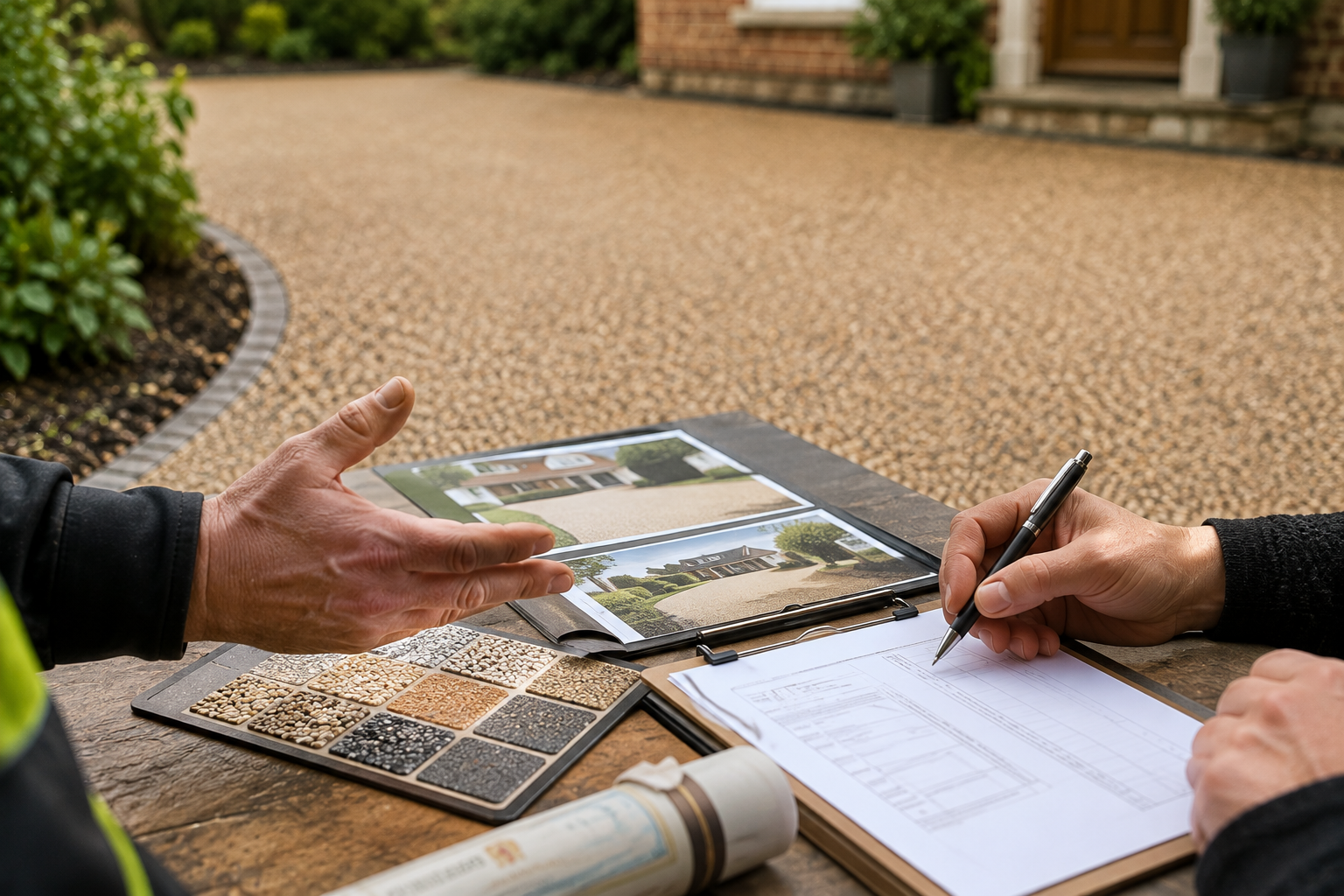
Choosing between resin bound surfacing and block paving for a high-traffic family home really comes down to how much time you want to spend on upkeep versus how much you’re prepared to spend upfront. Resin bound wins on low maintenance, drainage, and all-weather grip; block paving wins on initial cost and easy, piece-by-piece repairs. Whichever way you lean, get a proper site survey done first — the quality of the groundworks will matter far more to your driveway’s long-term performance than the material on top of it.
Frequently Asked Questions
Is resin bound paving safer for children and pets than block paving?
Resin bound surfacing generally offers better slip resistance in wet weather because it has no joints for water to pool in, making it a solid choice for families with young children or dogs.
Does block paving need more maintenance than resin bound driveways?
Yes, typically. Block paving joints can allow weeds and moss to establish over time, requiring occasional weeding, re-sanding, and cleaning, whereas resin bound surfaces have no joints to maintain.
Will I need planning permission for either surface?
It depends on drainage. Permeable resin bound surfacing and permeable block paving usually avoid the need for planning permission, while standard, non-permeable block paving over five square metres may require it.
Which option is cheaper to install?
Block paving is generally less expensive upfront per square metre than resin bound surfacing, though resin’s lower long-term maintenance can narrow that gap over time.
Can block paving be repaired more easily than resin bound surfacing?
Yes. Individual blocks can be lifted and replaced if damaged or stained, whereas resin bound surfacing is a continuous finish that’s harder to patch invisibly.