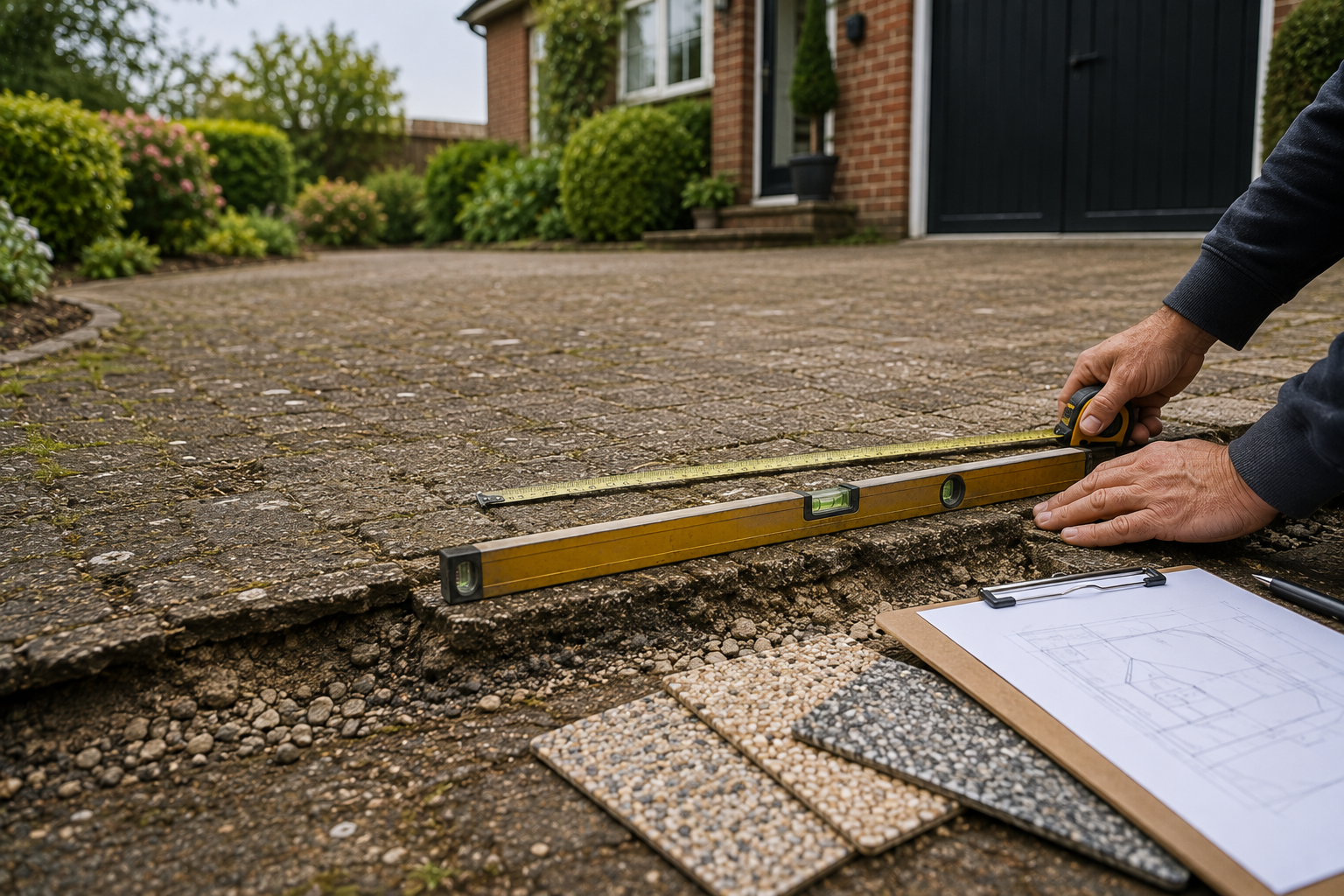
Bromley homeowners replacing a tired driveway usually end up choosing between two options: traditional block paving or resin bound surfacing. Both look good when freshly laid — the difference shows up years later, in maintenance, drainage, and how well the surface ages.
Resin bound driveways cost roughly £70–£120 per m² and are fully permeable with minimal upkeep, lasting 15–25 years. Block paving costs slightly less at £60–£110 per m², offers a traditional look, but needs more maintenance over time, including joint sand top-ups and occasional block replacement. The right choice depends on budget, property style, and how much upkeep you’re willing to do.
South East Resin & Paving installs both resin bound and block paving driveways across Bromley, so this comparison is written without a hard sell either way — just the practical trade-offs Bromley homeowners should weigh up.
What’s the actual difference between block paving and resin bound driveways?
Block paving is built from individual concrete or clay blocks laid in a pattern on a compacted sub-base, with sand brushed into the joints to lock everything in place. It’s been the default UK driveway upgrade for decades, and Bromley has plenty of examples — from herringbone patterns on 1930s semis to more contemporary large-format block layouts on newer builds around Shortlands and Bickley.
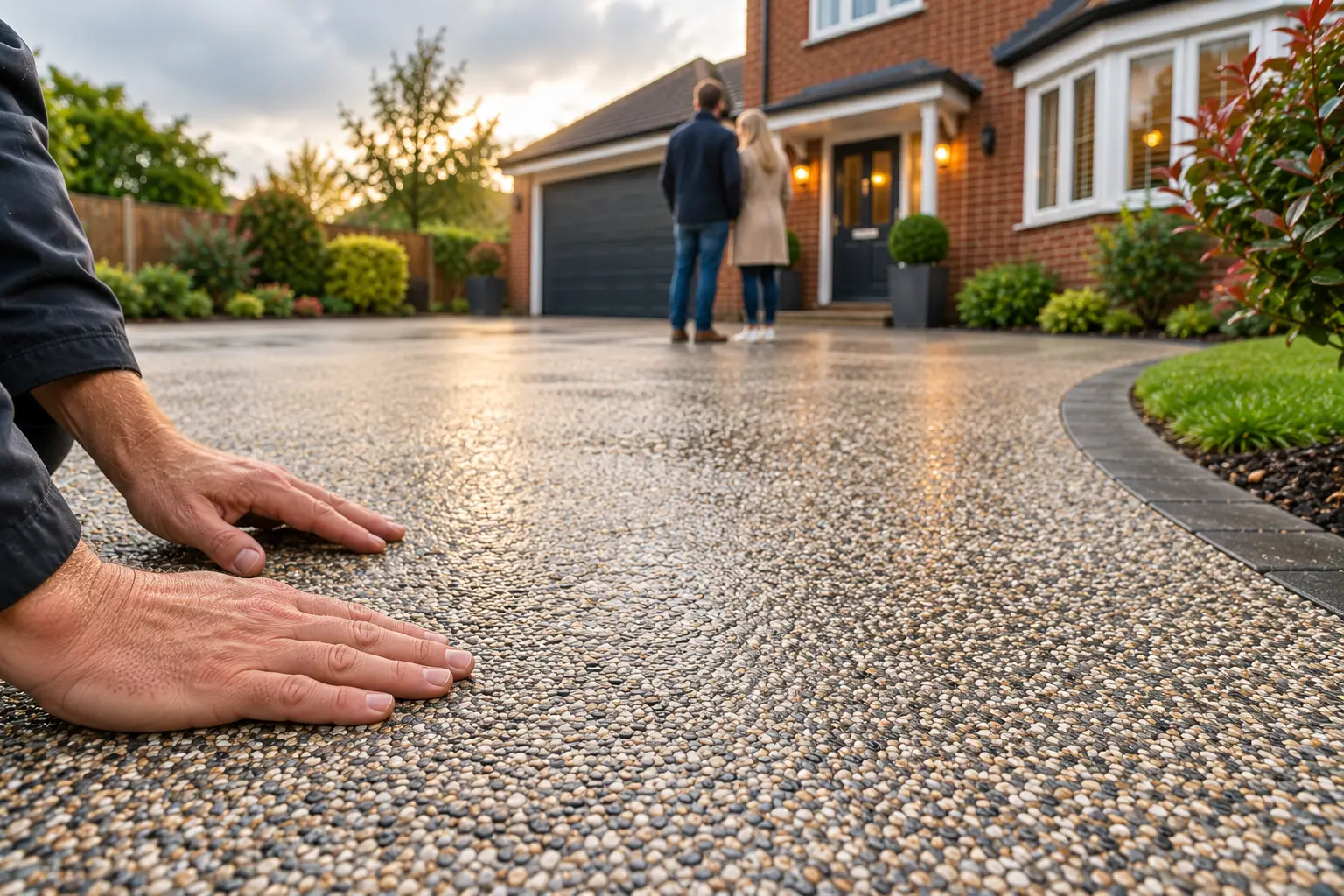
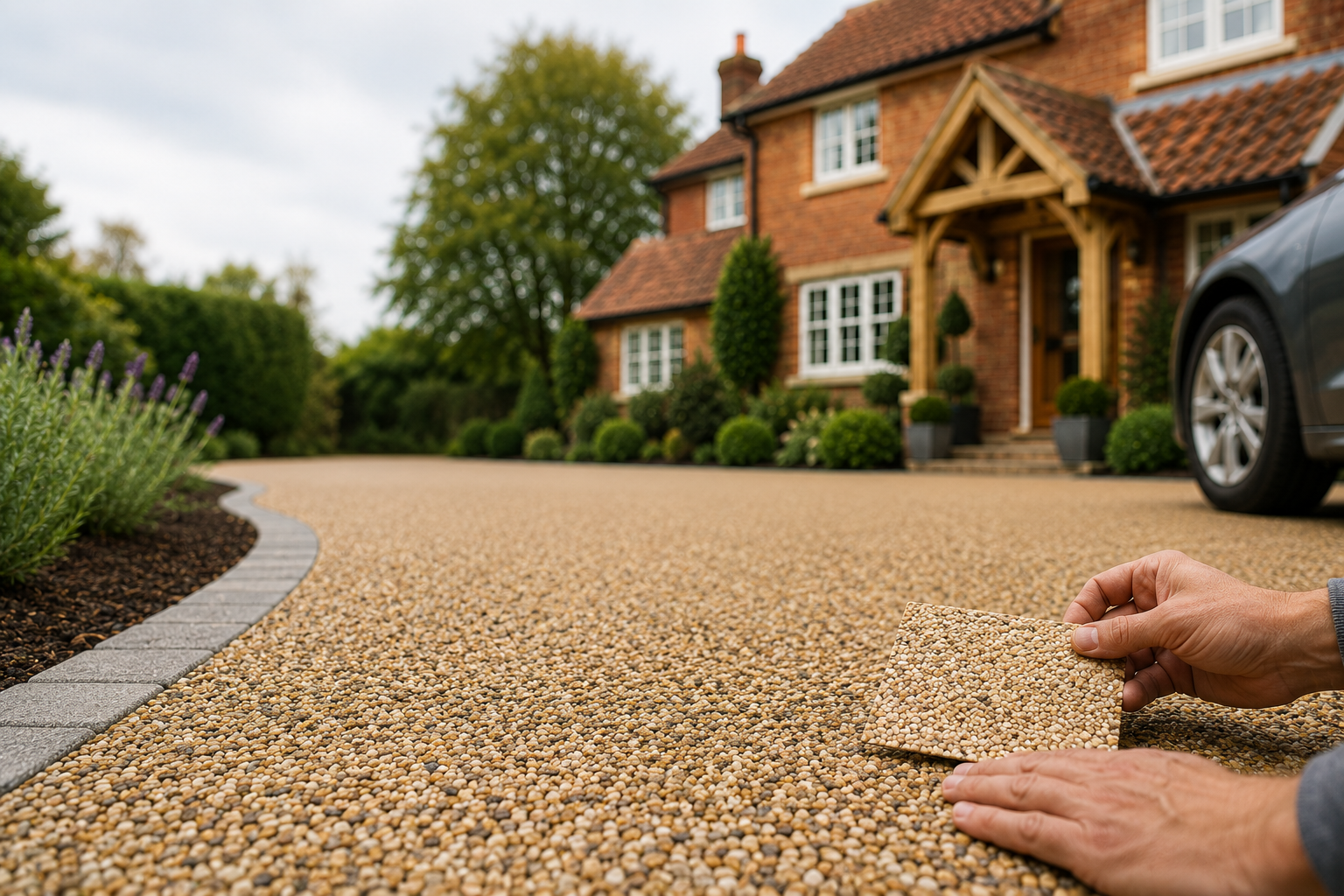
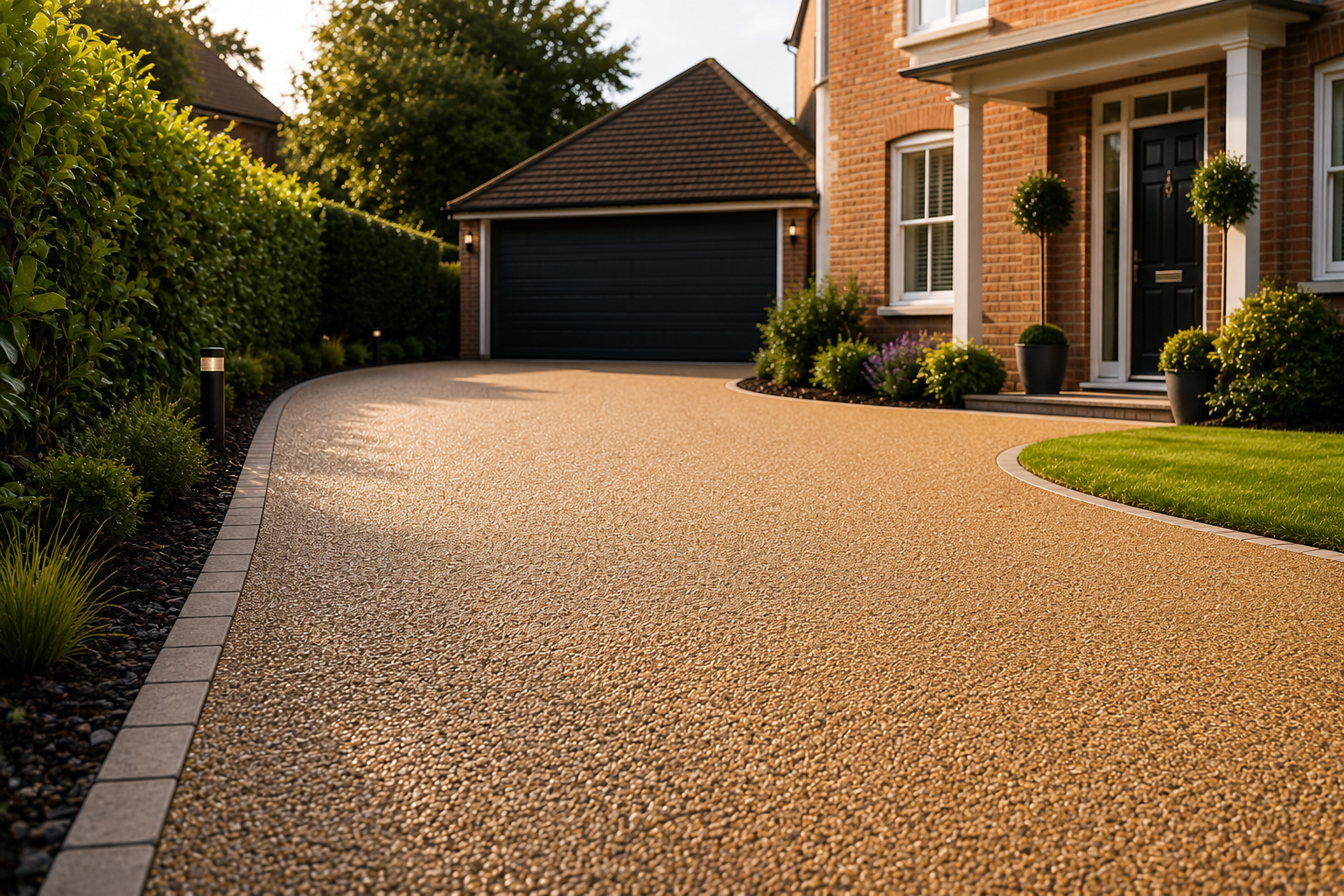
Resin bound surfacing is different: natural stone aggregate is mixed with a clear resin binder and trowelled across a prepared sub-base to create a single, seamless surface. There are no individual units and no joints — just one smooth, permeable finish in the aggregate paving colour of your choice.
Which is cheaper: block paving or resin bound?
On installation cost alone, block paving usually comes in slightly lower — typically £60–£110 per square metre against £70–£120 per square metre for resin bound. For an average Bromley driveway of 40–50m², that’s a difference of roughly a few hundred pounds at the point of installation. [VERIFY: confirm current 2026 rates with the quoting team before publishing.]
But installation cost is only part of the picture. Block paving needs periodic re-sanding of the joints, occasional re-levelling if blocks sink or shift, and more frequent weed treatment. Resin bound surfacing has a higher relative upfront cost but lower running costs over its 15–25 year lifespan, since there’s no jointing to maintain and nothing for weeds to establish in.
Which surface drains better?
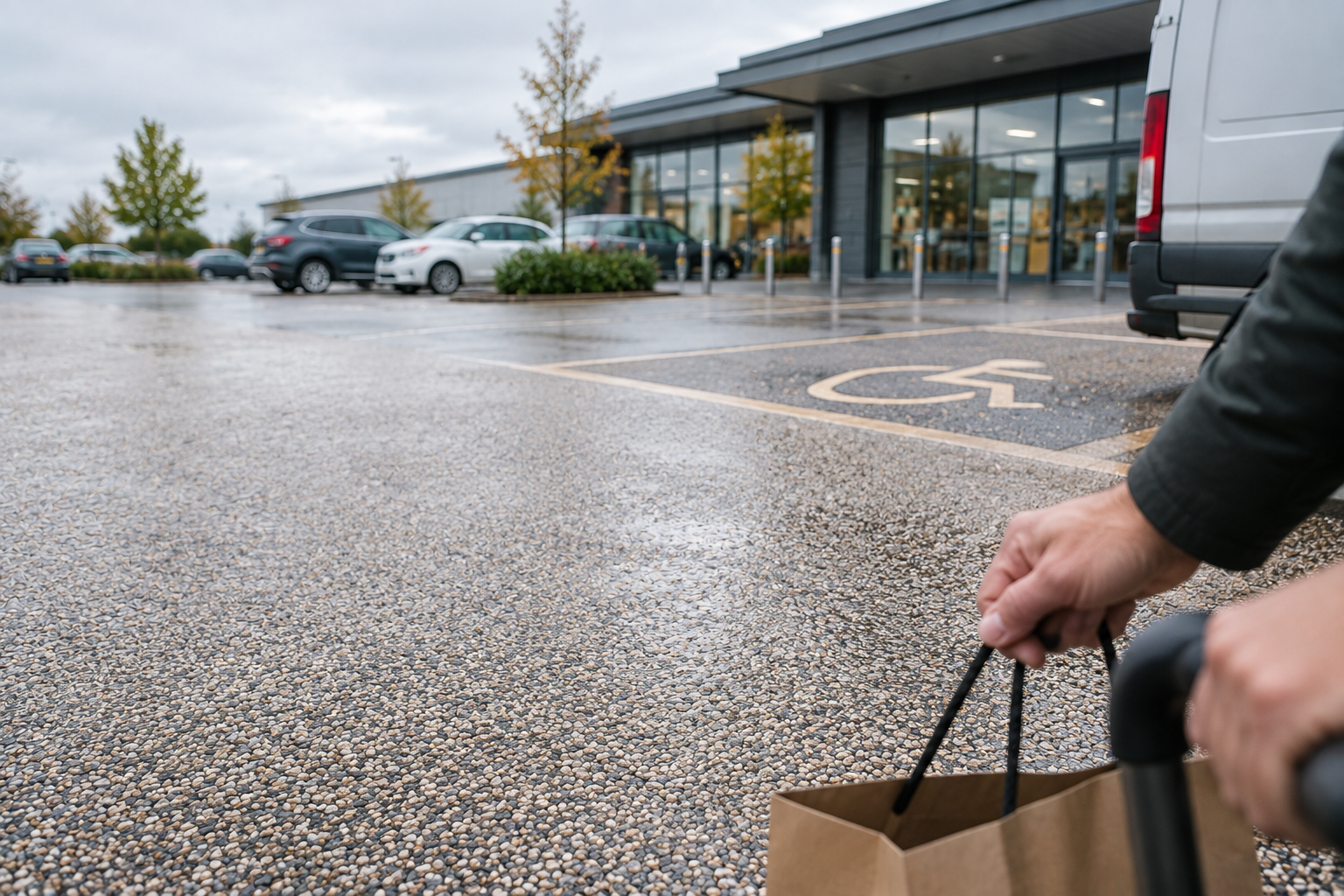
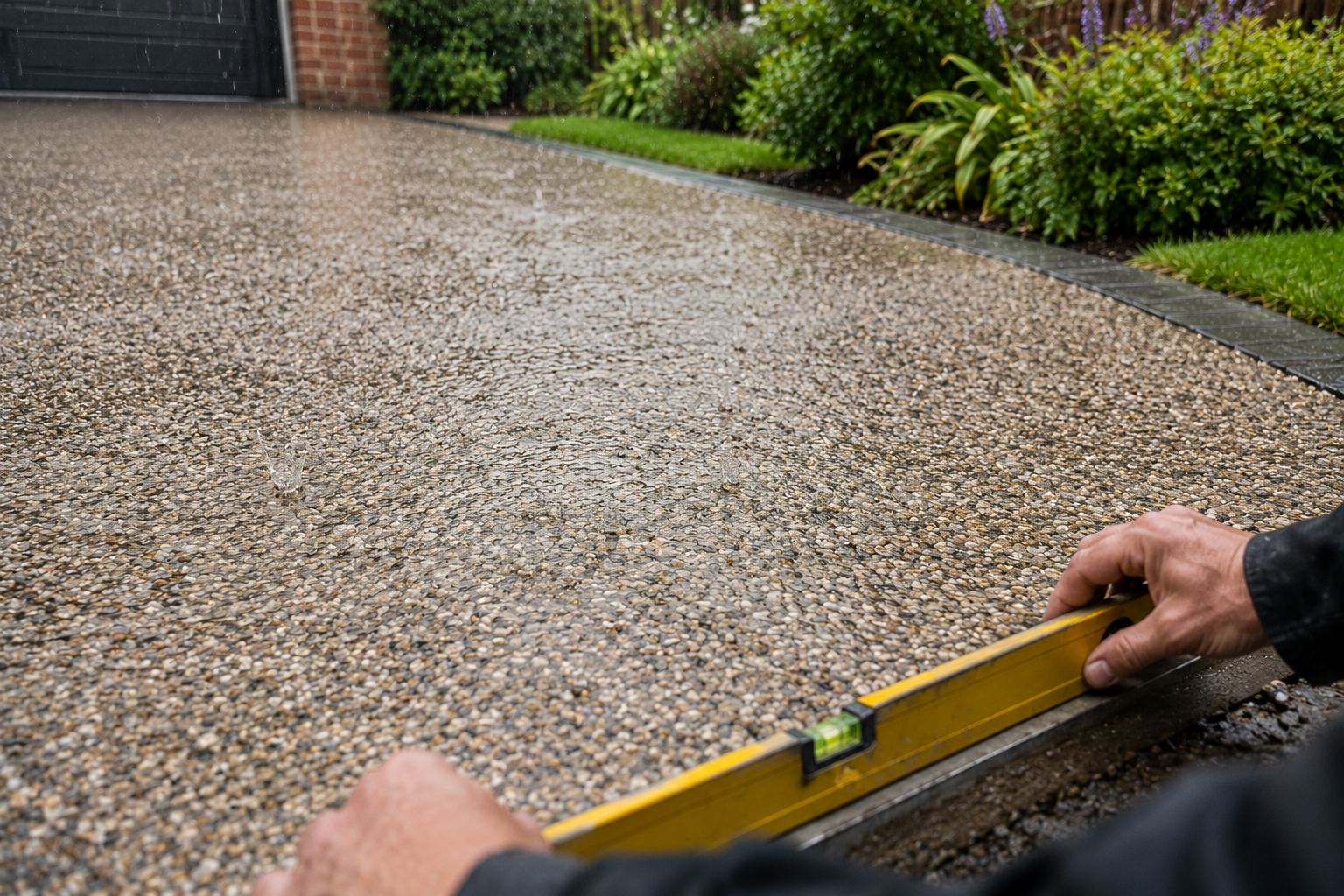
This is where the two options differ most, and it matters in Bromley given the borough’s periodic surface water flooding concerns in low-lying areas near the River Ravensbourne and its tributaries. Resin bound paving is fully permeable — water passes through the surface itself into a permeable sub-base, rather than running off. Block paving can be laid with permeable jointing to achieve similar drainage, but standard block paving with sanded joints sheds a significant amount of surface water, which then needs to go somewhere — typically a soakaway or drain.
Under UK permitted development rules, a non-permeable driveway over 5m² generally requires planning permission unless water is directed to a permeable area rather than the highway. Resin bound paving sidesteps this issue entirely because the surface itself is permeable, which is one reason it’s become the default recommendation for driveway replacements across London boroughs including Bromley.
Which looks better and lasts longer?
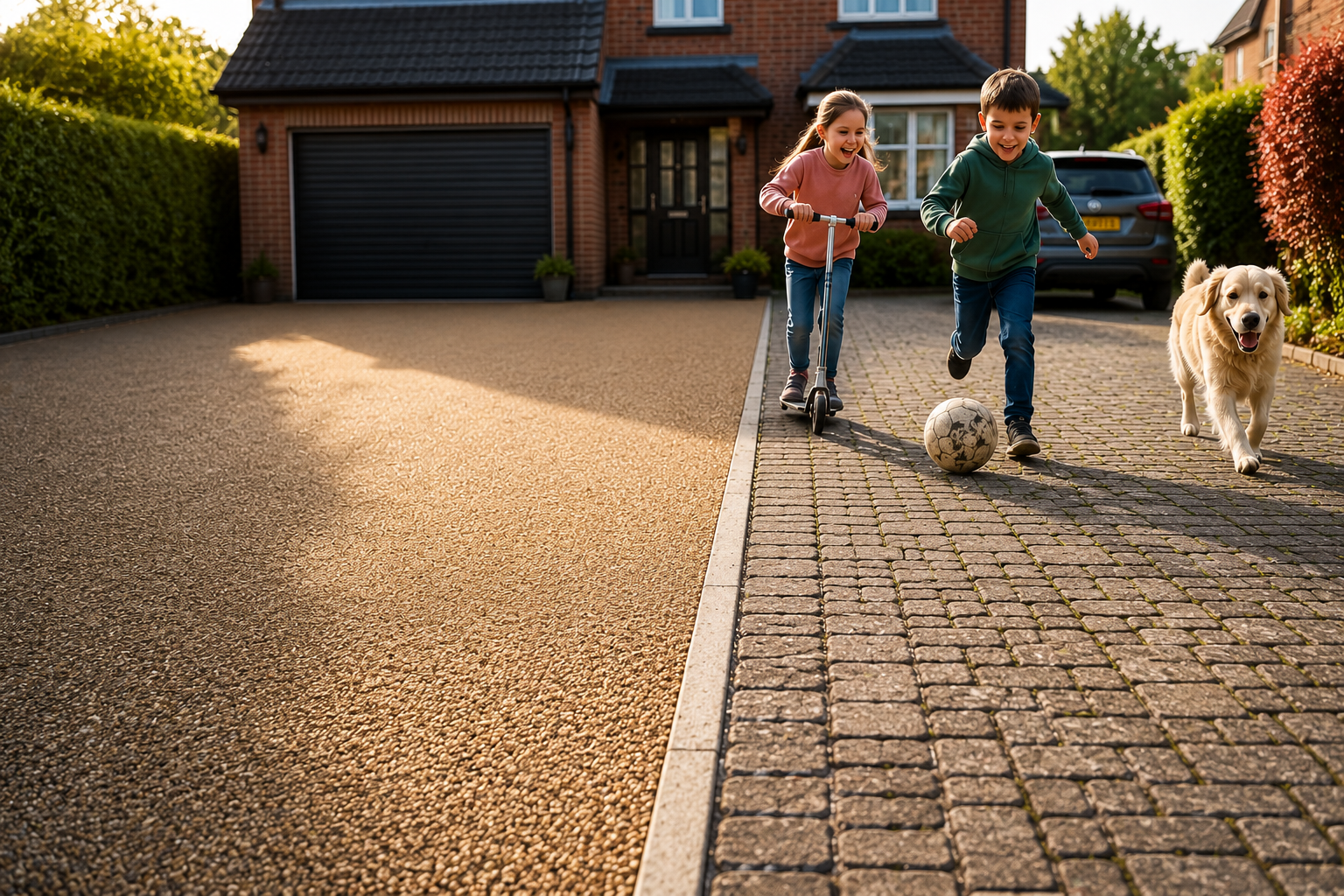
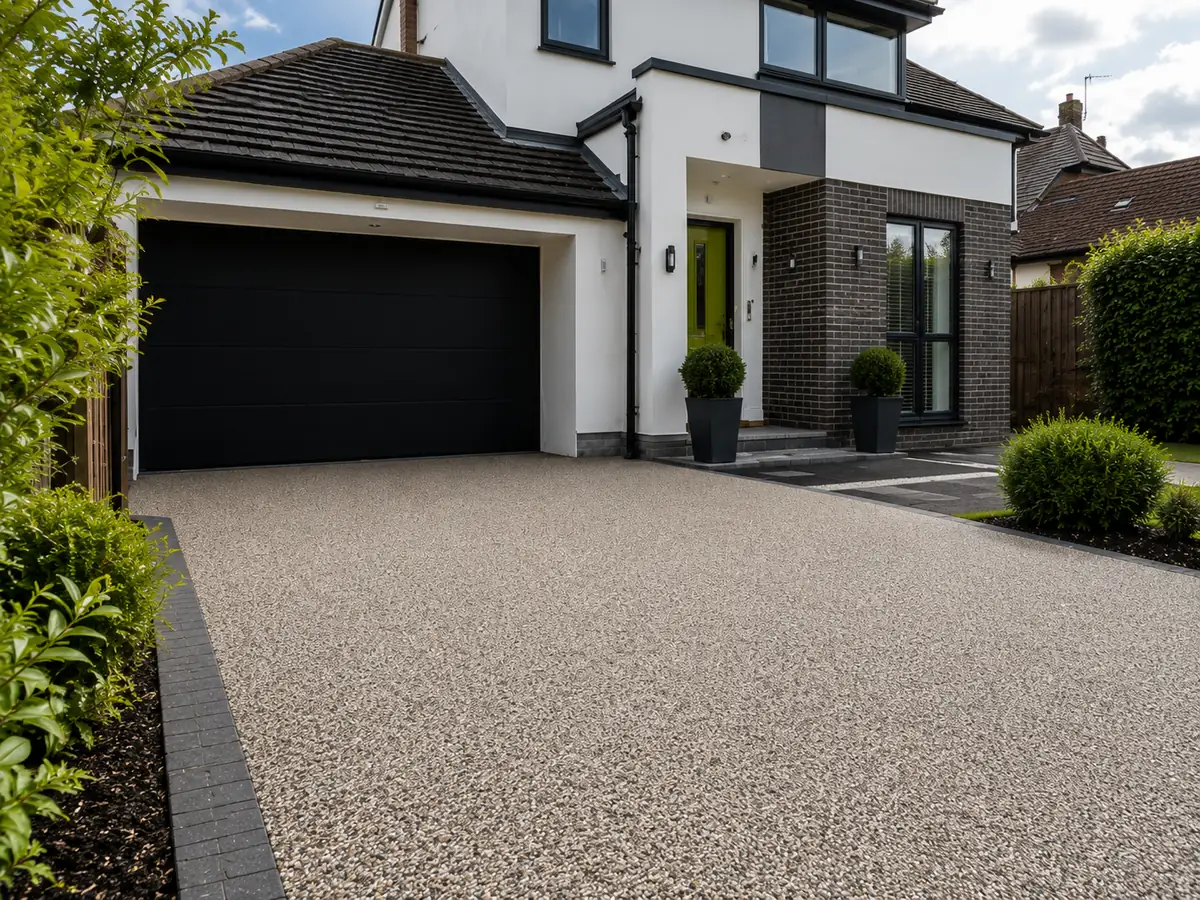
Both surfaces can look excellent when properly installed, and the “better” choice here is genuinely down to taste and property style. Block paving suits period properties and gives a traditional, textured look with visible pattern and joint lines. Resin bound gives a smoother, more contemporary finish that many homeowners find suits modern extensions, render, and larger driveways where a busy block pattern can feel visually heavy.
On longevity, both can last well with proper installation, but they age differently. Block paving can shift, sink in places, or develop weed growth in the joints over time, and while individual blocks can be lifted and replaced, colour matching an older block paving driveway years later is often difficult. Resin bound surfacing ages more uniformly — very minor fading from UV exposure is possible over many years, but there’s no joint degradation or sinking to worry about, provided the sub-base was properly compacted at installation.
Is one easier to maintain than the other?
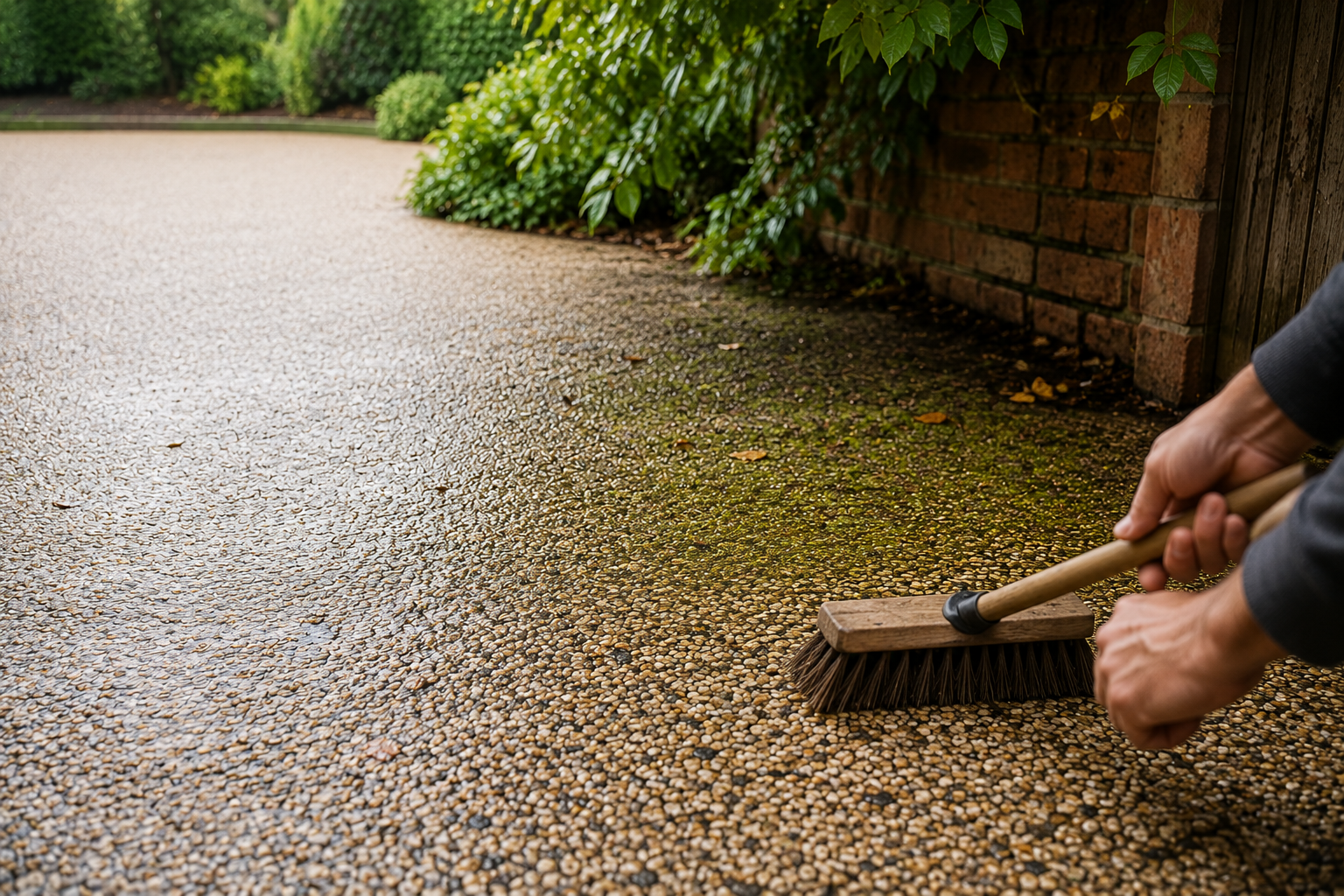
Resin bound surfacing is the lower-maintenance option by a clear margin. There’s no jointing sand to top up, no loose blocks to relay, and the seamless surface makes it far harder for weeds and moss to establish. An occasional hose-down or light pressure wash keeps it looking as good as the day it was laid.
Block paving needs more regular attention: joint sand naturally washes and brushes out over time and needs replacing every few years, weeds will eventually find their way into the gaps without treatment, and individual blocks can crack or sink slightly with ground movement, particularly on driveways that see heavy vehicle use.
How does installation time compare?
Both surfaces typically take one to two days to install on a standard residential driveway, though the process differs. Block paving installation involves excavating to the correct depth, laying and compacting a sub-base, then bedding and laying each block by hand before brushing in jointing sand — a labour-intensive process that scales with the complexity of the chosen pattern.
Resin bound installation follows a similar excavation and sub-base process, but the surfacing stage is faster: the resin and aggregate mix is trowelled across the prepared area in one continuous pour rather than unit by unit. For larger Bromley driveways, this can mean resin bound is completed slightly quicker on the surfacing day itself, though total project time is broadly similar once ground preparation is factored in for both.
Does one add more value to a Bromley property?
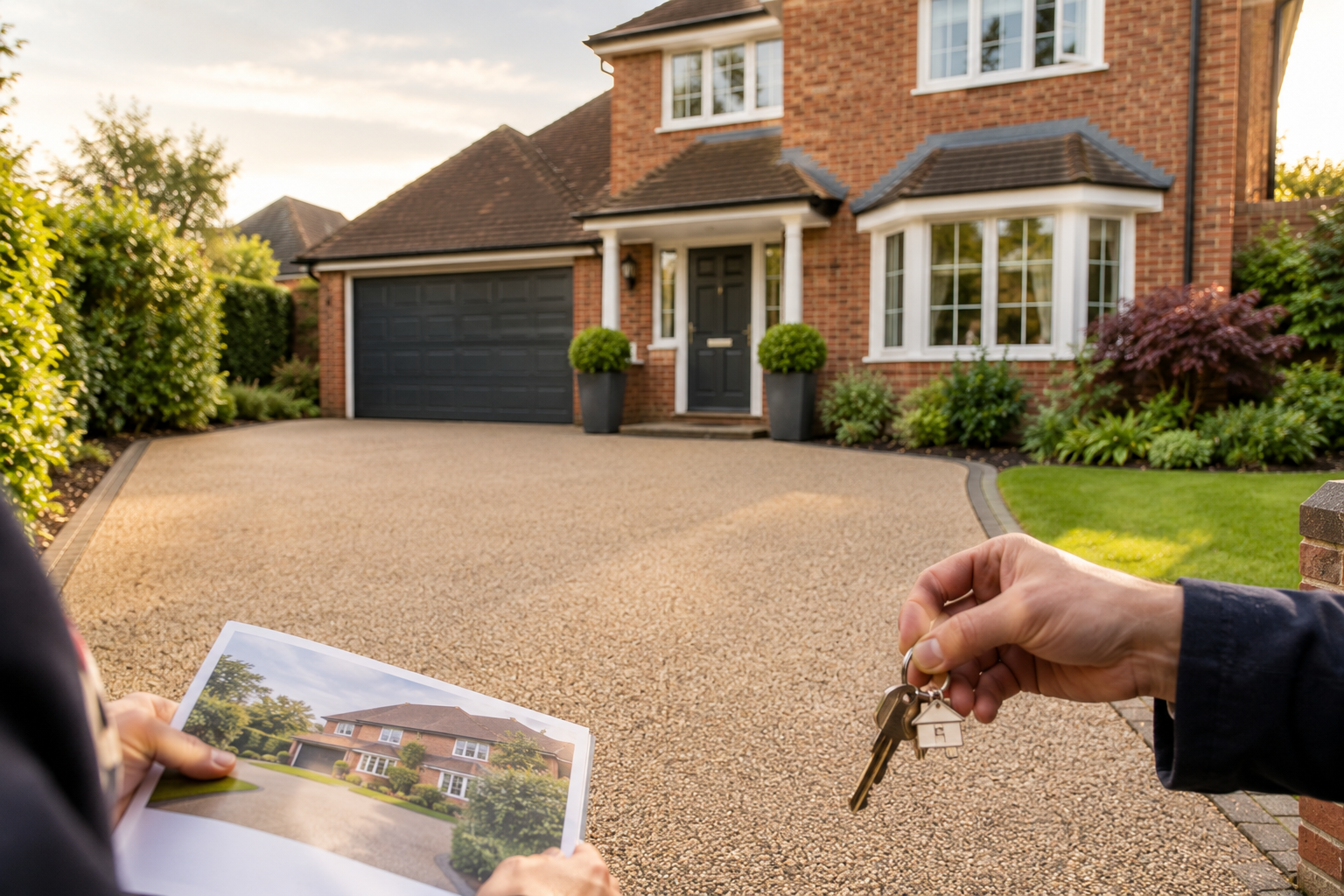
Both surfaces improve kerb appeal over cracked concrete or tarmac, and estate agents in Bromley generally note that a smart, well-maintained driveway — of either type — makes a positive first impression. Resin bound’s contemporary look tends to be favoured on higher-value properties and newer developments, where a clean, seamless finish complements modern architecture, while block paving remains a strong, familiar choice for period and traditional homes where a more textured finish suits the property’s character.
Which should Bromley homeowners choose?
There’s no universally correct answer, but a few rules of thumb help:
- Choose resin bound if: low maintenance matters most, the property has a modern or period-neutral frontage, or drainage and permitted development compliance are a priority
- Choose block paving if: the property is period-style and you want a traditional textured look, budget is the primary constraint, or you specifically want the option to lift and relay individual sections in future
- Consider a hybrid approach: some Bromley homeowners use block paving borders or edging around a resin bound driveway centre, combining the traditional framing look with a low-maintenance main surface
Getting a like-for-like comparison for your property
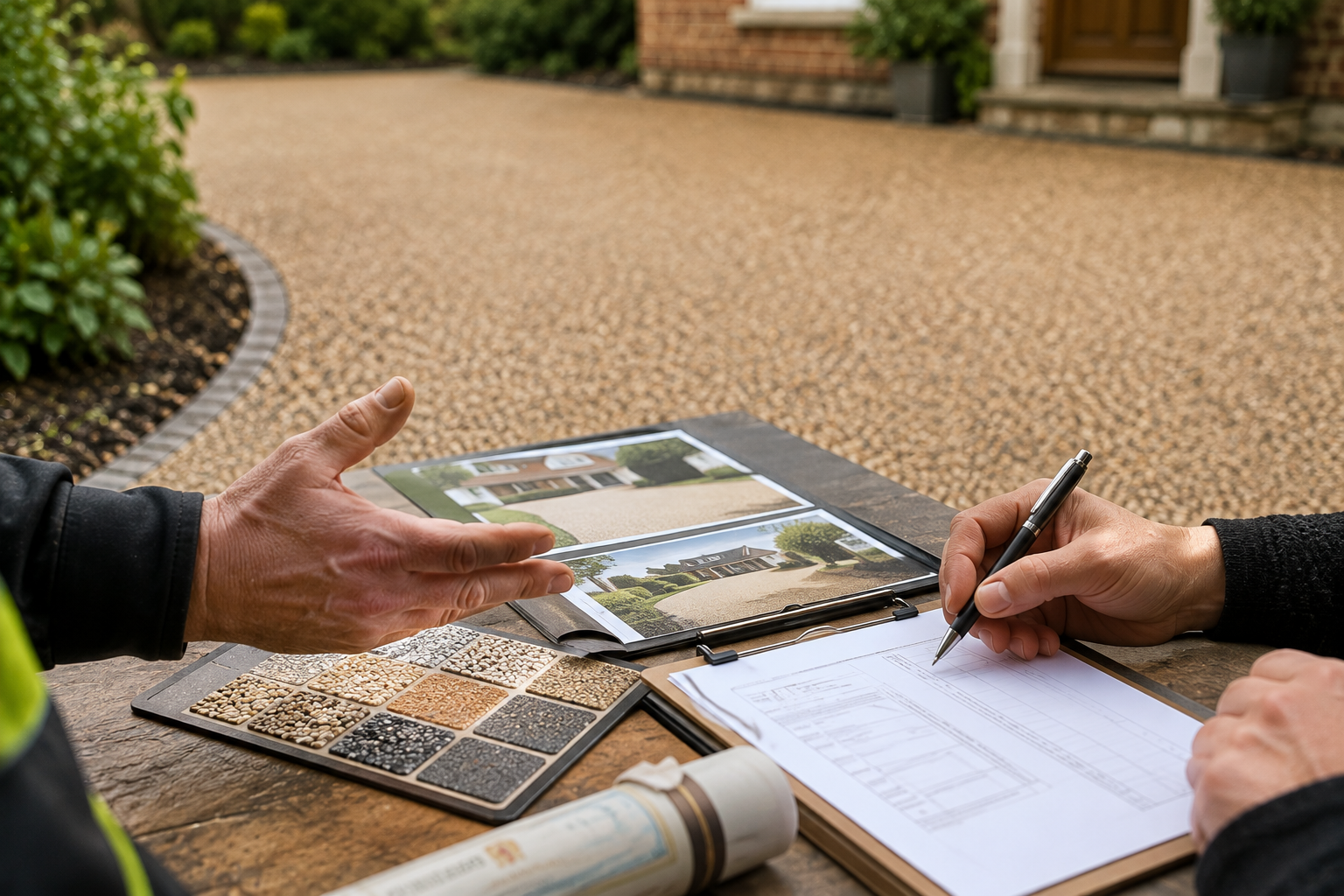
Cost and suitability both depend heavily on the specific site — existing surface, access, drainage, and the size and shape of the driveway all affect the final price for either option. South East Resin & Paving offers free, no-obligation consultations for Bromley homeowners, including a written quote comparing both resin bound and block paving so you can make the decision with real numbers in front of you, not just estimates.