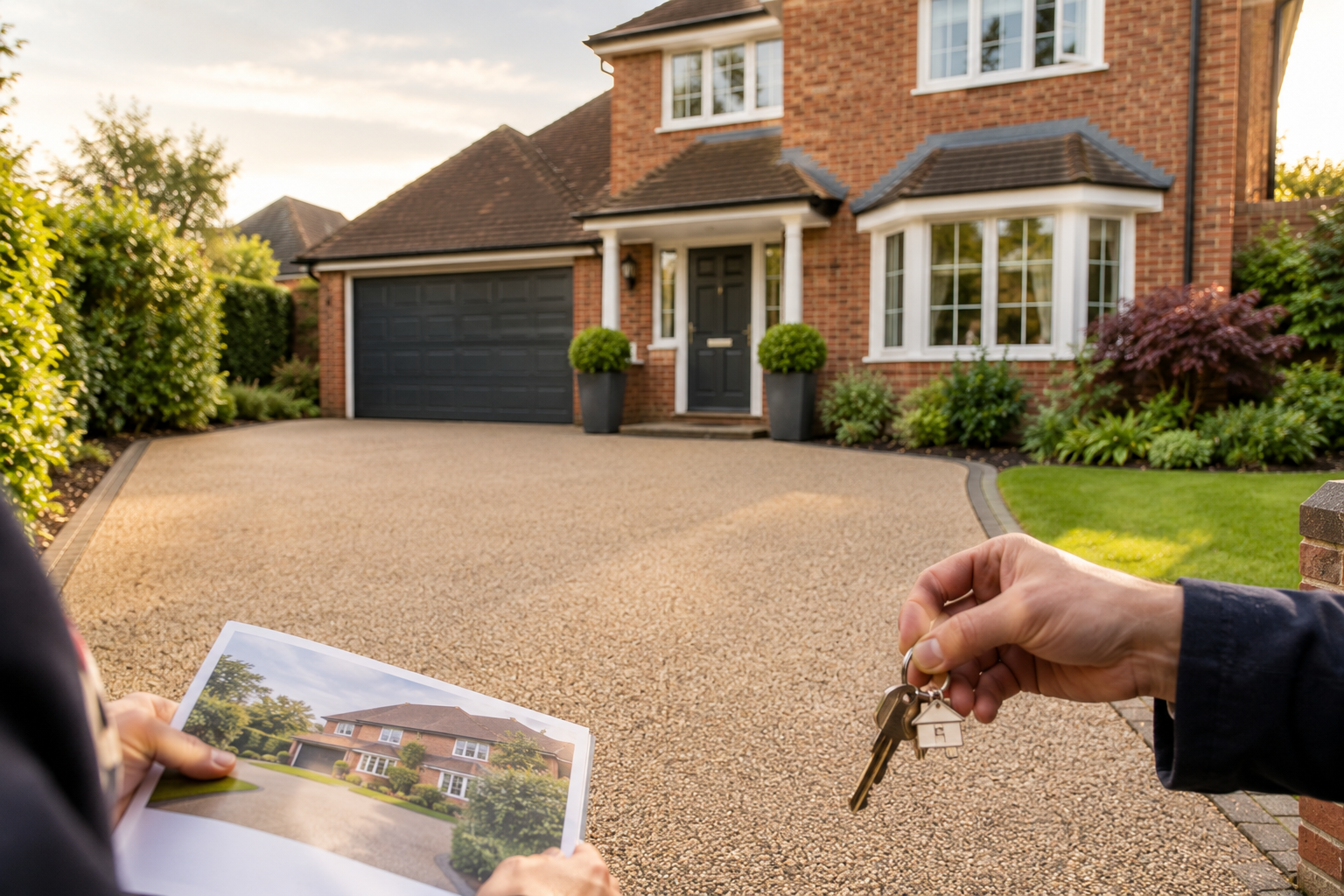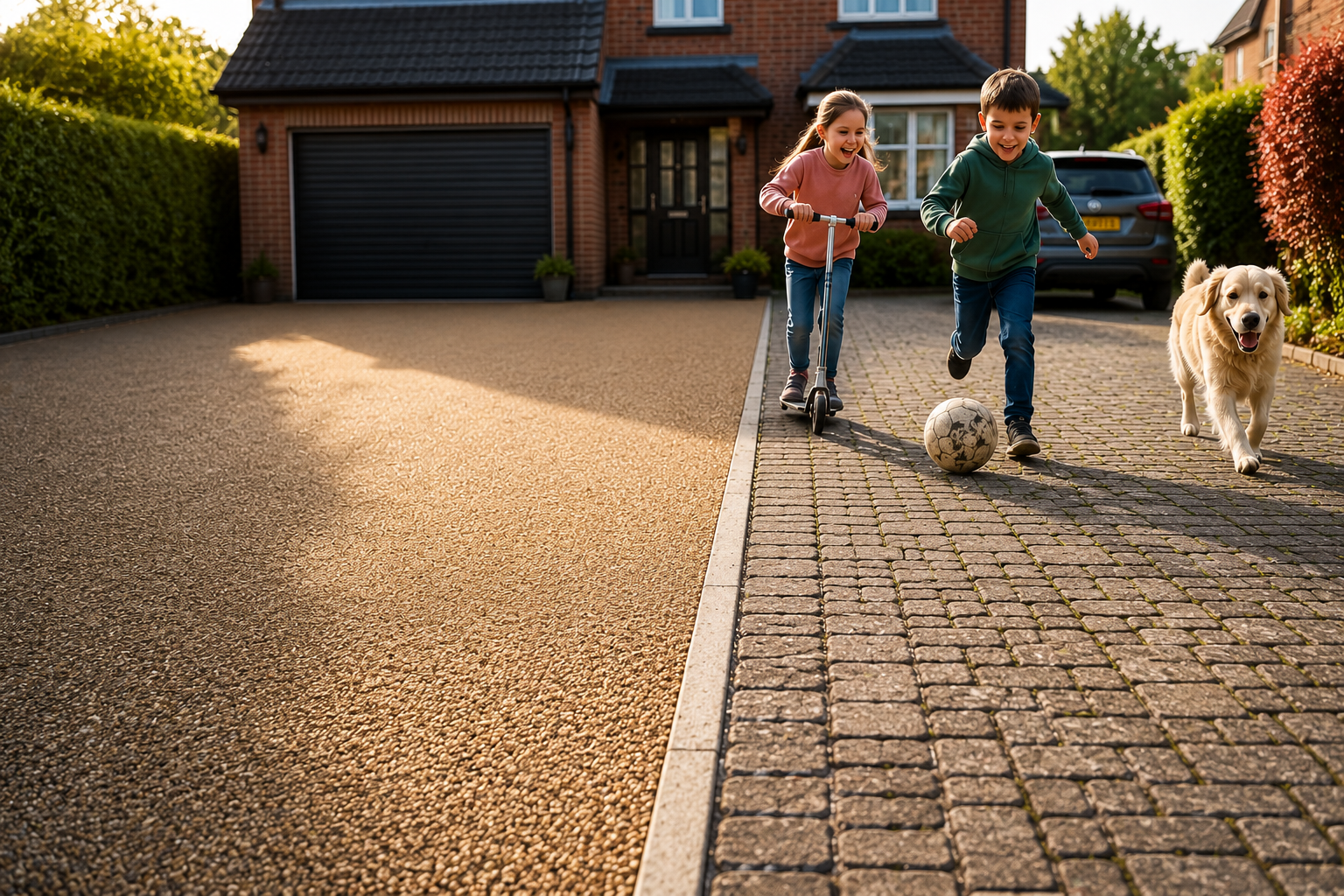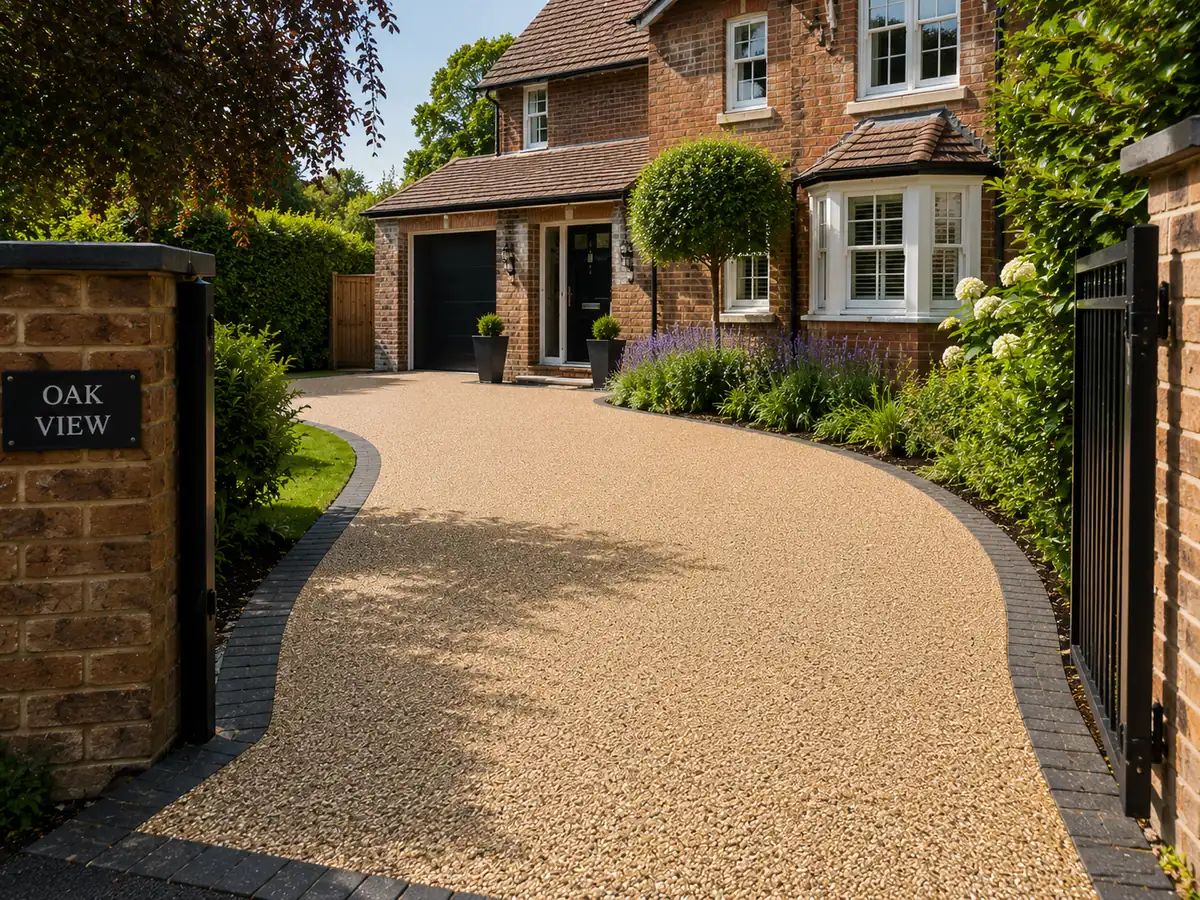
Tonbridge’s mix of period townhouses, riverside cottages and larger family homes means no two driveways look the same — but more and more homeowners here are choosing resin bound surfacing to replace tired tarmac and cracked block paving.
A resin bound driveway in Tonbridge typically costs £70–£120 per square metre installed, or roughly £2,800–£6,000 for an average single-to-double driveway. The finish is fully permeable, SuDS-compliant, and available in a wide range of natural stone aggregate blends. Most residential installations are completed within one to two days.
South East Resin & Paving is based on Tonbridge and Sevenoaks’ doorstep and installs resin bound driveways, patios and pathways throughout the town — from the conservation area around the High Street to newer developments on the outskirts.
Why is resin bound paving popular with Tonbridge homeowners?
Tonbridge sits in a conservation-conscious part of Kent, and a lot of the housing stock — particularly around the castle and along the River Medway — is period or listed-adjacent. Resin bound surfacing gives homeowners a way to modernise a driveway without it looking out of place next to Georgian brick or Kentish ragstone.
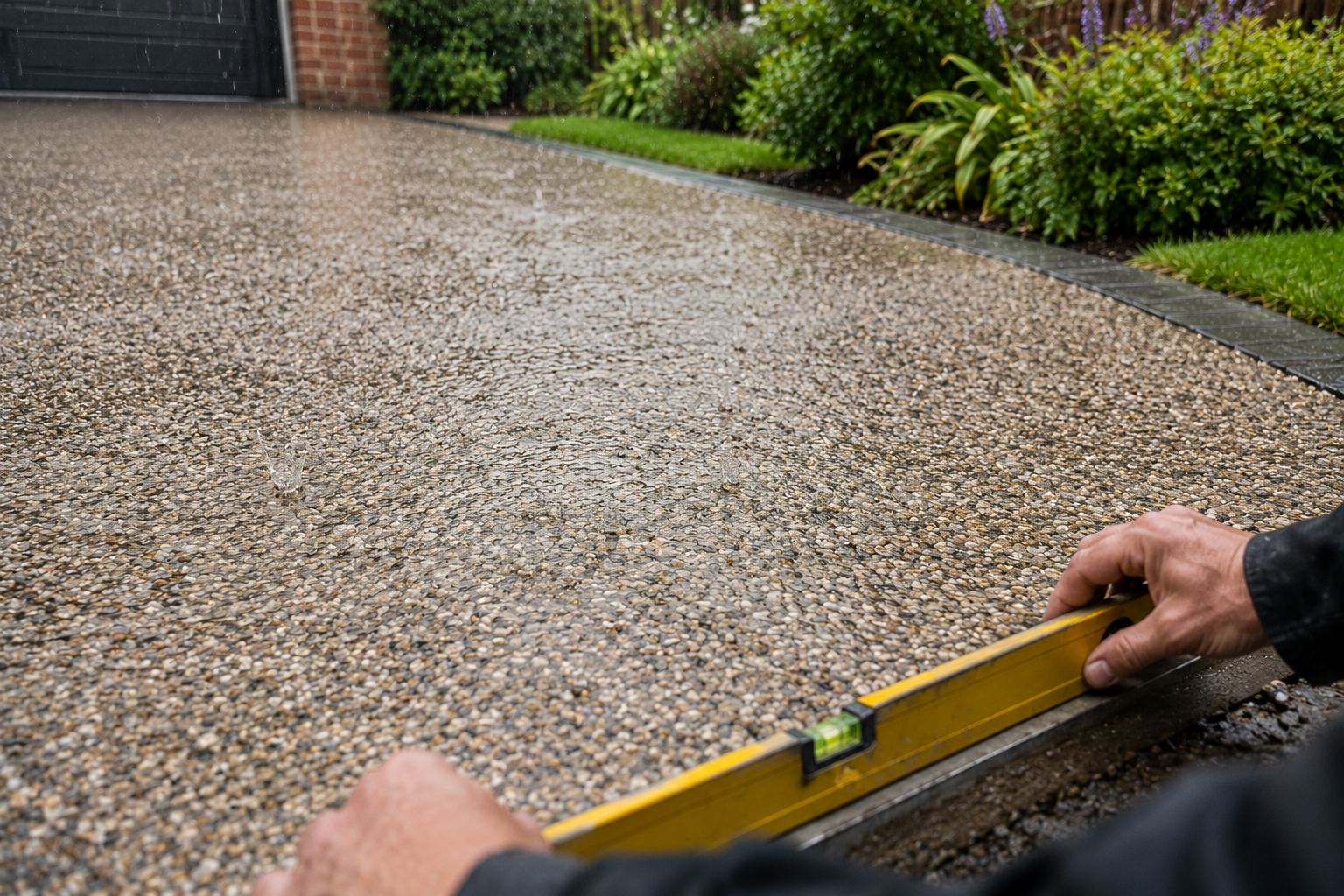
It’s also a practical choice. Tonbridge has seen its share of flooding concerns given its position on the Medway, and local planning authorities increasingly expect new hard surfacing to be permeable. A resin bound driveway lets rainwater drain through the surface into the sub-base rather than running off into drains or neighbouring gardens, which is one reason it rarely needs planning permission where a solid, non-permeable driveway would.
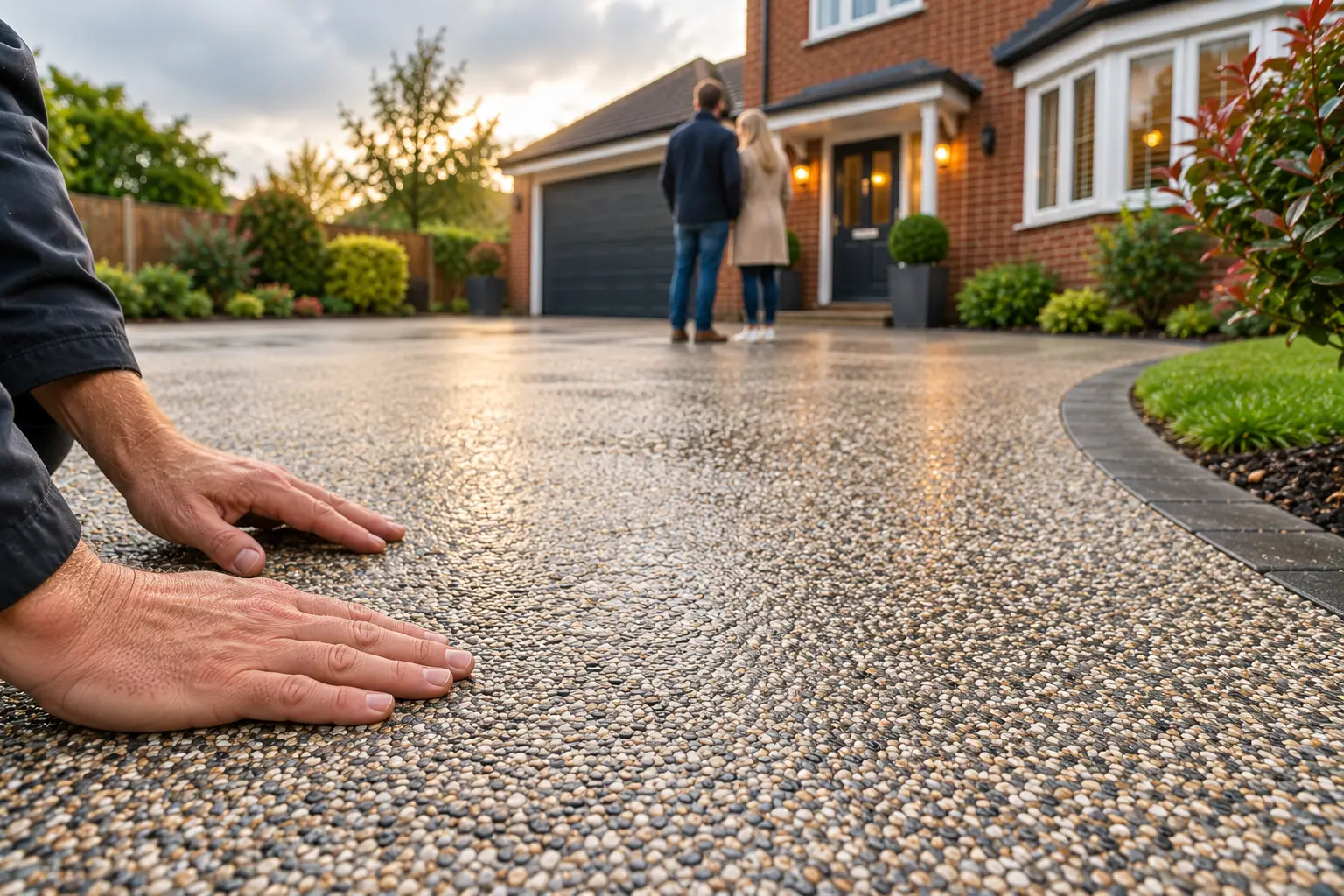
Beyond compliance, the appeal is straightforward: a seamless, smooth finish with no loose stones, no joints for weeds to colonise, and a huge range of aggregate resin paving colours to match brick, render or stone.
What does a resin bound driveway cost in Tonbridge?
Pricing depends on the size of the area, ground conditions, and how much preparation the existing surface needs before the resin is laid. As a general guide:
- Small driveway (up to 30m²): around £2,100–£3,600
- Average driveway (40–50m²): around £2,800–£6,000
- Large or double driveway (60m²+): £4,200 upwards, though larger areas often see a slightly lower cost per square metre
These figures sit in line with block paving (£60–£110/m²), which requires more ongoing maintenance, and well above plain tarmac (£30–£60/m²), which lacks the finish and drainage benefits. [VERIFY: confirm current 2026 pricing with the South East Resin quoting team before publishing, as these figures are based on 2025 benchmarks.]
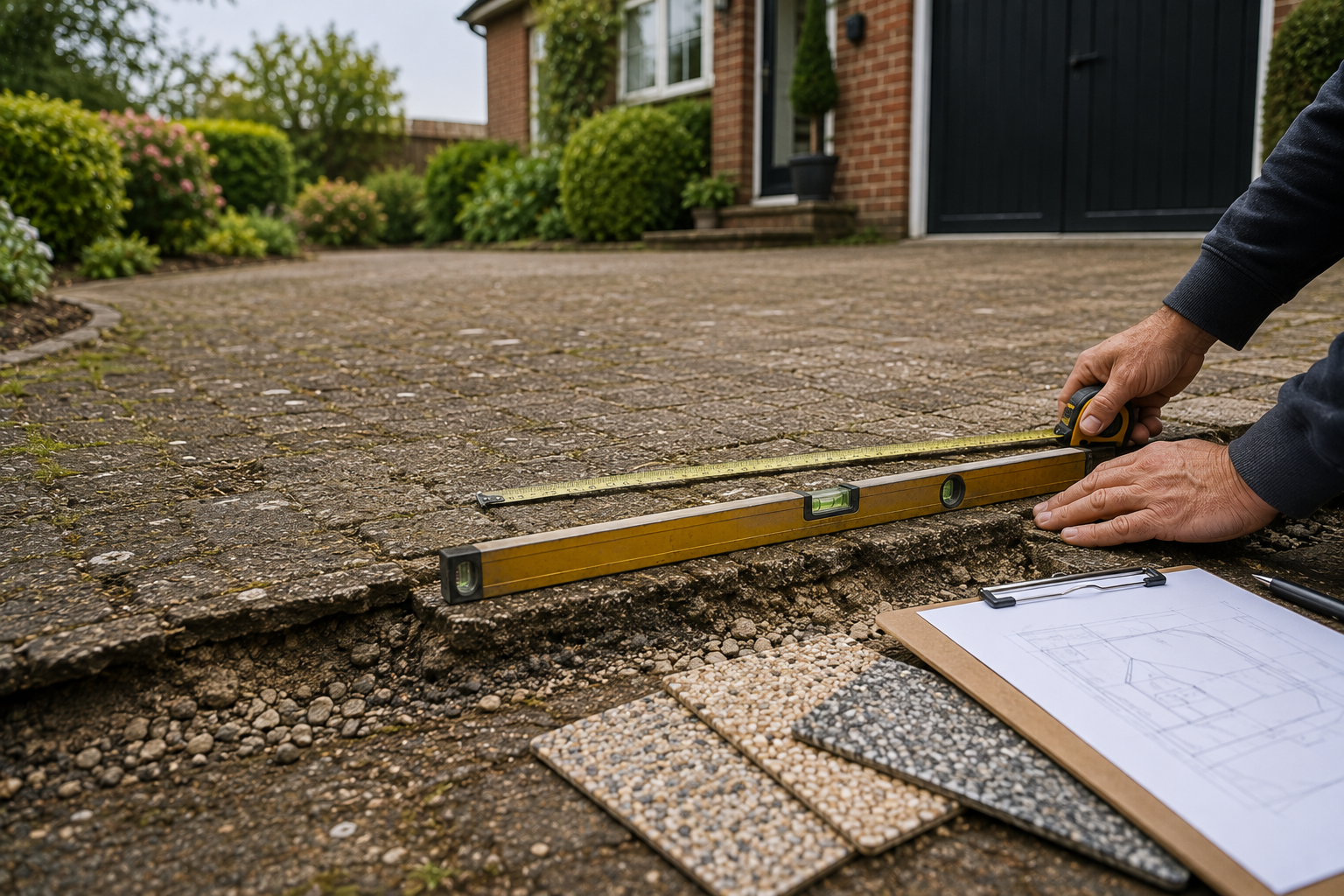
Excavation depth, existing surface removal, drainage provision and edging details (block paving borders, steel edging, or a resin-bound border in a contrasting colour) can all move the final price. The only reliable way to get an accurate figure for a specific Tonbridge property is a site visit and written quote.
What colours and finishes are available?
One of the biggest draws of resin bound paving is the range of natural stone aggregate blends available — far beyond the grey tarmac or terracotta block paving that dominates older Tonbridge streets. Popular options include:
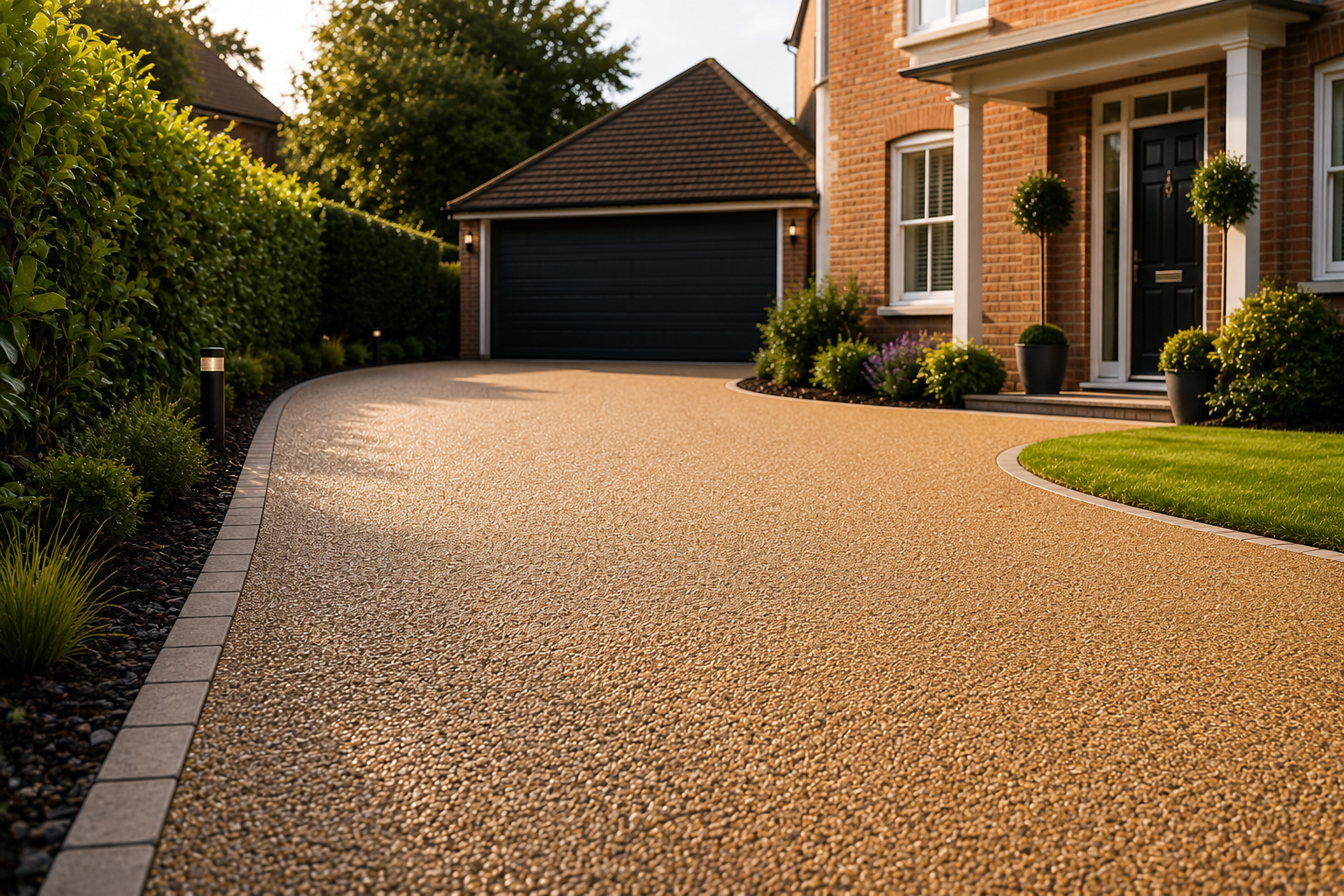
- Golden and buff tones — warm, sandy blends that complement Kentish brick and render
- Silver and grey blends — a cooler, contemporary look that suits modern extensions and new-builds
- Charcoal and slate mixes — a bold, dark finish often paired with black-framed windows and doors
- Mixed or flecked aggregates — blended tones that hide everyday dirt and tyre marks better than a single flat colour
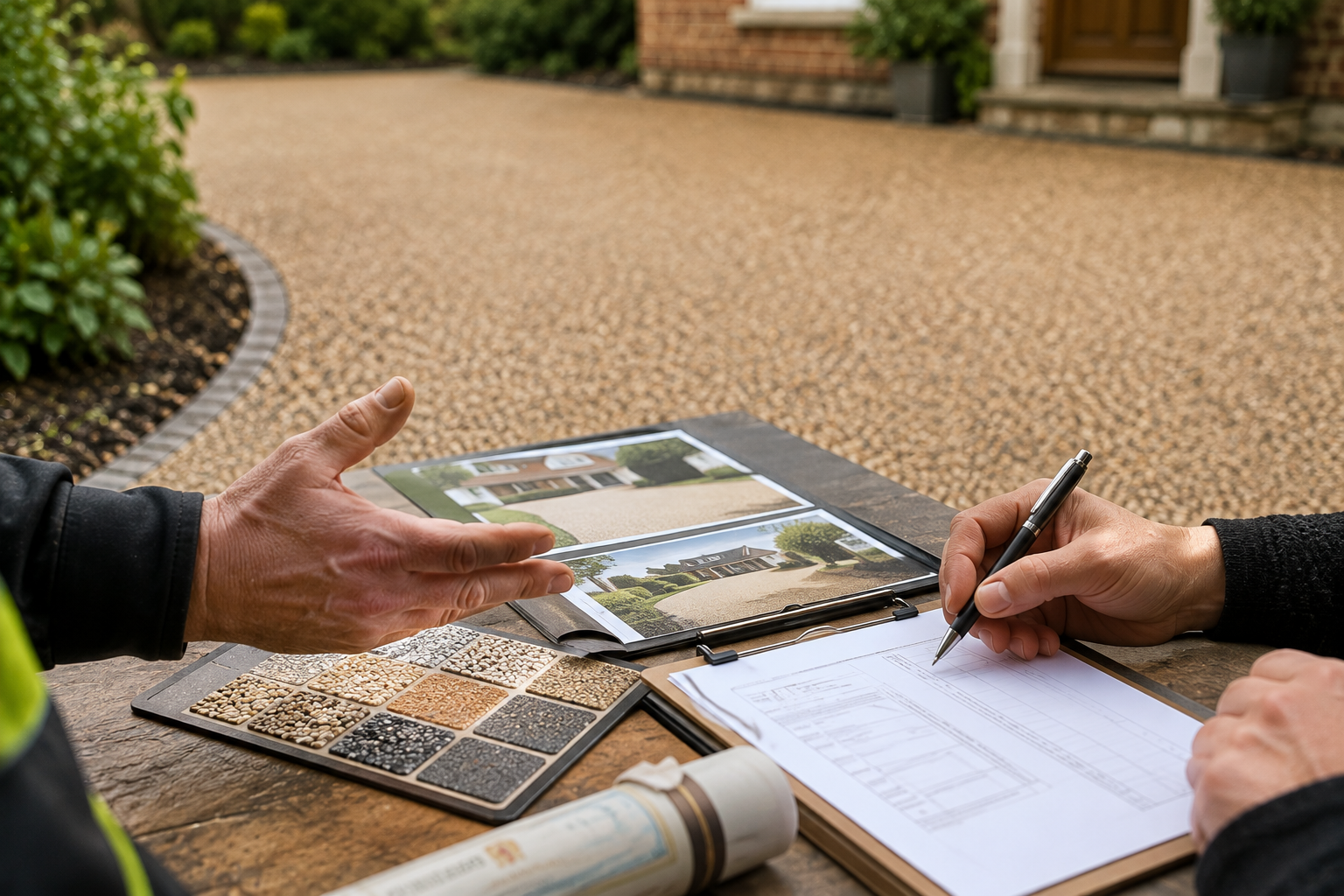
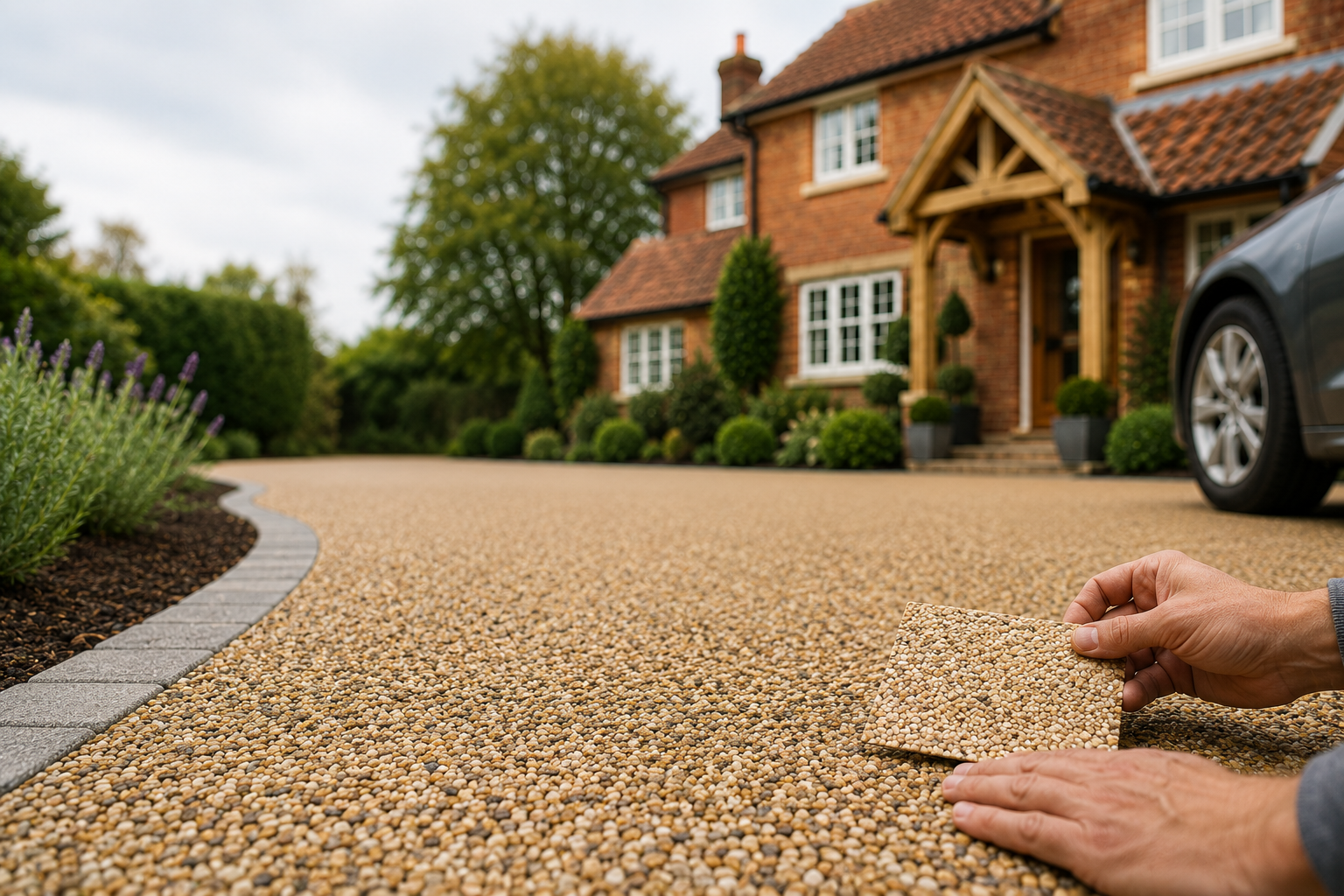
Most installers, including South East Resin, offer physical sample boards so homeowners can see how a colour looks against their brickwork and in different light before committing — a worthwhile step, since resin colours can look noticeably different in bright sun versus overcast Kent weather.
Do I need planning permission for a resin driveway in Tonbridge?
In most cases, no. Resin bound surfacing is permeable, meaning it allows water to drain through rather than pooling or running off, which is what triggers planning requirements for hard surfacing under UK regulations. Tonbridge and Malling Borough Council follows the same national permitted development rules that apply across England: a permeable driveway of any size at the front of a house generally does not need planning permission.
The exception is if the property is listed or sits within a conservation area with specific restrictions — parts of central Tonbridge fall into this category — in which case it’s worth a quick check with the council’s planning department before work starts. South East Resin can advise on this as part of the initial consultation.
How long does installation take and how long does it last?
A typical residential resin bound driveway in Tonbridge takes one to two days from start to finish, depending on size and whether the existing surface needs to be dug out first. The process involves excavating to the correct depth, laying and compacting a stable sub-base, then applying the resin and aggregate mix by hand to achieve a smooth, level finish.
Properly installed, a resin bound driveway typically lasts 15–25 years with minimal maintenance — an occasional rinse with a hose or pressure washer on a low setting is usually all that’s needed to keep it looking sharp.
Is resin bound paving suitable for older or listed Tonbridge properties?
Yes, in most cases. Resin bound surfacing is applied as a thin, flexible layer over a prepared sub-base, so it doesn’t interfere with existing drainage, tree roots, or underground services in the way that a full concrete slab can. For listed buildings or properties in conservation areas, choosing a muted, natural-toned aggregate that echoes the original materials — Kentish ragstone greys or warm buffs, for example — usually satisfies both the homeowner’s taste and any local conservation guidance. It’s still worth checking with Tonbridge and Malling’s conservation officer if the property has specific listed building consent conditions.
How do you maintain a resin bound driveway?
One of the reasons resin bound surfacing has overtaken block paving in popularity around Tonbridge is how little upkeep it needs. There are no joints for weeds to root in and no loose gravel to sweep back into place, so maintenance is mostly about keeping the surface clean rather than repairing it.
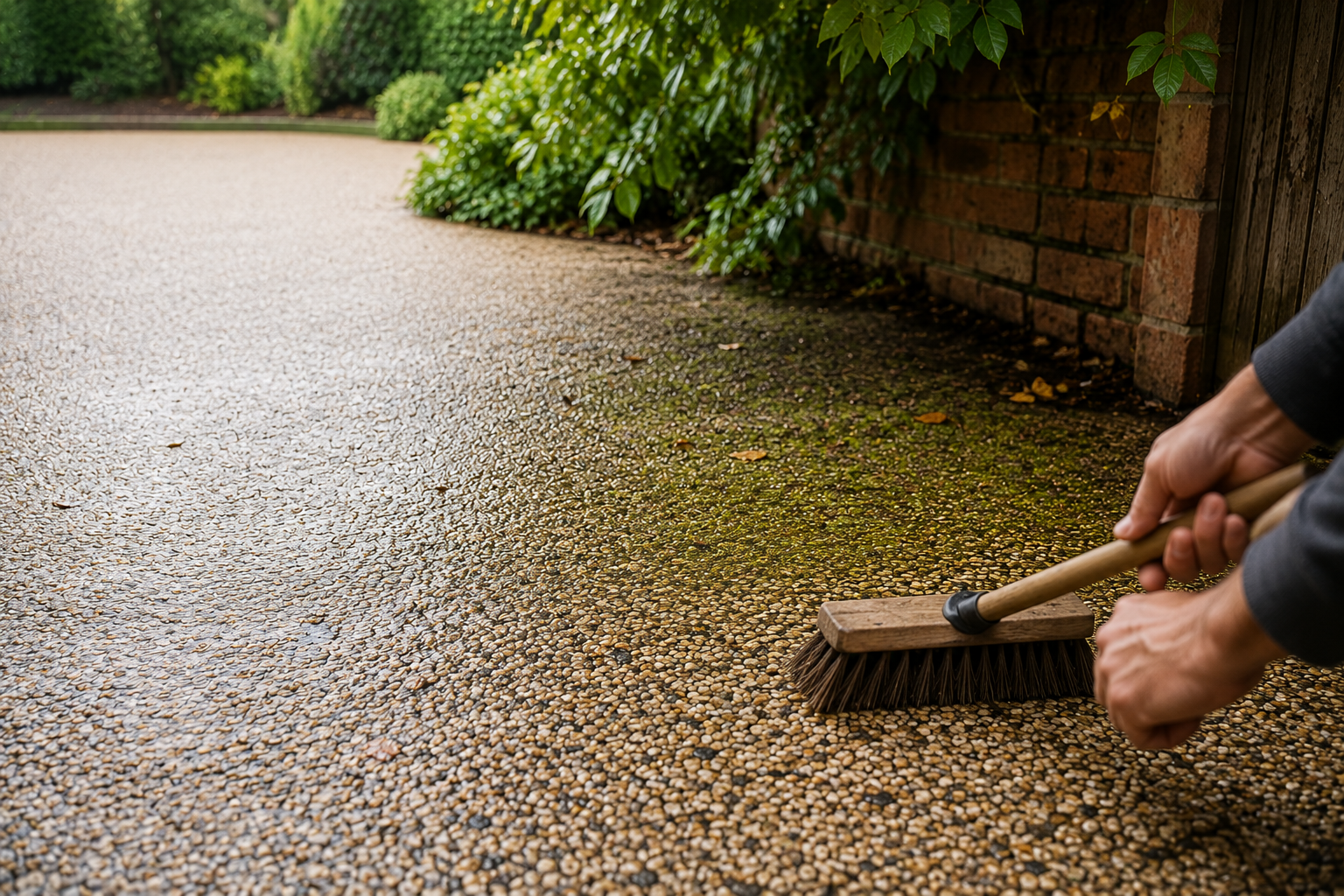
A hose-down every few months removes most everyday dirt, and a pressure washer on a low setting (holding the nozzle well back from the surface) lifts stubborn marks like oil drips or algae without disturbing the aggregate. Homeowners with driveways under trees — common in leafier parts of Tonbridge such as around the Hilden Park and Higham Wood areas — may want to brush off leaves and moss more regularly, since damp organic matter left to sit can encourage algae growth over time.
Unlike block paving, there’s no need to top up jointing sand or reset sunken blocks, and unlike tarmac, there’s no resurfacing every few years as the surface degrades. Provided the installation was done properly — correct excavation depth, a well-compacted sub-base, and the right resin-to-aggregate ratio — a Tonbridge driveway should need nothing more than occasional cleaning for well over a decade.
Getting started with your Tonbridge driveway project
Replacing a driveway is a visible, long-term investment in a property, and it’s worth getting a proper site assessment rather than a phone-only quote. Ground conditions, drainage, and access all affect the final price and the installation timeline.
South East Resin & Paving offers free consultations for homeowners across Tonbridge and the surrounding Kent and Surrey area, including a look at aggregate samples and a written quote based on the actual site.