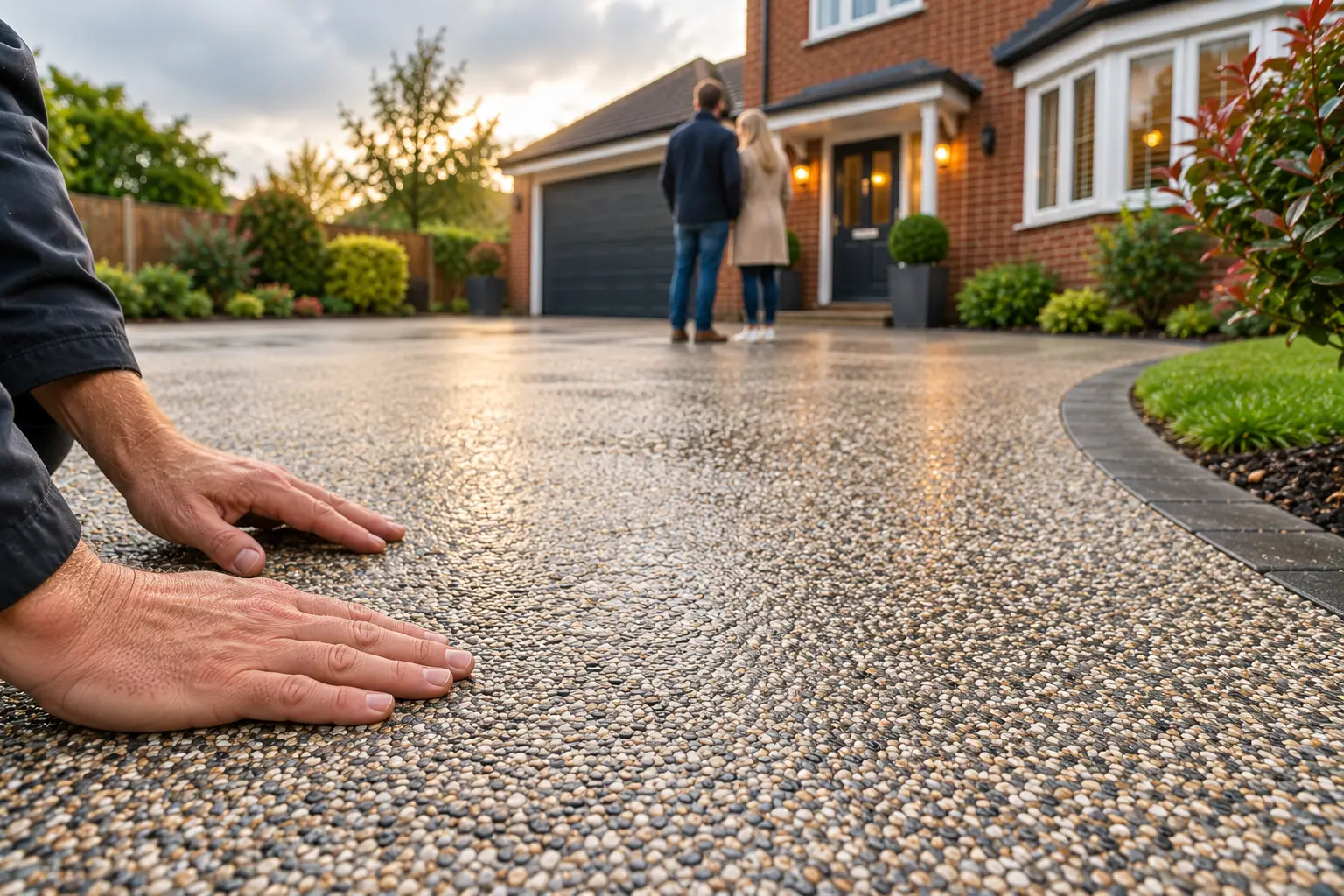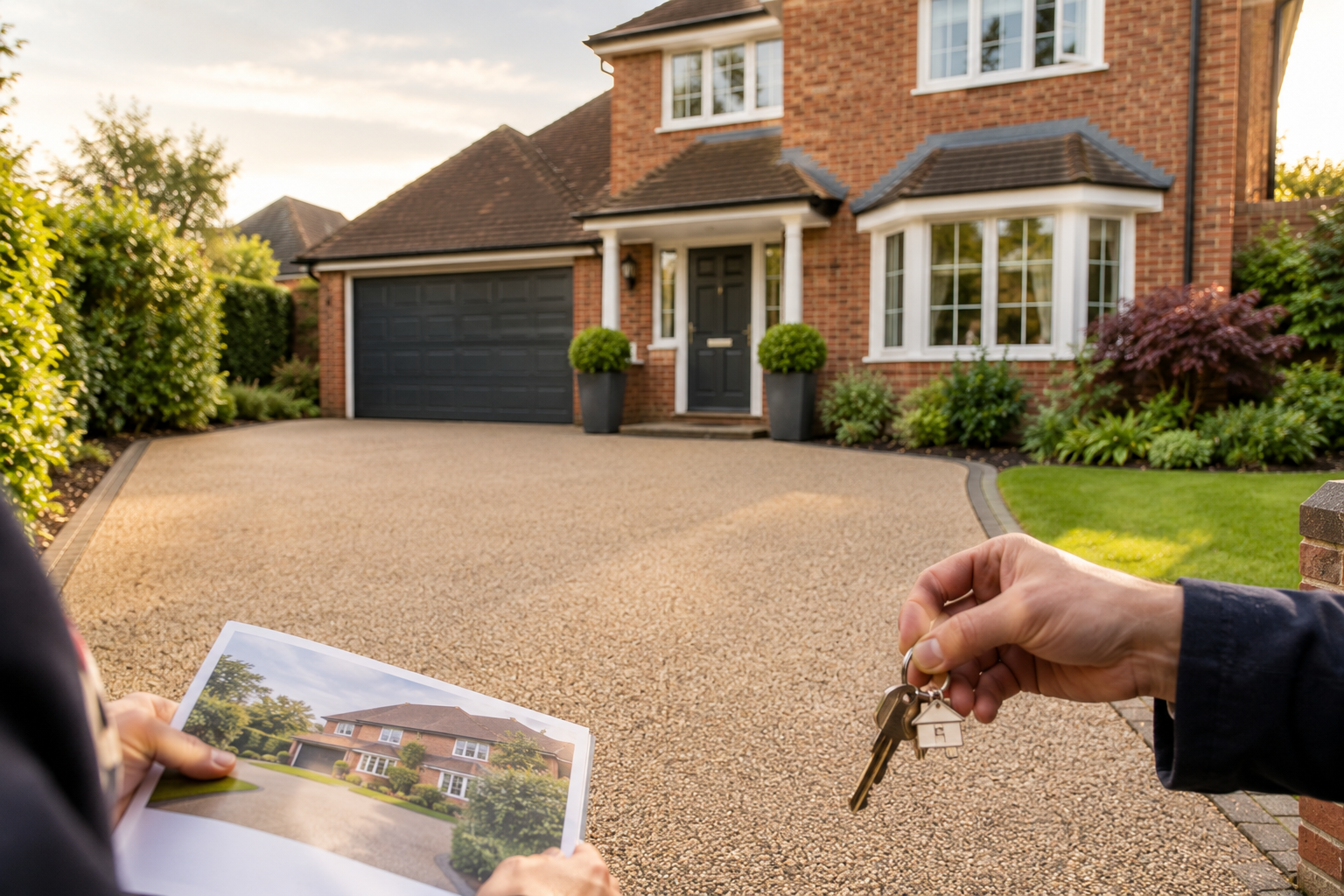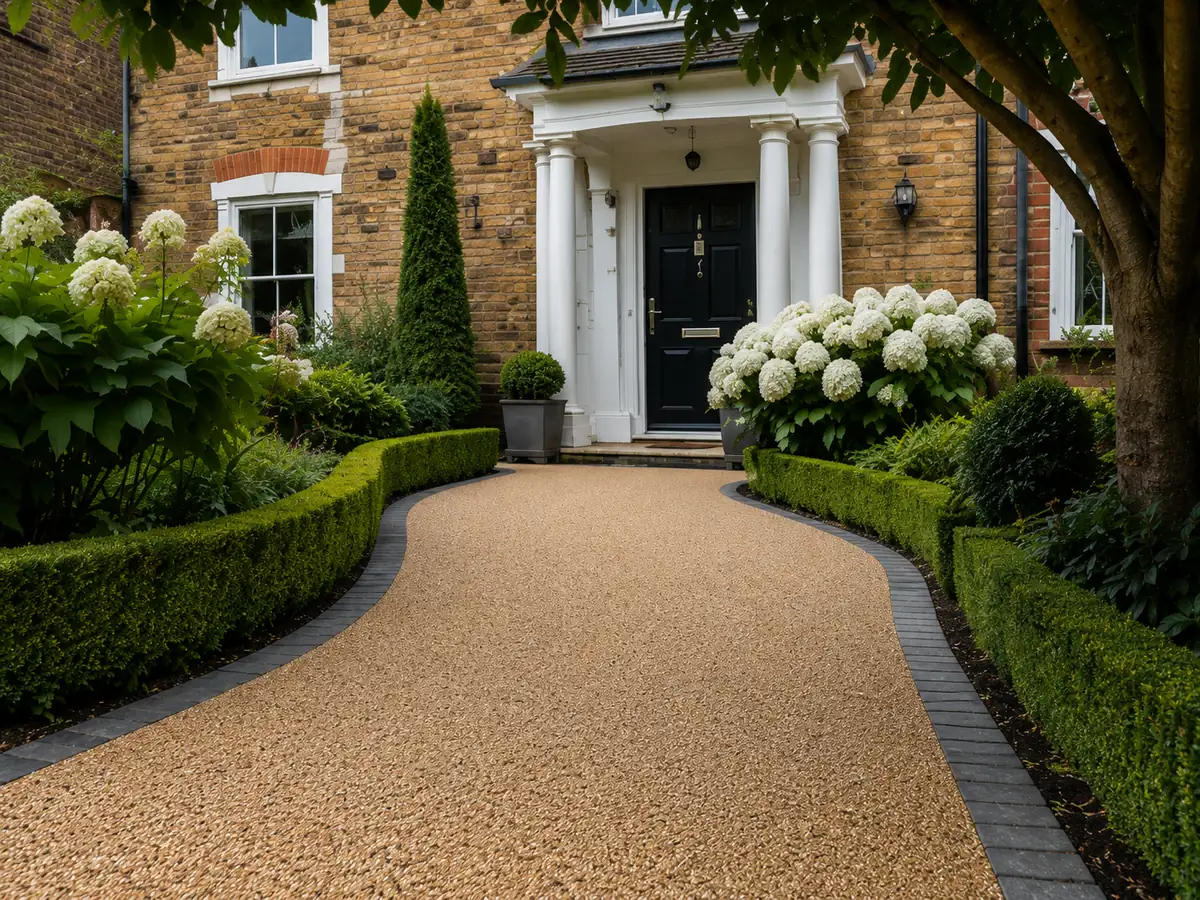
Tunbridge Wells combines Regency-era elegance around the Pantiles with substantial Victorian villas, leafy suburban roads, and newer developments on the town’s edges — and resin bound driveways have become one of the most popular ways for homeowners across all of these areas to modernise their frontage.
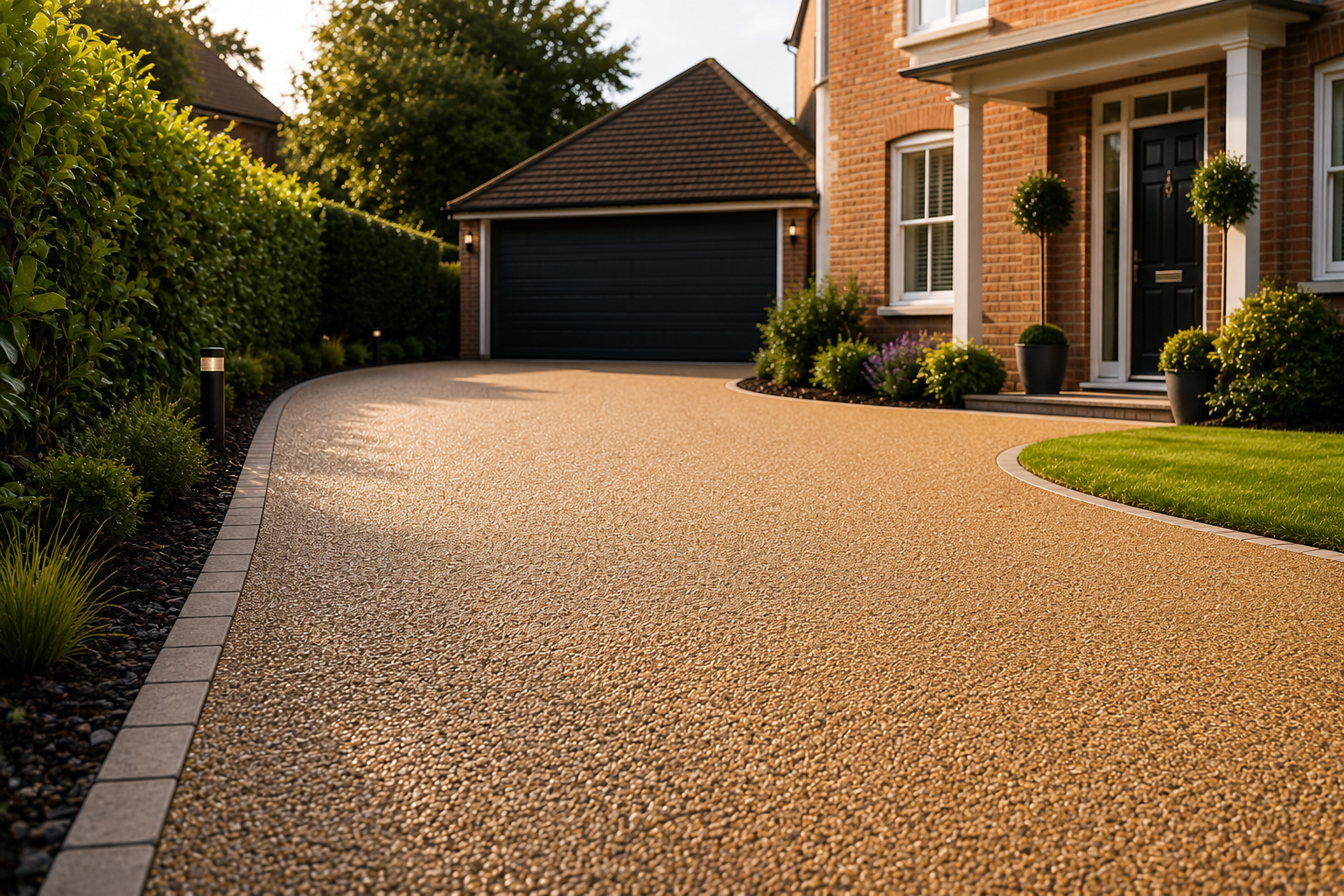
A resin bound driveway in Tunbridge Wells typically costs £70–£120 per square metre installed, or roughly £2,800–£6,000 for an average single-to-double driveway. The surface is fully permeable, SuDS-compliant, and available in a wide range of natural stone aggregate blends. Most residential installations are completed within one to two days.
South East Resin & Paving is a local specialist installing resin bound driveways, patios and pathways throughout Tunbridge Wells and the surrounding villages, including Southborough, Rusthall and Pembury.
Why choose a local Tunbridge Wells resin bound specialist?
Resin bound paving is a skilled trade — the finished quality and longevity of the surface depend heavily on correct sub-base preparation, accurate mixing ratios, and careful application, all of which are easy to get wrong with an inexperienced or unqualified installer. A driveway laid with an insufficient sub-base, for example, may look fine initially but can develop cracking, pooling, or an uneven surface within a year or two.
Working with a local specialist also means someone who understands Tunbridge Wells’ specific conditions: the clay-heavy soil common across much of the borough, the conservation area restrictions around the town centre and the Pantiles, and the property styles that call for particular aggregate choices — from muted, traditional tones for Regency and Victorian properties to bolder contemporary blends for the town’s newer builds.
What does a resin bound driveway cost in Tunbridge Wells?
Pricing depends on the size of the driveway, ground conditions, and the amount of preparation the existing surface needs. As a general guide:
- Small driveway (up to 30m²): around £2,100–£3,600
- Average driveway (40–50m²): around £2,800–£6,000
- Large or double driveway (60m²+): £4,200 upwards, with the cost per square metre often reducing slightly for bigger projects
[VERIFY: confirm current 2026 pricing with the South East Resin quoting team before publishing, as these figures are based on 2025 benchmarks.]
For comparison, block paving typically costs £60–£110 per m² but requires more ongoing maintenance, while plain tarmac is cheapest at £30–£60 per m² but offers none of resin bound’s aesthetic or drainage advantages. Excavation depth, drainage provision, and edging details all affect the final quote, so a site visit is the only reliable way to get an accurate figure.
What colours suit Tunbridge Wells properties?
Tunbridge Wells’ property styles range widely, and aggregate choice is often driven by the character of the specific area:
- Warm buff and honey tones — suit the sandstone and traditional brick common around the Pantiles and central conservation areas
- Soft grey and stone blends — a versatile, contemporary option that works well with most render and brick combinations across the town’s suburban roads
- Charcoal and slate mixes — increasingly popular on newer developments and modern extensions around the town’s outskirts
- Mixed or flecked aggregates — a practical choice that hides everyday dirt and tyre marks better than a single flat tone
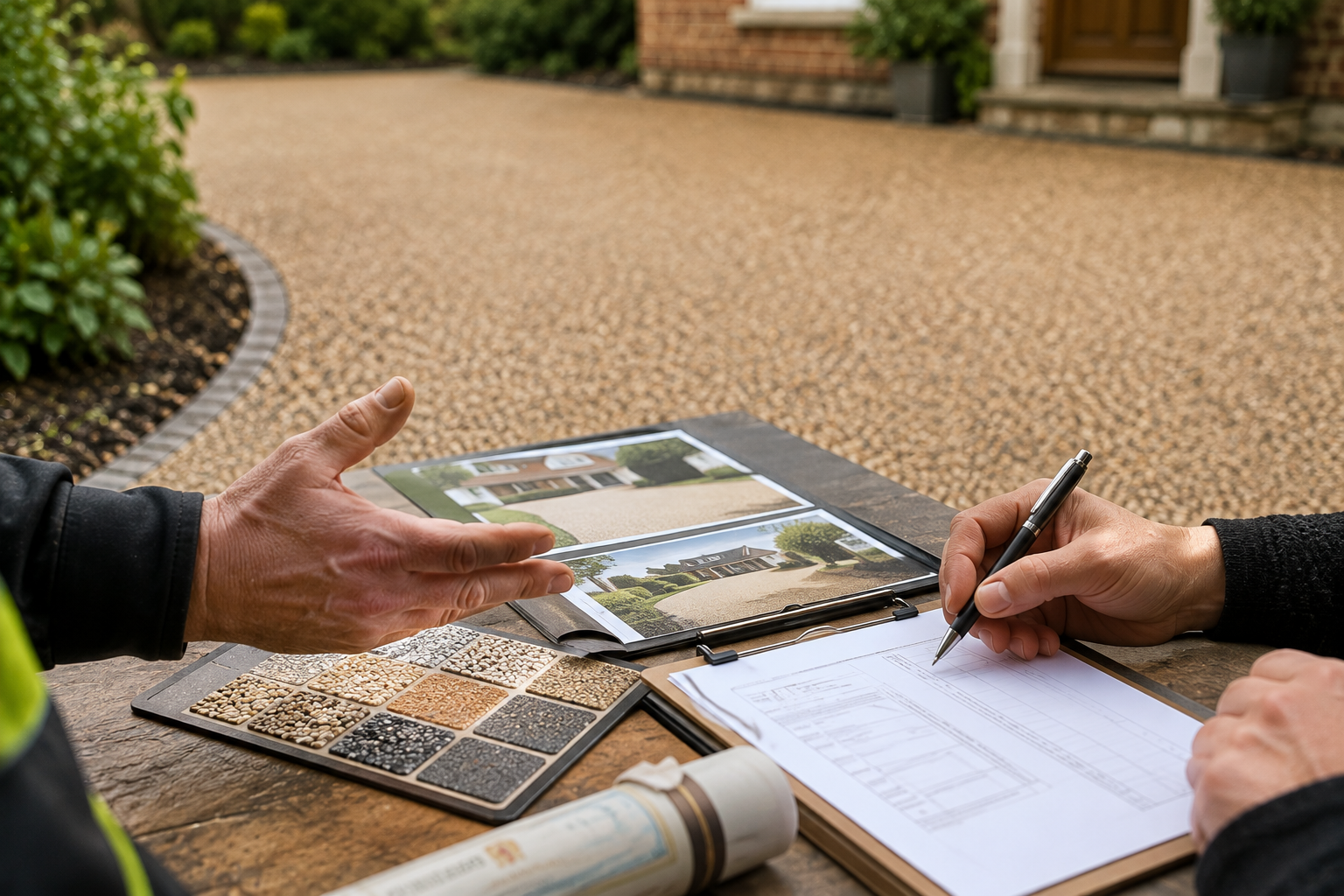
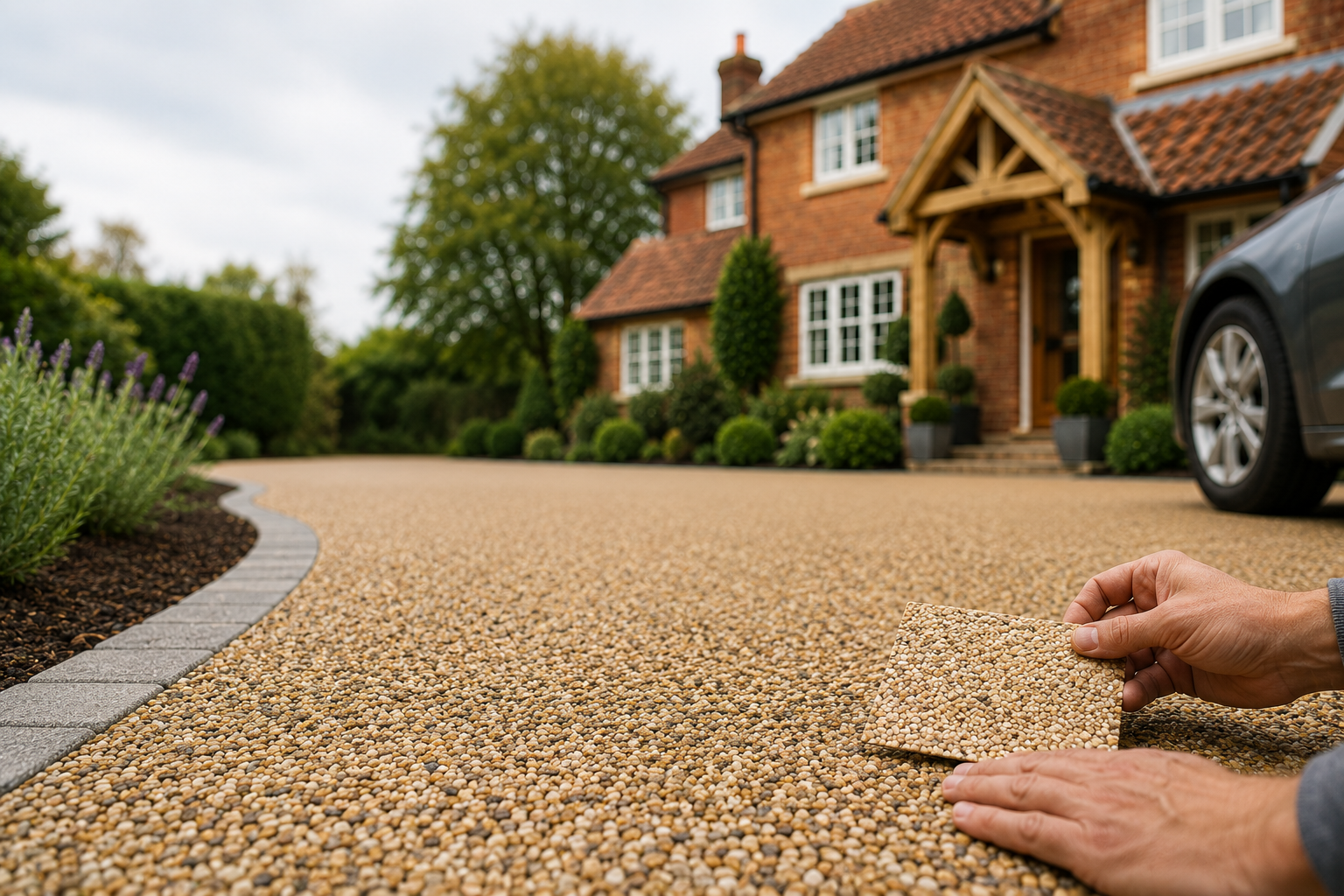
Physical sample boards are available so homeowners can view colours against their own brickwork before committing, since resin colours can look noticeably different in bright sun compared with overcast Kent weather.
Do I need planning permission for a resin driveway in Tunbridge Wells?
In most cases, no. Resin bound surfacing is permeable, meaning it falls under the same permitted development rules that apply across England for permeable driveways — planning permission generally isn’t required regardless of size, provided the surface allows water to drain through rather than running off to the highway.
The exception is listed buildings or properties within one of Tunbridge Wells’ conservation areas, which cover a substantial part of the town centre, the Pantiles, and several surrounding residential roads. In these cases, it’s worth checking with Tunbridge Wells Borough Council before work starts, particularly where a driveway forms part of wider frontage changes. South East Resin can flag this during the initial site visit.
How long does installation take and how long does it last?
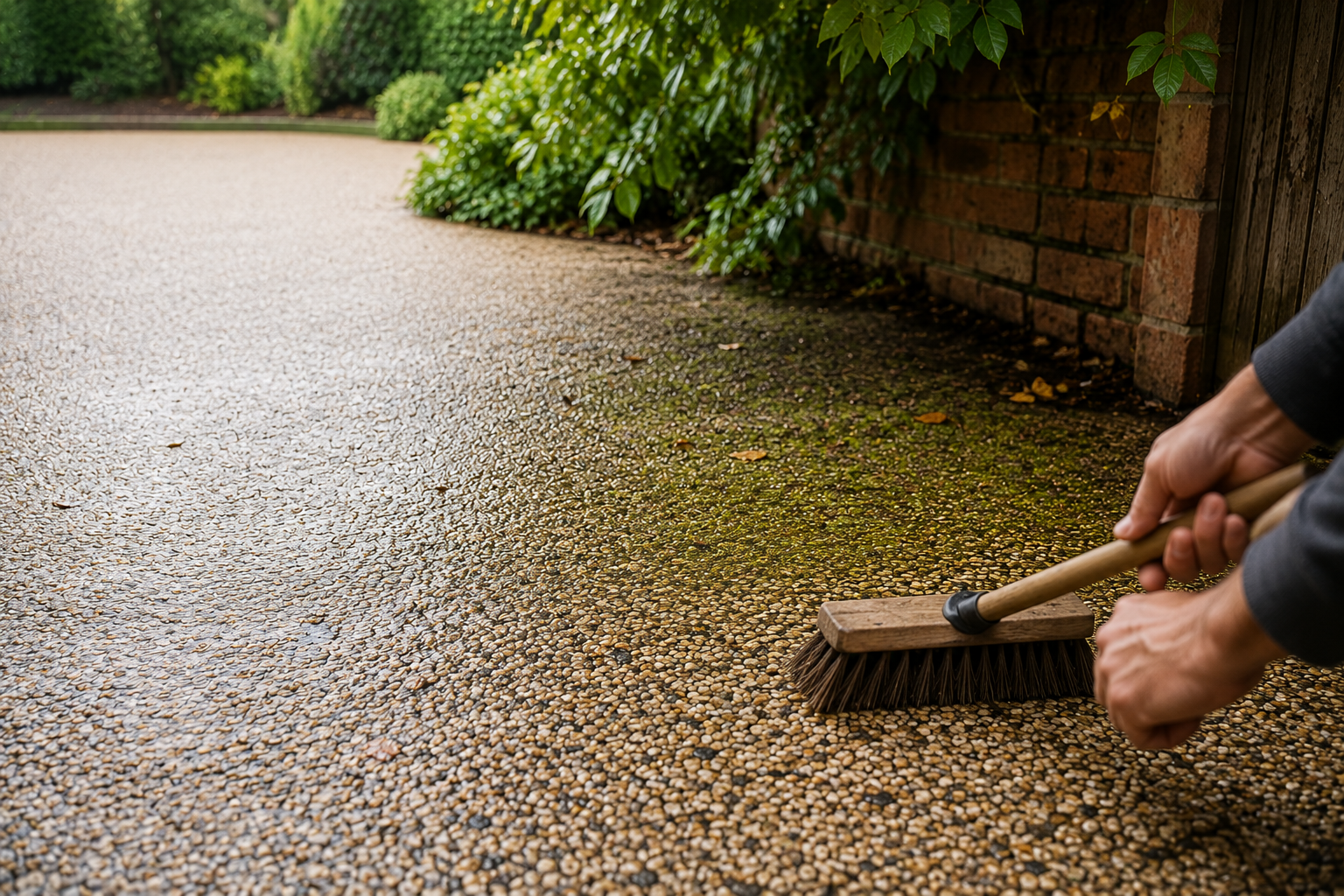
A typical residential resin bound driveway in Tunbridge Wells takes one to two days from start to finish, covering excavation, sub-base preparation and compaction, and the final resin and aggregate application. Properly installed, with correct depth and compaction at every stage, a resin bound driveway typically lasts 15–25 years with minimal maintenance beyond an occasional hose-down or light pressure wash.
How does resin bound cope with Tunbridge Wells’ clay soil?
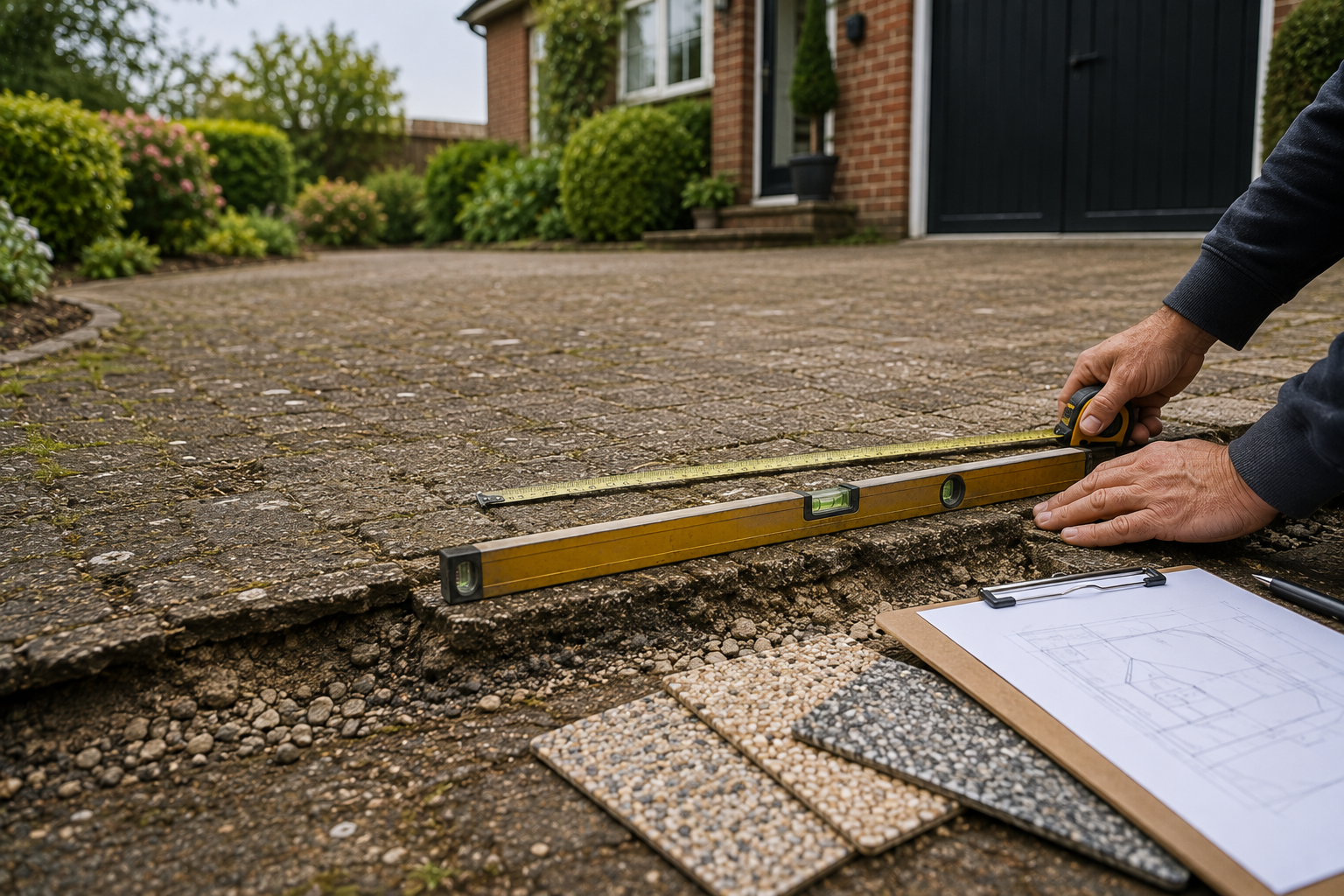
Much of the borough sits on clay-based ground, which expands and contracts with moisture levels through the year — a common cause of cracking in rigid driveways like concrete or poorly bedded block paving. Resin bound’s flexible, permeable construction handles this seasonal movement far better, and its permeability reduces the amount of water sitting in the soil directly beneath the surface, which can help limit the extent of ground movement in the first place. Getting the sub-base specification right for the specific soil conditions of a site is essential, which is why a proper survey matters more than a phone-only estimate.
What does the installation process involve?
Understanding the process helps explain both the cost and the finished quality of a resin bound driveway. Work starts with excavating the existing surface to the correct depth — this might mean removing old tarmac, cracked concrete, or tired block paving entirely. A permeable sub-base is then laid in layers and compacted thoroughly, since this stage does the most work in determining how the finished surface performs over the following 15–25 years.
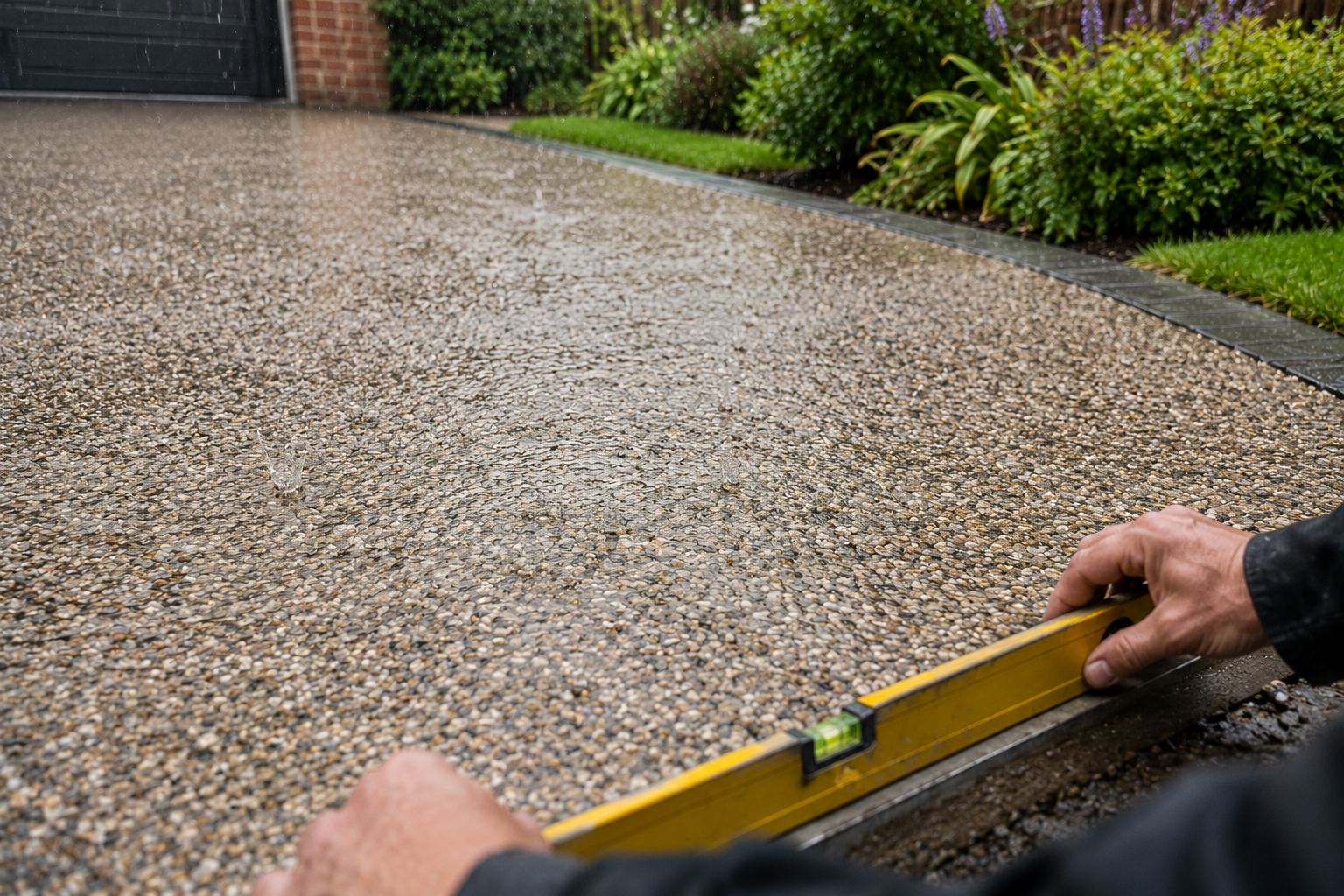
Edging is installed next to contain the resin bound surface and create a clean border, whether that’s a simple block paving edge, steel edging, or a contrasting resin bound strip. The resin binder and aggregate are then mixed to the correct ratio and trowelled across the prepared area by hand, working methodically to achieve a smooth, level, consistent finish before the surface is left to cure. For most Tunbridge Wells driveways, the whole process takes one to two days, with the final surface ready for light use within 24 hours and full curing over the following days.
Is resin bound better than block paving for a Tunbridge Wells driveway?
Both are popular choices locally, and the right one depends on priorities. Block paving gives a traditional, textured look that suits period properties around the town centre, and comes in at a marginally lower installation cost (£60–£110/m² versus £70–£120/m² for resin bound). But block paving needs more ongoing maintenance — jointing sand requires periodic topping up, weeds can establish in the gaps over time, and individual blocks can shift or sink with ground movement.
Resin bound’s seamless surface avoids all of this, and its permeability sidesteps the planning permission requirements that can apply to non-permeable block paving over 5m². For homeowners prioritising low maintenance and a modern finish, resin bound is generally the stronger choice; for those wanting a traditional textured look on a period property, block paving remains a solid option.
Getting started with your Tunbridge Wells driveway project
Replacing a driveway is a significant, visible investment, and it’s worth getting a proper site assessment rather than an estimate based on a phone call. South East Resin & Paving offers free consultations for homeowners across Tunbridge Wells and the surrounding area, including aggregate samples and a written quote based on the actual site.